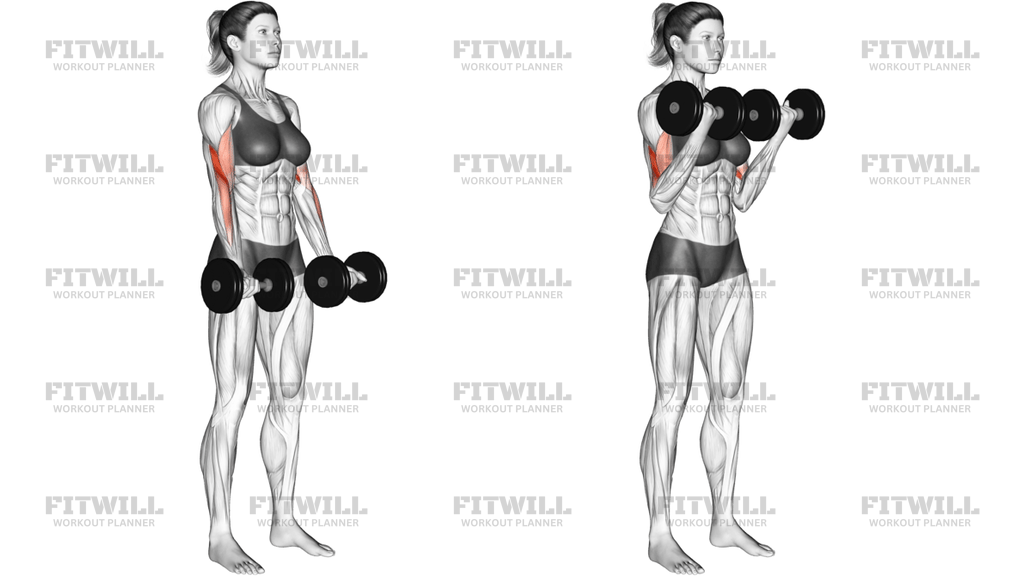
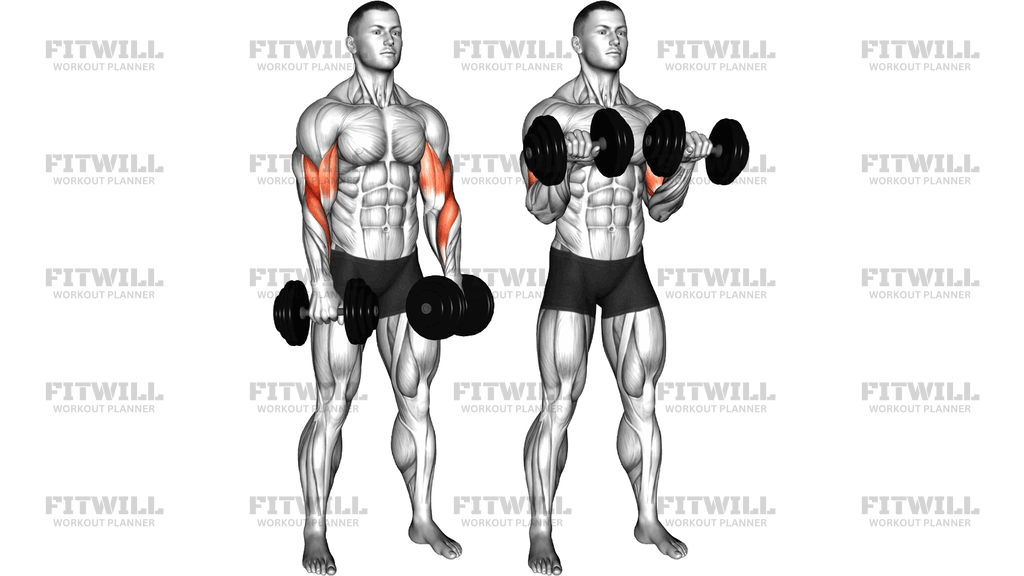
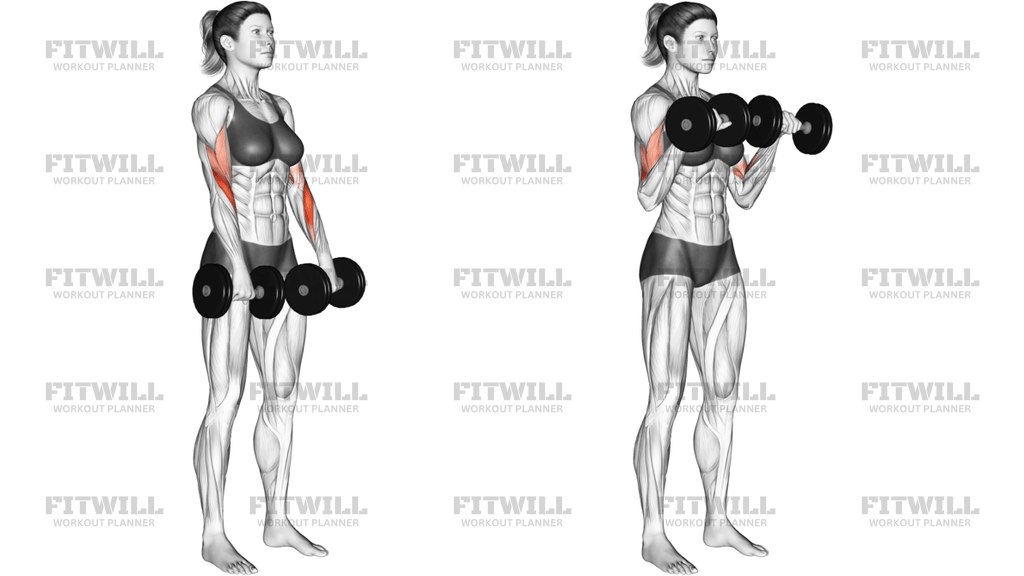
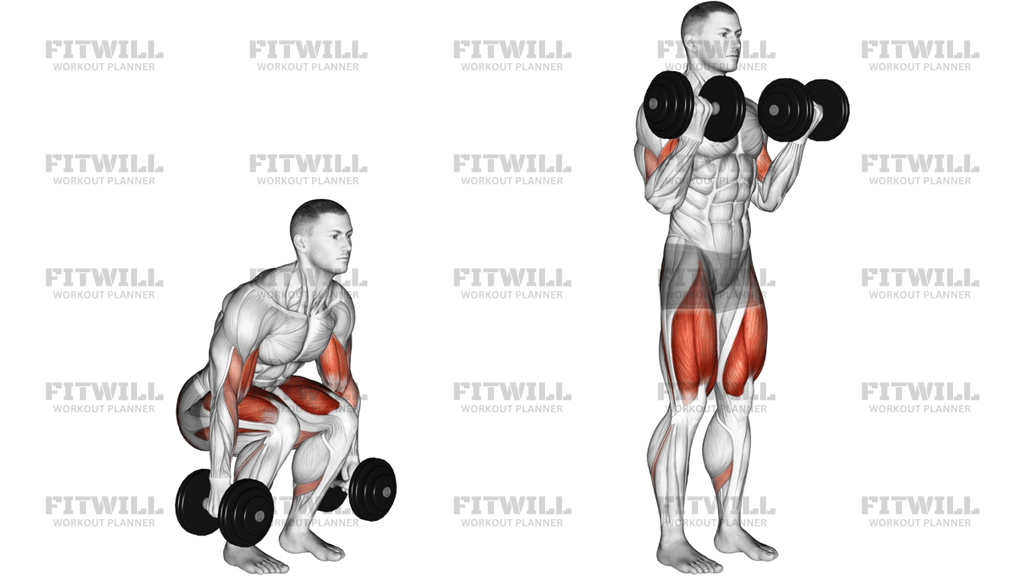
Dumbbell Peacher Hammer Curl
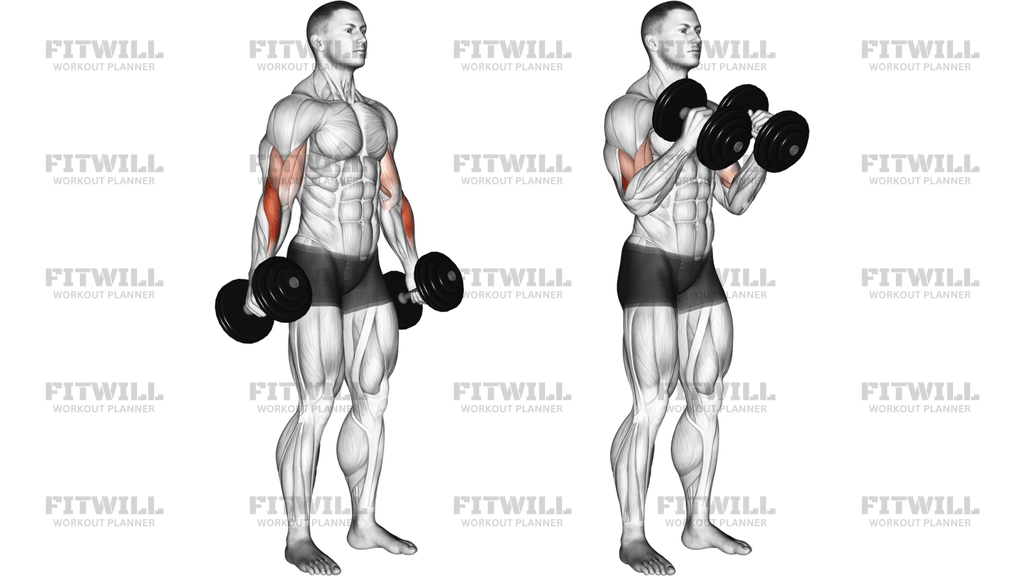
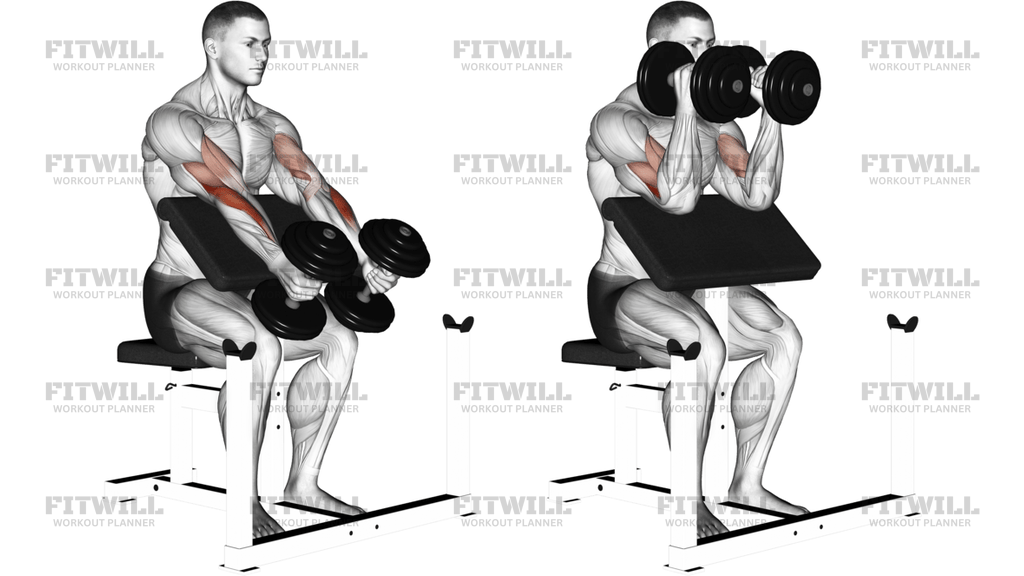
Dumbbell Peacher Hammer Curl is a preacher-supported arm exercise done with a neutral-grip dumbbell in each hand or one arm at a time. The bench fixes the upper arm against the pad so the elbow flexors have to create most of the motion. That makes the movement useful for building the brachialis, brachioradialis, biceps, and forearm flexors without letting the torso or shoulder turn the rep into a swing.
The preacher setup changes the strength curve. Because the upper arm is braced, you feel more tension when the elbow opens under load and less temptation to cheat with the shoulder. The neutral grip shifts emphasis away from pure supination-based curling and toward the brachialis and brachioradialis, which is why this variation is often used when the goal is thicker upper arms and stronger elbow flexion rather than just a standard biceps pump.
Set the bench so your armpits or upper arms sit high on the pad and your chest can stay supported. If the pad is too low, the shoulder drifts forward and the rep turns sloppy; if it is too high, the elbows can jam into the pad and shorten the useful range. The dumbbells should start under control with the wrists stacked over the forearms, not rolled back toward the palms. A clean setup matters more here than on a standing curl because the pad removes many of the stabilizing demands and exposes every small cheating pattern.
During the rep, the elbow should be the only joint doing meaningful work. Curl the dumbbells toward the front of the shoulders, keep the upper arms anchored on the pad, and stop before the elbows shoot forward or the wrists fold back. On the way down, resist the descent and let the forearms lengthen under control until the arms are nearly straight. The goal is a smooth arc that stays in the same lane from rep to rep, whether you are curling both arms together or one side at a time.
Use this exercise as accessory work after bigger pulling or arm lifts, or as a focused arm-builder when you want a strict curl variation that limits body English. Choose a load that lets you keep the neutral grip, the pad contact, and the lowering tempo honest. If the movement starts turning into a shrug, a hip drive, or a wrist break, the set is too heavy for the purpose of the exercise.
[ Workout Log & Planner ]
Put your next workout in Fitwill
Keep your plan and training log ready when you are.


Instructions
- Set the preacher bench so your upper arms can rest firmly on the pad with your chest supported.
- Sit tall with your feet flat, shoulders down, and a dumbbell in each hand or one dumbbell for a single-arm set.
- Start with a neutral grip so your palms face inward and your wrists stay stacked over the handles.
- Let your elbows open until your forearms are almost straight without bouncing off the bottom.
- Curl the dumbbells up by bending only the elbows while keeping the upper arms glued to the pad.
- Bring the weights toward the front of your shoulders without letting the elbows slide forward.
- Pause briefly at the top and keep the wrists straight instead of rolling the dumbbells back.
- Lower the dumbbells slowly on the same path until you reach the bottom position again.
- Breathe out as you curl up and breathe in as you lower under control.
- Stop the set if you have to shrug, rock, or lose contact with the preacher pad.
Tips & Tricks
- Set the seat height so the upper arm, not the elbow point, does most of the contact with the preacher pad.
- A neutral grip should stay neutral; if the wrists start turning into a regular curl, the load is too heavy or the setup is off.
- Do not let the shoulders creep forward at the top, because that steals tension from the elbow flexors.
- Use a slow lowering phase to keep tension on the brachialis and brachioradialis instead of dropping through the bottom.
- If you curl both arms together, keep the rep speed matched so one side does not take over the set.
- If the bottom range irritates the elbows, shorten the descent slightly instead of bouncing out of the stretched position.
- Keep your chest planted on the pad and your torso still; any back lean means the dumbbells are too heavy.
- Choose a load that lets you finish every rep with the same elbow path, not a heavier pair that changes shape halfway through the set.
- A brief squeeze near the top is useful, but only if the elbows stay pinned to the pad.
- Use straps only if grip is the limiting factor and you still want the preacher position to drive the arm work.
Frequently Asked Questions
What muscles does Dumbbell Peacher Hammer Curl train?
It primarily trains the brachialis, brachioradialis, and biceps, with the forearm flexors helping to hold the neutral grip.
Why use the preacher pad for this curl?
The preacher pad locks the upper arm in place, which reduces body swing and makes the elbow flexors do the majority of the work.
Why is the neutral grip important?
Holding the dumbbells palms-in shifts more emphasis toward the brachialis and brachioradialis while keeping the wrist and forearm position simple and strict.
Can I do this with one dumbbell at a time?
Yes. A single-arm version is useful if one side is weaker or if you want to focus on matching the elbow path on each rep.
How low should I lower the dumbbells?
Lower until the arms are nearly straight, but stop before you bounce the weight or lose the upper-arm contact on the pad.
What is the most common mistake on the preacher bench?
Letting the elbows slide forward and turning the rep into a shoulder-driven curl instead of a strict elbow flexion.
Is Dumbbell Peacher Hammer Curl good for beginners?
Yes, as long as the dumbbells are light enough to keep the wrist straight, the shoulders down, and the descent controlled.
Should my elbows stay fixed on the preacher pad the whole time?
They should stay planted against the pad as much as possible, with only the elbow opening and closing through the rep.
How should I breathe during this exercise?
Exhale on the curl up and inhale as you lower the dumbbells back down under control.
How do I make the exercise harder without adding much weight?
Slow the lowering phase, pause briefly near the top, and keep every rep strict against the preacher pad.