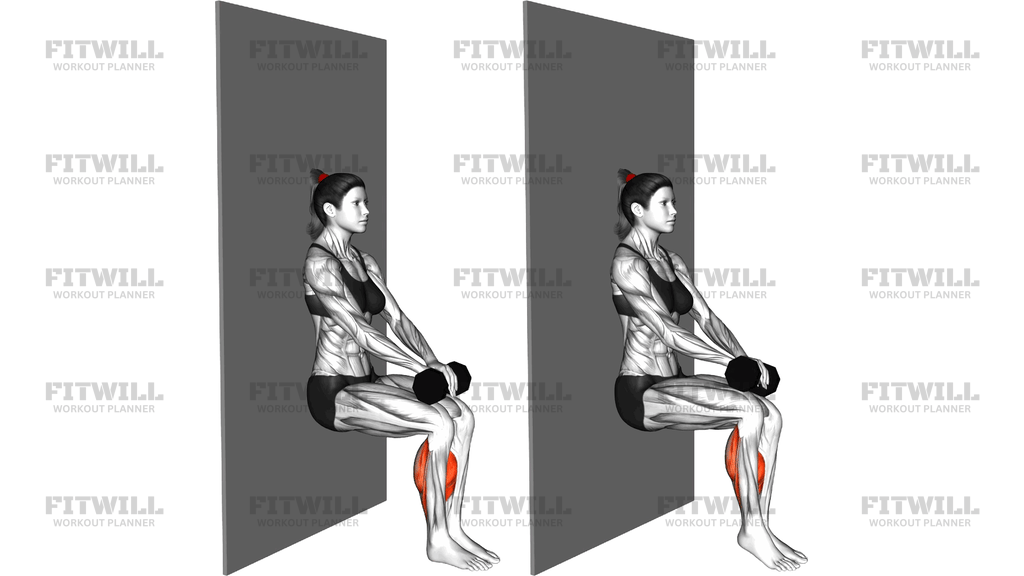
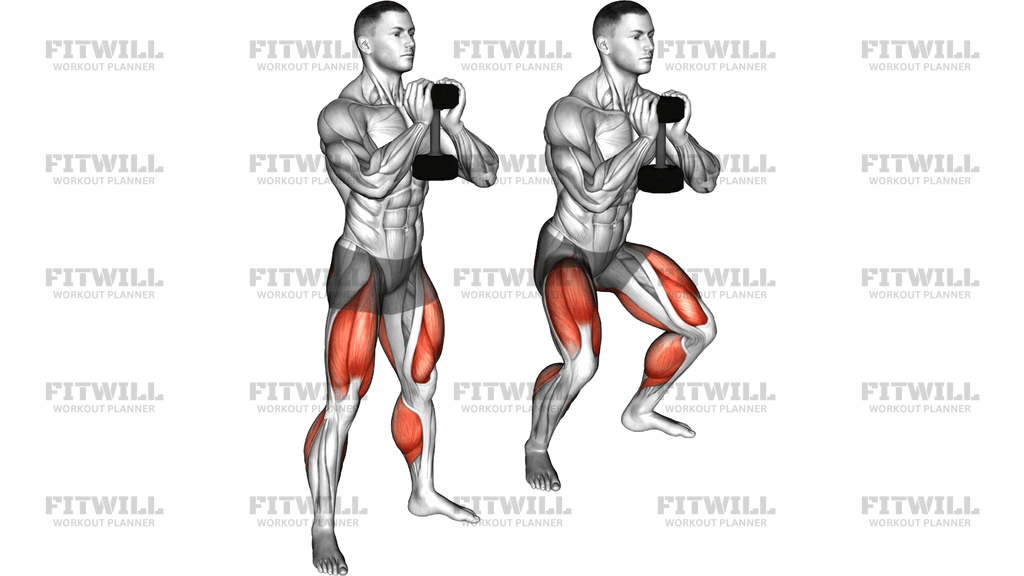
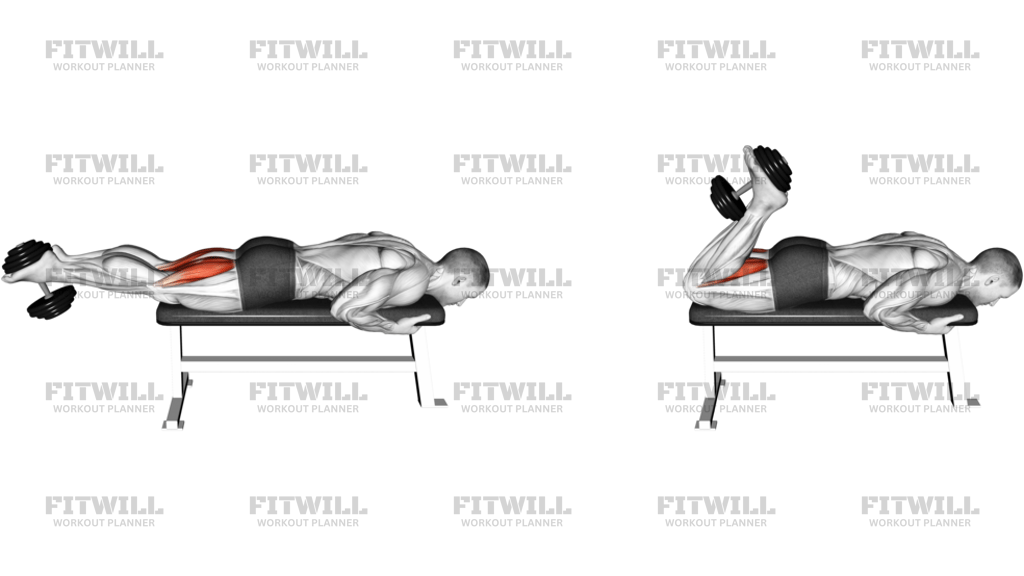
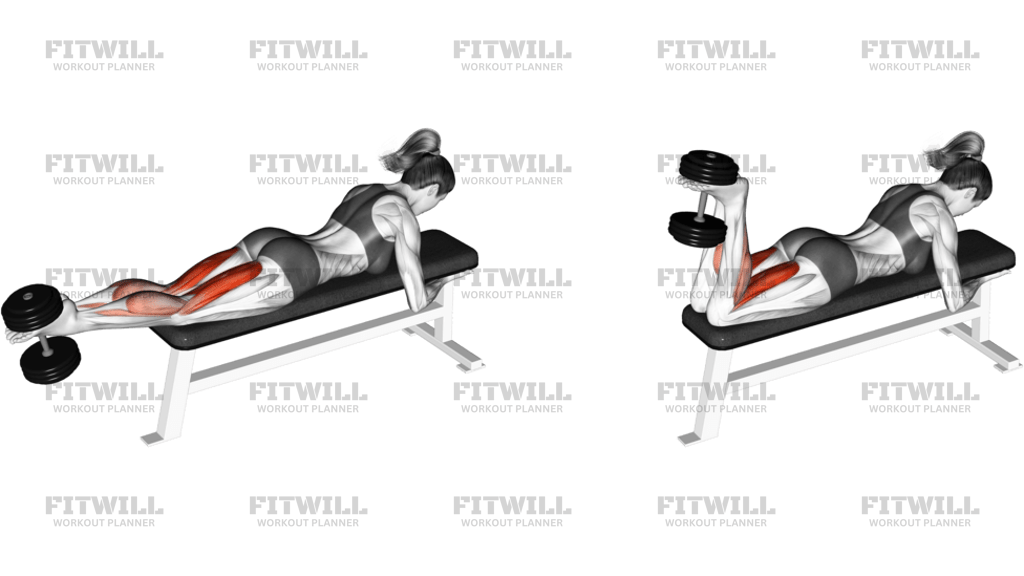
Dumbbell Seated One Leg Calf Raise Hammer Grip
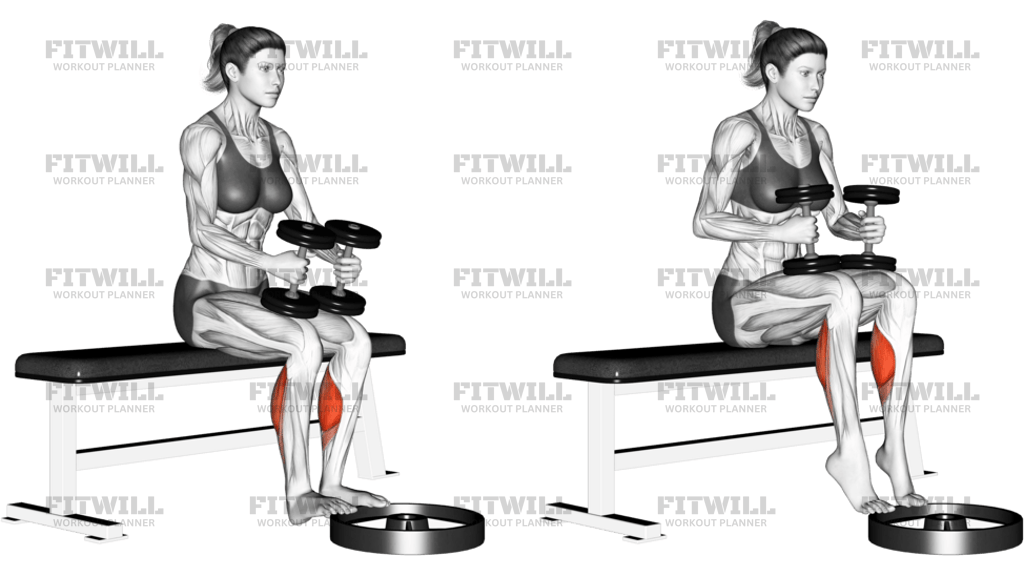
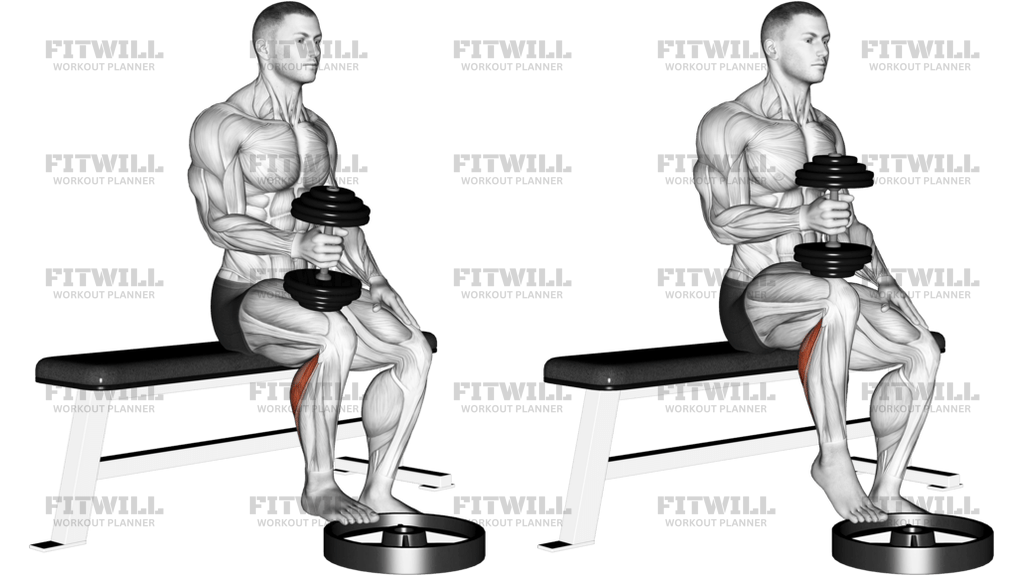
Dumbbell Seated One Leg Calf Raise Hammer Grip is a seated single-leg calf exercise that emphasizes ankle plantarflexion with the knee bent. The bent-knee position shifts more of the work to the soleus while still training the calf complex as a whole. Holding the dumbbell upright in a hammer grip keeps the load centered over the working leg and makes it easier to stay controlled through the top and bottom of each rep.
The setup matters because this exercise is small and precise. Sit tall on a bench, place one forefoot on a stable support such as a plate or block, and let the heel travel freely below the level of the support. The working knee should stay stacked over the foot, while the other leg stays quiet so you do not push off or bounce through the rep. That arrangement lets the calf do the work instead of the hips or torso helping out.
Each repetition should feel like a smooth ankle drive rather than a whole-body lift. Press through the ball of the foot, raise the heel as high as you can without rolling the ankle outward, then lower slowly until you feel a useful stretch in the lower calf. The dumbbell should stay steady in your hand or on the thigh, and your torso should remain upright instead of leaning back to create extra range.
This movement is useful for calf strength, lower-leg size, ankle control, and endurance work in both general training and sports preparation. It pairs well with standing calf raises because the seated position changes the line of tension and gives the soleus more direct work. Because the range is short and the load can be concentrated, quality matters more than weight; use a load and tempo that let you repeat the same clean path on every rep.
If the dumbbell becomes awkward, the heel starts bouncing, or the knee shifts side to side, the set is too heavy or the support is too unstable. Keep the motion smooth, pause briefly at the top, and come down under control so the calf stays loaded instead of the rep turning into a bounce. Beginners can use this variation with light load and a solid bench setup, as long as the working foot stays planted and the heel can move freely.
[ Workout Log & Planner ]
Put your next workout in Fitwill
Keep your plan and training log ready when you are.


Instructions
- Sit upright on a bench and place one forefoot on a stable plate, block, or step so the heel can drop below the support.
- Keep the working knee bent about 90 degrees and the other foot quiet on the floor for balance, not for pushing.
- Hold the dumbbell vertically in a hammer grip over the working thigh or knee so the load stays centered.
- Start with the heel lowered until you feel a comfortable stretch in the calf.
- Press through the ball of the working foot and raise the heel as high as you can without turning the ankle outward.
- Pause briefly at the top and squeeze the calf before beginning the descent.
- Lower the heel slowly back into the stretch with the shin and knee staying still.
- Breathe out as you lift, breathe in as you lower, and keep the torso tall throughout the set.
Tips & Tricks
- Keep the ball of the foot on the support and let only the heel move; if the toes shift a lot, the setup is too loose.
- Use a slow lowering phase so the calf stays under tension instead of dropping into the bottom position.
- Do not let the working knee drift inward or outward; that usually means the foot is rolling and the ankle line is leaking force.
- Choose a support height that lets the heel travel below the forefoot without the ankle feeling jammed at the bottom.
- If the dumbbell starts wobbling on the thigh, lighten the load or reposition it so the wrist stays stacked and neutral.
- Keep the nonworking leg relaxed; pushing off that foot turns the movement into a partial two-leg raise.
- A short pause at the top usually improves calf contraction more than adding extra momentum or faster reps.
- Stop the set when the heel no longer reaches the same height on each rep or when the ankle starts to twist.
Frequently Asked Questions
What does Dumbbell Seated One Leg Calf Raise Hammer Grip train most?
It primarily trains the calves, with the seated bent-knee position placing extra emphasis on the soleus.
Why is the dumbbell held in a hammer grip?
The vertical hold keeps the weight centered over the working leg and makes it easier to stay balanced on a small calf-raise setup.
Where should my foot be during the rep?
Keep the ball of the working foot on a solid support with the heel free to drop and rise through the full calf-raise range.
Should my knee move during the exercise?
No. The knee should stay bent and mostly still so the ankle does the work instead of the leg swinging.
Is this exercise good for beginners?
Yes, as long as the load is light and the support is stable enough to keep the foot and knee aligned.
What is the biggest form mistake?
Bouncing the heel or pushing off the other leg usually takes tension away from the calf and makes the rep much less useful.
How is this different from a standing calf raise?
The seated version bends the knee more, which reduces the gastrocnemius contribution and shifts more work toward the soleus.
How should I progress it over time?
Add small amounts of load only after you can pause at the top, lower slowly, and keep the heel path identical on every rep.