Dumbbell Seated Neutral Wrist Curl
Dumbbell Seated Neutral Wrist Curl is a seated forearm isolation exercise that trains wrist flexion while the hands stay in a neutral, thumb-up grip. The bench and thigh support take the bigger muscles out of the lift so the forearms have to do the work. That makes it a useful accessory when you want better wrist strength, grip endurance, and more control through the last part of pulling and carrying movements.
The setup matters because the exercise only works well when the forearms are anchored and the wrists are free to move. Sit near the edge of a flat bench, place your forearms across your thighs, and let the dumbbells hang just beyond the knees. From there, the movement should come from the wrists, not from swinging the elbows, shrugging the shoulders, or rolling the forearms.
A clean rep starts with the dumbbells low, then you curl them upward by flexing the wrists while keeping the neutral grip unchanged. The handles should travel in a short, controlled arc until the wrists are fully flexed, then lower back down under control. Because the leverage is awkward at the bottom, it is usually best to use light dumbbells and slower reps rather than chasing load.
This variation is helpful for lifters who want more direct forearm work without the wrist position of a palms-up curl. It can fit after pulling sessions, arm work, or any accessory block where smaller joint work makes sense. It is also easy to scale for beginners as long as the range stays strict and the dumbbells do not force the hands to bend or twist.
Treat the exercise as precision work for the wrists and forearms. If the shoulders start helping, the torso rocks, or the dumbbells bang against the thighs, the load is too heavy or the setup is off. Keep the motion smooth, hold the bench-supported position, and stop the set before your grip or wrist position breaks down.
Fitwill
Log Workouts, Track Progress & Build Strength.
Achieve more with Fitwill: explore over 9600 exercises with images and videos, access built-in and custom workouts, perfect for both gym and home sessions, and see real results.
Start your journey. Download today!




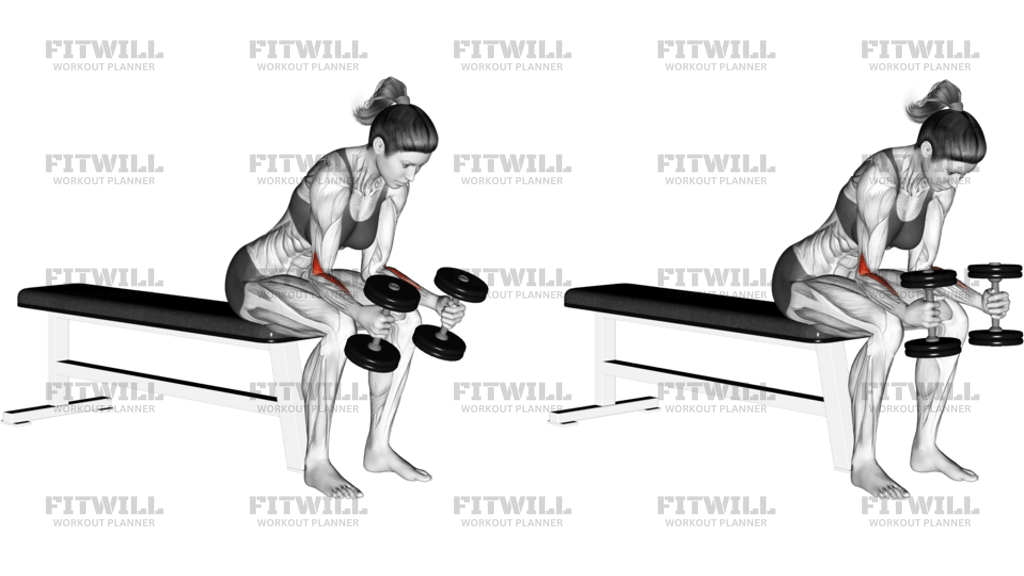
Instructions
- Sit on the edge of a flat bench with your feet flat and your knees bent so your thighs are easy to reach.
- Rest your forearms across your thighs and let your wrists hang just past the tops of your knees.
- Hold a dumbbell in each hand with your palms facing in and your thumbs pointing upward.
- Keep your elbows and upper forearms pinned to your thighs so only the wrists can move.
- Start with the dumbbells hanging low in your fingers and your wrists extended.
- Curl the dumbbells upward by flexing the wrists while keeping the neutral grip unchanged.
- Pause for a moment at the top when the wrists are fully bent and the forearms feel squeezed.
- Lower the dumbbells slowly until the hands hang back below the knees without letting the shoulders help.
- Reset the dumbbells on your thighs or the floor before you stand up.
Tips & Tricks
- Choose much lighter dumbbells than you would for curls; the long lever at the wrist makes this movement feel heavier than it looks.
- Keep the palms facing in the whole set so the exercise stays a wrist curl and does not turn into a forearm rotation.
- Let the dumbbells sit low in the fingers at the start, then close the hands as you curl to keep tension on the forearms.
- Keep the elbows glued to the thighs; if they slide forward, the shoulders and biceps will start taking over.
- Use a slow lowering phase of about two to three seconds to build control through the weaker bottom position.
- Do not bounce the dumbbells off your thighs at the bottom, or you will lose the stretch and cheat the rep.
- If your wrists ache, shorten the bottom range slightly and reduce the load before adding more volume.
- Stop the set when the dumbbells start drifting side to side or your grip can no longer keep the hands neutral.
Frequently Asked Questions
What muscles does Dumbbell Seated Neutral Wrist Curl train?
It mainly trains the forearm muscles that flex the wrist, with grip muscles helping to hold the dumbbells steady.
Why do I sit with my forearms on my thighs?
The thigh support blocks shoulder swing and keeps the movement focused on the wrists, which is what makes this variation effective.
Should my palms stay facing in during Dumbbell Seated Neutral Wrist Curl?
Yes. Keeping the neutral grip makes the exercise stay focused on wrist flexion instead of turning into a curl or a rotation drill.
Is Dumbbell Seated Neutral Wrist Curl beginner friendly?
Yes, as long as you use very light dumbbells and keep the range short and controlled.
How heavy should the dumbbells be for this exercise?
Light enough that you can curl the wrists without the elbows leaving your thighs or the dumbbells swinging.
What is the most common mistake with Dumbbell Seated Neutral Wrist Curl?
The biggest mistake is letting the shoulders and torso help. If the bench position changes rep to rep, the load is too heavy.
What should I do if the bottom position feels awkward?
Shorten the stretch slightly and lower the weight. The bottom is the hardest part, so the setup should feel stable before you add load.
What can I use instead of Dumbbell Seated Neutral Wrist Curl?
A seated barbell wrist curl or cable wrist flexion can work if you want a similar forearm-focused pattern with a different implement.