Dumbbell Lying Triceps Extension
Dumbbell Lying Triceps Extension is a flat-bench triceps isolation exercise that uses a pair of dumbbells to load elbow extension while the upper back stays supported. It is a useful choice when you want direct triceps work without standing momentum or shoulder drive, and it fits well after heavier presses or as a focused arm accessory. The long lever created by the dumbbells makes the bottom range demanding, so the setup and path matter more than the load on the handles.
The main target is the triceps, especially the elbow-extending role that finishes pressing strength and arm size. The forearms help stabilize the dumbbells, while the shoulders and core keep the upper arm steady on the bench. If the elbows drift, the shoulders shrug, or the wrists fold back, the exercise stops feeling like a triceps movement and turns into a loose press-back pattern.
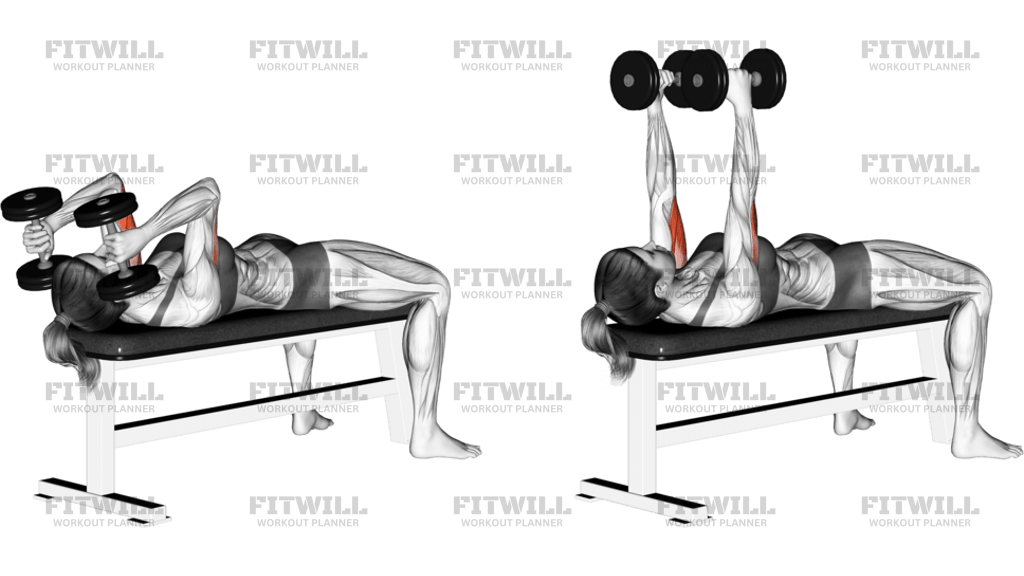
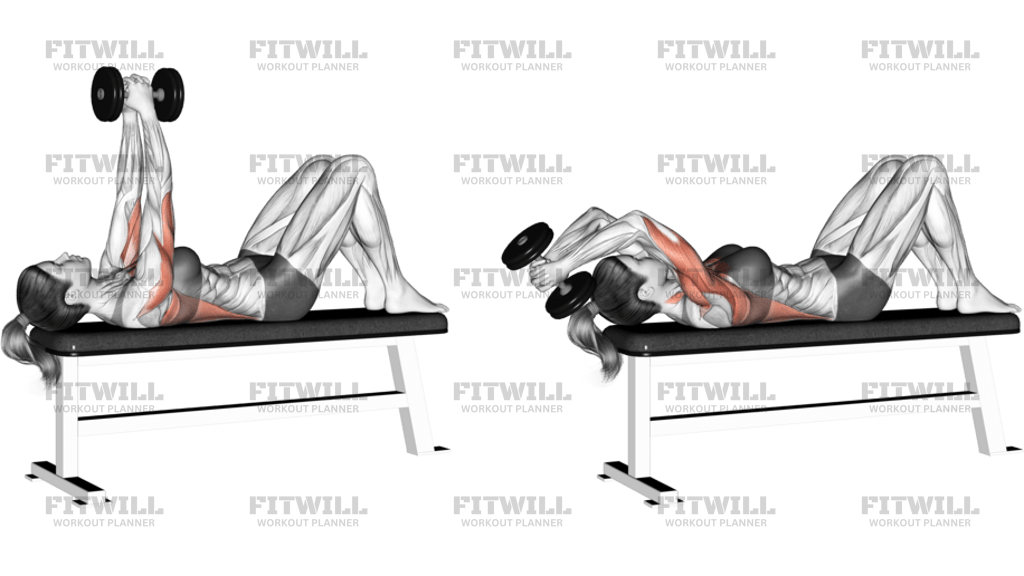
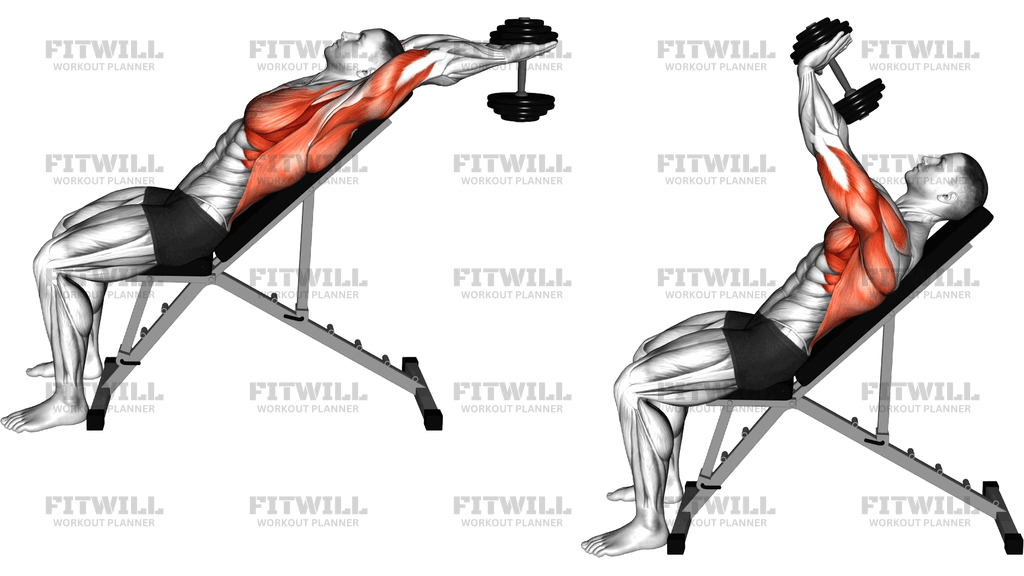
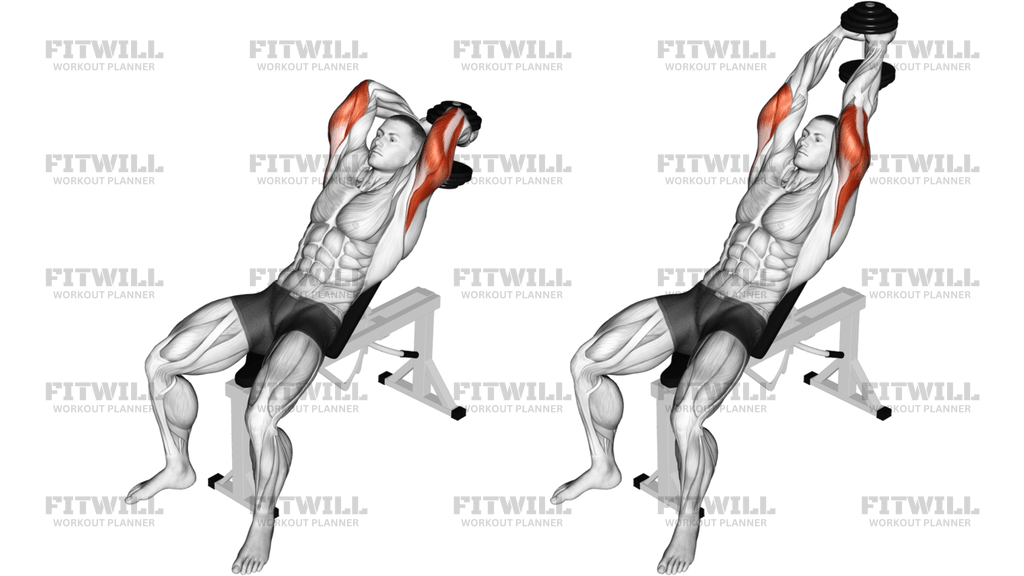
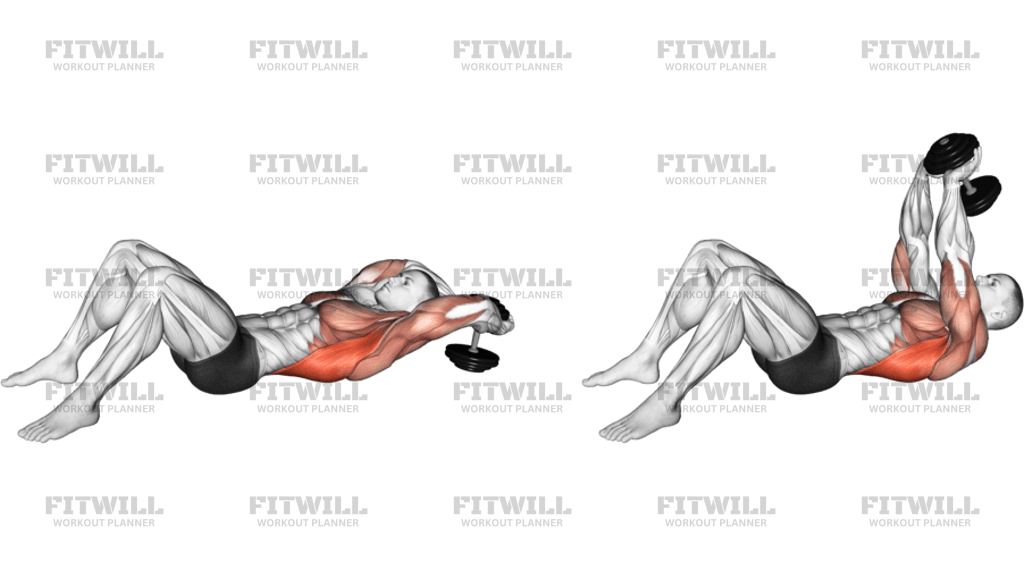
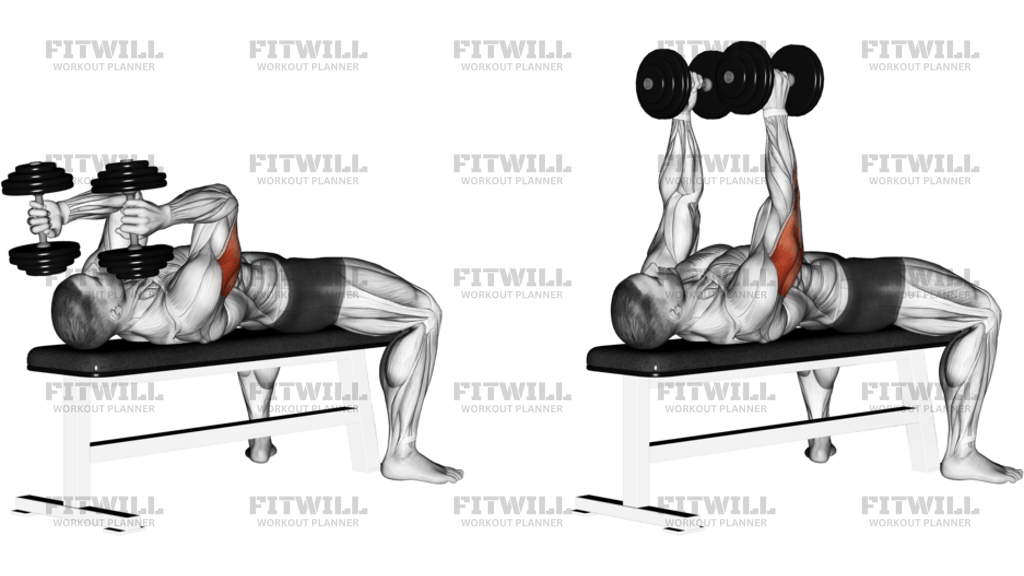
Start by lying flat with the head, shoulders, and upper back supported on the bench and both feet planted. Hold the dumbbells above the chest with the palms facing each other, wrists stacked, and elbows pointed up rather than splayed wide. From that position, the upper arms should stay mostly fixed while the forearms do the moving, which is why the exercise is sometimes described as a dumbbell skullcrusher variation.
During the lowering phase, bend only at the elbows and guide the dumbbells toward the sides of the forehead or just behind it, depending on shoulder comfort and arm length. Keep the descent smooth so the weights do not crash into the bottom position. On the way up, drive the dumbbells back to the start by extending the elbows and keeping the upper arms quiet, then finish with control instead of snapping the joints into lockout.
Dumbbell Lying Triceps Extension is a strong option for lifters who want more direct triceps volume without relying on cables or a barbell. It is also easy to scale: shorten the range if the shoulders feel crowded, lighten the dumbbells if the elbows complain, or slow the eccentric if you want more tension. Done well, the exercise teaches the triceps to work hard while the rest of the body stays organized, which is exactly what makes it productive and easy to overload safely over time.
[ Workout Log & Planner ]
Put your next workout in Fitwill
Keep your plan and training log ready when you are.


Instructions
- Lie flat on a bench with your head, shoulders, and upper back supported, feet planted on the floor, and a dumbbell in each hand above your chest.
- Hold the dumbbells with palms facing each other, wrists stacked over the elbows, and the arms extended so the weights are directly over the shoulder line.
- Set the elbows slightly inward and keep the upper arms mostly vertical before you start the first rep.
- Brace your ribs down and keep your neck relaxed so the torso stays quiet on the bench.
- Bend only at the elbows and lower the dumbbells in a controlled arc toward the sides of your forehead or just behind it.
- Keep the upper arms from drifting backward or out to the sides as the dumbbells descend.
- Pause briefly at the bottom without letting the shoulders roll forward or the wrists break back.
- Exhale as you extend the elbows and bring the dumbbells back to the start under control, then reset before the next rep.
Tips & Tricks
- Choose dumbbells you can lower slowly; this movement gets hard fast because the load sits far from the elbow joint.
- Keep the elbows aimed roughly toward the ceiling so the triceps do the work instead of the shoulders opening up.
- If the weights touch your forehead, lower them farther back toward the bench line instead of shortening the range with faster reps.
- A neutral wrist matters here; let the handles sit deep in the palm so the dumbbells do not fold your hands backward.
- Stop the set if your upper arms start drifting during the lowering phase, because that usually means the load is too heavy.
- Use a slower eccentric than concentric to keep tension on the triceps through the bottom half of the rep.
- Do not slam the elbows into lockout at the top; finish the extension with control and keep the dumbbells steady.
- If one arm finishes earlier than the other, reduce the weight and match the weaker side instead of twisting the dumbbells.
Frequently Asked Questions
What muscles does Dumbbell Lying Triceps Extension work?
It mainly works the triceps, with the forearms, shoulder stabilizers, and core helping keep the dumbbells and upper arms steady on the bench.
Is Dumbbell Lying Triceps Extension Beginner-Friendly?
Yes, if you keep the dumbbells light and the upper arms fixed. Beginners usually do best with a shorter range and a slow lowering phase.
How Should The Dumbbells Move In Dumbbell Lying Triceps Extension?
They should travel in a controlled arc toward the sides of your forehead or slightly behind it, then return by extending the elbows rather than by moving the shoulders.
What Mistake Should I Avoid Most?
The biggest mistake is letting the upper arms drift backward or flare wide, because that turns the exercise into a loose press-back instead of a triceps isolation drill.
Should My Elbows Stay In The Same Place?
They should stay close to the same line throughout the set. A little natural motion is fine, but if the elbows wander, the dumbbells are probably too heavy.
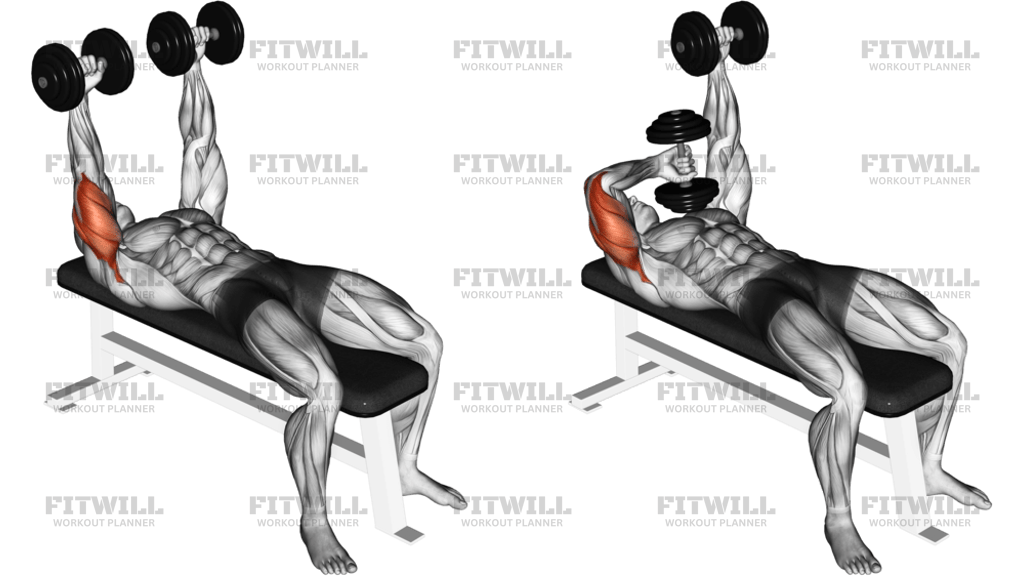
Can I Do Dumbbell Lying Triceps Extension With One Dumbbell?
Yes, a single dumbbell version works well if you want to focus on one arm at a time. Keep the elbow path strict and avoid letting the torso rotate.
Why Do My Wrists Feel Uncomfortable On The Dumbbell Handles?
Usually the dumbbells are sitting too high in the hand or the wrists are bending back at the bottom. Re-stack the wrist over the elbow and use a lighter load.
How Can I Make Dumbbell Lying Triceps Extension Harder Without Going Much Heavier?
Slow the lowering phase, pause near the bottom, and keep the dumbbells moving on the same path every rep. Those changes increase triceps tension without turning the set into a shoulder movement.