Dumbbell Lying Triceps Extension
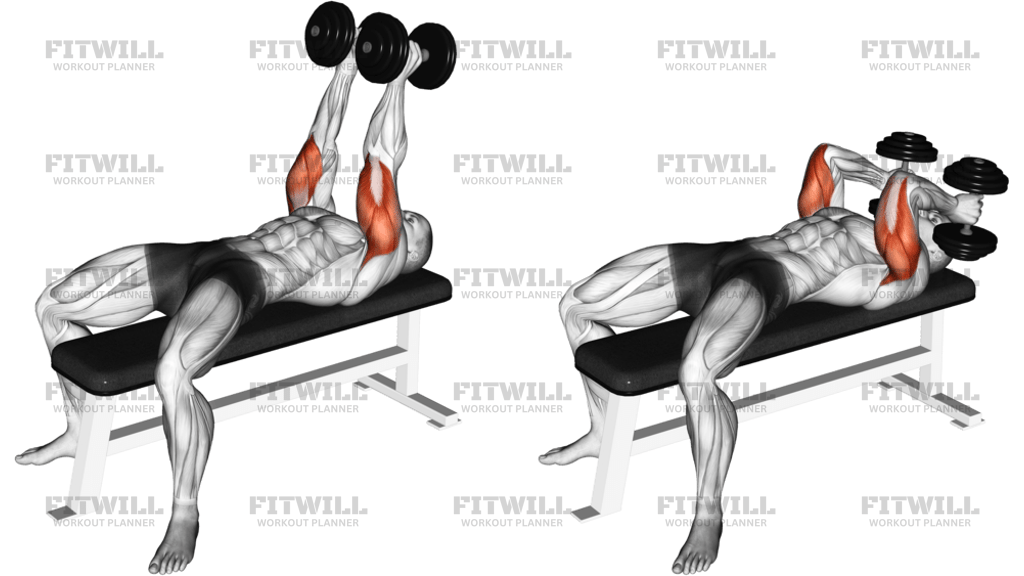
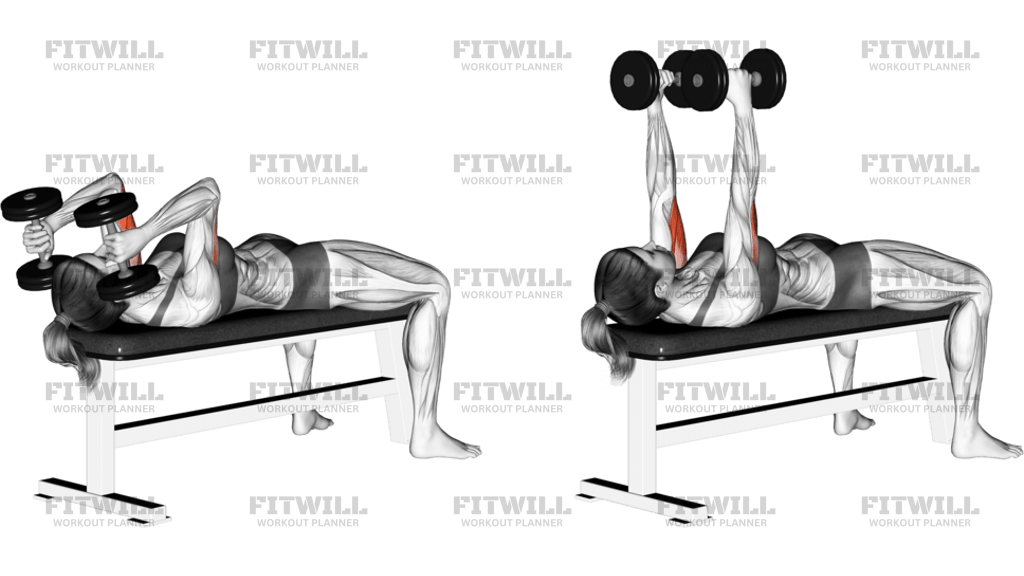
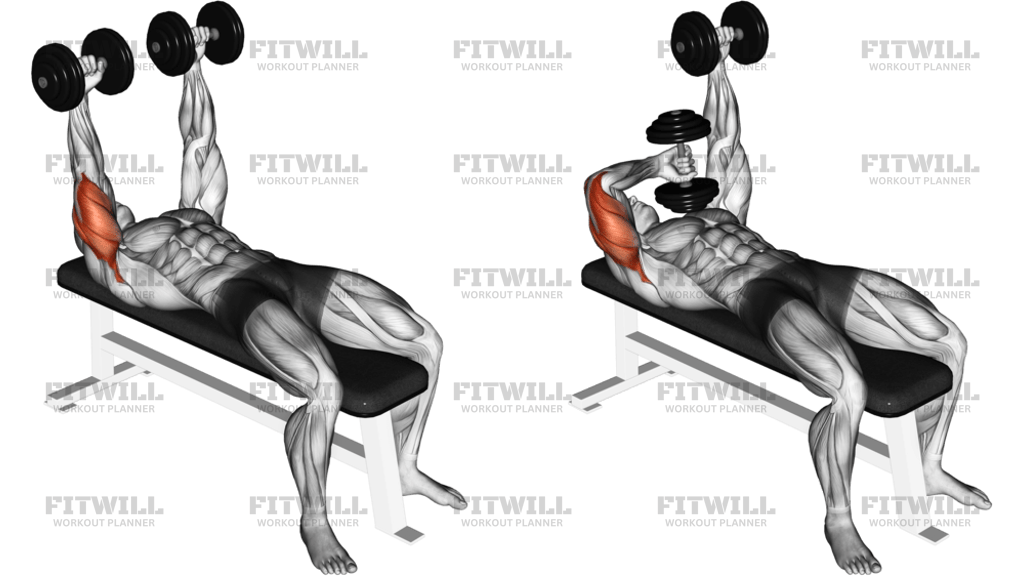
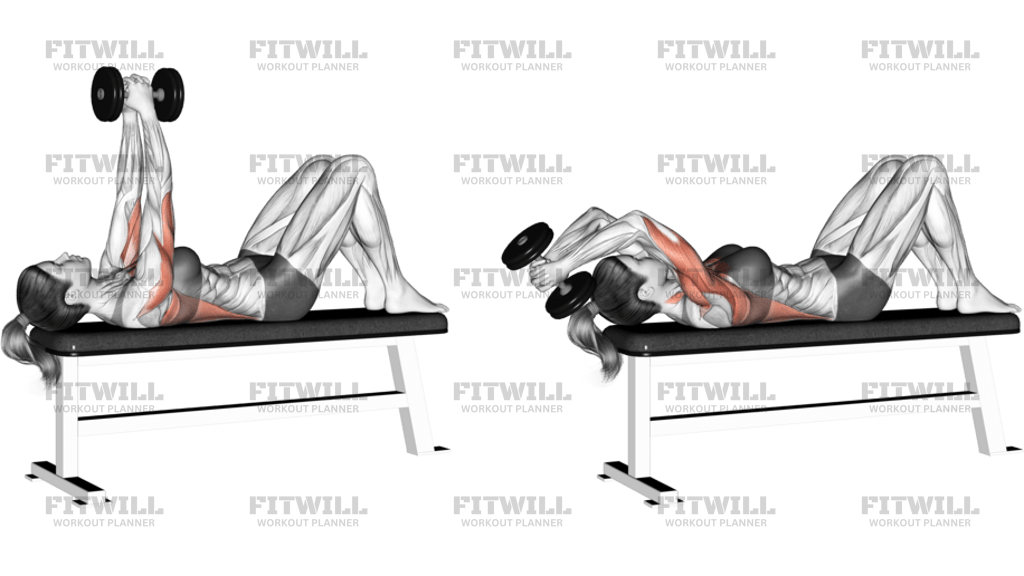
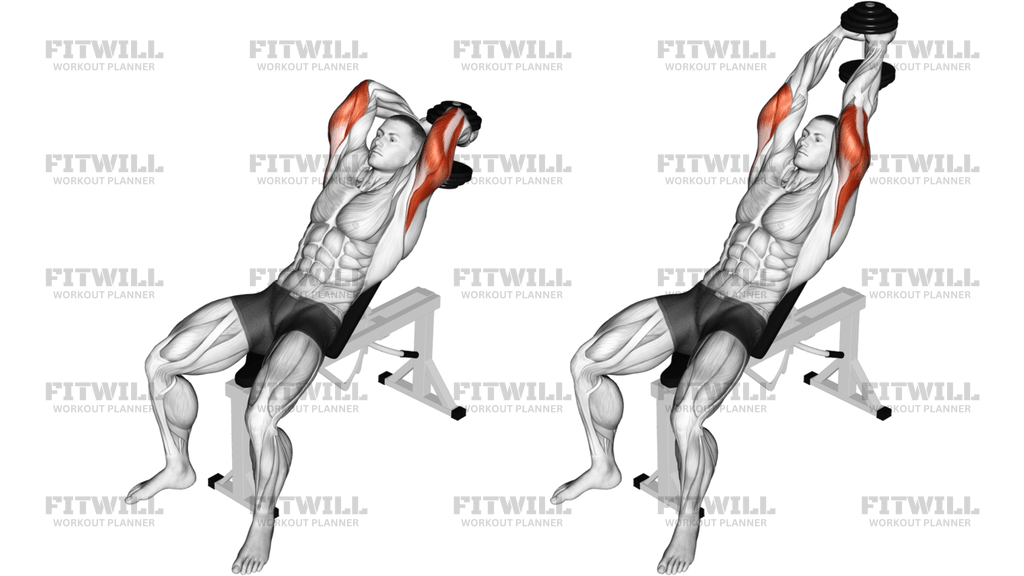
Dumbbell Lying Triceps Extension is a bench-based elbow extension exercise that loads the triceps through the lower and mid range of the press-out pattern. The image shows the lifter lying flat with the dumbbells held over the chest and the elbows bending to lower the weights toward the forehead and temples before extending again. That makes setup and elbow tracking the whole exercise: the bench supports the torso, but the triceps still have to control the dumbbells through a long lever.
This movement is mainly a triceps builder, with the forearms working hard to keep the wrists stacked and the shoulder area helping stabilize the upper arm. It is useful when you want direct arm work without standing momentum or body English. Compared with pushdowns or presses, the lying position lets you focus on elbow extension and makes it easier to feel whether one arm is drifting, flaring, or losing tension.
Set the bench so you can lie fully supported with your feet planted and your head close enough to the top edge that the dumbbells can travel beside your face without hitting the bench. Start with the arms vertical or slightly angled back, wrists straight, and elbows pointed mostly up. From there, bend only at the elbows and lower the dumbbells under control toward the sides of the forehead or just behind the hairline, depending on shoulder comfort and arm length.
A good rep keeps the upper arms nearly fixed while the forearms fold and unfold around the elbow joint. The dumbbells should trace the same path every rep instead of drifting toward the chest or sweeping behind the head. Lower only as far as you can keep the shoulders quiet and the elbows stable, then extend to a strong but not slammed lockout. Exhale as you press the dumbbells back up and reset the wrists before the next rep.
Use this exercise as an accessory after compound pressing, or as a focused triceps finisher when you want high tension with modest loading. It is especially useful for people who respond well to dumbbell work and want a setup that exposes side-to-side differences. Keep the load honest, because once the elbows start opening wide or the dumbbells start swinging, the movement stops being a triceps isolation and becomes a sloppy shoulder-and-momentum drill.
[ Workout Log & Planner ]
Put your next workout in Fitwill
Keep your plan and training log ready when you are.


Instructions
- Lie flat on a bench with your feet planted and your head near the top edge so the dumbbells can move beside your face.
- Hold the dumbbells above the chest with straight wrists and elbows pointed mostly toward the ceiling.
- Brace your ribs down and keep the upper arms quiet before you start the first rep.
- Bend the elbows to lower the dumbbells in an arc toward the sides of the forehead or just behind the hairline.
- Keep the elbows from flaring wide or drifting toward the chest as the weights descend.
- Pause briefly in the bottom position if needed, but do not let the shoulders roll forward to steal the movement.
- Extend the elbows to drive the dumbbells back to the starting position over the chest.
- Exhale as you extend, then reset the wrists and elbow position before the next rep.
- Lower the dumbbells to the bench or rack them safely once the set is finished.
Tips & Tricks
- Keep the upper arm nearly vertical; the more the shoulders move, the less the triceps have to do.
- Let the dumbbells travel toward the forehead or temples, not down toward the chest.
- Use a grip width that keeps the wrists stacked over the elbows instead of bending the hands back.
- Choose a load that lets you control the bottom half of the rep without the elbows drifting apart.
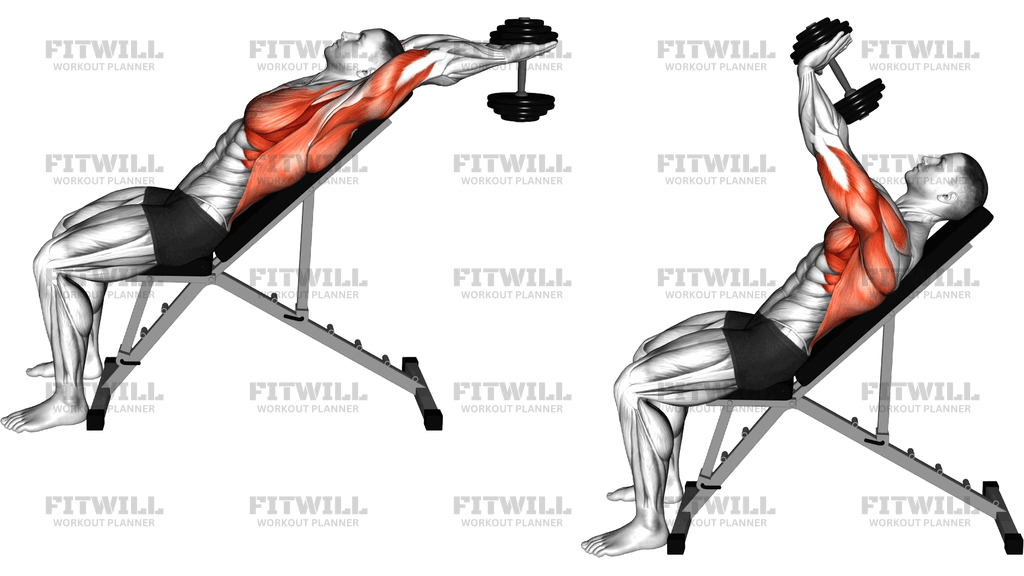
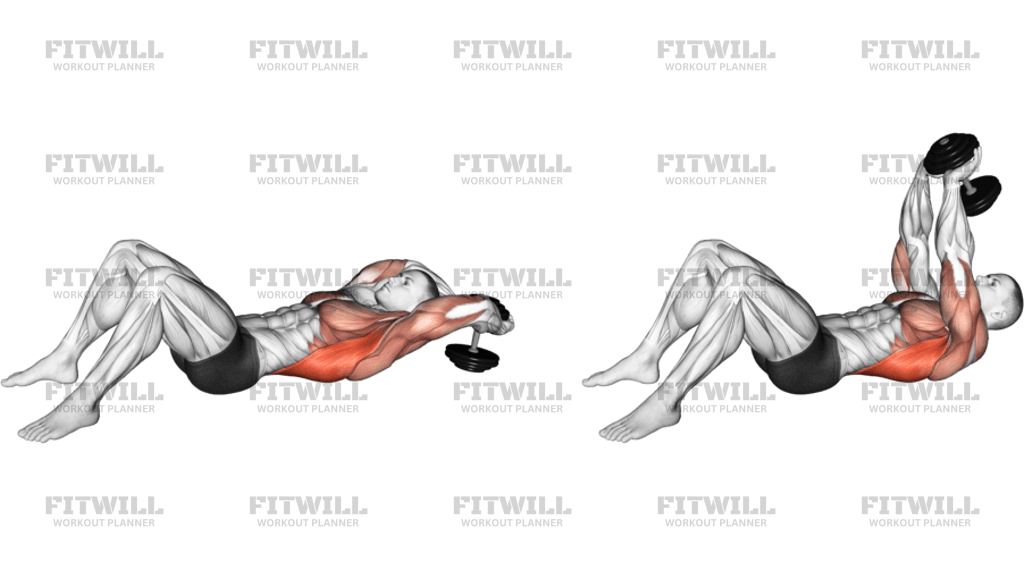
- A slight backward angle of the upper arms is fine if it keeps the shoulders comfortable, but do not turn the lift into a pullover.
- Stop the descent when the dumbbells are close enough to keep tension on the triceps without losing shoulder position.
- Press to full elbow extension, but do not slam into lockout or bounce the weights off the top.
- If one side lags, slow the lowering phase and match the dumbbells at the top before starting the next rep.
Frequently Asked Questions
What does Dumbbell Lying Triceps Extension train most?
It primarily trains the triceps through elbow extension. The forearms help keep the dumbbells stable, and the shoulders help hold the upper arms in place.
Where should the dumbbells move on each rep?
They should travel in a controlled arc toward the sides of the forehead or just behind the hairline, then return to stacked arms over the chest.
Should my upper arms stay completely still?
As still as possible, yes. A small amount of shoulder movement is normal, but if the elbows drift a lot the exercise stops being a clean triceps isolation.
Is this the same as a skullcrusher?
It is the dumbbell version of the lying triceps extension, which is commonly called a skullcrusher when the weight lowers toward the head.
How heavy should the dumbbells be?
Light enough that you can control the lowering phase and keep the wrists straight. If the dumbbells wobble at the bottom, the load is too heavy.
What if my elbows feel irritated?
Shorten the range slightly, keep the upper arms a little more vertical, and reduce the load. Sharp elbow pain is a sign to stop and change the exercise.
Can I do this with one dumbbell instead of two?
Yes, a single dumbbell held with both hands can be easier to control and may feel better on the elbows for some lifters.
What is the biggest form mistake?
Letting the elbows flare open and turning the rep into a shoulder-heavy press. The triceps should be doing the extension, not the chest or front delts.