Dumbbell One-Arm Kickback
Dumbbell One-Arm Kickback is a bent-over dumbbell triceps isolation exercise that keeps the upper arm fixed while the elbow straightens the weight behind the body. It is a small-range movement, but it is only effective when the torso angle, elbow position, and dumbbell path stay consistent. The exercise places the highest demand on the triceps, with the shoulder, forearm, and trunk working to keep the arm from drifting.
In the setup shown here, the lifter hinges forward with a split stance and braces the free hand on the forward thigh. That support reduces body sway and makes it easier to keep the working upper arm close to the ribs. The dumbbell starts under the torso with the elbow bent, then travels back in a short arc until the arm is straight behind the hip. The goal is not to swing the weight, but to make the triceps do the work.
This exercise is useful when you want focused triceps work without heavy loading through the chest or shoulders. It can fit well after presses, push-ups, or dips, or as a lighter arm accessory when you want to finish a session with clean elbow extension work. Because the movement is unilateral, it also helps expose side-to-side differences in control, elbow path, and lockout strength.
The setup matters because a sloppy hinge turns the kickback into a torso-driven swing. Keep the back long, ribs controlled, and the working elbow pinned near the side of the body. The upper arm should stay nearly level with the torso while the forearm moves. If the shoulder rolls forward, the elbow drifts away from the body, or the wrist bends back, the triceps lose tension and the dumbbell gets harder to control.
Use a lighter dumbbell than you would for a curl or row and move through a deliberate range. A good rep finishes with a hard but clean elbow extension, then returns under control until the forearm is near vertical again. Smooth reps, a steady torso, and a neutral wrist make this movement safer and more productive than chasing momentum or range that the shoulder cannot support.
[ Workout Log & Planner ]
Put your next workout in Fitwill
Keep your plan and training log ready when you are.


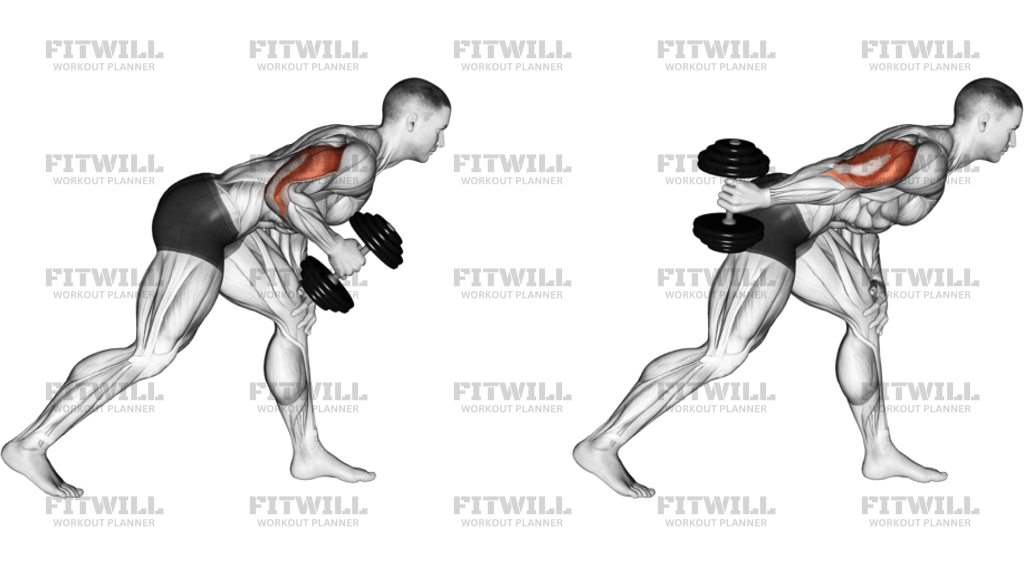
Instructions
- Stand in a split stance and hinge forward until your torso is near parallel to the floor, then brace your free hand on the front thigh for support.
- Hold the dumbbell in the working hand with your elbow bent and tucked close to your ribs, and let the weight hang just under your torso.
- Keep your neck long, chest quiet, and wrist straight before you start the first rep.
- Pin the upper arm in place and extend the elbow to drive the dumbbell back until your arm is straight behind your hip.
- Pause briefly at the top without letting the shoulder roll forward or the torso swing upward.
- Lower the dumbbell slowly by bending only the elbow until the forearm returns toward vertical.
- Keep the elbow pointed back and close to your side for the whole set.
- Repeat for the planned reps, then switch arms and match the same hinge, elbow path, and tempo on the other side.
Tips & Tricks
- Use a lighter dumbbell than you would for most arm exercises; the leverage gets harder as the arm straightens.
- Brace the free hand firmly on the thigh so the torso does not rock as the elbow extends.
- Keep the upper arm level with the torso instead of letting the elbow drop under the shoulder on every rep.
- Let the dumbbell travel in a tight arc, not a wide swing away from the hip.
- Finish the rep with a straight elbow, but do not snap aggressively into lockout.
- If the shoulder starts to roll forward, shorten the range and reset the hinge.
- Keep the wrist stacked over the forearm so the dumbbell does not pull the hand backward.
- Use a slow lowering phase to keep tension on the triceps instead of dropping the weight back down.
Frequently Asked Questions
What muscles does Dumbbell One-Arm Kickback work?
It primarily works the triceps, especially during elbow extension. The forearms, shoulder stabilizers, and trunk also work to keep the dumbbell and torso from moving around.
Is Dumbbell One-Arm Kickback beginner-friendly?
Yes, if you use a light dumbbell and brace your free hand on the thigh to keep the torso steady. Beginners usually need a smaller range and slower tempo than they expect.
Where should my upper arm be during the kickback?
Keep the upper arm close to your ribs and nearly fixed in place. The forearm should move while the shoulder stays quiet.
Should I brace my hand on my thigh or keep both legs straight?
Bracing the free hand on the thigh is usually the clearest setup for this variation. It helps keep the hinge position stable and prevents the torso from swinging the weight.
Why does the dumbbell feel hardest near the top of the rep?
The leverage gets worse as the elbow straightens, so the triceps have to work hardest near lockout. That is normal as long as you stay in control.
Can I flare my elbow out to lift more weight?
No. Letting the elbow drift away from the ribs turns the movement into a sloppy swing and reduces triceps tension.
What should my wrist do on the dumbbell handle?
Keep the wrist neutral and stacked over the forearm. If the wrist bends back, the dumbbell becomes harder to control and the forearm takes over.
How do I know if the range is too big?
If the shoulder rolls forward, the torso lifts, or the upper arm stops staying still, the range is too large. Shorten the rep and keep the elbow path tight.