Dumbbell Over Bench One-Arm Wrist Curl
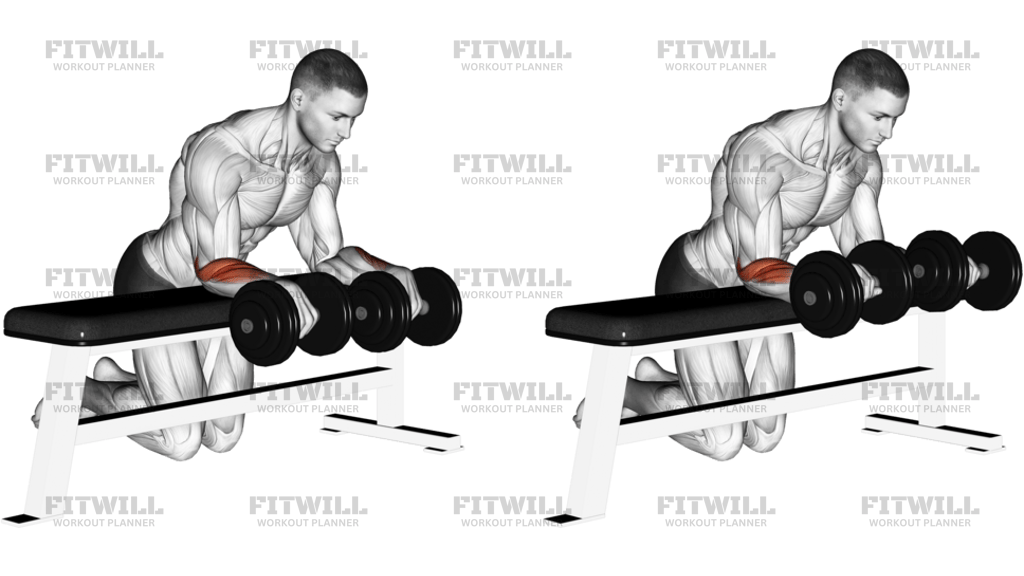
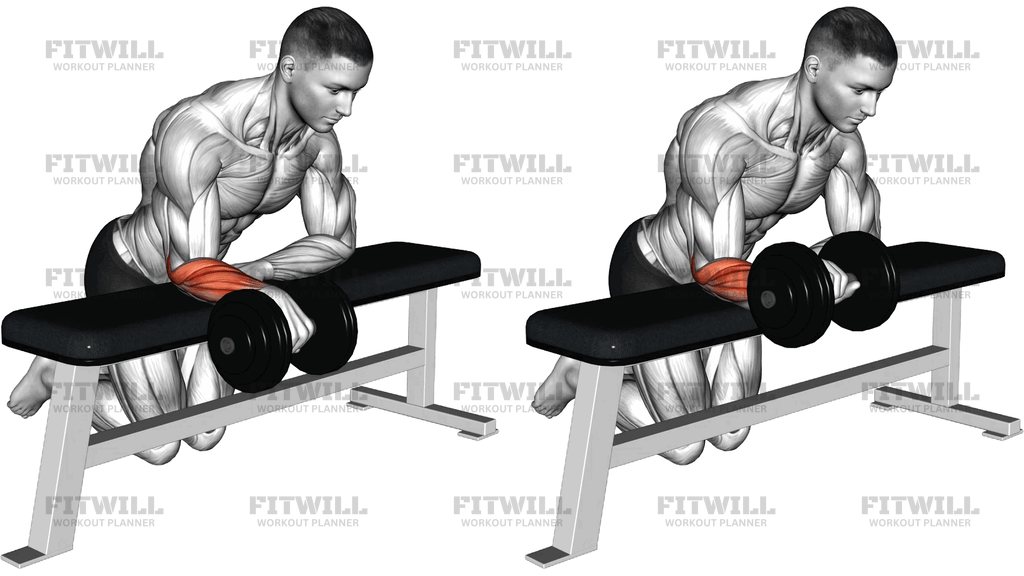
Dumbbell Over Bench One-Arm Wrist Curl is a strict forearm exercise that trains wrist flexion with the arm supported on a flat bench. The bench takes the shoulder and upper arm out of the lift so the wrist flexors have to do the work, which makes this a useful accessory movement for grip strength, arm balance, and forearm hypertrophy.
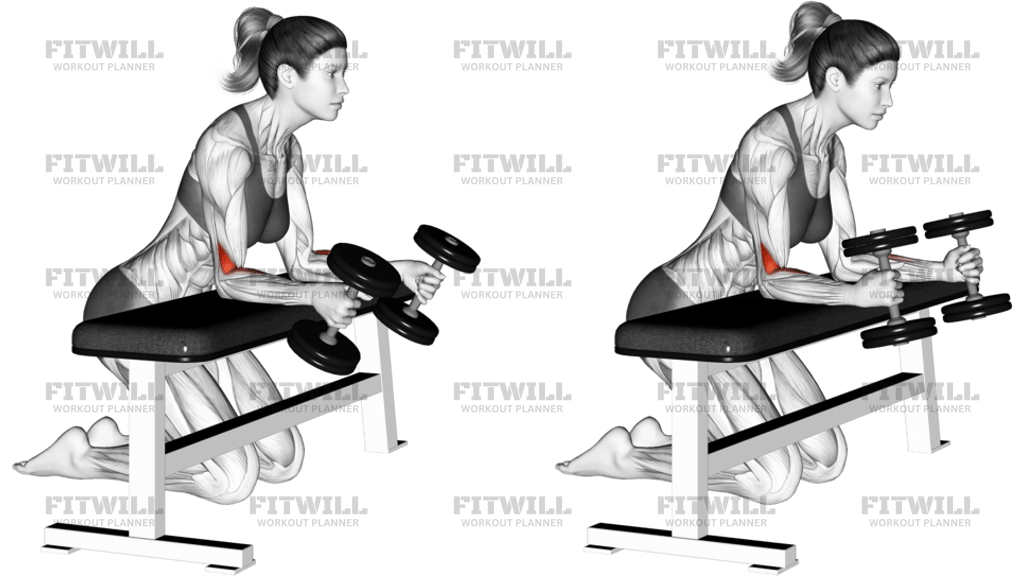
The setup matters more than the load. Your working forearm should rest across the bench with the wrist and dumbbell hanging just past the edge. The free hand braces on the bench, the elbow stays planted, and the palm faces up so the wrist can move through a clean flexion arc without the shoulder or torso helping.
Because the range is small, the exercise only works well when the repetition is controlled. Let the dumbbell settle into a full stretch, curl the knuckles toward the forearm, then lower until the wrist is extended again. The forearm stays quiet while the hand moves, and the dumbbell should travel in the same short path every rep.
This variation is best used as an accessory after bigger pulling work or as part of direct forearm training. It is especially useful when you want to improve wrist strength for holds, curls, rows, or climbing, but it should be loaded conservatively because cheating turns the exercise into a shoulder or elbow movement instead of a wrist exercise.
Keep the movement pain-free and precise. If the wrist feels pinchy, shorten the range slightly and slow the lowering phase before adding weight. A clean one-arm bench-supported curl with a light dumbbell will do far more for the forearms than a heavy rep with motion leaking from the rest of the body.
Fitwill
Log Workouts, Track Progress & Build Strength.
Achieve more with Fitwill: explore over 9600 exercises with images and videos, access built-in and custom workouts, perfect for both gym and home sessions, and see real results.
Start your journey. Download today!




Instructions
- Kneel or lean beside a flat bench and rest the working forearm across the pad with the wrist hanging over the edge.
- Plant the opposite hand on the bench for support and keep the working elbow fixed in place.
- Hold a light dumbbell with the palm facing up and let it hang under control at the bottom.
- Let the wrist extend until you feel a clear forearm stretch without lifting the shoulder or elbow.
- Curl the dumbbell by flexing the wrist and bringing the knuckles toward the forearm.
- Squeeze briefly at the top while keeping the forearm pressed into the bench.
- Lower the dumbbell slowly back to the stretched position under control.
- Keep the forearm still through the whole set and switch sides after you finish the rep target.
Tips & Tricks
- Set the forearm far enough on the bench that the wrist can move freely past the edge without the hand scraping the pad.
- Use a very light dumbbell first; wrist flexors fatigue fast and form breaks down long before the forearm feels large enough to need heavy load.
- Keep the elbow glued to the bench so the rep comes from wrist flexion, not from curling the whole arm.
- Let the dumbbell sink into the bottom stretch for a moment, but do not relax so far that the wrist collapses sideways.
- Think about moving the knuckles toward the forearm rather than trying to lift the whole weight with the fingers.
- Lower the dumbbell slower than you lift it; the eccentric phase usually gives the forearms the most useful tension.
- If the wrist joint feels irritated, shorten the bottom range slightly and keep the palm angle neutral instead of forcing extra extension.
- Stop the set when the forearm starts twisting on the bench, because that usually means the load is too heavy or the bench support is too low.
Frequently Asked Questions
What muscles does Dumbbell Over Bench One-Arm Wrist Curl work?
It mainly targets the wrist flexors and the deeper forearm flexor muscles that close the hand and bend the wrist. Your grip still works, but the bench support keeps the motion focused on the forearm.
Is Dumbbell Over Bench One-Arm Wrist Curl beginner-friendly?
Yes, as long as you use a light dumbbell and keep the forearm fully supported on the bench. Beginners usually do best with slow reps and a short, controlled range.
Why does the forearm need to stay on the bench?
The bench removes help from the shoulder and upper arm so the wrist flexors have to move the dumbbell. If the forearm lifts off the pad, the exercise turns into a loose curl instead of a wrist curl.
How much range of motion should I use?
Use the full wrist flexion range you can control without letting the elbow move or the hand twist. If the bottom position feels cranky, shorten it slightly and keep the rep smooth.
Should I use my fingers to squeeze the dumbbell harder?
Grip the handle firmly, but do not turn the set into a finger curl. The movement should come from the wrist flexing while the dumbbell stays stable in the hand.
What is the most common mistake on this exercise?
People usually let the elbow drift or swing the forearm off the bench to cheat the rep. That shifts the load away from the wrist and makes the exercise much less useful.
How heavy should I use?
Choose a weight that lets you pause briefly at the top and lower slowly without your wrist shaking or your forearm sliding on the bench.
Can I use this after back or biceps training?
Yes. It works well as a finish exercise after rows, pull-downs, or curls because the forearm support lets you isolate the wrists without needing much body setup.