Dumbbell Over Bench Wrist Curl
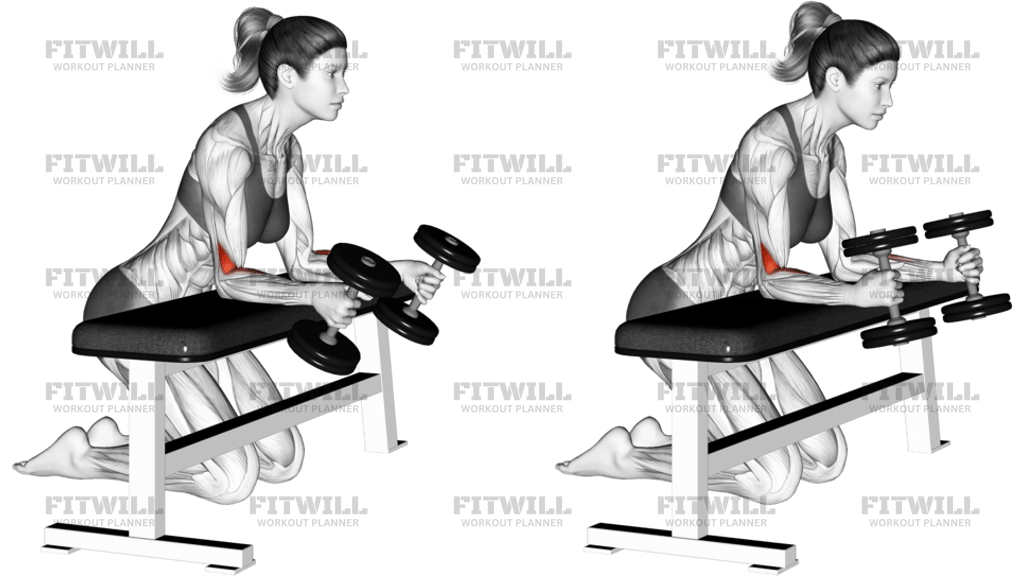
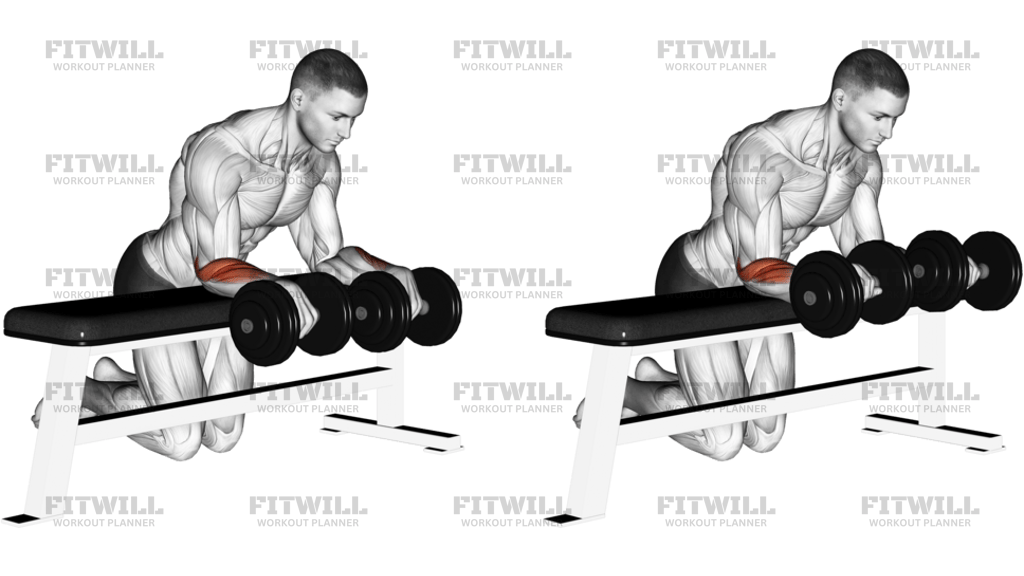
Dumbbell Over Bench Wrist Curl is a supported wrist-flexion exercise that targets the forearm flexors and grip with very little help from the rest of the body. In the image, the lifter kneels beside a flat bench, rests the forearms on the pad, and lets the wrists move just beyond the bench edge so the dumbbells can hang freely at the bottom and travel through a short, controlled arc.
The setup matters because the bench removes most shoulder and elbow cheating. When the forearms stay planted and the wrists are the only joints moving, the load stays on the wrist flexors instead of turning into a body swing. That makes the exercise useful for direct forearm work, grip training, and building tolerance in the wrists for other pulling or carrying movements.
Use a light dumbbell or a matched pair and organize the body before you start. Kneel or stand close enough that the forearms can lie flat on the bench with the wrists just past the edge. Keep the palms facing up, let the wrists open into the bottom stretch without dropping the shoulders, then curl the knuckles upward by flexing the wrists rather than lifting the elbows or rolling the dumbbells.
At the top, the dumbbells should move only as far as the wrist can close cleanly. The rep is finished when the forearm muscles are fully shortened without cramping or losing the forearm-on-bench contact. Lower slowly back to the stretched position and keep the forearms quiet the entire time. If the hands start to shake, the shoulders tense, or the elbows slide, the load is too heavy or the range is too large.
This is an accessory movement, so it should feel precise rather than explosive. Use it after larger pulling work, or as a focused forearm session when you want to train wrist strength, forearm size, and grip endurance. Smooth control, a small range, and consistent bench contact matter more here than how much weight is on the dumbbells.
[ Workout Log & Planner ]
Put your next workout in Fitwill
Keep your plan and training log ready when you are.


Instructions
- Set a flat bench at about waist height and kneel beside it so both forearms can rest on the pad with the wrists hanging just over the edge.
- Hold one dumbbell in each hand with the palms facing up and let the hands relax into the bottom stretch without letting the shoulders round forward.
- Plant the forearms firmly on the bench and keep the elbows still before the first rep.
- Curl the knuckles toward the forearms by flexing the wrists, not by lifting the elbows or rocking the torso.
- Finish the rep when the wrists are fully closed and the dumbbells are tucked in as high as you can control.
- Pause briefly at the top to feel the forearm flexors working through the shortened position.
- Lower the dumbbells slowly back past the bench edge until the wrists are open again.
- Keep the forearms glued to the bench and repeat for the desired number of reps.
- Set the dumbbells down carefully if the wrists begin to ache or the grip starts to slip.
Tips & Tricks
- Keep the bench height low enough that your wrists can hang free without the shoulders having to shrug.
- Use a lighter load than you think you need; the wrist flexors fatigue fast when the forearms are fixed in place.
- Let the dumbbells settle into the bottom stretch, but do not dump the weight into the wrist joint.
- Move through a short, clean arc instead of trying to turn this into a big curling motion.
- Keep the palms up the whole time so the exercise stays on wrist flexion rather than forearm rotation.
- If the elbows slide forward on the bench, reset the setup before continuing.
- Stop the set when the forearms start to cramp and the dumbbells can no longer travel smoothly.
- Use a controlled lowering phase to build more forearm work than the concentric alone.
Frequently Asked Questions
What muscles does Dumbbell Over Bench Wrist Curl work?
It mainly trains the wrist flexors in the forearm, with grip and smaller stabilizers helping to control the dumbbell. Because the forearms stay supported on the bench, the movement is very direct.
How should I position my forearms on the bench?
Rest both forearms flat on the bench with the wrists just past the edge so the dumbbells can move freely. Keep the elbows planted and the upper arms quiet.
Should I use one dumbbell or a pair?
Either works, but a matched pair is useful if you want both wrists trained evenly. One dumbbell at a time is fine if you need to focus on control or compare sides.
What is the biggest form mistake on this exercise?
The most common mistake is turning the wrist curl into an arm lift by letting the elbows move or the shoulders take over. The forearms should stay glued to the bench from start to finish.
How far should the dumbbells move?
Only through the range that keeps the forearms supported and the wrists in control. A smaller, cleaner arc is better than forcing a deeper stretch or higher curl.
Is this a good exercise for grip strength?
Yes. The forearm flexors and hand grip both have to hold the dumbbells while the wrists curl, so it is a useful accessory for grip and forearm endurance.
Can beginners do Dumbbell Over Bench Wrist Curl?
Yes, as long as the dumbbell is light and the wrists stay pain-free. Beginners should focus on smooth reps and a stable bench setup before adding load.
What should I do if my wrists feel irritated?
Shorten the range, lower the weight, and make sure the wrists are not collapsing into the bottom position. If the joint pain stays sharp, stop the set and switch to a lighter forearm drill.