Dumbbell Biceps Curl Reverse
Dumbbell Biceps Curl Reverse is a standing dumbbell curl done with an overhand grip, so the palms face down throughout the lift. The movement shifts the emphasis away from a standard supinated curl and puts more demand on the brachioradialis, brachialis, and the forearm musculature while the biceps still help flex the elbow. It is a simple arm exercise on paper, but the grip position makes setup and control much more important than brute force.
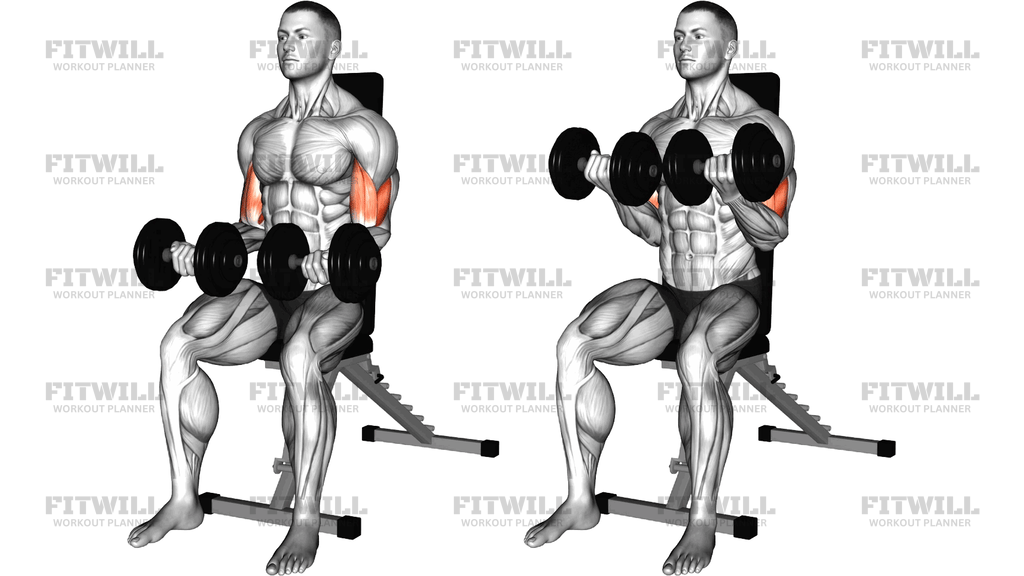
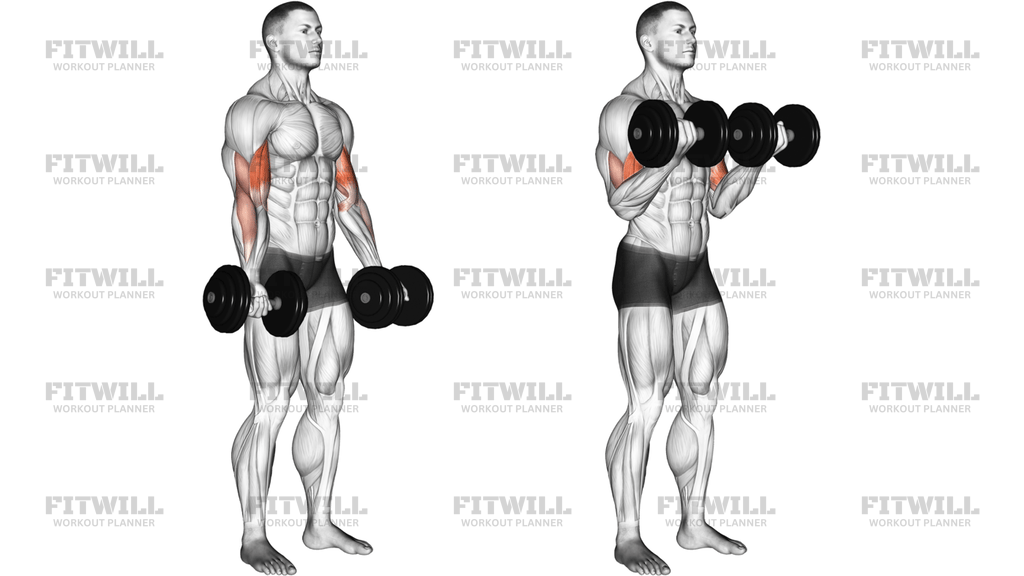
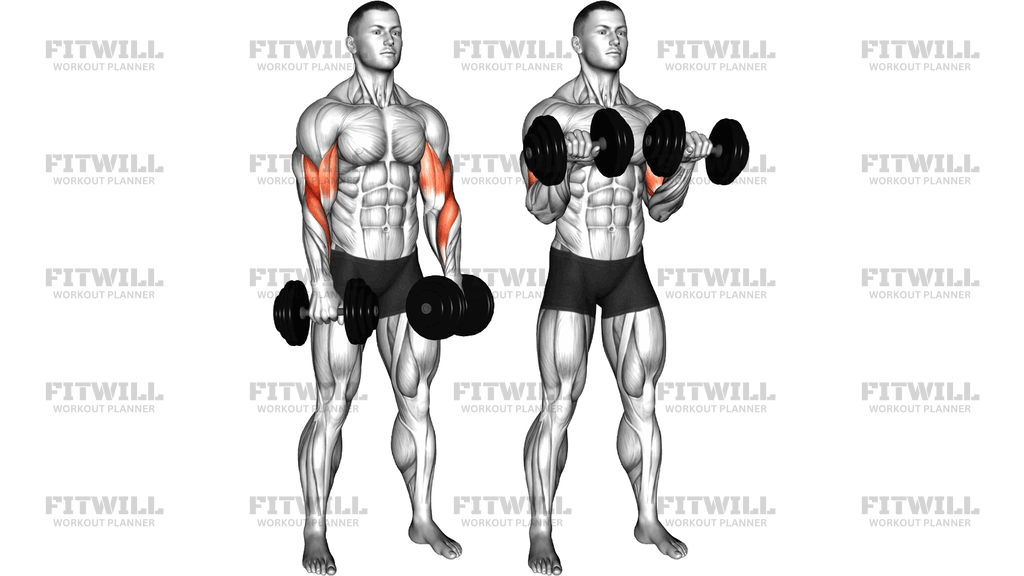
The image shows a tall, upright stance with the dumbbells hanging beside the thighs, elbows tucked close to the body, and wrists kept straight. That starting position matters because the reverse grip is less forgiving when the torso starts swinging or the wrists bend back. A clean rep begins with the shoulders set down, the chest quiet, and the upper arms held nearly still so the elbows do the work instead of the whole body.
On the way up, the dumbbells travel in a smooth arc toward the front of the shoulders or upper chest, depending on arm length and resistance. The forearms rotate only as much as the grip demands; the elbows stay pointed downward, not flared out. At the top, the curl should feel like a strong elbow flexion effort, not a shrug or a front-delt lift. Lower the weights under control until the arms are straight again, keeping tension in the forearms and avoiding a hard bounce at the bottom.
This exercise is useful for building arm size, grip strength, and elbow-flexion strength when you want a direct arm movement that carries over to pulling work and barbell variations. It also works well as an accessory movement after heavier back or arm training because it trains the forearms and upper arms without requiring a machine. Keep the load moderate, use a clean tempo, and stop the set if the wrists fold back, the shoulders drift forward, or the torso begins to swing to finish the rep.
Fitwill
Log Workouts, Track Progress & Build Strength.
Achieve more with Fitwill: explore over 9600 exercises with images and videos, access built-in and custom workouts, perfect for both gym and home sessions, and see real results.
Start your journey. Download today!




Instructions
- Stand tall with your feet about hip-width apart and hold a dumbbell in each hand beside your thighs using an overhand grip, palms facing the floor.
- Keep your elbows close to your ribs, shoulders relaxed and down, and wrists straight before you start the first rep.
- Brace your torso and look forward so your upper body stays quiet while the arms move.
- Curl both dumbbells upward by bending at the elbows only, keeping the upper arms nearly fixed beside your body.
- Guide the dumbbells toward the front of your shoulders or upper chest without letting the elbows drift forward or flare out.
- Pause briefly at the top with the forearms tight and the wrists still stacked over the dumbbells.
- Lower the dumbbells slowly until the elbows are fully extended again, keeping the same overhand grip and controlled tempo.
- Exhale as you curl up, inhale as you lower, and reset your posture before the next repetition.
Tips & Tricks
- Use noticeably lighter dumbbells than you would for a regular palm-up curl, because the overhand grip reduces leverage quickly.
- Keep your knuckles and wrists in line so the hands do not bend backward when the load gets hard.
- Let the elbows act like hinges; if the upper arms swing forward, the shoulders are taking over.
- Stop the curl when the dumbbells reach the upper chest or shoulder line instead of chasing extra height with a shrug.
- Lower the weights with a slow two- to three-second descent to keep tension on the forearms and brachialis.
- Keep the dumbbells close to the body on both the way up and the way down so the movement stays strict.
- If your grip fails before your elbows do, the weight is too heavy for this variation.
- Use a neutral neck and a tall posture so you do not crane forward to watch the dumbbells.
Frequently Asked Questions
What muscle does Dumbbell Biceps Curl Reverse target most?
It mainly targets the brachioradialis and brachialis, with the biceps helping to flex the elbow.
Can beginners perform this exercise?
Yes, as long as the load is light enough to keep the wrists straight and the torso still.
What grip should I use on the dumbbells?
Use an overhand grip with the palms facing down and the wrists stacked over the handles.
Where should the dumbbells finish at the top?
They should rise toward the front of the shoulders or upper chest, not swing far in front of the body.
Why do my forearms feel this more than my biceps curl?
The pronated grip shifts more work to the brachioradialis and forearm muscles than a palm-up curl does.
Should my elbows move forward as I curl?
Only slightly, if at all. Big elbow travel usually means the shoulders and body momentum are helping too much.
What is the biggest form mistake with reverse curls?
Bending the wrists back and using body swing to finish the rep are the two most common problems.
Can I use this instead of a regular curl?
Yes, but it is usually used as a complementary arm exercise because the grip changes the emphasis on the elbow flexors.