Dumbbell Pronate-Grip Triceps Extension
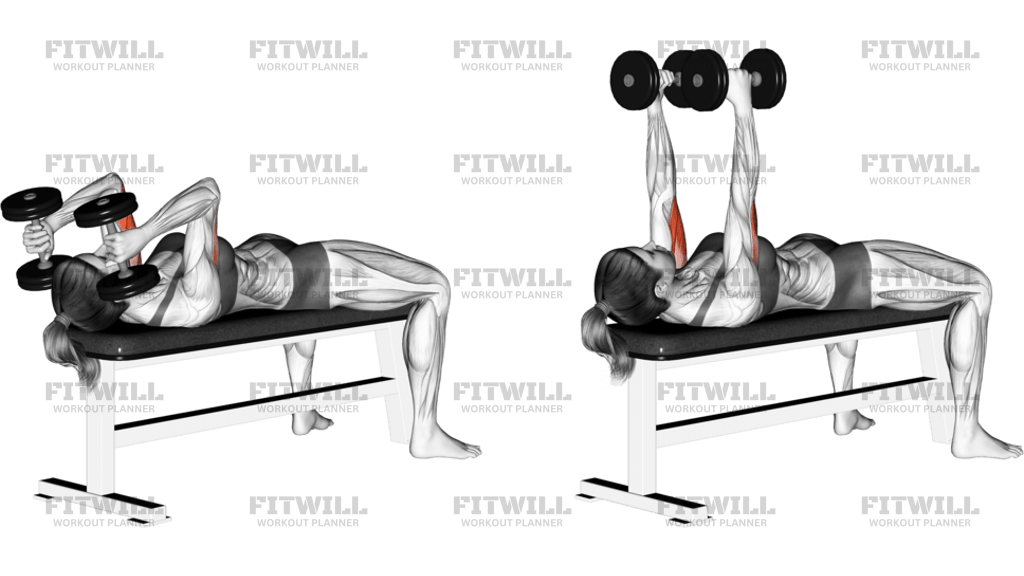
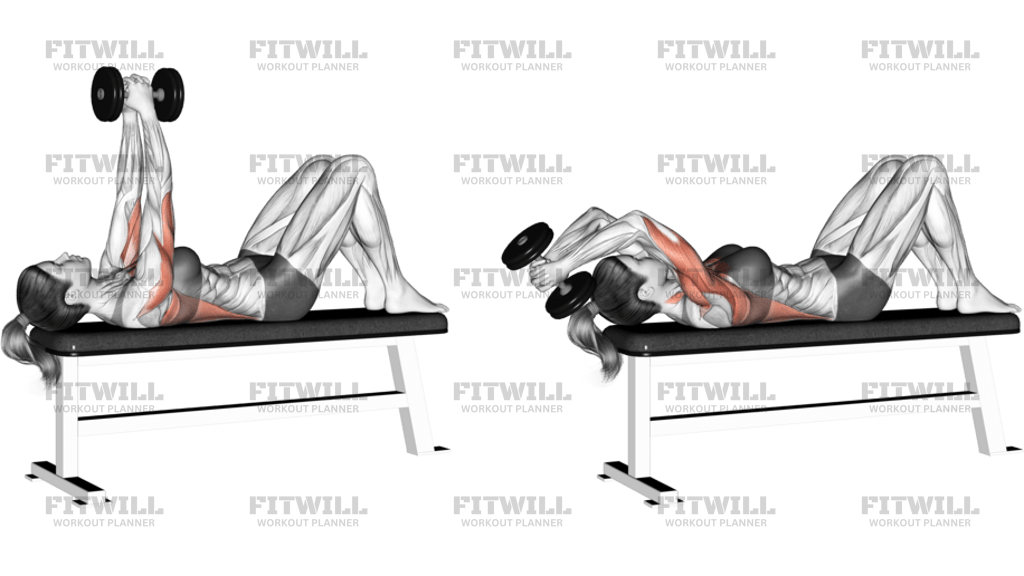
Dumbbell Pronate-Grip Triceps Extension is a lying dumbbell isolation movement for the triceps. The setup in the image places you on a flat bench with the dumbbells held over the chest and the elbows bending to lower the weights beside the head. That overhand grip changes how the wrists and forearms line up, but the main job is still elbow extension from a stable upper arm.
The exercise strongly targets the triceps, especially when you keep the shoulders quiet and let the elbows do the work. Because the body is supported by the bench, it is easy to think the movement is simple, but the details matter: the dumbbells should travel in a controlled arc, the elbows should stay consistent from rep to rep, and the rib cage should not flare to fake extra range.
Set up by lying fully on the bench with both feet planted and the head supported. Hold the dumbbells with a pronated grip, palms facing down, and start with the hands above the shoulders, not drifting back toward the face. From there, lower the weights by bending only the elbows until the dumbbells come near the temples or just behind the forehead, then straighten the elbows to bring the dumbbells back to the start.
Use a load that lets you keep the upper arms steady and the wrists stacked. If the dumbbells wobble, the elbows flare, or the shoulders roll forward, the set is too heavy or the range is too deep. This is a strong accessory for triceps size and lockout strength after pressing work, but it also works well on its own when you want direct elbow-extension work without needing a machine or cable.
Fitwill
Log Workouts, Track Progress & Build Strength.
Achieve more with Fitwill: explore over 9600 exercises with images and videos, access built-in and custom workouts, perfect for both gym and home sessions, and see real results.
Start your journey. Download today!




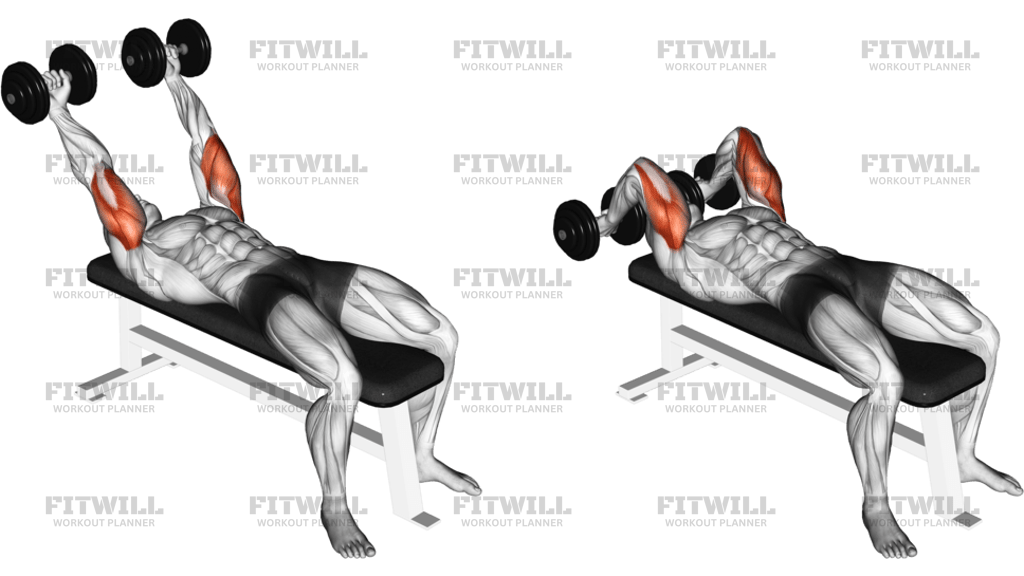
Instructions
- Lie on a flat bench with your head, upper back, and hips supported, and plant both feet on the floor.
- Hold the dumbbells above your shoulders with an overhand grip, palms facing down and wrists straight.
- Start with the elbows stacked and the dumbbells separated so they do not touch as you lower them.
- Pull the ribs down and keep the upper arms angled slightly back from vertical before the first rep.
- Bend only the elbows to lower the dumbbells in a controlled arc toward the temples or just behind the forehead.
- Keep the elbows narrow and mostly fixed so the forearms hinge while the shoulders stay quiet.
- Pause briefly in the stretched position without letting the elbows drift wide or the shoulders roll forward.
- Straighten the elbows to drive the dumbbells back to the start, then reset the path before the next rep.
Tips & Tricks
- Keep the dumbbells over the shoulder line at the top; if they drift toward the face, the elbows usually lose their fixed position.
- Let the forearms travel while the upper arms stay almost still, because turning this into a shoulder movement shifts tension off the triceps.
- Lower the weights only as far as you can keep the wrists stacked and the elbows pointed roughly upward.
- Use a slower eccentric than the press up to keep the triceps loaded instead of bouncing through the bottom.
- If the dumbbells wobble, reduce the load before you try to force a heavier pair through the same path.
- Keep the grip firm but not crushed; a bent wrist makes the dumbbells harder to control near the forehead.
- Do not let the rib cage arch hard off the bench, since that shortens the triceps stretch and turns the set into a compensation drill.
- Finish each rep by straightening the elbows under control instead of snapping into lockout.
Frequently Asked Questions
What muscles does Dumbbell Pronate-Grip Triceps Extension work?
It mainly trains the triceps, with the long, lateral, and medial heads all working to extend the elbow. The forearms and shoulder stabilizers help keep the dumbbells steady over the bench.
Is Dumbbell Pronate-Grip Triceps Extension beginner-friendly?
Yes, if you start light and keep the elbows and wrists organized through a short, controlled range. Beginners usually do best with a pair of lighter dumbbells and a flat bench.
Why use a pronated grip on this triceps extension?
The overhand grip changes the wrist and forearm position, which can make the movement feel more natural for some lifters. It still keeps the focus on elbow extension rather than pressing the weights like a chest exercise.
How low should the dumbbells go?
Lower them until they are beside the temples or just behind the forehead, as long as the elbows stay controlled. If the shoulders roll forward or the elbows flare, stop the descent sooner.
Should my upper arms move during the rep?
They should stay almost fixed, with only a small angle change if needed for comfort. If the upper arms swing a lot, the set stops being a true triceps extension.
Can I do this with one dumbbell instead of two?
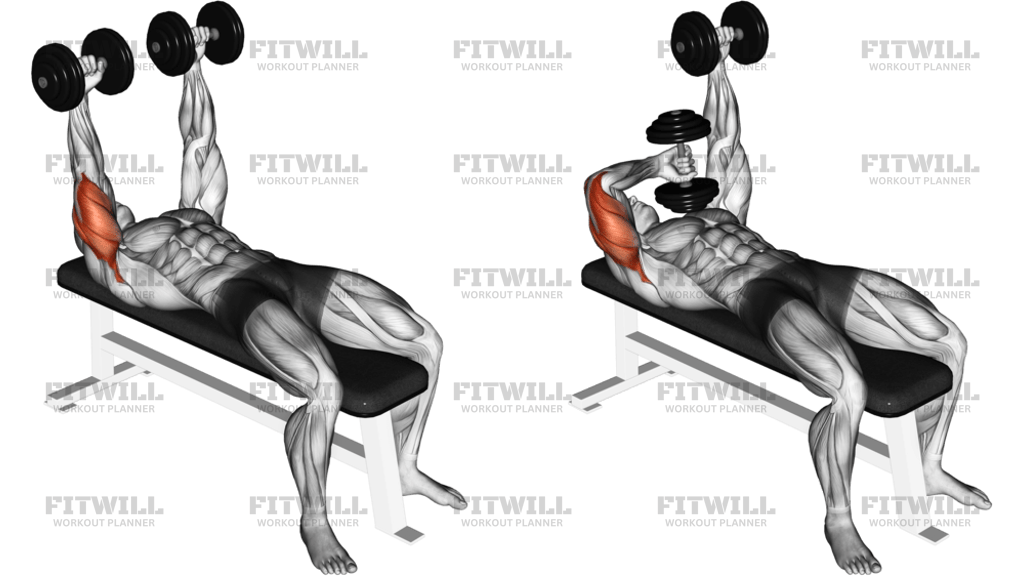
Yes. A single dumbbell held with both hands is a common variation, especially if you want a simpler setup or better control at the bottom.
What should I do if my elbows feel strained?
Shorten the range, use lighter dumbbells, and keep the elbows from drifting wide. If the discomfort stays sharp, stop the set and switch to a less aggressive triceps movement.
Is this the same as a skullcrusher?
It is the same basic family of movement: a lying triceps extension. The main difference here is the dumbbell setup and the pronated hand position.