Dumbbell Reverse Wrist Curl
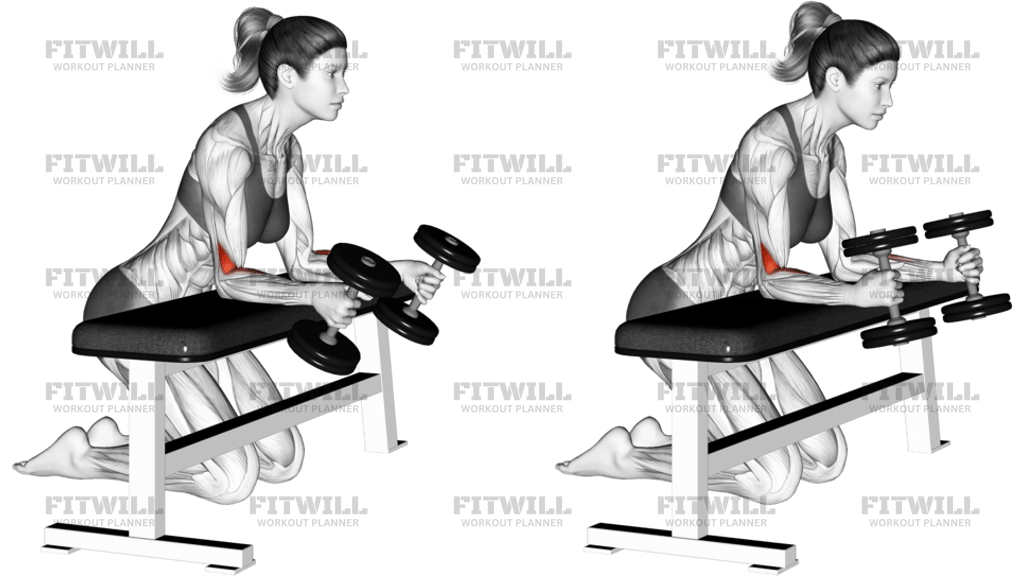
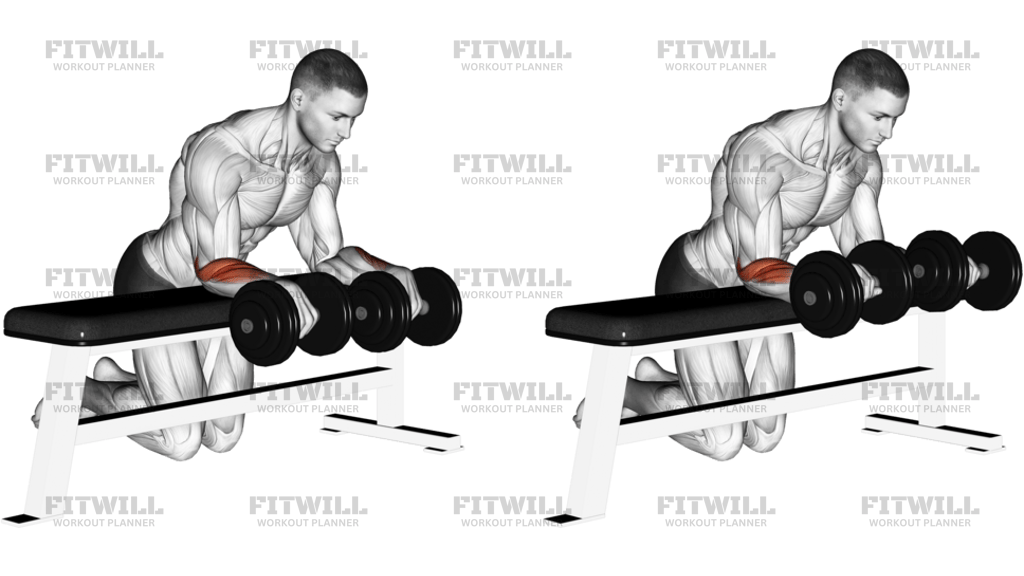
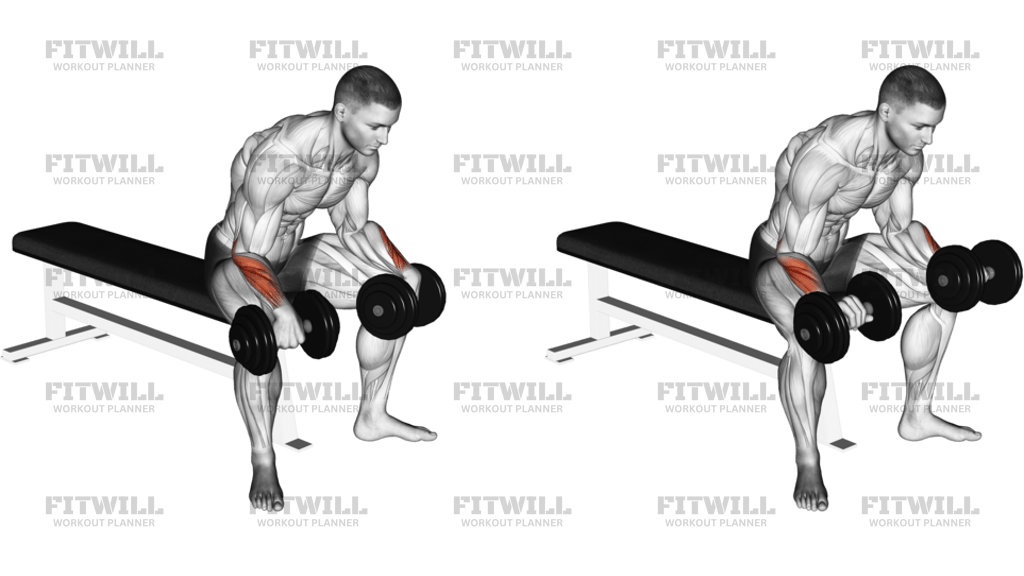
Dumbbell Reverse Wrist Curl is a seated forearm isolation exercise for the wrist extensors and grip. In the image, the lifter rests the forearms across the thighs with the hands hanging off the knees, palms facing down, and moves the dumbbells by extending the wrists. That small setup is the point of the exercise: it lets the wrists work hard while the shoulders, elbows, and upper back stay quiet.
This movement is useful when you want stronger, more durable forearms for lifting, climbing, racket sports, or any training that depends on grip endurance. Because the range of motion is short, the load should stay light and controlled. A reverse wrist curl is easy to turn into a sloppy curl if the elbows lift, the forearms leave the support, or the motion becomes a bounce from the whole arm.
Set up so the forearms are fully supported and the wrists can move freely past the edge of the thighs or bench. Start with the dumbbells hanging low in the fingers, then extend the wrists to bring the knuckles up toward the forearms. The lift should feel like a clean hinge at the wrist, not a body-driven curl. A brief squeeze at the top and a slow lowering phase make the set more useful than simply chasing heavier dumbbells.
Use this exercise as a forearm accessory, warm-up, or finisher when you want direct wrist extensor work without much setup. It is especially helpful if your grip tires before your pulling work, or if your forearms need balanced training after a lot of supinated curling. Keep the motion pain-free and precise; if the wrist, elbow, or thumb side of the hand starts to ache, reduce the load or shorten the range before continuing.
[ Workout Log & Planner ]
Put your next workout in Fitwill
Keep your plan and training log ready when you are.


Instructions
- Sit on the edge of a flat bench with your feet flat and place your forearms across your thighs so your wrists hang just past the knees, palms facing down.
- Hold a dumbbell in each hand and let the handles settle deep in the fingers so the wrists can start in a slightly lowered position.
- Press the forearms into the thighs and keep the elbows and upper arms still while you brace your torso over the knees.
- Extend both wrists to lift the knuckles toward the forearms without letting the elbows curl or the shoulders shrug.
- Pause for a beat at the top when the backs of the hands are highest.
- Lower the dumbbells slowly until the wrists return to the stretched start position, keeping the forearms glued to the support.
- Keep the left and right wrists moving through the same range and speed on every rep.
- At the end of the set, bring the dumbbells back to your thighs before standing up.
Tips & Tricks
- Use a very light dumbbell or pair of dumbbells; this lift is limited by wrist control, not total body strength.
- Keep the forearms planted on the thighs so the wrists do the work instead of the elbows starting a curl.
- Let the handle sit closer to the fingers at the bottom to lengthen the lever arm, but do not open the hand enough to lose the grip.
- Think about lifting the knuckles, not the dumbbell heads, to keep the motion focused on wrist extension.
- Slow the lowering phase to two to four seconds so the wrist extensors do real work instead of bouncing at the bottom.
- Stop the set if the dumbbells start rolling side to side or the wrists twist outward to cheat extra range.
- Keep the shoulders relaxed and away from the ears; shrugging usually means the load is too heavy for this isolation drill.
- If the wrists feel irritated, shorten the range and keep the hands just slightly below neutral instead of forcing a deep stretch.
Frequently Asked Questions
What muscles does Dumbbell Reverse Wrist Curl work?
It mainly targets the wrist extensors and grip, with the brachioradialis helping stabilize the forearm. The forearms also have to work isometrically to keep the dumbbells steady on the thighs.
Is Dumbbell Reverse Wrist Curl beginner-friendly?
Yes, as long as the load is very light and the wrists can move without the elbows leaving the support. Beginners usually do best with slow reps and a small range at first.
Should my forearms stay on my thighs the whole time?
Yes. Keeping the forearms on the thighs is what isolates the wrists and prevents the movement from turning into an elbow curl or shoulder swing.
Do I lift one dumbbell at a time or both together?
Either works, but the image shows both hands working together. If one side cheats or fatigues faster, alternating one arm at a time can make the set cleaner.
What is the main mistake to avoid?
Do not turn the rep into a full-arm curl. If the elbows move, the forearms come off the thighs, or the shoulders shrug, the load is too heavy or the setup is off.
How heavy should the dumbbells be?
Light enough that you can pause at the top and lower slowly without shaking. Reverse wrist curls usually need much less weight than regular dumbbell curls.
Why use the knees or thighs as support?
The support shortens the lever and locks the forearms in place, which lets you train wrist extension with less cheating and less strain on the shoulders.
What should I do if my wrists feel irritated?
Reduce the range, lighten the dumbbells, and keep the start position closer to neutral. Sharp pain is a sign to stop and adjust the setup instead of forcing more reps.