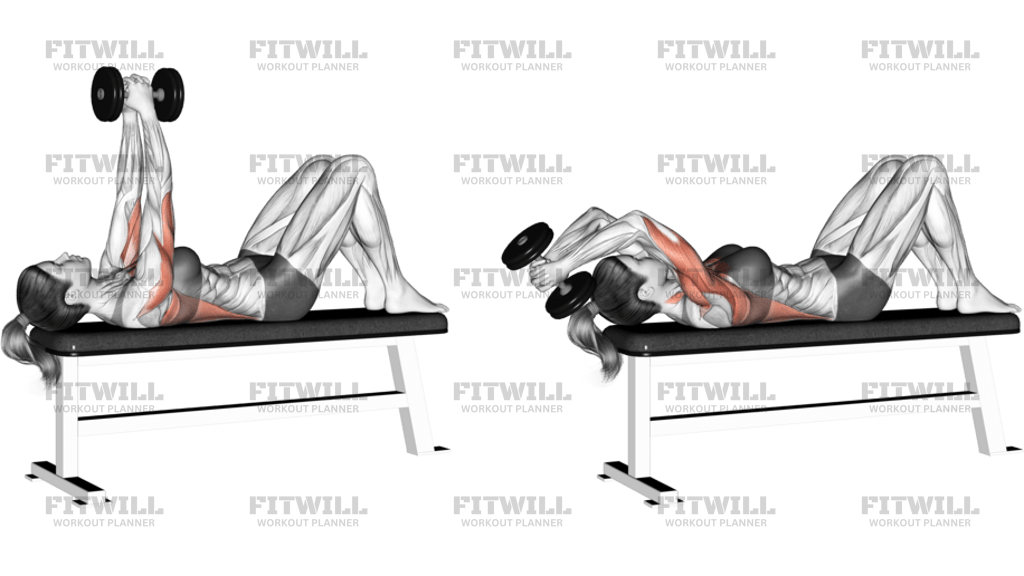
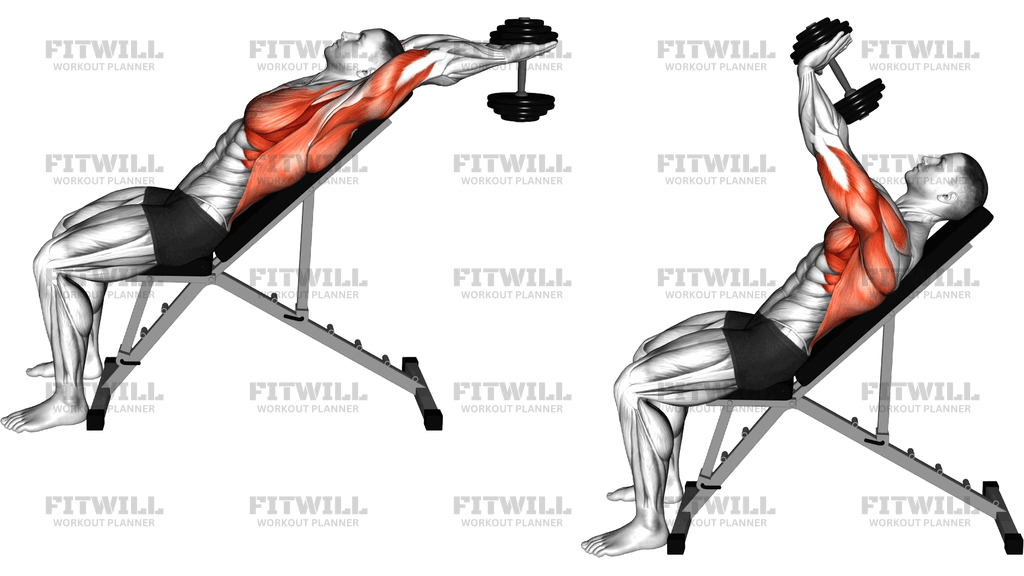
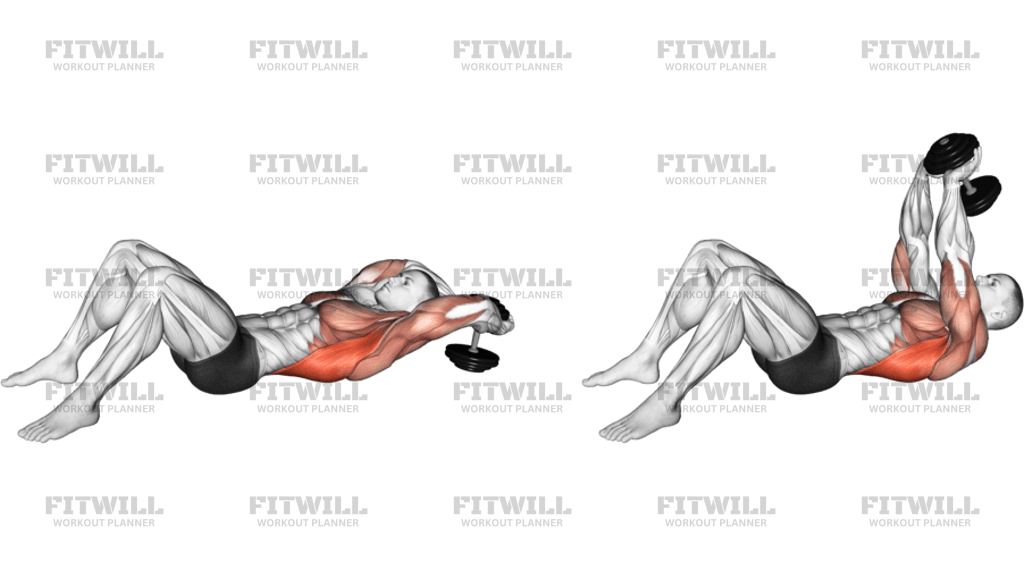
Dumbbell Seated Bench Extension
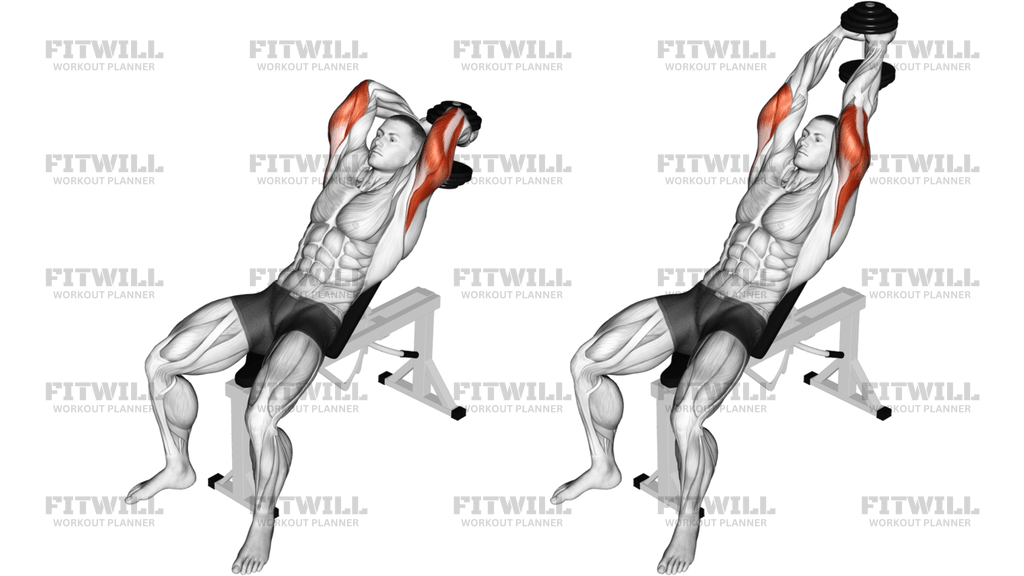
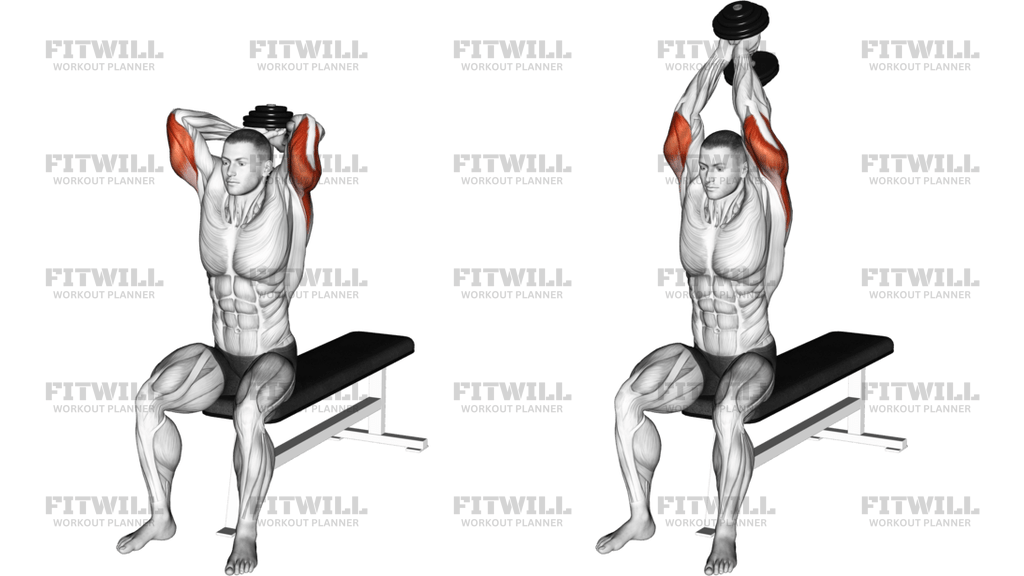
Dumbbell Seated Bench Extension is a seated overhead triceps exercise performed with your upper back supported by a bench and a single dumbbell held above the head with both hands. The movement is simple on paper, but the bench position and overhead line of pull change the demands a lot: the triceps have to produce the elbow extension while the shoulders, forearms, and trunk keep the dumbbell stacked and stable. That makes the exercise useful for building arm size and strength without relying on body swing or momentum.
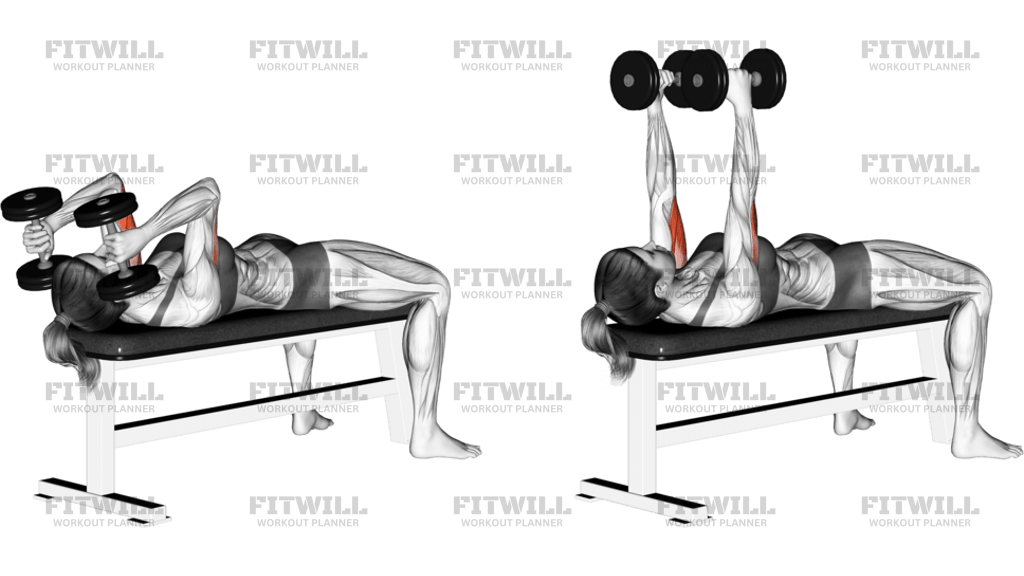
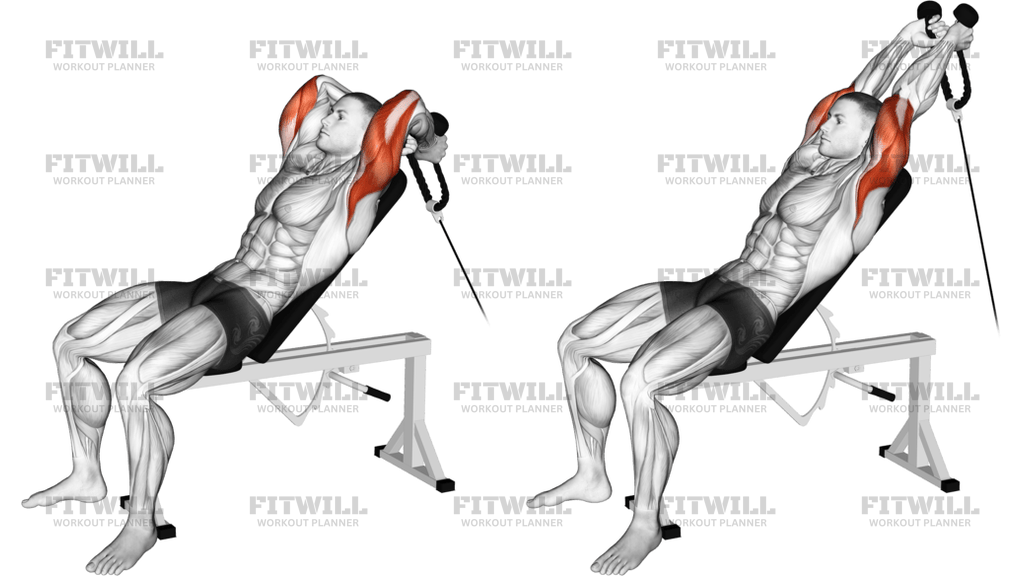
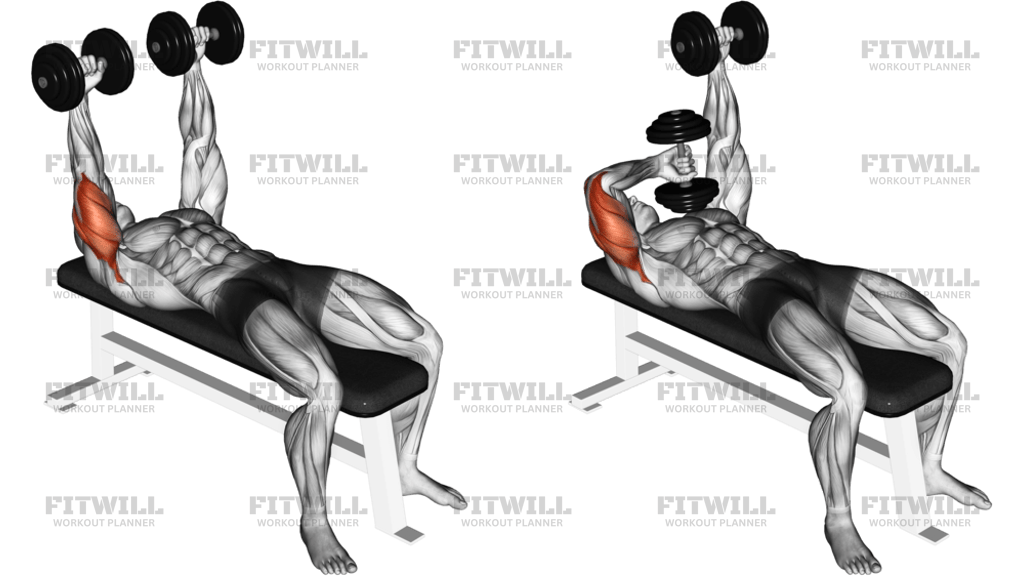
The image shows a controlled seated setup rather than a standing version, and that matters. Sitting on the bench reduces cheating through the hips and low back, so the reps are driven mostly by elbow motion. In that position, the upper arms should stay close to the head, the elbows should point mostly forward, and the forearms should track the same overhead path on every rep. If the dumbbell drifts behind the head or the elbows flare wide, the load shifts away from the triceps and into the shoulders and lower back.
Treat the start position as part of the exercise, not just a way to get the weight overhead. Sit tall on the bench, plant the feet, and bring the dumbbell into a stable overhead hold before you start the descent. A neutral wrist and a firm two-hand grip help keep the bell centered. From there, lower the weight by bending only at the elbows, then extend back to a fully controlled top position without slamming into lockout. The goal is a smooth arc with the upper arms nearly fixed in space.
This movement is most useful as an accessory after compounds such as presses, chin-ups, or dips, or as a direct triceps builder when you want more elbow-flexion work than pressing provides. It is especially helpful for lifters who want to train the long head of the triceps in an overhead line while keeping the torso braced and the range of motion honest. Use a load that lets you keep the shoulders quiet and the elbows predictable; if the rep turns into a back-arching press, the set is too heavy.
Because the exercise loads the elbows in a stretched overhead position, the best results come from patience and repeatability. Controlled eccentrics, consistent elbow tracking, and a stable bench setup will usually outperform heavier, sloppier reps. When the shoulders, wrists, or elbows start to complain, shorten the range slightly, lighten the dumbbell, or switch to a less aggressive triceps variation for the day.
Fitwill
Log Workouts, Track Progress & Build Strength.
Achieve more with Fitwill: explore over 9600 exercises with images and videos, access built-in and custom workouts, perfect for both gym and home sessions, and see real results.
Start your journey. Download today!




Instructions
- Sit on the bench with your feet flat, chest tall, and the dumbbell held overhead with both hands.
- Keep your upper arms close to your head and your elbows pointed mostly forward, not flared wide.
- Wrap both hands around the upper end of the dumbbell and keep your wrists stacked and neutral.
- Brace your torso before the first rep so your ribs do not flare as the weight lowers.
- Bend only at the elbows to lower the dumbbell behind or just above the head in a smooth arc.
- Lower until you feel a strong triceps stretch while the shoulders and lower back stay quiet.
- Press the dumbbell back up by extending the elbows until the arms are straight but not locked aggressively.
- Keep the dumbbell centered over the head on every rep and avoid drifting it forward or back.
- Reset your posture at the top if the torso starts leaning, then continue with the next rep.
Tips & Tricks
- Use a lighter dumbbell than you would for a standing triceps extension; the seated position makes cheating easier to notice but not safer for the elbows.
- Keep the elbows relatively narrow and pointed forward so the triceps do the work instead of the shoulders taking over.
- Let the dumbbell travel behind the head only as far as you can keep the ribs down and the low back neutral.
- Think about hinging at the elbows, not moving the upper arms, so each rep follows the same overhead track.
- Slow the lowering phase to feel the triceps lengthen under control rather than dropping into the bottom.
- Do not squeeze the dumbbell so hard that the wrists bend backward; keep the forearms in line with the load.
- If the bench contact makes you arch, sit more upright or reduce the load before adding more range.
- Stop the set when lockout turns into a shoulder shrug or when the elbows stop feeling smooth.
- If one elbow opens sooner than the other, lower the weight and match both arms before chasing more reps.
Frequently Asked Questions
What muscles does Dumbbell Seated Bench Extension work?
It mainly targets the triceps, especially through the overhead elbow-extension position. The forearms, shoulders, and trunk help stabilize the dumbbell and keep the seated posture steady.
Why do I sit on a bench for this triceps exercise?
Sitting on the bench reduces hip drive and makes it easier to keep the dumbbell path strict. That helps you isolate the triceps instead of turning the movement into a standing body-English lift.
Should my elbows point out to the sides?
No. Keep them mostly forward and fairly narrow so the load stays on the triceps and the dumbbell does not drift into a wide shoulder-dominant pattern.
How low should I lower the dumbbell?
Lower it only as far as you can keep your ribs down, your wrists stacked, and your upper arms mostly fixed. If the shoulders start to roll forward or the low back arches, shorten the range.
Is this the same as a dumbbell overhead triceps extension?
Yes in practice. The seated bench version just emphasizes a stable bench setup, which makes the overhead triceps path easier to control.
Can I use one dumbbell with both hands?
Yes, and that is the setup shown here. A two-hand grip helps center the load overhead and makes it easier to keep both elbows moving together.
What should I avoid at the top of the rep?
Avoid snapping the elbows hard or shrugging the shoulders into the ears. Finish the rep with control so the triceps, not the joints, take the load.
When should I use this exercise in a workout?
Use it after heavy pressing or as a focused triceps accessory. It works well when you want direct arm work without a lot of whole-body fatigue.