Dumbbell Seated Kickback
Dumbbell Seated Kickback is a seated bent-over triceps isolation movement that uses one dumbbell or a pair of dumbbells to load elbow extension while the upper arm stays fixed beside the torso. The bench gives you a stable base, which makes this a good choice when you want to train the triceps directly without turning the rep into a swing, shrug, or hip-driven cheat.
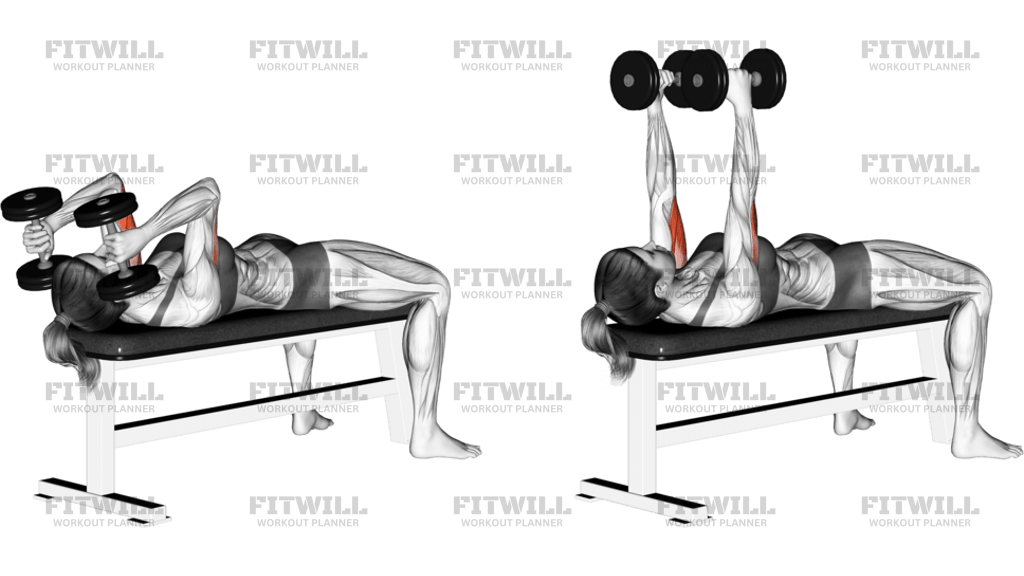
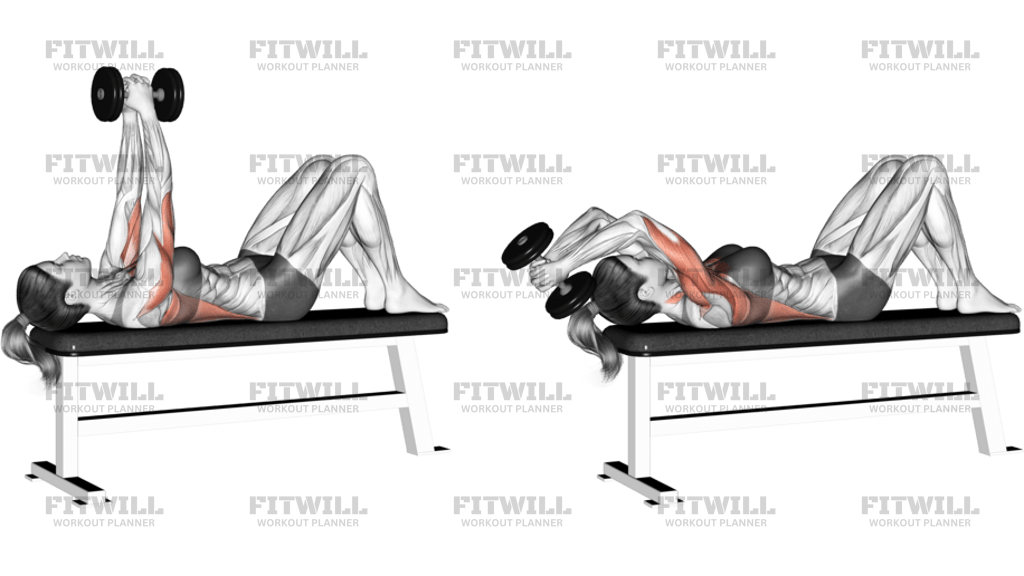
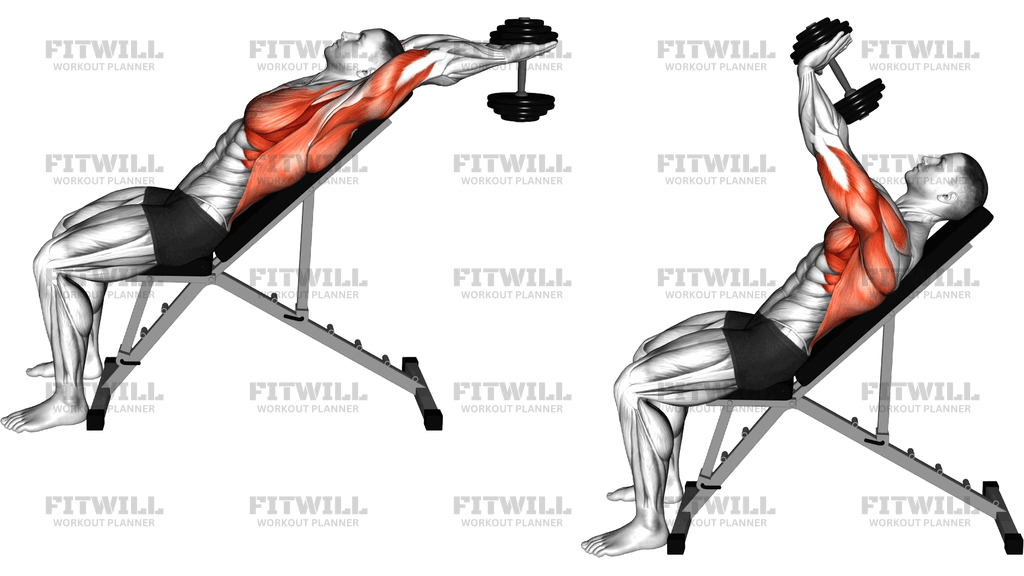
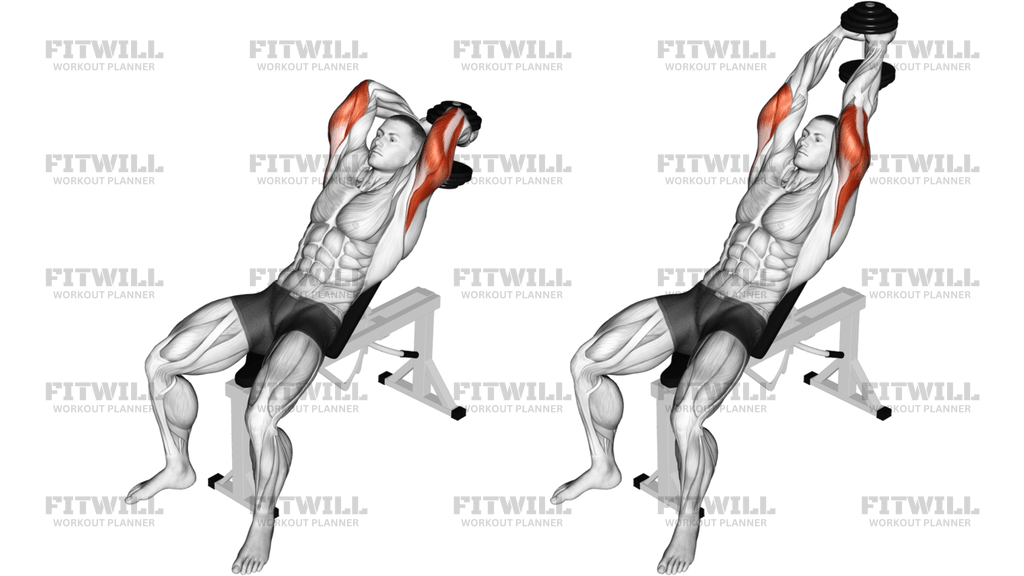
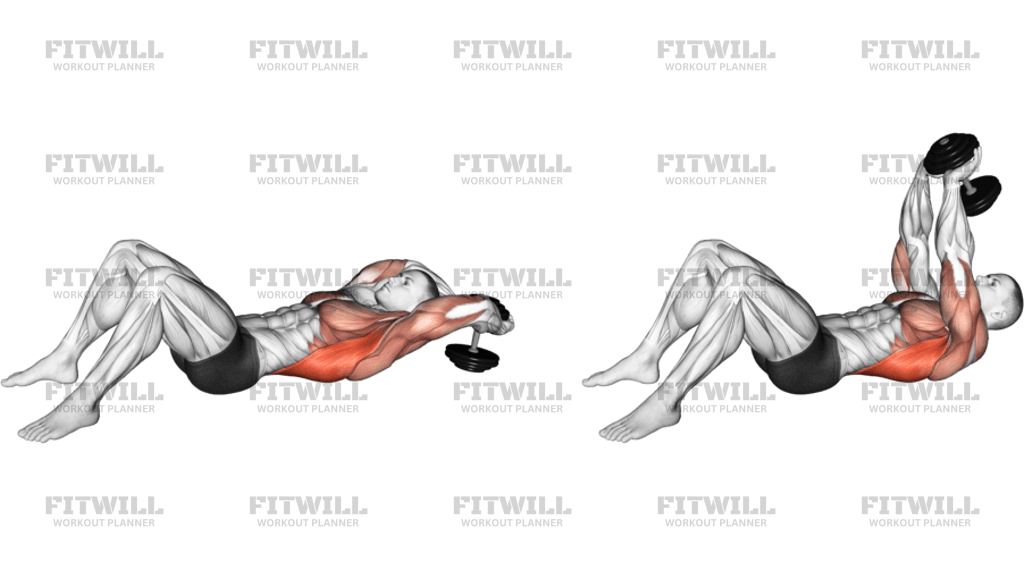
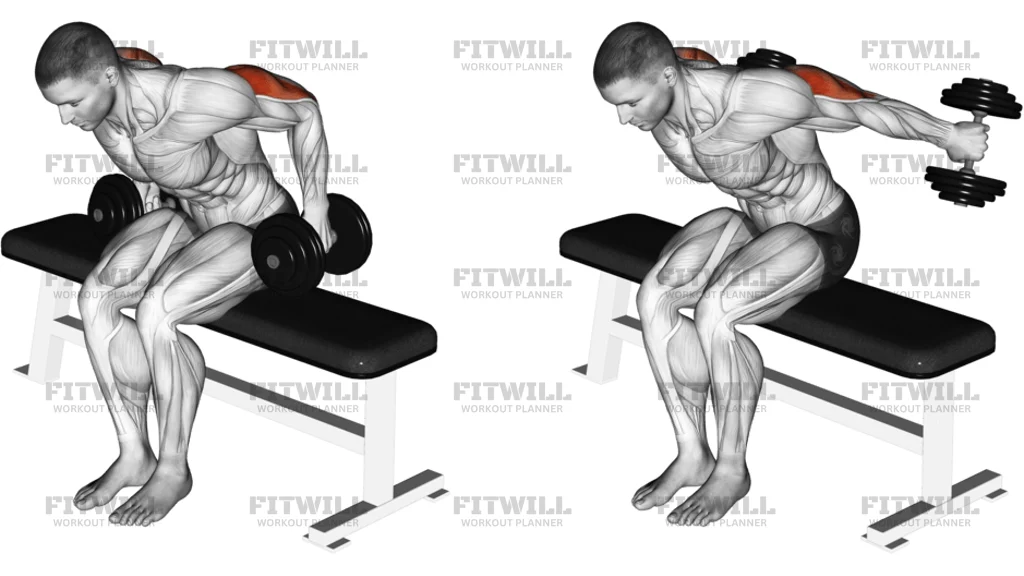
The image shows the torso hinged forward over a flat bench, feet planted, and the upper arm held close to the body while the forearm moves from a bent position to a straight finish behind the hip. That setup matters because the exercise is only effective when the elbow is the moving joint. If the shoulder drifts, the torso rocks, or the wrist collapses, the triceps lose tension and the dumbbell becomes harder to control.
Use a load that lets you keep the elbow pinned and the dumbbell path clean. Start with the elbows bent and the dumbbells close to the sides of the hips, then extend until the arm is straight behind you without forcing the elbow into an aggressive snap. The return should be slow and deliberate so the triceps stay under tension through the full range instead of resting at the bottom.
This exercise fits well as an accessory after presses, dips, or heavier triceps work, especially when you want a strict, low-momentum finisher. It is also useful for side-to-side balance because the seated position makes compensation easier to spot. Keep the bench position, torso angle, and elbow line consistent from rep to rep, and the movement becomes a reliable triceps builder rather than a generic arm raise.
Fitwill
Log Workouts, Track Progress & Build Strength.
Achieve more with Fitwill: explore over 9600 exercises with images and videos, access built-in and custom workouts, perfect for both gym and home sessions, and see real results.
Start your journey. Download today!




Instructions
- Sit on the bench and hinge your torso forward until your chest is over your thighs, with your feet flat and planted for balance.
- Hold a dumbbell in each hand or one dumbbell at a time, then tuck your upper arms close to your sides with the elbows bent and the palms facing in.
- Set your shoulders down and back without over-arching your lower back, and keep the neck long while you brace lightly through the midsection.
- Start with the dumbbells hanging just behind your hips and the forearms angled down, not drifting forward under the bench.
- Keep the upper arms still as you extend the elbows and drive the dumbbells straight back until the arms are nearly or fully straight.
- Pause briefly at the top without shrugging or swinging the weight higher.
- Lower the dumbbells slowly by bending the elbows until the forearms return to the starting angle while the upper arms stay in place.
- Reset each rep from the same torso angle and repeat for the planned number of reps before switching sides if you are working one arm at a time.
Tips & Tricks
- Choose a lighter dumbbell than you would use for a standing kickback; the bent-over seated position makes cheating easier to notice but harder to hide.
- Keep the bench height and torso angle consistent so the dumbbell travels from the same start point on every rep.
- Let the elbow extend, not the shoulder; if the upper arm swings backward, the set has turned into a rear-delt or rowing motion.
- Keep the wrist stacked over the forearm so the handle does not fold into the palm at the top.
- Stop the rep when the elbow straightens, not when the dumbbell starts to arc upward behind you.
- Use a controlled 2- to 3-second lowering phase to keep tension on the triceps and reduce joint yanking at the bottom.
- If both shoulders start to shrug, shorten the set and re-set your chest position over the thighs.
- Match the left and right sides closely if you alternate arms; the seated posture makes asymmetries obvious.
Frequently Asked Questions
What muscles does Dumbbell Seated Kickback work?
It mainly trains the triceps, with the forearms, rear shoulder stabilizers, and core helping keep the bench-supported hinge steady while the elbow extends.
Is Dumbbell Seated Kickback beginner-friendly?
Yes, if you keep the load light and the torso fixed. The seated setup makes it easier for beginners to feel whether the elbow is doing the work instead of the shoulder.
Should my upper arm move during the rep?
Only a little if at all. The upper arm should stay tucked beside the torso while the forearm straightens and bends around the elbow.
How far back should I take the dumbbell?
Finish when the arm is straight behind the hip and the triceps are fully contracted. Do not keep reaching higher if that means shrugging the shoulder or arching the back.
What is the most common mistake?
Letting the shoulder swing or the torso rise to help move the dumbbell. That reduces triceps tension and usually means the weight is too heavy.
Can I do this one arm at a time?
Yes. Single-arm reps are useful if you want to compare sides or keep the torso angle strict, but keep the free hand braced on the bench or thigh for balance.
What should I feel at the bottom?
You should feel the triceps lengthen as the elbow bends, not a sharp pull in the shoulder or a collapse in the wrist.
Where does this fit in a workout?
It works well near the end of an upper-body or arm session after heavier presses, pushdowns, or compound triceps work.