Dumbbell Seated One-Arm Rotate
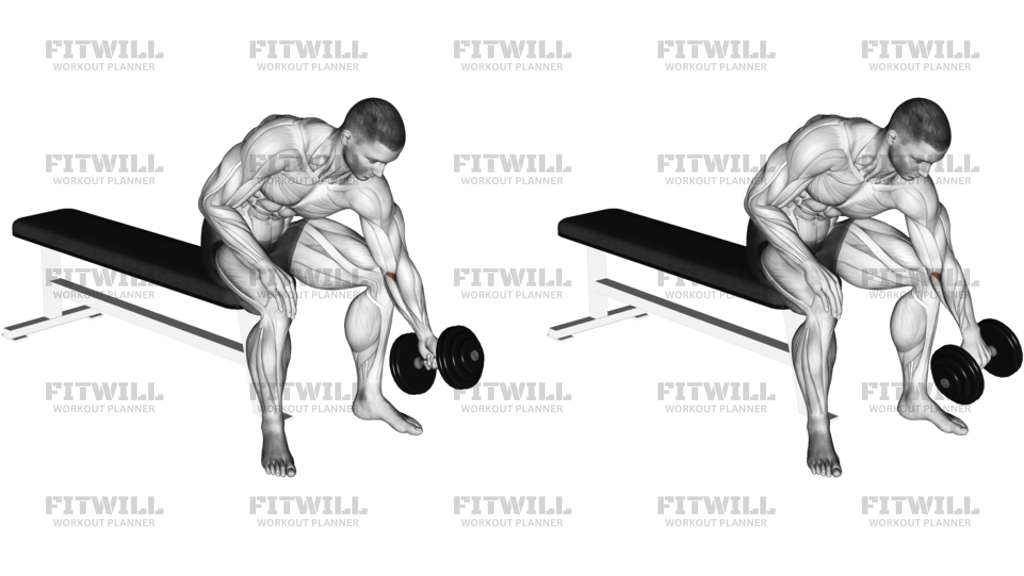
Dumbbell Seated One-Arm Rotate is a seated forearm rotation drill that trains the muscles used to turn the palm up and down while the elbow stays fixed. The small, controlled arc makes the exercise feel more like precision work than a big strength lift, which is exactly why it is useful for building dependable wrist and forearm control. In the image, the upper arm is braced against the inner thigh and the dumbbell is rotated from a supported seated position, so the shoulder should stay quiet and the forearm should do the moving.
The main benefit is stronger forearm rotation, with extra work for grip endurance and the smaller muscles that stabilize the wrist during pulling, carrying, and bar work. That makes Dumbbell Seated One-Arm Rotate a practical accessory for athletes, lifters, and anyone who wants better control in the hands and elbows. It can fit into a warm-up, a rehab-style accessory block, or the end of a workout when heavy compounds are already done.
Setup is the part that determines whether this becomes a useful isolation drill or a sloppy twist. Sit on a bench with both feet planted, hinge slightly forward, and brace the working elbow and forearm against the inner thigh or another stable support. Hold a light dumbbell so the handle is secure but the wrist can still turn freely, then set the forearm in a neutral starting position before you begin the first rep. If the elbow slides, the shoulder rolls forward, or the wrist bends instead of rotating, the load is too heavy or the support point is not firm enough.
Each rep should rotate through a clean, deliberate range from palm-down toward palm-up, or the reverse if you are training the opposite direction. The movement should come from the forearm turning around the elbow support, not from curling the dumbbell, shrugging the shoulder, or swinging the torso. Pause briefly at the end of the turn, then return under control so the forearm does not snap back through the wrist. Breathing should stay calm and steady, with a controlled exhale during the hardest part of the rotation.
Dumbbell Seated One-Arm Rotate is most useful when you want to strengthen the smaller joints and tissues that help the hand stay organized under load. It pairs well with rows, curls, deadlifts, racquet sports, throwing work, and any training that asks the forearm to resist twisting. Keep the motion pain-free and compact, because the goal is quality rotation and tendon-friendly control rather than a bigger range or a heavier dumbbell.
[ Workout Log & Planner ]
Put your next workout in Fitwill
Keep your plan and training log ready when you are.


Instructions
- Sit on a flat bench with your feet planted and hinge forward until you can brace the working elbow and forearm against the inner thigh.
- Hold a light dumbbell in the working hand and set the forearm in a neutral starting position before the first rep.
- Keep the upper arm quiet and pin the elbow support point to the thigh so the shoulder does not help the movement.
- Rotate the forearm slowly toward palm-up or palm-down, depending on the direction you are training.
- Let the dumbbell turn in your hand while the wrist stays stacked and does not bend or flare.
- Pause briefly at the end of the rotation and feel the forearm work before you reverse direction.
- Return to the starting position under control without swinging, snapping, or lifting the elbow off the thigh.
- Breathe out through the rotation, inhale on the way back, and keep the torso steady through the whole set.
- Set the dumbbell down carefully before switching sides and repeat with the same elbow position on the other arm.
Tips & Tricks
- Choose a very light dumbbell first; this exercise gets hard quickly because the lever arm is long even when the weight looks small.
- If the elbow lifts off the thigh, move the bench closer or sit taller so the forearm has a firmer support point.
- Keep the hand stacked over the forearm instead of bending the wrist into flexion or extension during the turn.
- Slowly reverse the dumbbell instead of letting it roll or flop at the end range, especially when the plates are heavy.
- Use a smaller range if the outer elbow or wrist feels pinchy at the top or bottom of the rotation.
- Do not curl the dumbbell toward the shoulder; the forearm should rotate while the upper arm stays quiet.
- Keep the grip firm enough to control the handle, but do not squeeze so hard that the forearm cramps before the rotators fatigue.
- If one direction is much weaker, use the weaker side's clean range as the limit for both arms.
- Stop the set when the dumbbell starts wobbling in your hand, because that usually means the stabilizers are no longer controlling the turn.
Frequently Asked Questions
What muscles does Dumbbell Seated One-Arm Rotate work?
It mainly trains the forearm pronators and supinators, plus the wrist stabilizers and grip muscles that keep the dumbbell organized during the turn.
Where should my elbow be during Dumbbell Seated One-Arm Rotate?
Brace the elbow on the inner thigh or another stable support so the forearm can rotate without the shoulder drifting.
Is Dumbbell Seated One-Arm Rotate the same as a wrist curl?
No. A wrist curl bends the wrist up and down, while this exercise turns the forearm so the palm rotates from up to down or down to up.
How heavy should the dumbbell be for Dumbbell Seated One-Arm Rotate?
Light enough that you can keep the elbow pinned and the rotation smooth for every rep. If the dumbbell starts wobbling or your shoulder helps, the load is too heavy.
Can beginners do Dumbbell Seated One-Arm Rotate?
Yes, as long as they start with a small range and very light weight. It is often easier to learn than heavier curling work because the elbow stays supported.
What is the most common mistake in Dumbbell Seated One-Arm Rotate?
Letting the elbow lift off the thigh. Once that support is lost, the movement turns into a shoulder or arm swing instead of a forearm rotation.
Which direction should I rotate in Dumbbell Seated One-Arm Rotate?
That depends on the side you want to emphasize. Palm-up and palm-down work are both useful, so use the direction prescribed by your program or train both sides evenly.
Should Dumbbell Seated One-Arm Rotate hurt my wrist or elbow?
No. You should feel forearm effort and maybe a mild stretch, but sharp pain, pinching, or tendon irritation means you should reduce load or range and stop if it does not settle.