Dumbbell Seated Palms Up Wrist Curl
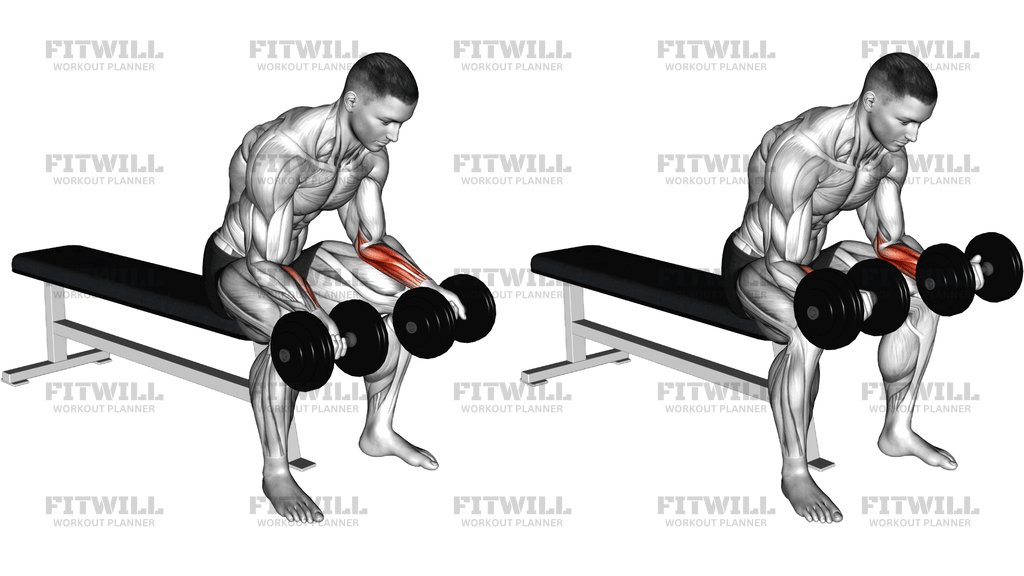
Dumbbell Seated Palms Up Wrist Curl is a seated isolation exercise for the wrist flexors and the small muscles that help you close the hand and stabilize the wrist. The palms-up position places the forearm in supination, which lets the wrist flexors do the work instead of turning it into a whole-arm curl. The goal is a clean wrist-specific rep, not a bigger lift driven by the elbow or shoulder.
The setup matters because the bench and thighs create a stable shelf for the forearms. Sit tall on a flat bench, plant both feet, and rest the forearms across the thighs with the wrists hanging just past the knees. That position shortens the lever arm and gives the wrists room to flex through a controlled range while the upper arm stays quiet.
During the curl, let the dumbbells roll into the fingers slightly at the bottom, then close the hand and curl the palm side of the hand toward the forearm. The load should travel in a short arc driven by wrist flexion alone. Pause near the top, then lower slowly until the wrists are extended again without bouncing off the knees or letting the dumbbells slip.
This exercise is useful as a forearm accessory for grip, racket sports, climbing, lifting support, and general arm development. It is also a practical option when you want direct forearm work without loading the shoulders or spine. Start light and keep the motion smooth; once the wrists or elbows begin to ache, the usual fix is less load, a smaller range, or stricter forearm support.
Because the movement is small, sloppy reps show up quickly. If the elbows drift, the shoulders lift, or the dumbbells swing, the set stops being a wrist curl and becomes a momentum drill. Keep the wrists doing the work, breathe steadily, and treat the lowering phase as part of the exercise rather than a reset between reps.
Fitwill
Log Workouts, Track Progress & Build Strength.
Achieve more with Fitwill: explore over 9600 exercises with images and videos, access built-in and custom workouts, perfect for both gym and home sessions, and see real results.
Start your journey. Download today!




Instructions
- Sit on a flat bench with both feet planted and rest your forearms across your thighs.
- Let your wrists hang just past the knees so the dumbbells can move freely.
- Hold a dumbbell in each hand with your palms facing up and your wrists straight at the start.
- Allow a small stretch at the bottom without opening your fingers completely.
- Curl only at the wrists by bringing the palm side of the hand toward the forearm.
- Squeeze hard at the top for a brief pause without lifting the forearms off the thighs.
- Lower the dumbbells slowly until the wrists are extended again.
- Keep the elbows, shoulders, and torso quiet for every rep.
- Match the same range and tempo on both sides before ending the set.
Tips & Tricks
- Place the wrists just beyond the knees; if the hands are too far back on the thighs, the curl becomes too short.
- Keep the forearms pressed into the legs so the upper arm cannot help finish the rep.
- Let the dumbbell sit low in the fingers at the bottom, then close the hand before curling so the forearm has to work.
- Use a lighter weight than you think; this movement exposes sloppy form as soon as the load gets too heavy.
- Do not bounce off the knees at the bottom, or you will turn the lowering phase into a swing.
- Keep the palms fully turned up throughout the set; a drifting wrist position shifts the stress away from the flexors.
- Control the descent for at least as long as the lift so the wrist flexors stay under tension.
- Stop the set when the wrists start to shake or the dumbbells start rolling out of the hands.
Frequently Asked Questions
What muscles does Dumbbell Seated Palms Up Wrist Curl work?
It mainly trains the wrist flexors and the grip muscles of the forearm. The seated position also asks the upper arm and torso to stay still while the wrists move.
Is Dumbbell Seated Palms Up Wrist Curl beginner-friendly?
Yes, if you keep the load light and use the thighs as a support. Beginners usually do best with slow reps and a smaller range before adding weight.
Where should the dumbbells sit during the curl?
They should hang just past the knees with the forearms resting on the thighs. That keeps the wrist as the only joint doing meaningful work.
How heavy should I use?
Choose a load that lets you flex and lower the wrists without opening the hands, bouncing off the knees, or losing the forearm support.
Should my elbows move?
No. The elbows stay planted on the thighs while the wrists flex and extend. If the elbows drift, the movement becomes much less specific.
Why is the palms-up grip important?
The palms-up grip emphasizes the wrist flexors more directly and keeps the exercise from turning into a pronated forearm or biceps movement.
What should I feel in the bottom position?
A mild stretch through the underside of the forearm is normal, but the dumbbells should still feel secure and controlled. If the stretch turns sharp or painful, shorten the range.
How do I progress Dumbbell Seated Palms Up Wrist Curl?
Progress by adding reps, slowing the lowering phase, or using slightly more load while keeping the forearms fixed on the thighs and the wrists moving cleanly.