Dumbbell Standing Kickback
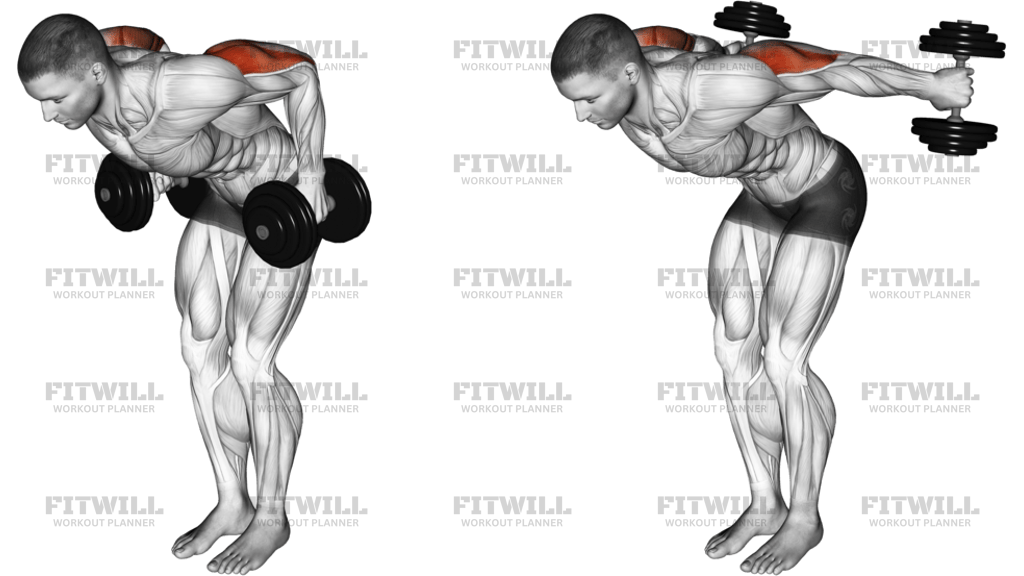
Dumbbell Standing Kickback is a bent-over triceps isolation exercise done with a dumbbell in each hand. The torso stays hinged forward while the upper arms stay nearly fixed beside the ribcage and the elbows open to drive the weights behind the body. It is a small, precise movement, so the setup and body angle matter as much as the load.
This variation is designed to load the triceps through elbow extension while the shoulders and midsection keep the torso from drifting. The forearms, grip, rear shoulder, and trunk all assist, but the work should be felt most clearly in the back of the upper arm. If the chest rises or the elbows swing, the exercise turns into a body English movement instead of a triceps drill.
Set the hinge before the first rep: feet about hip-width, knees softly bent, torso tipped forward, neck long, and dumbbells hanging under the shoulders. From that position, keep the upper arms pointed back, extend the elbows until the dumbbells travel behind the line of the torso, and pause briefly when the triceps are fully shortened. The rep should be crisp at the top and controlled on the way back down.
Use this exercise as an accessory after presses, push-ups, or other elbow-dominant work when you want direct triceps volume without needing a machine or bench. Keep the load modest enough that the shoulder stays quiet and the lower back does not take over. If balance is an issue, shorten the stance, reduce the range, or support one hand on a bench and work one side at a time.
[ Workout Log & Planner ]
Put your next workout in Fitwill
Keep your plan and training log ready when you are.


Instructions
- Stand with your feet about hip-width apart and hinge forward until your torso is nearly parallel to the floor.
- Hold a dumbbell in each hand with your palms facing in and let both arms hang under your shoulders.
- Bend your knees slightly, keep your neck long, and brace your trunk so your torso angle does not change.
- Pin your upper arms close to your sides so the elbows point back and the dumbbells start near your outer ribs.
- Exhale and straighten both elbows, sending the dumbbells straight back behind you without swinging the shoulders.
- Keep the upper arms still and stop the rep when the arms are nearly straight and the triceps are fully contracted.
- Pause briefly at the top, then inhale and lower the dumbbells along the same path until the elbows are bent again.
- Repeat with controlled reps and reset the hinge if your lower back starts to round or your chest rises.
Tips & Tricks
- Choose lighter dumbbells than you would use for curls or presses; this movement is limited by elbow control, not brute force.
- Keep your torso angle fixed for the whole set. If your chest starts lifting, the triceps stop being the only driver.
- Think about the elbow opening, not the hand reaching. The forearm should move because the elbow extends, not because the shoulder swings.
- Keep the dumbbells close to your sides and slightly behind your torso at the top so the triceps finish the rep instead of the lower back.
- Use a neutral wrist so the handle stays stacked over the forearm instead of bending the wrist back under load.
- Do not chase a huge range. In a kickback, the last few degrees of elbow extension are the point of the exercise.
- If one side keeps twisting or drifting, do single-arm reps so you can keep the elbow path clean.
- A staggered stance can help if your hamstrings or lower back tire before the triceps do.
Frequently Asked Questions
What muscles does Dumbbell Standing Kickback work?
It mainly works the triceps brachii. The forearms, grip, rear shoulder, and trunk help hold the bent-over position while the elbows extend.
Is Dumbbell Standing Kickback beginner-friendly?
Yes, if you keep the weight light and the hinge stable. Beginners usually do better with a smaller range and slower reps before adding load.
How far should my elbows move?
The elbows should mostly stay in place while the forearms swing through the rep. The upper arm should remain nearly parallel to your torso.
Why do my shoulders take over?
Usually the torso has come up or the elbows have drifted too high. Lower the load, hinge more consistently, and keep the upper arms locked beside the ribs.
Do I need to lock the elbows at the top?
Straighten them firmly, but do not slam into a hard snap. Think of a strong triceps squeeze with control, not a joint punch.
Can I do this one arm at a time?
Yes. Single-arm reps make it easier to keep the torso still and can help you clean up side-to-side differences.
What should I do if my lower back feels it?
Shorten the set, reduce the dumbbell weight, and use a more stable stance. If needed, support one hand on a bench and keep the torso angle from changing.
Where should I feel the top of the rep?
You should feel the back of the upper arm tighten hard. If the feel shifts to the shoulders or lower back, the setup has drifted.