Dumbbell Standing One-Arm Extension
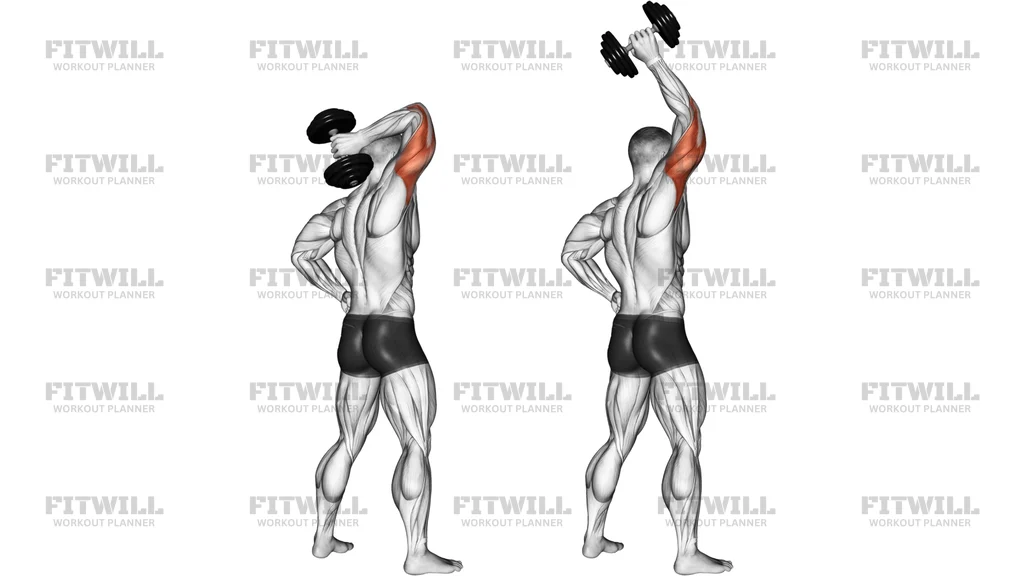
Dumbbell Standing One-Arm Extension is a standing overhead triceps isolation exercise that loads the long head of the triceps through a deep elbow bend and a strong overhead lockout. The lifted arm stays overhead while the elbow flexes and extends, so the movement should look and feel like a controlled one-arm overhead press setup with only the elbow actually moving.
The overhead position matters because it puts the triceps, especially the long head, under tension while the shoulder is flexed. That makes the exercise useful when you want direct triceps work without a lot of chest or shoulder involvement. The free hand often rests on the hip or stays out of the way so the trunk does not twist as the working arm moves.
Set the feet in a stable stance and bring the dumbbell overhead with the elbow pointing mostly upward. Keep the wrist stacked over the elbow, ribs down, and torso tall. If the lower back arches or the shoulder rolls forward, the weight is too heavy or the elbow is drifting out of position.
Lower the dumbbell behind the head under control until the triceps reaches a strong but manageable stretch, then extend the elbow to drive the weight back up to full lockout. The return should be smooth, not bounced. Breathe in on the lowering phase and exhale as you extend, keeping the torso quiet so the triceps does the work.
Use this exercise as an arm accessory movement after pressing or as part of a triceps-focused session. It rewards strict control, moderate loading, and clean elbow tracking more than aggressive range or speed. If the shoulder feels crowded, the elbow flares, or the body starts leaning to one side, shorten the range or reduce the load and keep every rep crisp.
Fitwill
Log Workouts, Track Progress & Build Strength.
Achieve more with Fitwill: explore over 9600 exercises with images and videos, access built-in and custom workouts, perfect for both gym and home sessions, and see real results.
Start your journey. Download today!




Instructions
- Stand tall with your feet about hip-width apart and hold one dumbbell overhead in the working hand.
- Keep the working elbow close to your head and point it mostly upward; let the non-working hand rest on your hip or brace your torso.
- Stack the wrist over the elbow and keep the shoulder packed instead of shrugging up toward the ear.
- Brace your midsection so your ribs do not flare as the dumbbell moves.
- Bend the elbow to lower the dumbbell behind your head until you feel a strong triceps stretch.
- Keep the upper arm as still as possible while the forearm rotates down and back.
- Press the dumbbell back up by extending the elbow until the arm reaches full control overhead.
- Exhale as you extend and inhale as you lower, then reset your stance before the next rep.
Tips & Tricks
- Use a load that lets you keep the elbow pointed up; if the elbow drifts wide, the set is too heavy.
- A staggered stance can help you stay balanced without leaning away from the working arm.
- Let the dumbbell travel behind the head only as far as you can keep the shoulder steady and the wrist stacked.
- Keep the upper arm nearly vertical; turning it into a shoulder movement reduces triceps tension.
- Do not lock the elbow hard at the top; finish the rep with control instead of a snap.
- If the lower back arches, shorten the range and pull the ribs down before trying more load.
- A slow lowering phase usually works better than fast reps for this movement because the stretch is the hard part.
- Match both sides with the same elbow path, stance, and tempo so one arm does not hide weakness from the other.
Frequently Asked Questions
What does Dumbbell Standing One-Arm Extension train?
It mainly trains the triceps, with the long head getting extra work because the arm stays overhead. The shoulder, trunk, and grip help keep the dumbbell steady.
Why is the dumbbell held overhead instead of at the side?
The overhead position lengthens the triceps before each rep and increases the stretch on the long head. That is what makes this version different from a kickback or a pressdown.
Should my upper arm move during the rep?
Only a little. The upper arm should stay mostly vertical while the elbow bends and straightens; if the shoulder swings, the triceps loses tension.
What is the most common mistake with this exercise?
The biggest mistake is flaring the elbow and turning the movement into a leaning shoulder extension. That usually means the load is too heavy or the torso is not braced.
Is this exercise good for beginners?
Yes, if the weight is light and the range stays controlled. Beginners often do better with a seated version first if standing balance or torso control is shaky.
How far behind my head should the dumbbell go?
Only as far as you can keep the elbow pointed up and the shoulder stable. Going deeper is not better if it changes the line of pull or causes pain.
What should I feel in the working arm?
You should feel the triceps working through the back of the upper arm and a stretch near the bottom of the rep. You should not feel sharp pinching in the shoulder or elbow.
Can I do Dumbbell Standing One-Arm Extension one arm at a time?
Yes, and that is how it is shown here. One-arm work makes it easier to keep the torso square and compare both sides evenly.