Elbow To Knee Crunches
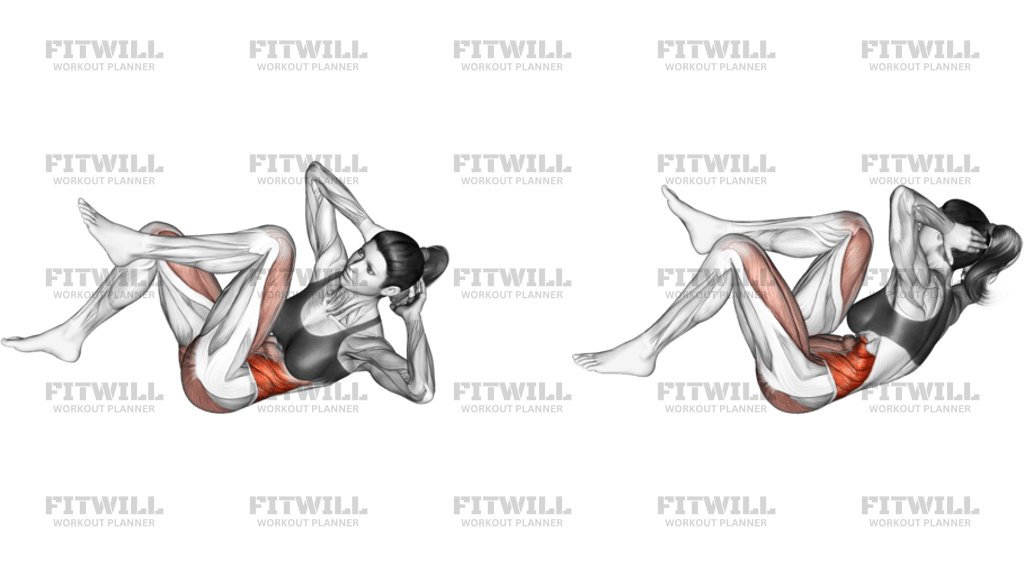
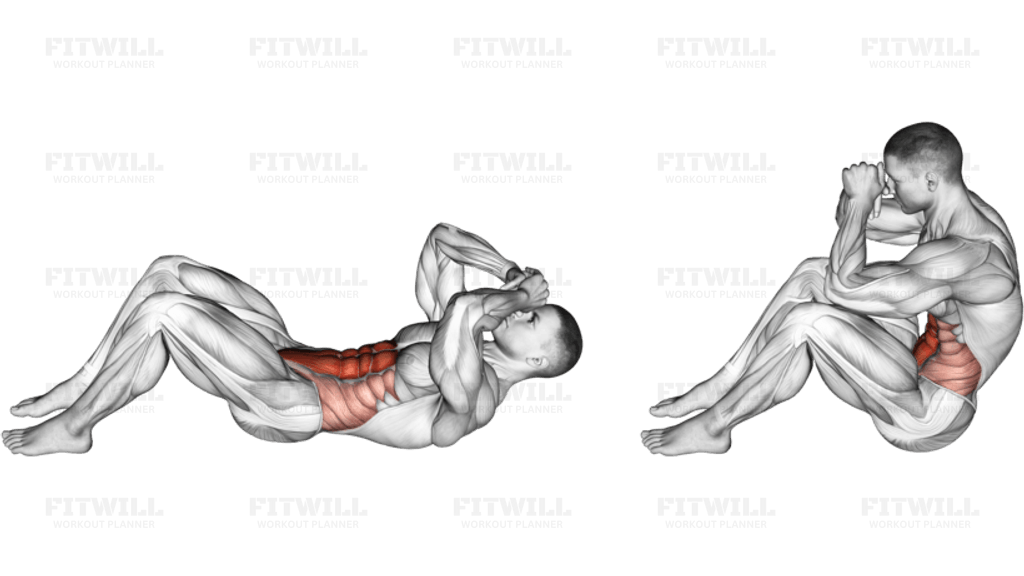
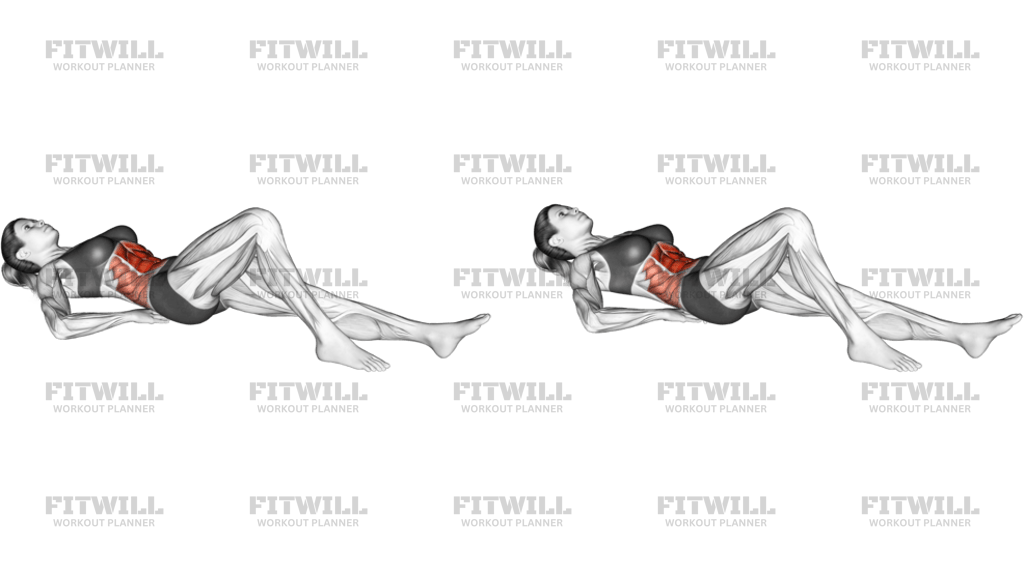
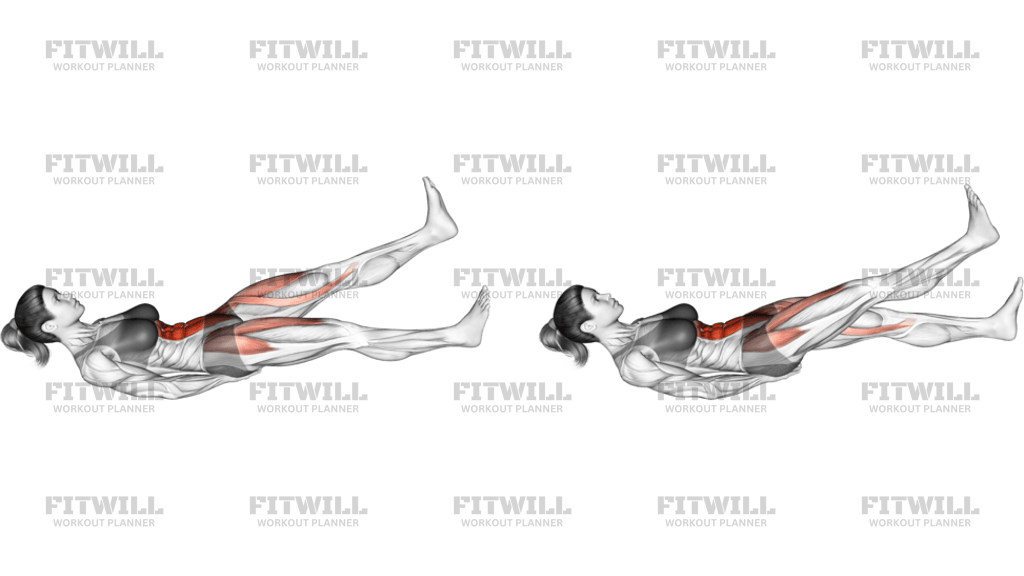
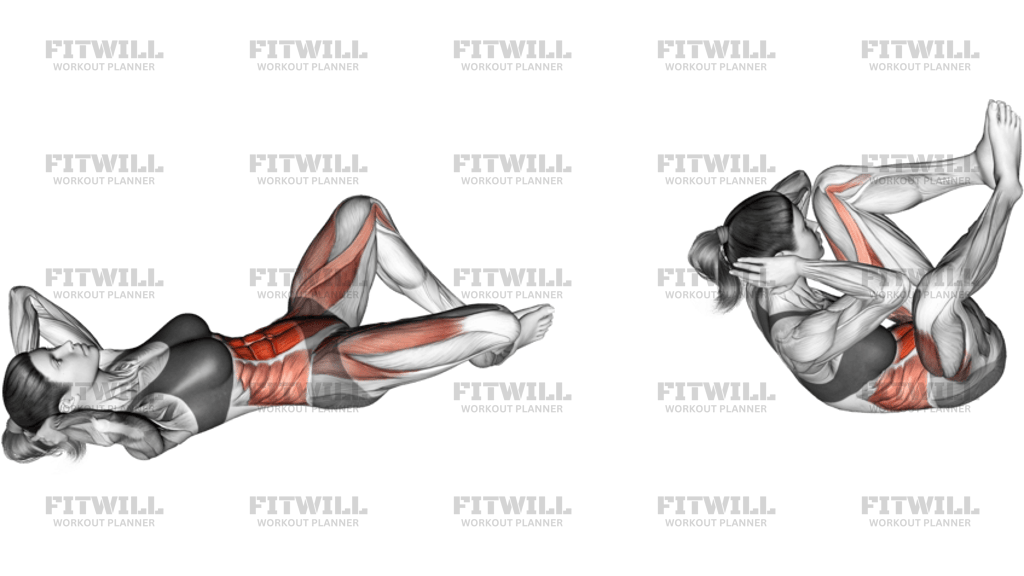
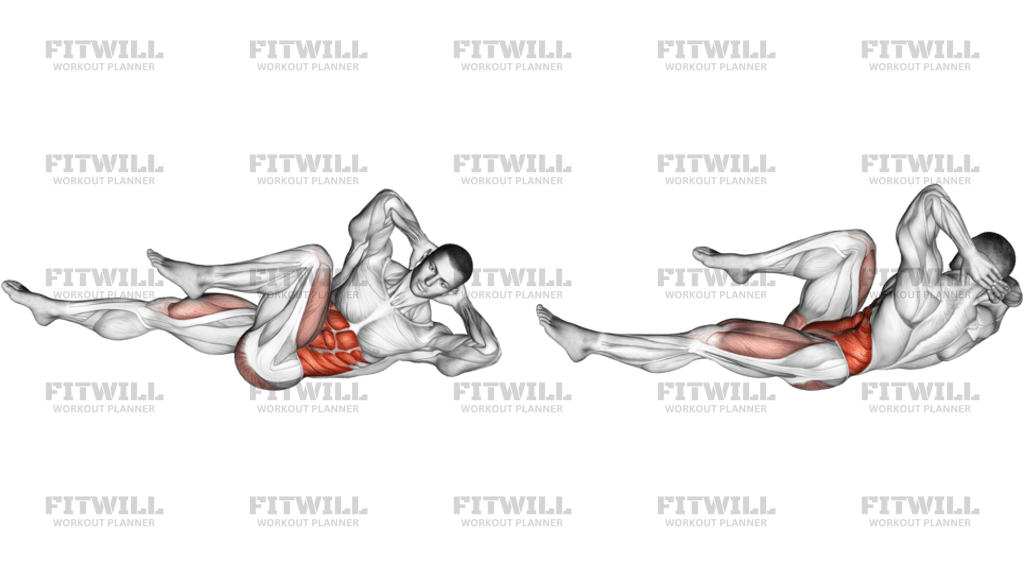
Elbow to Knee Crunches is a floor-based bodyweight abdominal exercise that combines a crunch with alternating torso rotation. In the picture, one elbow reaches across to the opposite knee while the other leg extends away, which puts the abs, obliques, and hip flexors to work at the same time. The exercise is useful because it trains trunk flexion and rotation together instead of isolating a straight crunch.
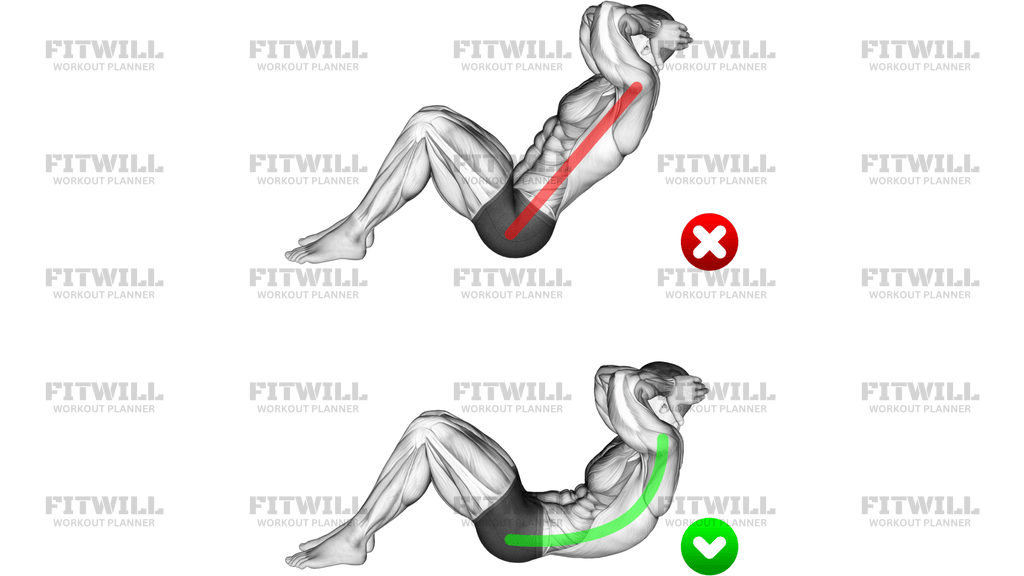
The setup matters more here than in a simple crunch. You need enough room to fully extend one leg while the other knee comes in, and your hands should stay light behind the head rather than pulling the neck forward. A small posterior pelvic tilt and a low back that stays controlled on the floor help keep the tension in the abs instead of letting the hips take over.
Each rep should feel like a smooth alternating pattern: crunch, rotate, touch or approach the opposite knee, then switch sides under control. The moving elbow should come from the rib cage and torso turning, not from yanking the head or swinging the shoulders. The extended leg should stay long enough to challenge the core, but not so low that the lower back arches away from the floor.
This movement is common in core circuits, conditioning blocks, warm-ups, and bodyweight sessions because it raises the heart rate while still training midline control. It also makes a good regression or accessory drill for people who need more trunk control before harder hanging or loaded core work.
Keep the rep quality strict. If the knees start drifting wide, the neck gets tense, or the lower back pops off the floor, shorten the range and slow down. Done well, Elbow to Knee Crunches builds cleaner abdominal tension, better oblique control, and more coordinated cross-body core strength.
[ Workout Log & Planner ]
Put your next workout in Fitwill
Keep your plan and training log ready when you are.


Instructions
- Lie on your back on the floor with your knees bent, hands lightly behind your head, and elbows open.
- Press your lower back gently toward the floor and lift both shoulders just enough to keep the abs engaged.
- Bring one knee in toward your chest while the opposite leg extends long without letting the low back arch.
- Rotate your torso so the opposite elbow travels toward the raised knee, using your rib cage instead of your hands.
- Touch or reach close to the knee without cranking the neck or collapsing the chest.
- Return both shoulders and the moving leg under control until you are back to the start position.
- Repeat on the other side, alternating smoothly like a bicycle pattern.
- Keep each rep deliberate and stop the set if you start swinging, arching, or losing the twist.
Tips & Tricks
- Keep your fingertips light behind the head so the neck stays relaxed and the abs do the work.
- Think about bringing the shoulder toward the knee, not the elbow toward the thigh by force.
- Exhale as the elbow and opposite knee come together to help the rib cage fold and rotate.
- Do not let the extended leg drop so low that your low back pops off the floor.
- A small, crisp twist is better than a big sloppy reach that turns into momentum.
- If your hip flexors dominate, shorten the leg extension and focus on the exhale and rib-cage curl.
- Keep the opposite elbow wide instead of pulling the head forward across the chest.
- Slow down the return phase so each side starts from a controlled reset.
Frequently Asked Questions
What muscles do Elbow to Knee Crunches work?
They mainly work the rectus abdominis, obliques, and hip flexors, with the deep core helping you keep the low back controlled on the floor.
Is Elbow to Knee Crunches good for beginners?
Yes, if the movement stays slow and controlled. Beginners should keep the hands light, shorten the leg extension, and avoid trying to touch the knee aggressively.
How do I keep my neck from straining during the crunch?
Keep a small gap between your chin and chest, let your hands guide rather than pull, and move the shoulders and rib cage instead of yanking the head forward.
What is the biggest mistake in Elbow to Knee Crunches?
The biggest mistake is using momentum to swing the elbow and knee together. That usually turns the drill into a fast bicycle kick instead of a controlled abdominal contraction.
Should my low back stay on the floor the whole time?
Yes, as much as possible. A controlled low back position keeps the emphasis on the abs instead of letting the lumbar spine arch and the hip flexors take over.
How many reps should I do?
Use 8 to 20 controlled alternating reps per side, or stop earlier if the twist, neck position, or low back control starts to break down.
How can I make Elbow to Knee Crunches harder?
Slow the tempo, extend the straight leg lower only if your back stays flat, or pause briefly at the top of each elbow-to-knee reach.
What should I do if I cannot touch my elbow to the opposite knee?
That is fine. Aim for a clean cross-body crunch with good rotation and control instead of forcing the touch and losing the position.
Are Elbow to Knee Crunches the same as bicycle crunches?
They are very similar. This version emphasizes the alternating elbow-to-opposite-knee pattern shown in the image, with one leg extending as the other side crunches in.