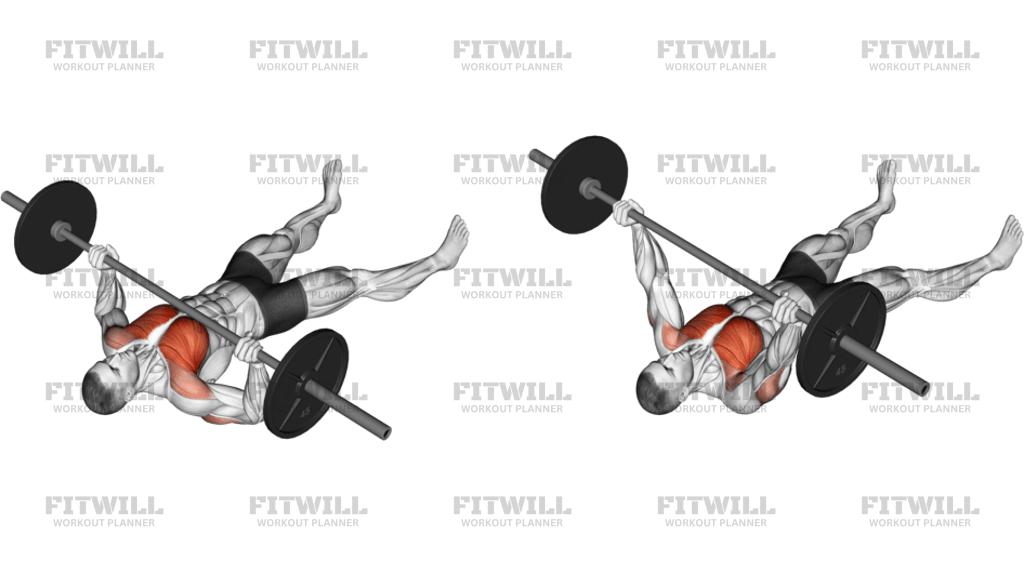
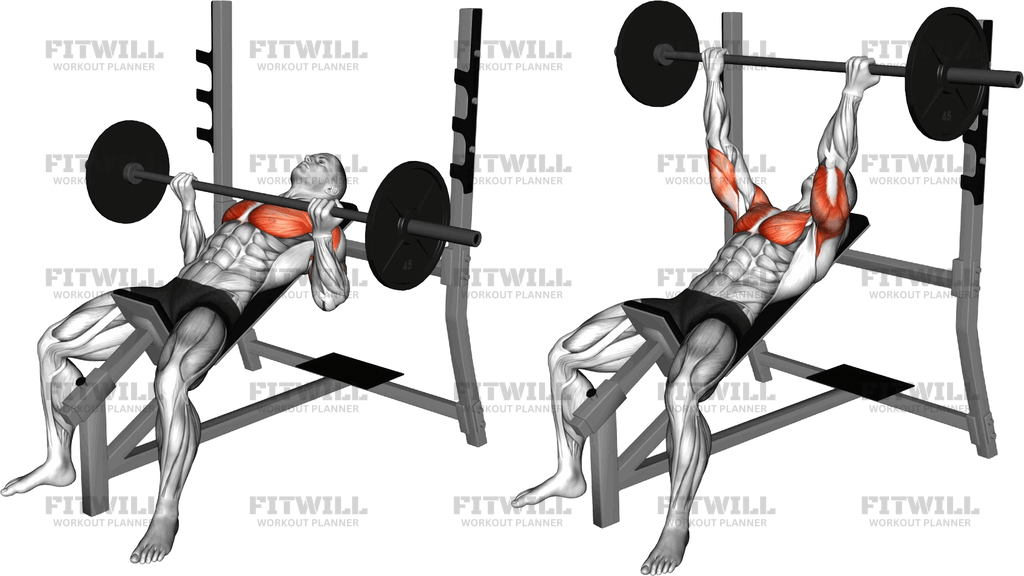
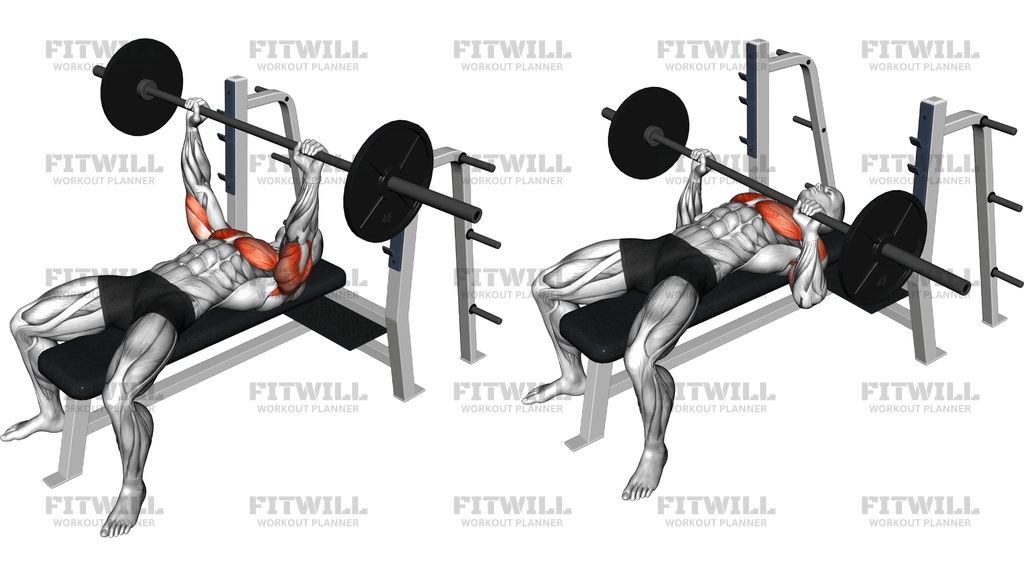
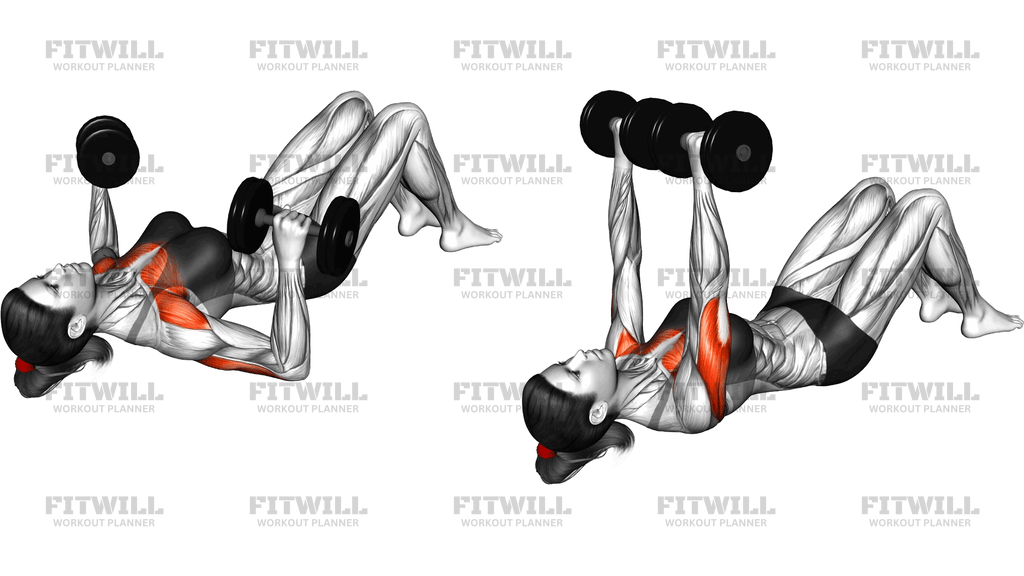
Floor Fly With Barbell
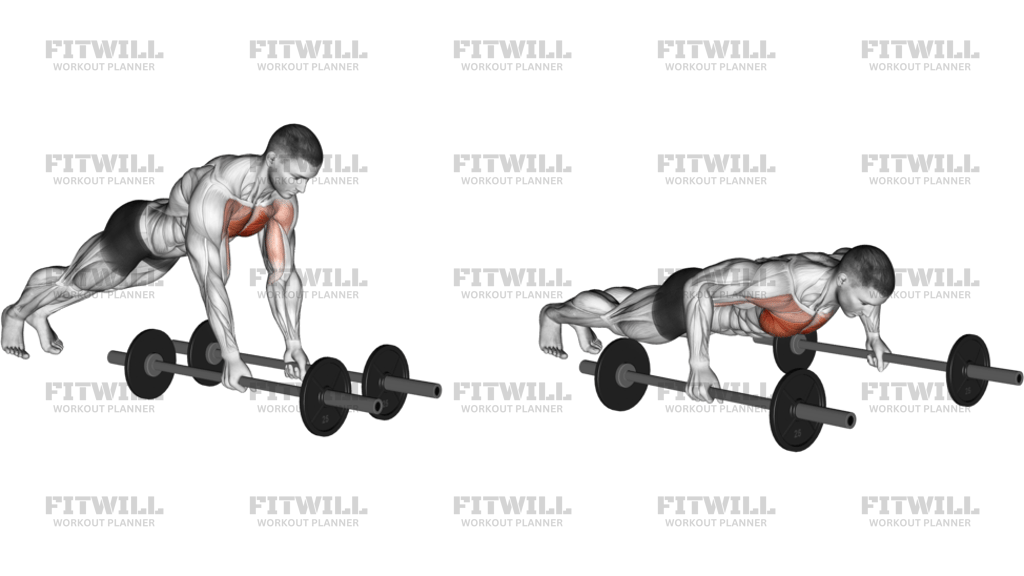
Floor Fly With Barbell is a floor-based chest exercise that uses two barbells as handles to create a controlled chest-driven pressing and fly-style pattern. The floor shortens the bottom range, which makes the movement easier to manage than a deep fly on a bench while still keeping strong tension on the chest.
The setup matters because the barbells change the shoulder angle and the floor defines how deep you can go. With your hands on the bars and your body held in a straight plank, you have to control the descent through the chest, shoulders, and trunk at the same time. That makes it useful for building chest strength, shoulder stability, and torso control without forcing a long stretch.
Treat the movement as a deliberate floor chest pattern rather than a fast push-up. Start with the bars planted parallel on the floor, take a firm grip, brace your midsection, and lower your chest between the bars under control. Keep the elbows from flaring into a painful angle and stop before the shoulders dump forward. Press back up on the same line and reset each rep.
This exercise is a good accessory choice when you want chest work with a limited range of motion, or when a standard fly feels too deep. Because the body is supported only by the hands and toes, the core and glutes have to stay active to keep the ribs from sagging and the lower back from arching.
The main coaching target is control. If the bars wobble, the shoulders roll forward, or the chest touches the floor before the arms finish the rep, reduce the load, shorten the range, or widen the hand position slightly. The goal is a smooth chest-focused rep that stays stable from the top plank to the bottom position and back again.
[ Workout Log & Planner ]
Put your next workout in Fitwill
Keep your plan and training log ready when you are.


Instructions
- Place two barbells parallel on the floor and get into a straight-arm plank with one hand gripping each bar just outside shoulder width.
- Set your feet back so your body forms one long line from head to heels, then brace your abs and squeeze your glutes.
- Keep your wrists stacked over the bar shafts and your shoulders slightly in front of the hands before you lower.
- Inhale and lower your chest between the barbells with control, letting the elbows bend without collapsing inward.
- Keep the bars stable and let the chest travel down as one unit instead of dipping the hips first.
- Pause just above the floor or as soon as the shoulder position starts to lose control.
- Press the floor away through both hands and drive back to the top without twisting or bouncing.
- Exhale near the top, then reset your plank before the next rep.
Tips & Tricks
- Keep the barbells close enough that your chest can lower between them without your shoulders feeling jammed.
- A shoulder-width or slightly wider hand position usually gives a cleaner chest line than a narrow grip.
- Do not let the heads of the barbells roll; if they move, shorten the set or slow the descent.
- Keep the ribs tucked and the glutes tight so the lower back does not sag as you descend.
- Think about guiding the chest down between the bars instead of dropping the head or hips first.
- Use a shallow range if the front of the shoulders feels pinched at the bottom.
- A slow 2-3 second lowering phase makes the chest work harder and keeps the rep honest.
- If the wrists ache on the bar shafts, reduce the load on the hands and choose a more neutral grip setup.
Frequently Asked Questions
What muscles does Floor Fly With Barbell work?
It mainly works the chest, with help from the front shoulders, triceps, and core. The upper back and glutes stabilize the plank so the pressing path stays controlled.
Is Floor Fly With Barbell good for beginners?
Yes, if the barbells are stable and you can hold a solid plank. Start with a short range and stop well before your shoulders lose position.
Why use barbells instead of doing a regular push-up?
The barbells create a different hand position and a slightly larger range from the floor. That can make the chest work harder while still limiting the deepest part of the rep.
How wide should my hands be on the barbells?
Usually just outside shoulder width. Too narrow turns it into a triceps-heavy press, while too wide can stress the shoulders and make the bars less stable.
What is the most common mistake on this exercise?
Letting the hips sag or the shoulders roll forward on the way down. That usually means the core is losing position before the chest finishes the rep.
Should I touch my chest to the floor?
Only if you can do it without losing shoulder control. For most people, stopping just above the floor gives a cleaner chest-focused rep.
What should I do if the bars feel unstable?
Widen the stance of your feet, slow the tempo, and use lighter load or shorter sets. If the bars still move around, choose a more stable push-up setup.
How do I make Floor Fly With Barbell harder?
Slow the lowering phase, pause near the bottom, or increase the range only after the top position stays solid. You can also add reps before adding load.