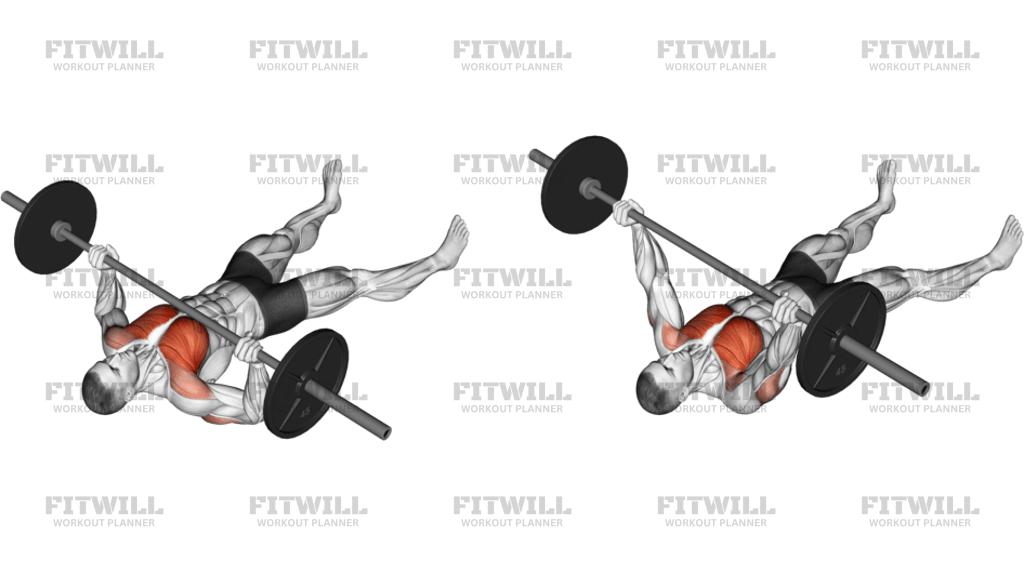
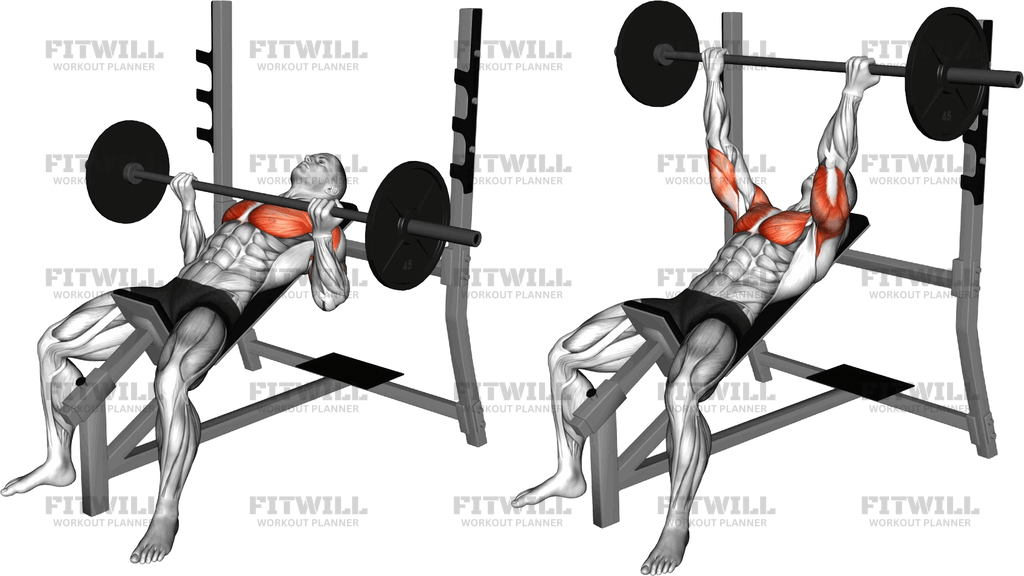
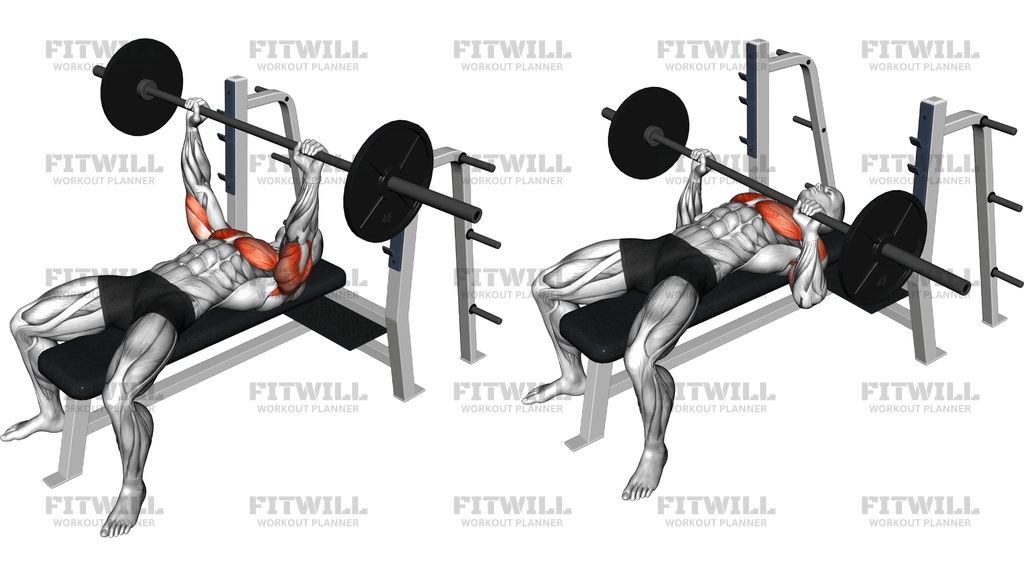
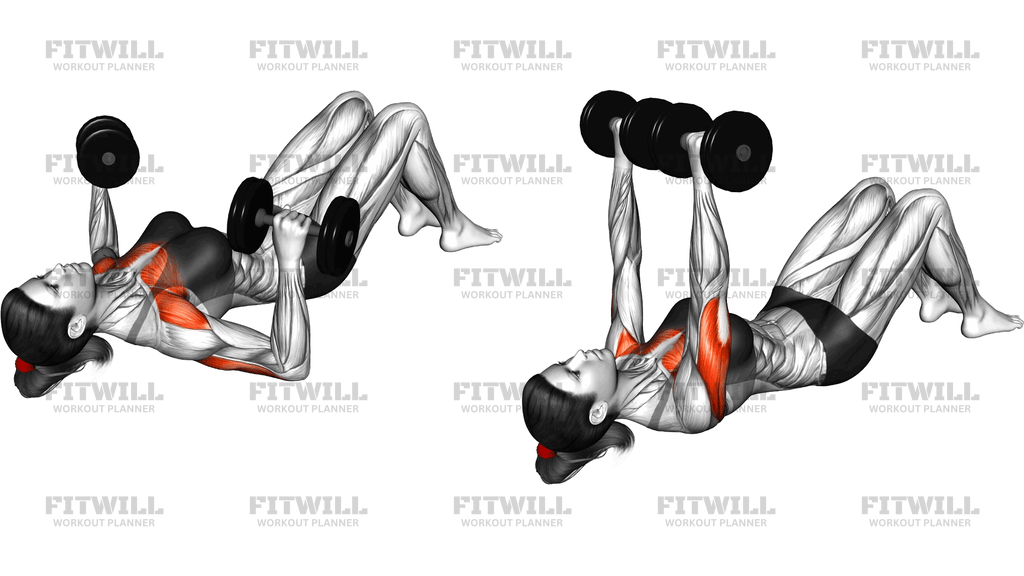
Barbell Chest Press On Stability Ball
Barbell Chest Press On Stability Ball is a pressing variation that combines a classic barbell chest press with an unstable base under the upper back. That extra instability makes the exercise more demanding on body control, so the set is not only about pushing weight but also about keeping the rib cage, shoulders, and hips organized while the bar moves.
The main emphasis is on the chest, with the front shoulders, triceps, and core helping to stabilize the body and finish each rep. It is a useful choice when you want a pressing pattern that challenges coordination and trunk tension without turning the movement into a full-body circus. When the setup is right, the chest does the bulk of the work and the ball simply adds a balance demand that forces cleaner execution.
The setup matters more here than it does on a flat bench. Place the upper back and head on the stability ball, plant the feet firmly on the floor, and keep the body in a controlled bridge so the ball does not drift as you press. Grip the bar slightly wider than shoulder width, stack the wrists over the elbows, and lower the bar toward the mid chest with the forearms close to vertical so the shoulders stay in a strong pressing line.
Each repetition should move in a smooth arc: lower the bar under control, lightly touch or hover just above the chest, then press back up until the arms are almost straight without locking hard into the joints. Exhale as you drive the bar upward and keep the ribs from flaring as the bar clears the sticking point. If the hips sag, the lower back arches hard, or the ball starts rolling, the load is too heavy or the setup is too narrow for a clean set.
Barbell Chest Press On Stability Ball works well as accessory pressing for lifters who want chest work with extra trunk demand, but it should be treated as a technique exercise first and a heavy strength test second. Use a spotter or a safe rack setup if possible, and keep the range of motion honest instead of bouncing off the chest or chasing a deeper stretch than the shoulders can control. Done well, it trains pressing strength, upper-back positioning, and midline control in the same rep.
[ Workout Log & Planner ]
Put your next workout in Fitwill
Keep your plan and training log ready when you are.


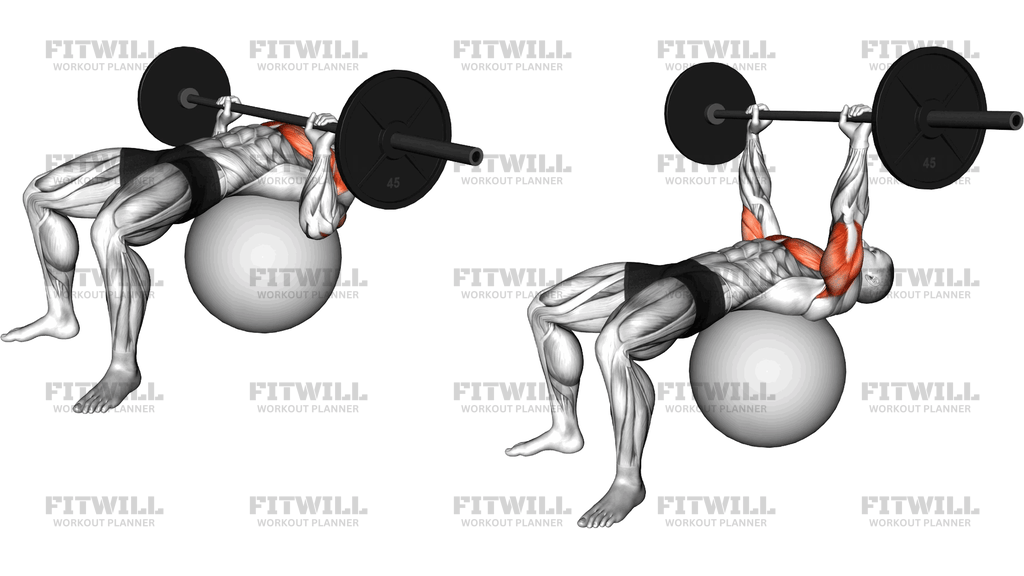
Instructions
- Sit in front of the stability ball, roll your upper back and head onto it, and plant both feet flat on the floor until your body feels balanced.
- Hold the barbell above the middle of your chest with a slightly wider-than-shoulder-width grip and stack your wrists over your elbows.
- Lift your hips into a steady bridge so your torso stays level and the ball does not slide as you press.
- Take a breath, brace your trunk, and lower the bar toward your mid chest in a controlled line with your elbows angled slightly out from your sides.
- Pause briefly when the bar reaches chest level or just touches it, keeping your shoulders pinned back on the ball.
- Press the bar upward in a smooth arc until your arms are almost straight without slamming the elbows shut.
- Exhale through the press, then inhale again as you lower into the next repetition.
- After the last rep, guide the bar back to a safe rack or support point before relaxing your bridge.
Tips & Tricks
- Set your feet wide enough that the ball stays stable when the bar leaves the chest.
- Keep the bar over the lower half of the chest instead of drifting toward the neck at the top.
- If your hips drop during the press, reduce the load before adding more reps.
- Let the shoulder blades stay set against the ball; do not shrug them forward as the bar lowers.
- Use a shorter range if the bar bounces off the chest or if the ball shifts under you.
- A slightly slower lowering phase makes it easier to keep the ribs down and the bar path consistent.
- Choose a grip that lets your forearms stay close to vertical at the bottom of the rep.
- Stop the set if your neck starts reaching forward to chase the bar.
Frequently Asked Questions
What muscles does Barbell Chest Press On Stability Ball work?
The chest is the main driver, with the front shoulders, triceps, and core helping stabilize and finish the press.
Why use a stability ball for Barbell Chest Press On Stability Ball?
The ball adds an instability challenge under the upper back, which makes you work harder to keep the torso and shoulder position steady.
How should my body sit on the ball during Barbell Chest Press On Stability Ball?
Your upper back and head should be supported on the ball, with both feet planted firmly so your hips can stay lifted and steady.
How wide should my grip be on the bar?
A slightly wider-than-shoulder-width grip usually works best because it keeps the forearms more vertical and the press line cleaner.
Should I touch the bar to my chest on every rep?
Only if you can do it without losing shoulder position or bouncing. A light touch or a controlled hover is fine when the range gets shaky.
Is Barbell Chest Press On Stability Ball a good beginner exercise?
Yes, but only with a light load and a stable setup. Beginners should learn the bridge and bar path first before chasing heavier weight.
What is the most common mistake with this exercise?
Letting the hips sag or the ball roll while trying to press too heavy is the biggest problem. That usually means the load is beyond the current setup control.
What can I use instead of Barbell Chest Press On Stability Ball?
A flat bench barbell press is the simplest substitute if you want more stability, while a dumbbell stability-ball press is useful if you want a lighter, more controllable variation.