Barbell Weighted Bench Press
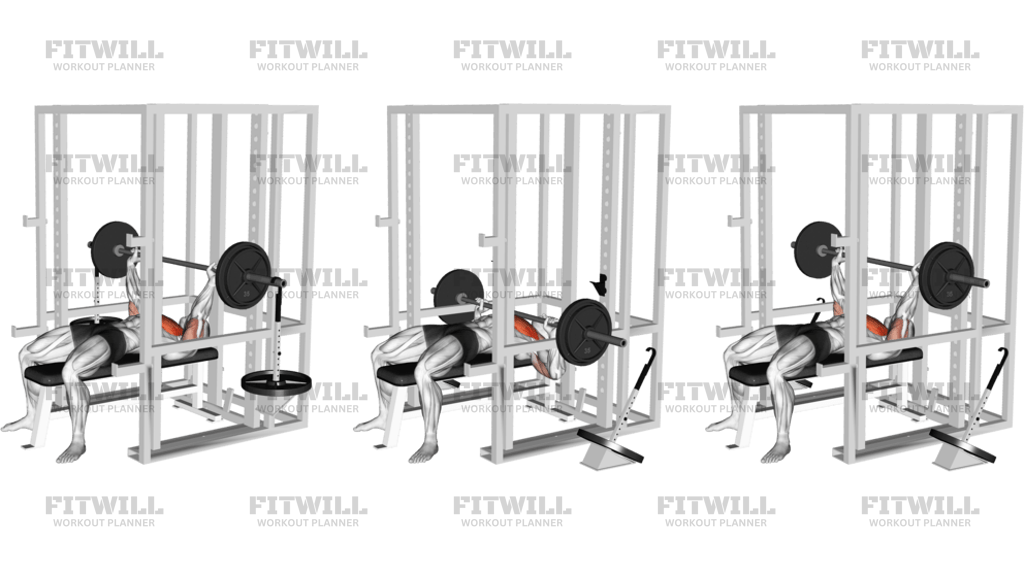
Barbell Weighted Bench Press is a flat-bench pressing exercise built around a loaded barbell moving from the rack to the chest and back again under control. It mainly trains the chest, with the front shoulders and triceps helping to press and stabilize each rep. The exercise is most useful when you want a straightforward horizontal press that develops upper-body strength, pressing skill, and repeatable bar path control.
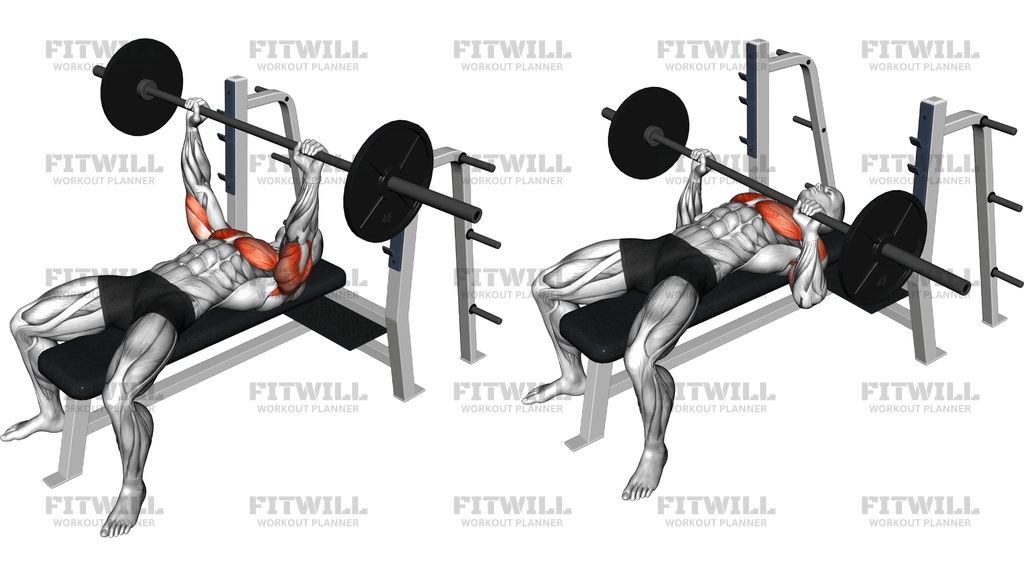
The setup matters because the bench position, grip width, and bar start height decide whether the rep feels solid or awkward. In the image, the lifter is lying on a flat bench inside a rack, reaching to a bar loaded with plates, with the shoulder blades set back and the feet planted for support. That position keeps the torso stable so the press comes from the chest and arms instead of from shifting or bouncing on the bench.
Done well, the bar lowers toward the mid-chest or lower chest in a smooth line, the elbows stay slightly tucked rather than flared hard to the sides, and the bar drives back up in the same path. A brief pause near the chest can help remove momentum and make each repetition cleaner. The goal is not to force the bar straight up from the shoulders; it is to keep the wrists stacked, the forearms vertical, and the press path consistent from the first rep to the last.
This is a common strength-building lift for beginners and experienced lifters alike, but the load should match the quality of the setup. Too much weight usually shows up as a loose upper back, a shallow touch point, or an uneven bar path. Use a spotter or safety stops when training near failure, especially with heavier sets. If the shoulders feel pinched, shorten the range slightly, check grip width, and keep the elbows from drifting too far behind the torso.
Fitwill
Log Workouts, Track Progress & Build Strength.
Achieve more with Fitwill: explore over 9600 exercises with images and videos, access built-in and custom workouts, perfect for both gym and home sessions, and see real results.
Start your journey. Download today!




Instructions
- Lie flat on the bench with your eyes under the bar and your feet planted firmly on the floor.
- Grip the bar slightly wider than shoulder width and wrap both thumbs around the bar.
- Pull your shoulder blades back and down so your upper back stays tight on the bench.
- Unrack the bar with straight arms and hold it over the mid-chest with wrists stacked over elbows.
- Lower the bar in a controlled line toward the lower to mid-chest.
- Keep the elbows angled slightly toward your torso instead of flaring them hard out to the sides.
- Lightly touch or pause the bar at the chest without bouncing it.
- Press the bar back up along the same path until the elbows are straight but not forcefully locked.
- Breathe in on the way down, press and exhale as the bar rises, then re-set your upper back before the next rep.
Tips & Tricks
- Set the bench so the bar starts directly above your shoulder line, not over your face or stomach.
- Keep your wrists stacked over your forearms; bent wrists make the press feel weaker and less stable.
- Drive your feet into the floor to keep your torso tight without lifting your hips off the bench.
- Touch the bar to the same spot on your chest every rep so the press path stays repeatable.
- If your elbows flare to 90 degrees, narrow the grip a little and tuck them slightly on the descent.
- Use a brief pause on the chest when you want cleaner strength work and less rebound from the rack setup.
- Stop the set if the bar drifts unevenly or one shoulder starts to rise faster than the other.
- Choose a load you can lower smoothly; a fast drop usually turns into a bounce at the bottom.
- Use the safety stops or a spotter when you are working close to failure in the rack.
Frequently Asked Questions
What does Barbell Weighted Bench Press train most?
It mainly trains the chest, with the front shoulders and triceps helping drive the press.
Why does the flat-bench setup matter so much?
A stable bench position lets you keep the shoulder blades set, the feet planted, and the bar path consistent.
Where should the bar touch on my chest?
Most lifters do best with the bar touching the lower to mid-chest, not high on the collarbone line.
How wide should my grip be?
Use a grip slightly wider than shoulder width so the forearms stay closer to vertical at the bottom.
Should my elbows flare out?
No. Keep them slightly tucked so the shoulders stay in a stronger pressing position.
Is this exercise beginner friendly?
Yes, as long as the load is light enough to keep the setup, touch point, and bar path under control.
What are the most common mistakes?
Loose upper-back tension, bouncing the bar off the chest, and pressing with bent wrists are the biggest ones.
Can I use a spotter or rack safeties for this lift?
Yes. That is the safest way to train this movement when the load is heavy or you are close to failure.