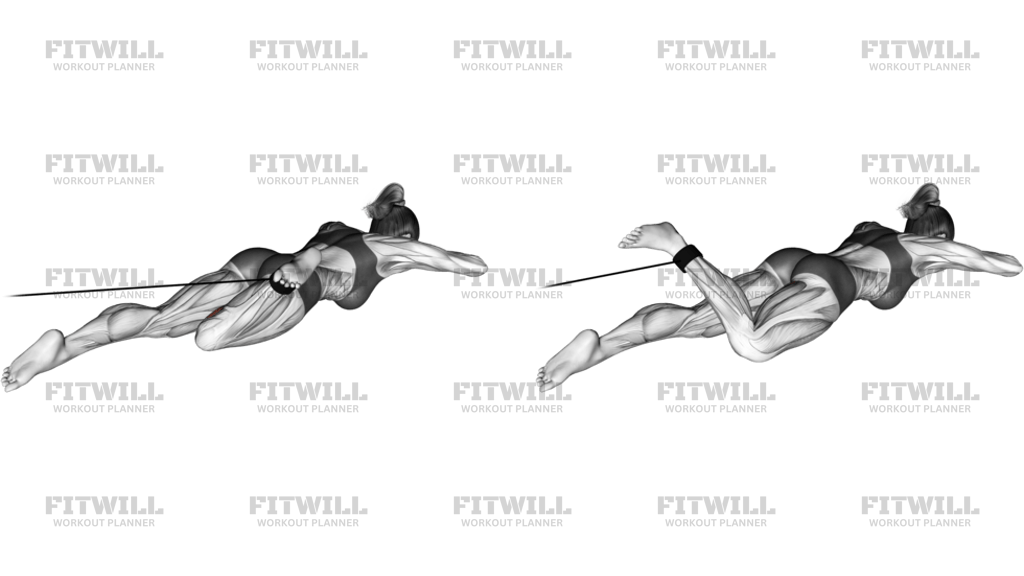
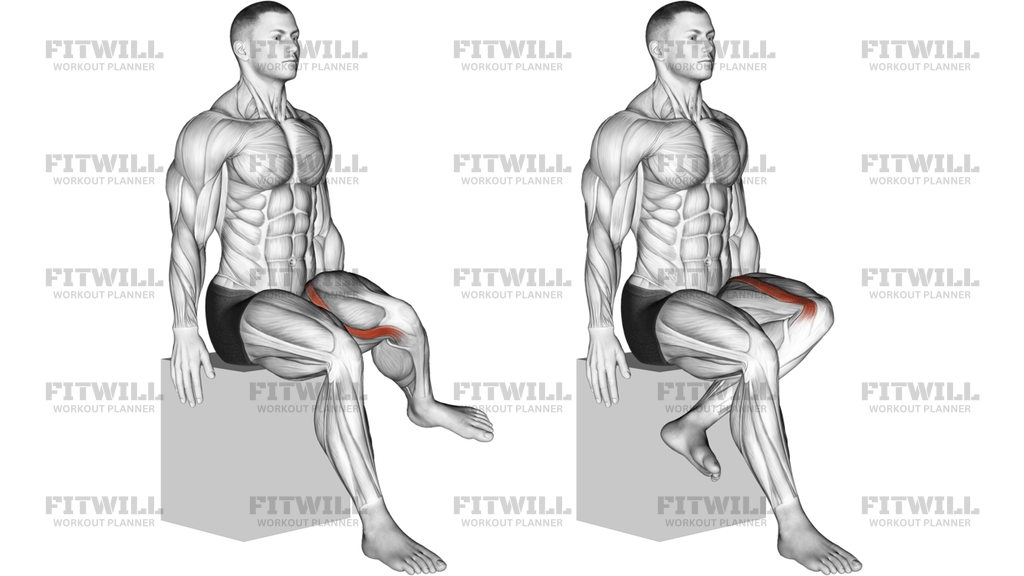
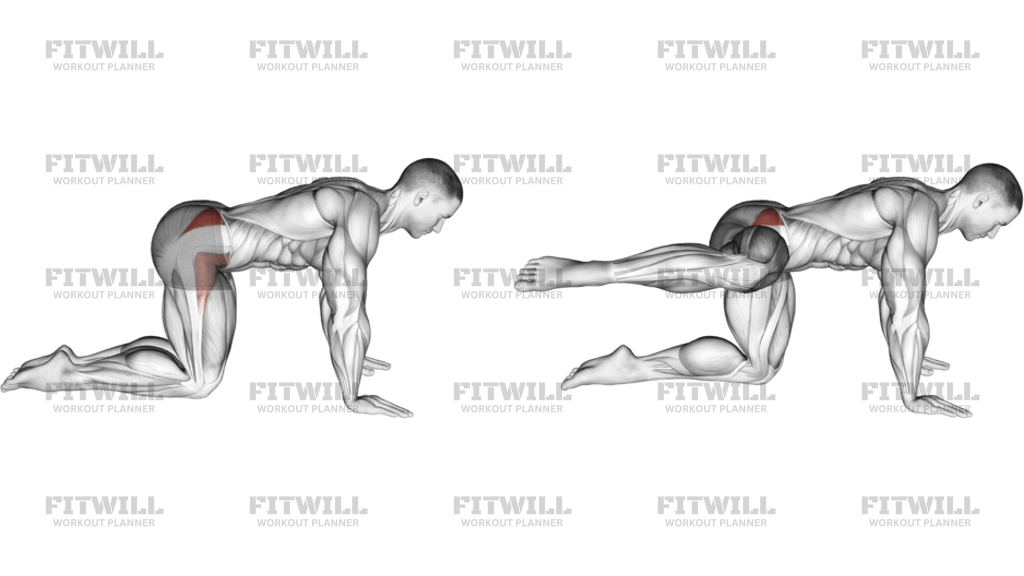
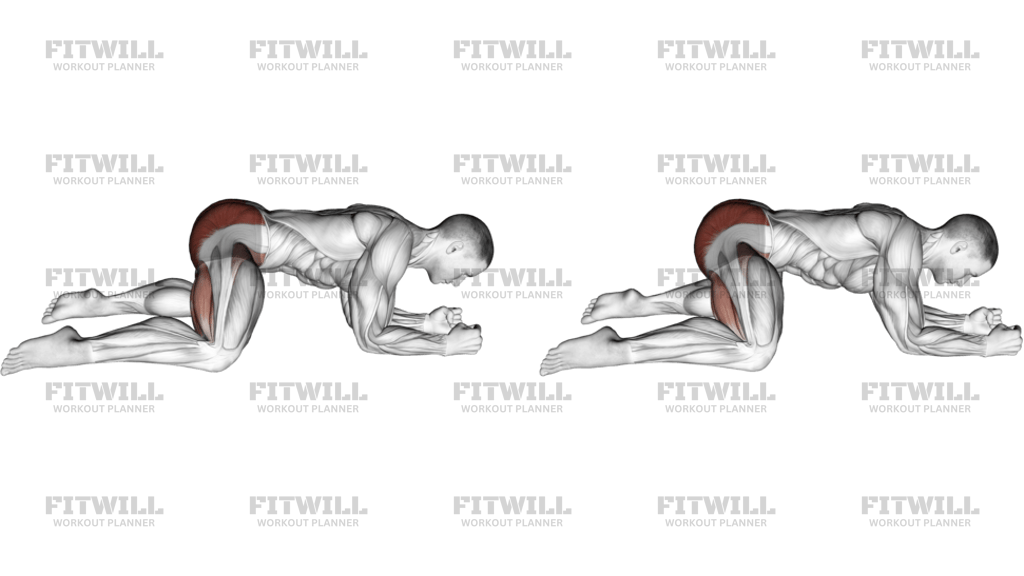
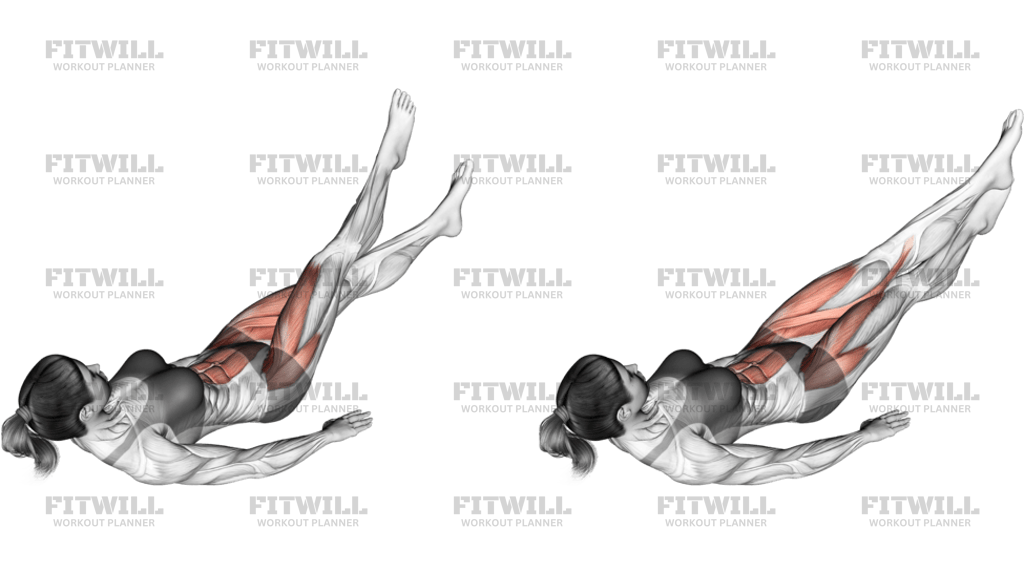
Flutter Kicks
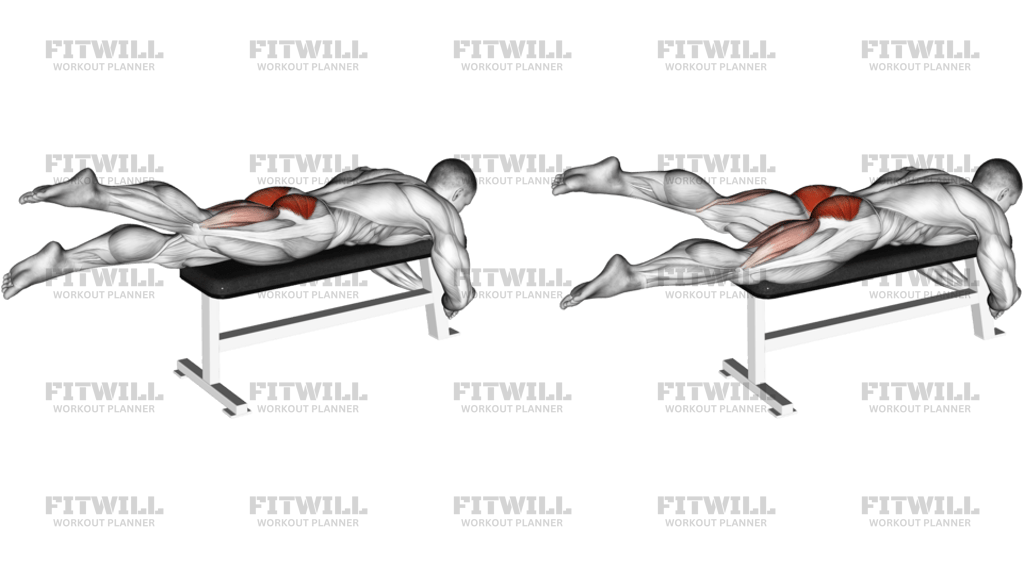
Flutter Kicks here is the prone, bench-supported version of the drill. Your torso lies face down on a flat bench while the legs alternate in short, quick kicks behind you. The setup matters because the bench removes a lot of body sway and makes the posterior-chain work come from the hips instead of from swinging the whole body.
This variation emphasizes glutes, hamstrings, and the spinal stabilizers while the core keeps the pelvis from tipping forward. The movement is small and rhythmic on purpose. If the kick gets too high, the lower back takes over and the legs stop doing the work you want.
Start by anchoring the upper body on the bench and letting the hips sit near the edge so both legs can move freely. Keep the ribcage down, press the pelvis lightly into the bench, and hold the bench with the hands if that helps you stay still. The rep should feel like alternating hip extension, not like kicking from the knees or arching the low back.
Use a smooth tempo and keep the range honest. The top leg should rise only as far as you can control without twisting, and the lower leg should stay long instead of collapsing toward the floor. Breathing should stay steady so the trunk does not tense up and turn the drill into a back extension.
Flutter Kicks are useful for posterior-chain conditioning, warmups, and low-load endurance work when you want glutes and hamstrings to stay active without heavy loading. They are also a good choice when you want to teach pelvic control on the bench before moving to harder prone leg-raise or hip-extension variations.
[ Workout Log & Planner ]
Put your next workout in Fitwill
Keep your plan and training log ready when you are.


Instructions
- Lie face down on a flat bench with your hips near the edge so both legs can move freely behind you.
- Let your torso rest on the bench and reach your arms down to hold the bench or keep them tucked for balance.
- Set your legs long with the knees mostly straight and the toes pointed slightly away from you.
- Brace your midsection lightly and press your pelvis into the bench so your low back stays quiet.
- Lift one leg a small distance behind you as the other leg lowers, keeping the motion alternating and continuous.
- Keep the kicks short and controlled rather than trying to lift the feet high above the bench line.
- Switch legs at a steady rhythm while keeping the hips square and the torso still on the bench.
- Breathe steadily through the set and stop the rep as soon as the lower back starts to arch or the hips start rocking.
- Lower both legs with control and reset your position before the next set.
Tips & Tricks
- Keep the hips close to the bench edge so the legs can alternate without you sliding forward.
- Think small kicks, not big swings; the rep should feel like the glutes are lifting the leg, not the momentum.
- If your lower back arches, reduce the kick height before you reduce the pace.
- Keep both thighs long and the knees nearly straight so the work stays on the hips instead of turning into a bent-knee kick.
- Use the hands on the bench as light anchors if your torso wants to twist or drift.
- Point the toes only slightly; an aggressive foot position can make the legs feel tense without improving the kick.
- A slower alternating tempo usually keeps the pelvis quieter than fast, frantic fluttering.
- Stop the set when the rear of the hips and hamstrings stop driving the motion and the low back starts taking over.
Frequently Asked Questions
What muscles do prone Flutter Kicks on a bench work?
They mainly target the glutes and hamstrings while the core and lower back stabilize the pelvis on the bench.
Why do I need a bench for this version of Flutter Kicks?
The bench supports the torso and lets the legs hang free, which keeps the drill focused on alternating hip extension instead of floor-based leg lifts.
Should my knees stay straight during the kicks?
Yes, mostly straight. A soft knee is fine, but bending the knees a lot turns the exercise into a different movement and reduces the glute and hamstring emphasis.
How high should I lift my legs in bench Flutter Kicks?
Only high enough to keep the pelvis stable and the lower back from arching. Small kicks are usually more effective than big, swingy lifts.
What is the most common mistake with this exercise?
People usually kick too high and turn the set into a low-back arch instead of a controlled alternating hip-extension drill.
Can beginners do this exercise?
Yes, if they keep the kicks small and the torso anchored. It is easier to learn when the tempo is slow and the hips stay square.
How long should I do bench Flutter Kicks?
Use short timed sets, such as 15 to 30 seconds, or stop when the pelvis starts rocking and the lower back begins to take over.
What should I do if I feel this mostly in my lower back?
Reduce the kick height, tighten the brace, and press the hips more firmly into the bench. If that does not help, stop the set and switch to a smaller range.