Gironda Sternum Chin
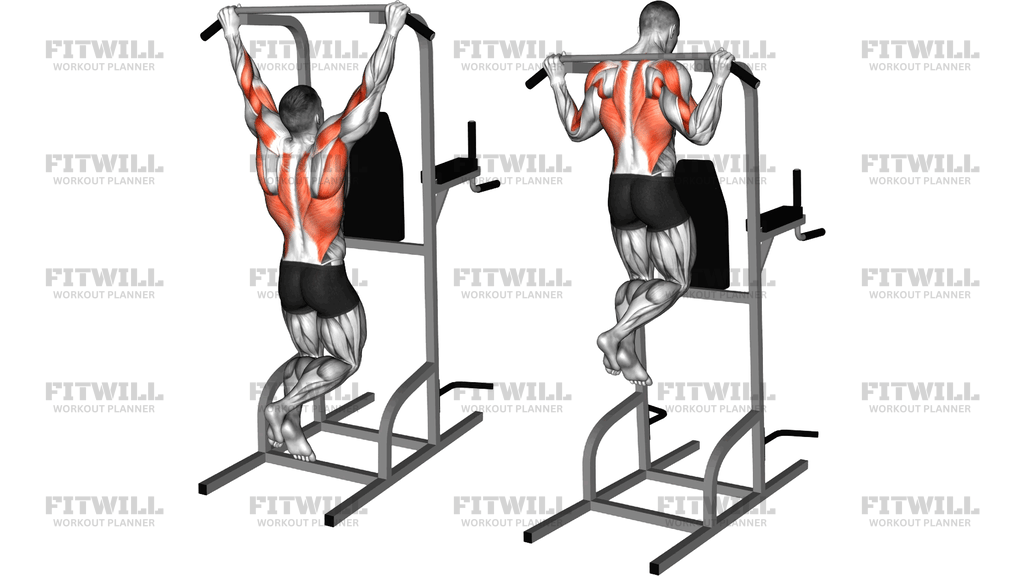
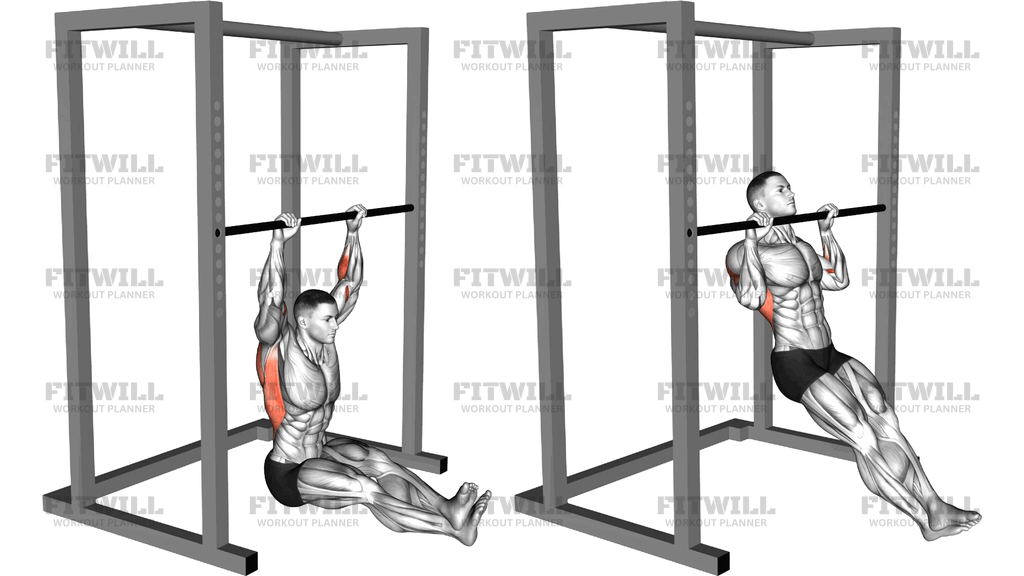
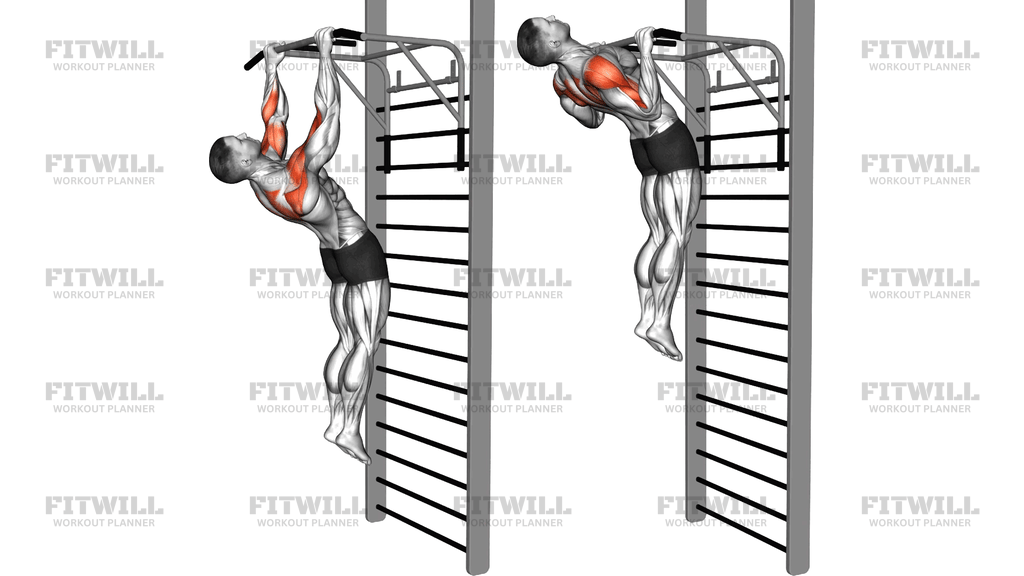
Gironda Sternum Chin is a strict bodyweight pulling exercise built around a high chest-to-bar path. The rep is not a generic pull-up. The torso stays slightly leaned back, the chest stays lifted, and the bar travels toward the upper chest or sternum so the lats, biceps, lower traps, rhomboids, and grip have to control the full pull. That steeper body position is what gives the movement its Gironda-style feel and makes it different from a straight vertical chin-up.
The setup matters because the exercise is easy to turn into a swing or shrug if the shoulders are not organized before the first rep. Start from a controlled hang, keep the ribs stacked, and set the shoulders down away from the ears before you pull. From there, the elbows should drive down and back while the chest reaches toward the bar instead of the body folding in half. When the rep is done well, the sternum rises toward the bar as the upper back stays tight.
This exercise is useful when you want a demanding bodyweight back movement that teaches scapular control, torso position, and lat engagement at the same time. It can be used as a main pulling lift, a skillful accessory after heavier back work, or a test of strict strength for athletes who already own clean chin-ups. Because the range is high and the position is specific, the lift rewards patience more than speed.
Keep the rep smooth from start to finish. If the body starts to kick, the neck reaches forward, or the shoulders dump into the ears, the set is no longer a sternum chin and the load is too much. Use assistance, reduce reps, or shorten the set before you let the pattern break. Done correctly, the movement should feel powerful through the lats and upper back, with the grip and arms finishing the job rather than taking over.
[ Workout Log & Planner ]
Put your next workout in Fitwill
Keep your plan and training log ready when you are.


Instructions
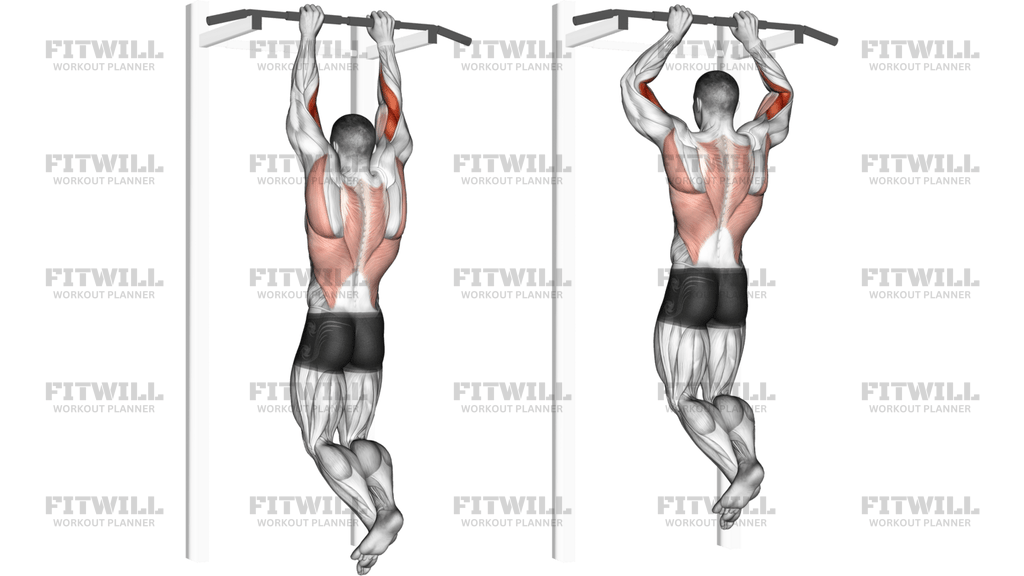
- Take a shoulder-width chin-up grip on a secure bar and hang with straight arms, stacked ribs, and your ankles crossed or legs together.
- Set your shoulders down away from your ears before you start the first pull.
- Lean back just enough to keep the chest lifted while the body stays tight from shoulders to feet.
- Begin each rep from a dead hang without kicking or swinging.
- Pull your elbows down and back as you drive your sternum toward the bar.
- Keep the neck long and let the chest rise instead of reaching the chin forward.
- Finish when the upper chest or sternum reaches the bar with control.
- Lower slowly to full arm extension and reset your body before the next rep.
Tips & Tricks
- Think about driving the elbows to your back pockets instead of trying to lift the chin higher.
- Keep the sternum proud and the ribs controlled so the torso does not collapse as you pull.
- Cross the ankles or keep the legs squeezed together to reduce swinging.
- A strict rep should feel like a vertical pull with a slight rearward lean, not a full kip.
- If the bar stops at the chin, the rep is too short for this variation; keep pulling until the upper chest reaches it.
- Use a clean grip width that lets the forearms stay under the bar without forcing the shoulders forward.
- Stop the set when the shoulders shrug or the chest falls away from the bar.
- Add assistance before adding momentum if you cannot keep the same chest-to-bar path.
Frequently Asked Questions
What muscles does Gironda Sternum Chin work?
It mainly trains the lats, biceps, lower and mid traps, rhomboids, rear delts, and forearms. The core helps hold the leaned-back torso position.
How is this different from a regular chin-up?
A sternum chin uses a more pronounced torso lean and a higher pull so the bar comes toward the upper chest instead of stopping at the chin.
Where should the bar land at the top?
The goal is to bring the bar to the upper chest or sternum area while keeping the body tight and the shoulders controlled.
Can beginners do Gironda Sternum Chin?
Yes, but most beginners should use assistance until they can keep a dead hang, a tight torso, and a clean chest-to-bar path.
What is the biggest form mistake?
Swinging the legs and turning the rep into a shrug or half-rep is the most common mistake. The torso should stay organized and the elbows should do the work.
Should I use an overhand or underhand grip?
Use the grip style that matches the version you are coaching in your program, but keep the hands close enough that you can pull the chest to the bar without losing shoulder control.
How do I make the exercise easier?
Use a band, an assisted pull-up machine, or a lower rep target while keeping the same chest-to-bar path and no swinging.
Should I feel this in my arms or back?
You should feel a strong mix of lats and upper back with the biceps and forearms helping finish the rep. If the arms take over completely, the torso position is usually off.
Is it supposed to be explosive?
The pull can be forceful, but it should still be controlled. Explosive does not mean loose or jerky.