Wide-Grip Pull-Up On Dip Cage
Wide-Grip Pull-Up On Dip Cage is a bodyweight pulling exercise that trains the lats, upper back, biceps, and shoulder stabilizers while demanding good hanging control. The wide overhand grip makes the pull more shoulder-driven than a narrow chin-up, so the setup matters: you want a stable hang, a quiet torso, and elbows that travel down instead of flaring into a shrug. It is a strong choice for building vertical pulling strength and for teaching the body how to control itself on a fixed bar.
The movement starts from a dead hang or near-dead hang on the pull-up station of the dip cage. Because the hands are set wide, the shoulders should stay packed rather than hanging loosely into the ears. Cross the ankles or keep the feet slightly behind the body if that helps reduce swing, then brace the midsection before each rep so the legs and hips stay quiet while the arms pull.
At the top of the rep, aim to bring the upper chest toward the bar or handle line without turning the set into a kip. The elbows should drive down and slightly back, the ribs should stay controlled, and the neck should remain long. A clean rep is about pulling the chest up by moving the shoulder blades and upper arms together, not by craning the chin forward or kicking the legs for help.
Lower yourself under control until the elbows are straight again and the shoulders are back in a strong hanging position. That eccentric phase is where a lot of the training value lives, so resist the urge to drop quickly. If the shoulders feel pinched or the body starts to swing, shorten the set or use assistance rather than chasing a bigger range than you can control.
This exercise fits well in strength-focused back work, upper-body pulling sessions, or calisthenics progressions. It is useful for lifters who want a demanding bodyweight back exercise and for athletes who need stronger vertical pulling mechanics. Beginners can still use it by adding assistance with a band or machine, but the priority should always be a controlled hang, a smooth pull, and a clean return to the bottom.
Fitwill
Log Workouts, Track Progress & Build Strength.
Achieve more with Fitwill: explore over 9600 exercises with images and videos, access built-in and custom workouts, perfect for both gym and home sessions, and see real results.
Start your journey. Download today!




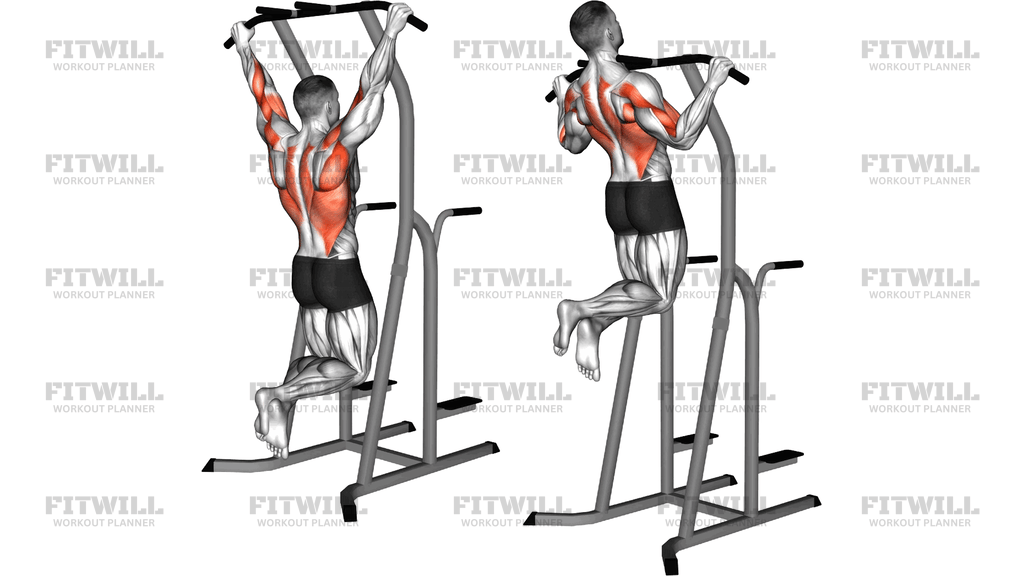
Instructions
- Grip the highest pull-up bar on the dip cage with a wide overhand grip, slightly wider than shoulder width, and hang with your arms fully extended.
- Cross your ankles behind you or keep your feet slightly back so the legs stay quiet and you do not swing.
- Set your shoulders down away from your ears and brace your midsection before the first pull.
- Pull your elbows down and out until your upper chest rises toward the bar.
- Keep your torso tight and avoid kicking, shrugging, or turning the rep into a kip.
- Briefly control the top position, then lower yourself until your arms are straight again.
- Move through the descent slowly enough that the shoulders stay organized and the body does not swing.
- Exhale as you pull up, then inhale as you return to the bottom position.
- Complete all reps with the same grip width and body position.
Tips & Tricks
- Think about driving the elbows toward your lower ribs instead of trying to yank your chin over the bar.
- Keep the chest proud without over-arching the lower back; the pull should come from the upper body, not a big hip swing.
- If the shoulders creep toward the ears, reset and start the rep again with the scapulae pulled down first.
- A grip that is too wide can shorten the range and irritate the shoulders, so keep the hands only as wide as you can control cleanly.
- Use a slower lowering phase than lifting phase to make each rep count and reduce swinging.
- Let the legs stay crossed or slightly bent so they do not turn into a counterweight.
- Stop one rep before your form turns into a kip, especially if the last inch of the pull depends on momentum.
- If you cannot reach full height, use band assistance or a lower rep target rather than forcing partial, jerky reps.
Frequently Asked Questions
What muscles does Wide-Grip Pull-Up On Dip Cage work most?
It mainly works the lats and upper back, with strong help from the biceps, rear shoulders, lower traps, and grip muscles.
Can beginners perform this exercise?
Yes, but many beginners need band assistance, a pull-up machine, or a lower rep target so they can keep the hang and the lowering phase controlled.
How wide should my grip be on the dip cage?
Set the hands wider than shoulder width, but not so wide that you lose shoulder control or shorten the range too much.
What is the most common mistake on wide-grip pull-ups?
The biggest mistake is turning the rep into a swing or kip and letting the shoulders shrug up instead of pulling cleanly from a dead hang.
Should my chin or chest touch the bar?
Aim to bring the upper chest toward the bar line as far as your shoulder mobility allows, but do not force extra height by jutting the head forward.
Why use a dip cage instead of a plain pull-up bar?
A dip cage gives you a stable fixed station and usually enough clearance to hang freely, which helps you keep the rep strict and consistent.
How should my body stay during the rep?
Keep the torso tight, the ankles crossed or the feet slightly behind you, and the neck relaxed so the pull stays focused on the upper body.
What can I do if I cannot complete full reps yet?
Use a band, a partner assist, or negatives only, then build toward full bodyweight reps with the same wide grip and controlled lowering.