Rocky Pull-Up Pulldown
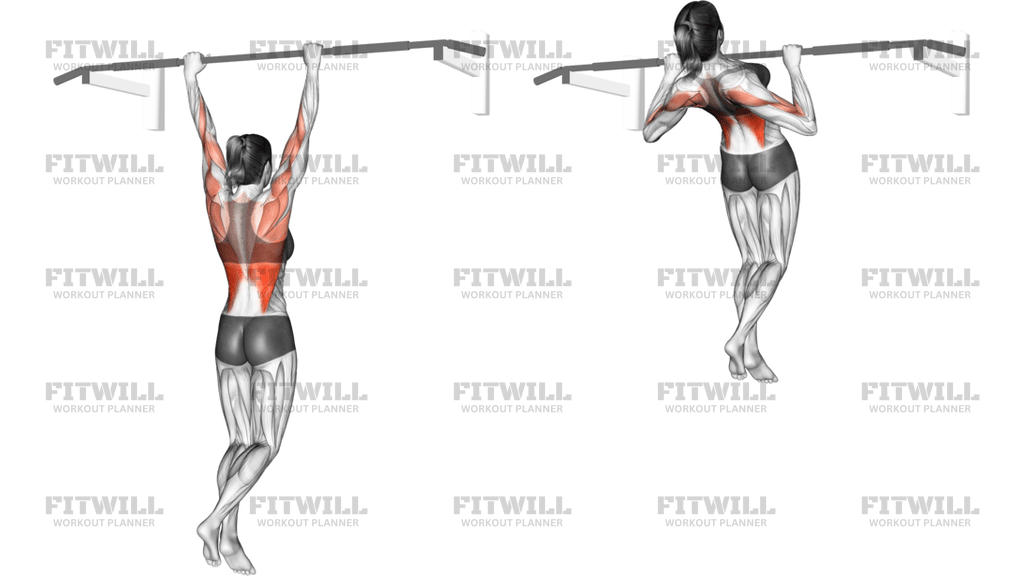
Rocky Pull-Up Pulldown is a vertical pulling exercise built around a strict hang, a strong shoulder set, and a controlled pull from the lats and upper back. In the bodyweight version shown here, you hang from a fixed overhead bar with an overhand grip and cross the ankles so the lower body stays quiet. The goal is not to swing your way through the rep, but to create a clean line from a dead hang to the top position and back down again.
This movement trains the back, biceps, forearms, and the smaller muscles that keep the shoulder blade steady as you pull. Because the body is suspended, the trunk also has to resist extension and rotation, so the abs and glutes help keep the torso organized. That makes Rocky Pull-Up Pulldown useful for anyone who wants a stronger vertical pulling pattern, better scapular control, and more upper-body strength that carries over to other pulling work.
The setup matters because the first few seconds decide whether the rep is strict or sloppy. Start with the hands set slightly wider than shoulder width, arms long, ribs stacked, and the shoulders not shrugged up into the ears. Cross the ankles or keep the feet together so you do not kick for momentum, then make the first pull by depressing the shoulder blades and driving the elbows down rather than yanking with the hands.
At the top, bring the chin to the bar or slightly above it without craning the neck forward. A good rep feels like the chest rises toward the bar while the elbows travel down and back beside the torso. Lower yourself under control until the arms are straight again, keeping the descent smooth so the shoulders stay centered and the lats stay loaded instead of dropping abruptly into the bottom position.
If you are using a pulldown station or assisted pull-up machine for the same pattern, the coaching cues stay the same: chest tall, elbows driving down, no swinging, and a slow return. That version is especially useful if bodyweight pull-ups are not yet available, because it lets you practice the same vertical path with a load you can own. Stop the set when the torso starts to sway, the neck reaches for the bar, or the shoulder blades lose control. Clean reps matter more here than forcing a bigger count.
[ Workout Log & Planner ]
Put your next workout in Fitwill
Keep your plan and training log ready when you are.


Instructions
- Grip the pull-up bar with an overhand grip slightly wider than shoulder width and hang with your arms fully extended.
- Cross your ankles behind you or keep your feet together so your legs stay quiet and do not swing.
- Set your ribs down, brace your abs, and let your shoulders settle away from your ears before the first pull.
- Pull your shoulder blades down and back, then drive your elbows toward your ribs as your chest rises toward the bar.
- Keep your body in one line and avoid kicking, arching, or twisting as you pull yourself upward.
- Bring your chin to the bar or slightly above it without jutting your neck forward.
- Pause briefly at the top, then lower yourself in a smooth, controlled descent until your arms are straight again.
- Reset at the bottom, keep tension through your shoulders, and begin the next rep without bouncing.
Tips & Tricks
- Keep the grip just outside shoulder width; a very wide grip usually shortens the range and makes the shoulders work harder than the lats.
- Think elbows to ribs, not chin to bar. If you lead with the hands, the rep usually turns into an arm pull with more shrugging.
- Crossing the ankles reduces sway and keeps the line of pull cleaner, especially on the last few reps.
- Start each rep from a dead hang only if you can keep the shoulders controlled; otherwise use a small shoulder set first instead of dropping suddenly.
- If your shoulders climb toward your ears, the set is too heavy or the bar path is getting too short.
- Lower under control for two to three seconds to keep tension on the lats and avoid bouncing out of the bottom.
- Exhale as you pull and inhale on the way down so your torso stays braced without holding your breath the entire set.
- On an assisted machine or pulldown station, stop the return just before the weight stack slams or the shoulders roll forward.
- If you can only get partway up, use a band or assistance and keep the same elbow path instead of turning the rep into a kick-up.
Frequently Asked Questions
What muscles does Rocky Pull-Up Pulldown work?
It mainly trains the lats and upper back, with the biceps, forearms, and lower traps helping through the pull. The abs and glutes also work to keep the body still under the bar.
Can beginners do Rocky Pull-Up Pulldown?
Yes, but most beginners should use assistance from a band, machine, or a lower rep target. The key is to keep the pull strict and avoid turning it into a swing.
Should my chin touch the bar on Rocky Pull-Up Pulldown?
Your chin should clear the bar, and a slightly higher finish is fine if your shoulders stay down and your neck stays neutral. Do not crane your head forward just to fake a higher rep.
Why do my shoulders feel jammed at the top?
That usually means you are shrugging instead of pulling the shoulder blades down first. Reduce the load or assistance and finish the rep with the chest rising, not the traps taking over.
Can I kip or swing on Rocky Pull-Up Pulldown?
No. The image shows a strict vertical pull, so momentum should stay out of it. A small amount of body motion can creep in on hard reps, but repeated swinging turns it into a different exercise.
What if I cannot finish a full rep?
Use a band, an assisted pull-up machine, or a pulldown station and keep the same elbow path. Partial reps are fine as long as they are strict and the shoulders stay controlled.
What is the best grip for Rocky Pull-Up Pulldown?
A shoulder-width to slightly wider overhand grip is the most practical starting point. It usually lets you pull with the back instead of overloading the shoulders or shortening the range too much.
How slow should the lowering phase be?
A controlled two- to three-second descent works well for most lifters. If the bottom position collapses or your shoulders dump forward, slow it down or use more assistance.