Wide Seated Pull-Up
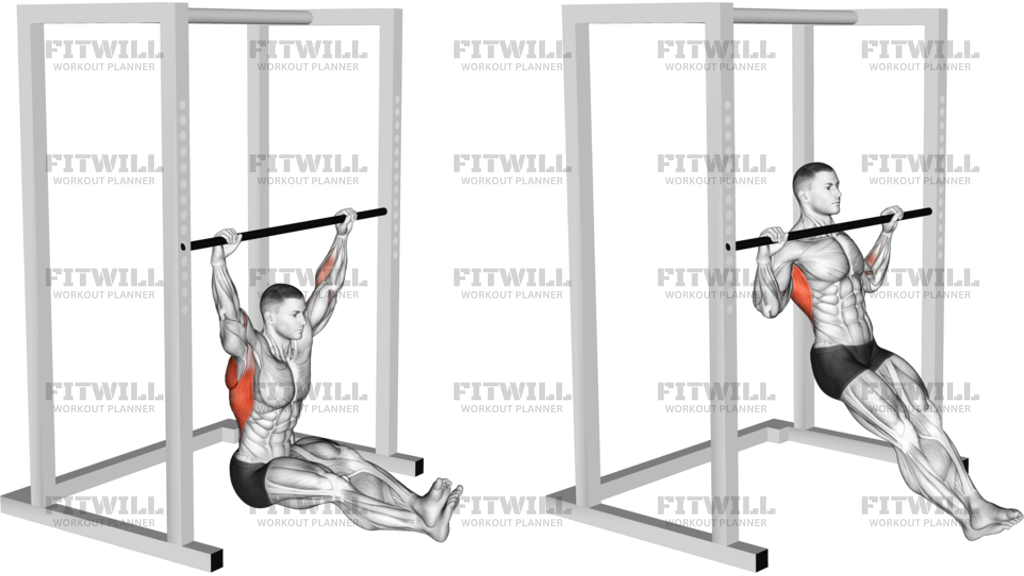
Wide Seated Pull-Up is a bodyweight back exercise performed from the floor or low seat under a fixed overhead bar. It trains the lats, upper back, rear shoulders, and arm flexors while also asking the trunk to stay organized as you pull your body toward the bar. The wide grip shifts emphasis toward shoulder adduction and upper-back control, so the setup matters as much as the pull itself.
The exercise starts with you seated beneath the bar, legs extended in front of you, and your hands placed wider than shoulder width. From that position, your torso should be slightly leaned back with the arms long at the bottom, not collapsed through the chest or shrugged into the shoulders. Because the body is hanging from a seated position rather than swinging, every rep is built on position and tension instead of momentum.
Wide Seated Pull-Up is useful when you want a demanding pulling pattern without standing under a full hanging pull-up. It can be used to build strength, reinforce scapular control, and teach cleaner pulling mechanics for athletes or lifters who need more upper-back work. The bar height, grip width, and leg position all affect how hard the movement feels, so small adjustments can make the exercise more manageable or more challenging.
As you pull, drive the elbows down and slightly back while keeping the chest tall enough to let the bar travel toward the upper chest. Avoid yanking with the hands or turning the rep into a shrug. The goal is a controlled upward pull, a brief squeeze near the top, and a steady return to the seated start so the lats and upper back stay loaded through the full range.
Wide Seated Pull-Up also rewards careful safety choices. Use a secure bar or rack, choose a grip width that your shoulders tolerate, and stop the set if you lose the ability to keep the torso controlled. If you cannot reach a clean top position yet, shorten the range or reduce leverage rather than forcing sloppy reps. The best sets look smooth, repeatable, and tight from the first pull to the last.
Fitwill
Log Workouts, Track Progress & Build Strength.
Achieve more with Fitwill: explore over 9600 exercises with images and videos, access built-in and custom workouts, perfect for both gym and home sessions, and see real results.
Start your journey. Download today!




Instructions
- Sit on the floor or a low seat under a secure overhead bar and grip it wider than shoulder width with an overhand grip.
- Extend your legs in front of you with your heels planted lightly on the floor and lean back just enough to start with tension on the bar.
- Set your chest up, keep your ribs stacked over your pelvis, and let your shoulders sit down away from your ears before you pull.
- Start each rep by drawing your shoulder blades down and back so the first motion comes from the upper back, not the hands.
- Pull your chest toward the bar by driving your elbows down and out to the sides, keeping the grip wide and the wrists straight.
- Finish the rep when the bar reaches the upper chest or collarbone area without losing the leaned-back seated position.
- Pause briefly at the top to control the squeeze through the lats and upper back.
- Lower yourself slowly until the arms are straight again and the shoulders stay packed, then reset before the next rep.
- Breathe in as you lower and exhale as you pull, then stop the set if you have to swing, shrug, or jerk to keep moving.
Tips & Tricks
- If your shoulders feel pinched, bring the hands in slightly; an ultra-wide grip often turns this into a shoulder test instead of a back exercise.
- Keep the chest lifted just enough to pull the bar toward the upper chest, but do not turn the rep into a big lean-back row.
- Think about pulling the elbows toward your back pockets so the lats do more work than the biceps.
- Keep the legs long and quiet on the floor; kicking or sliding the heels usually means you are using momentum to finish the rep.
- Stop each rep before the shoulders roll forward at the bottom, because losing that packed start makes the next pull much weaker.
- A short pause at the top exposes cheating quickly and makes the set far more useful than rushed touch-and-go reps.
- Use a smaller range if you cannot reach the bar to the upper chest without shrugging or craning the neck upward.
- Treat the descent as part of the set: a slow lower keeps tension on the lats and upper back instead of dropping into the bottom.
- If the bar is too high to reach safely from the floor, use a lower setup or a different variation rather than jumping into position.
Frequently Asked Questions
What muscles does Wide Seated Pull-Up work?
It mainly hits the lats and upper back, with the rear shoulders, biceps, and forearms helping to control the pull.
Is Wide Seated Pull-Up good for beginners?
Yes, if they can keep the torso controlled and reach the bar without swinging. Beginners may need a narrower grip or a shorter range at first.
How wide should my grip be on Wide Seated Pull-Up?
Wide enough to feel the lats and upper back work, but not so wide that your shoulders pinch. Usually a little wider than shoulder width is enough.
Why are my feet staying on the floor during Wide Seated Pull-Up?
They help keep you anchored and reduce swinging. Use the legs as a quiet support point, not a push-off to make the rep easier.
What should the bar touch at the top of Wide Seated Pull-Up?
Aim for the upper chest or collarbone area if your setup allows it. If you have to crane your neck to get there, shorten the range and keep the pull cleaner.
What are the most common mistakes on Wide Seated Pull-Up?
Shrugging the shoulders, using a grip that is too wide, and kicking the heels to create momentum are the biggest ones.
Can I substitute Wide Seated Pull-Up for a regular pull-up?
It is a useful substitute when you want a more controlled pull from the floor or under a fixed bar. It is still a vertical pulling pattern, but the seated setup changes the leverage.
How do I make Wide Seated Pull-Up harder?
Use a wider but still comfortable grip, pause longer at the top, slow the lowering phase, or start from a more stretched seated position.