Groin Crunch
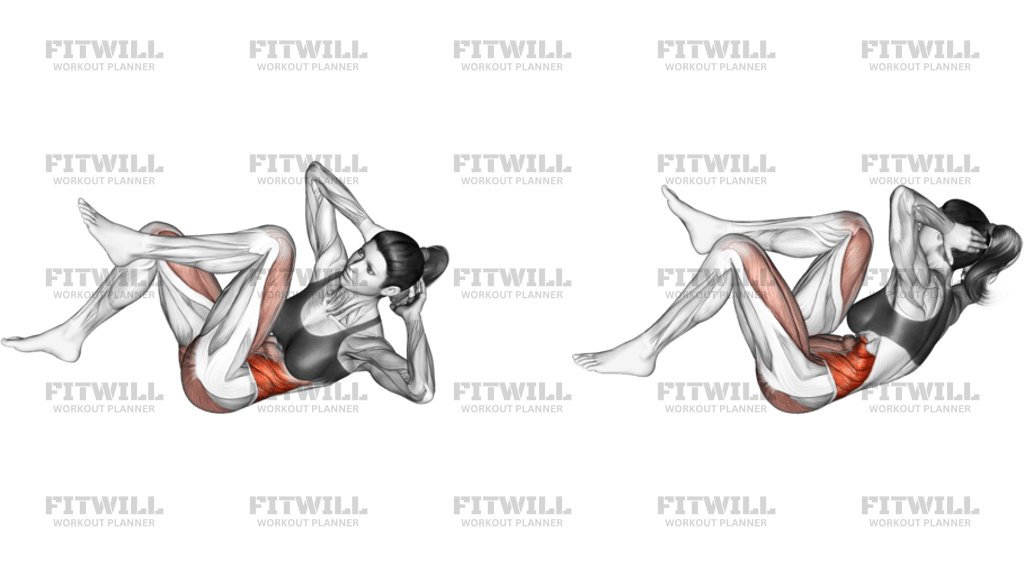
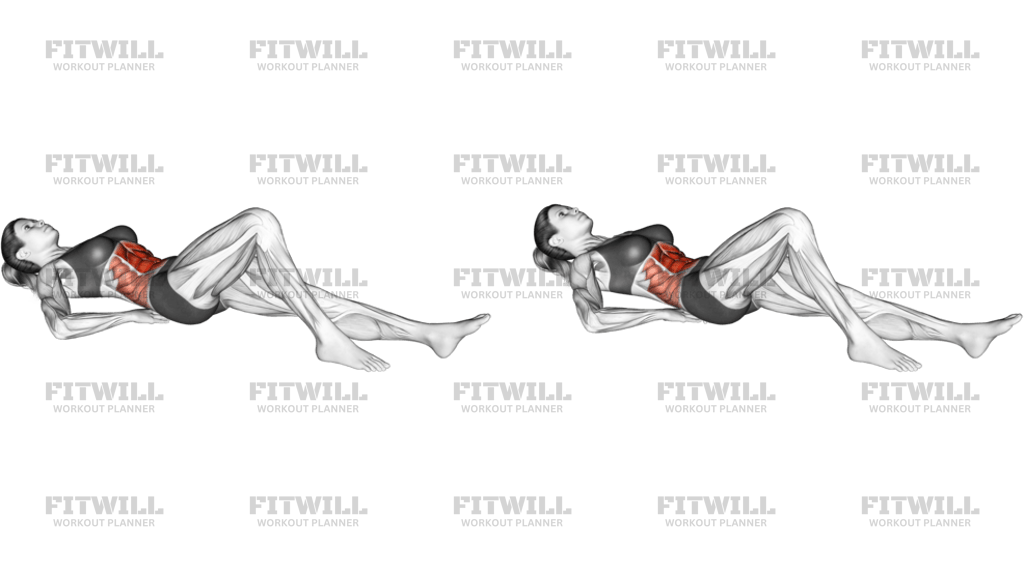
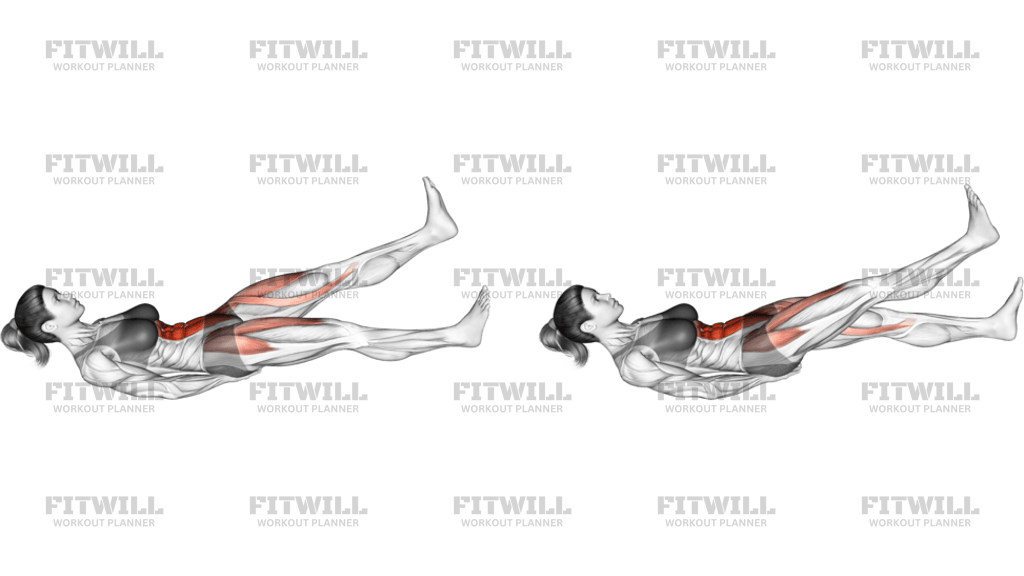
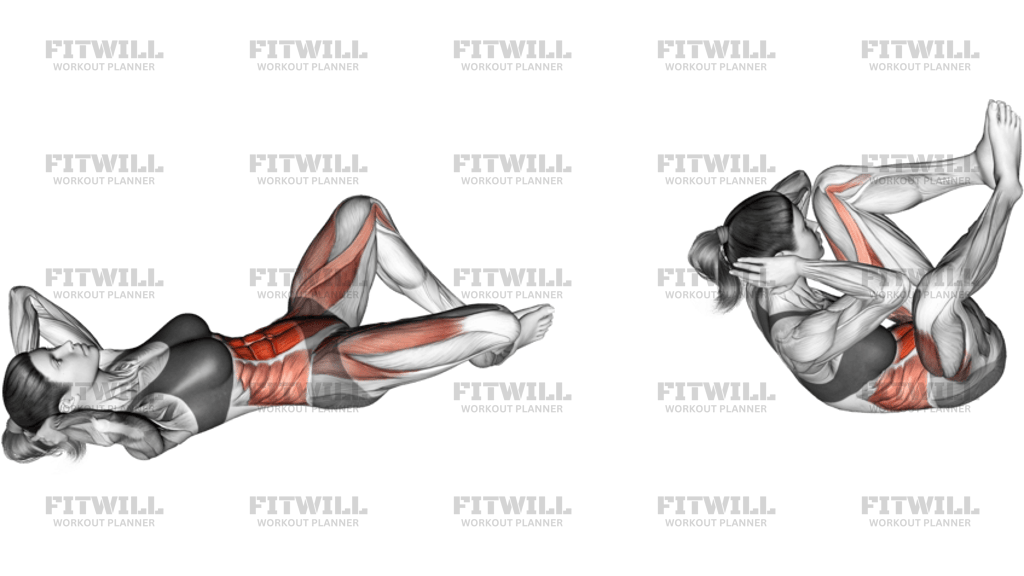
Groin Crunch is a bodyweight floor crunch variation that uses a crossed-leg setup to challenge the abs, obliques, hip flexors, and the muscles that stabilize the pelvis and hips. In the image, the exercise is performed on the floor with one foot planted and the other leg crossed over the opposite knee, which changes the leverage at the hips and makes the trunk curl work a little harder.
The setup matters because the crossed-leg position changes where the tension goes. Lie on your back, bend your knees, and place one ankle across the opposite thigh or knee while keeping the support foot grounded. Keep your lower back heavy, your chin slightly tucked, and your hands light behind your head so the neck stays relaxed.
From there, the working side of the torso curls up and slightly across. Exhale as you bring your shoulder blades off the floor and reach the ribcage toward the crossed knee without pulling on the head or forcing the elbow forward. The goal is a short, controlled crunch with the pelvis staying mostly quiet instead of a big swinging twist.
Lower under control until the shoulder blades touch down again and the abs can re-brace. If the hip flexors take over, the lower back arches, or the crossed knee position feels pinchy, shorten the range or make the setup simpler. That keeps the exercise focused on trunk control instead of turning it into a sloppy momentum drill.
Use Groin Crunch as a controlled core accessory when you want a floor-based movement that combines abdominal flexion with a little diagonal tension through the hips. It fits well in warm-ups, core finishers, and bodyweight circuits where you want a low-load exercise that still demands clean position and good breathing.
[ Workout Log & Planner ]
Put your next workout in Fitwill
Keep your plan and training log ready when you are.


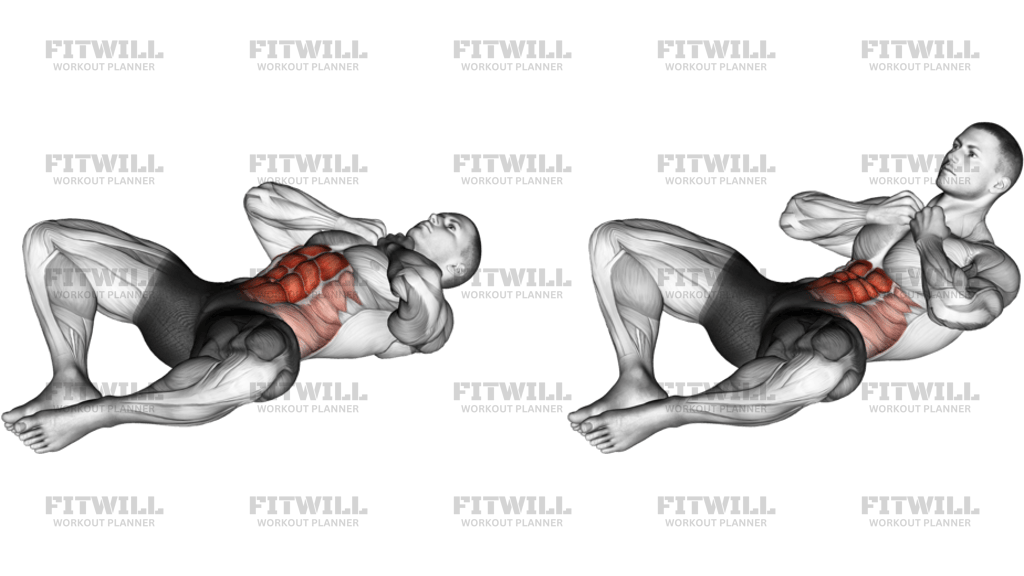
Instructions
- Lie on your back on the floor and bend both knees so you can set the crossed-leg position.
- Plant one foot firmly and cross the opposite ankle over the other thigh or knee.
- Place your hands lightly behind your head and keep your elbows open.
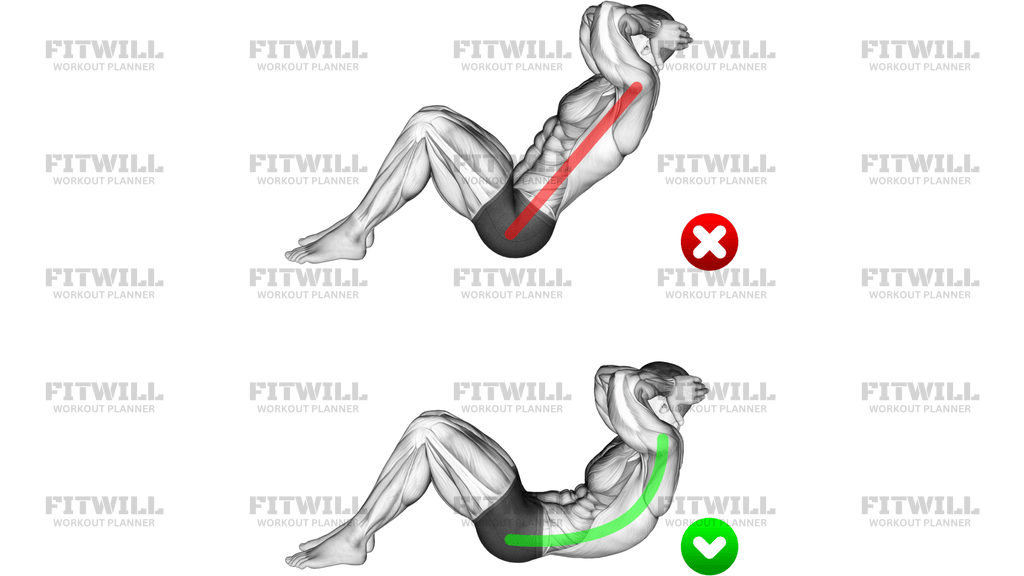
- Press your lower back gently toward the floor before the first rep starts.
- Exhale and curl your head and shoulder blades off the floor.
- Bring your ribcage toward the crossed knee with a small diagonal crunch.
- Pause for a beat at the top without yanking on your neck.
- Lower slowly until your shoulder blades touch down again.
- Reset your brace before repeating or switching sides.
Tips & Tricks
- Keep the support foot planted so the pelvis stays steady instead of rocking side to side.
- Let the crossed ankle rest on the thigh or knee; do not force the leg higher than your hip mobility allows.
- Think about lifting the ribs toward the pelvis, not swinging the elbow across your body.
- Keep your hands light so the neck is not doing the work.
- Exhale as you curl up to help the lower ribs stay down and the abs stay engaged.
- If your hip flexors dominate, shorten the range and stop the rep before the low back arches.
- Use a slower lowering phase than lifting phase to keep tension in the trunk.
- Keep the chin slightly tucked so the head follows the ribcage instead of leading it.
Frequently Asked Questions
What muscles does Groin Crunch work?
Groin Crunch mainly works the abs and obliques, with help from the hip flexors and the muscles that stabilize the hips and pelvis. The crossed-leg setup adds a little extra demand through the groin and inner-thigh line.
Is the crossed-leg setup supposed to stay still?
Yes. The support foot and crossed ankle should stay set while the torso crunches. If the hips are rocking, the movement is getting too big.
Is Groin Crunch good for beginners?
Yes, if you keep the range small and avoid yanking on the neck. Beginners should focus on a clean curl and a quiet pelvis before adding more reps.
Where should I feel this exercise?
You should feel the front of the trunk, the obliques, and some work through the hips. You should not feel the movement in your neck or low back.
How is this different from a regular crunch?
The regular crunch is straight ahead, while Groin Crunch uses a crossed-leg position and a slight diagonal curl. That setup changes the hip demand and makes pelvic control more important.
What is the biggest mistake in Groin Crunch?
The biggest mistake is pulling with the neck or swinging the torso to fake the rep. A better rep is smaller, slower, and controlled all the way back down.
How many reps should I do?
Most people do well with 8 to 15 controlled reps per side or a short timed set if the exercise is part of a circuit.
What if the crossed knee position feels uncomfortable?
Shorten the range, lower the hip angle, or switch to a standard crunch until the hip feels comfortable again. Do not force the crossed-leg position through pain.