Hanging Pike
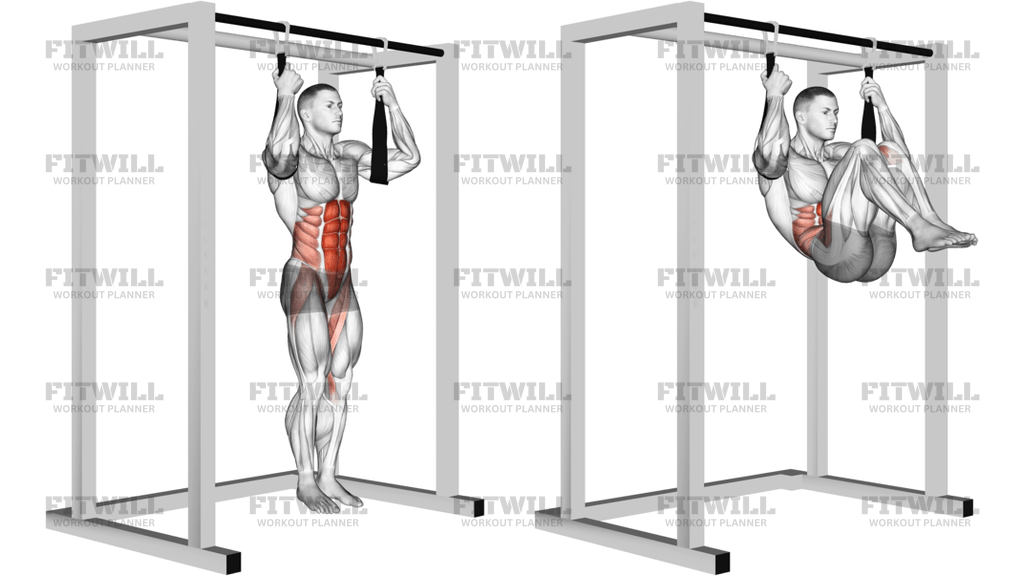
Hanging Pike is a bodyweight hanging core exercise where you suspend from a bar and fold the lower body upward into a tight pike. The visible goal is not a loose knee raise or a swinging kip. It is a controlled curl of the pelvis and hips that loads the abs while the shoulders, lats, and grip keep the body steady under the bar.
The main demand is on the rectus abdominis and the deeper bracing muscles that keep the ribs from flaring. The hip flexors help bring the thighs upward, and the obliques assist if you keep the legs quiet and the pelvis square. Because the body is hanging, the bar also adds a real shoulder and grip challenge, which makes setup quality matter from the first second of the rep.
Start from a dead hang with an active hang position: arms straight, shoulders packed, legs together, and the pelvis controlled rather than loose. A clean start gives you a stable line before the rep begins. If the body is already swinging, the pike becomes a momentum drill and the abs lose the job they are supposed to do.
Each rep should fold at the hips and curl the pelvis upward. Bring the knees or lower legs toward the torso with control, then keep lifting until the pike is tight and the trunk stays braced. The best reps look compact and deliberate, with no neck strain, no wild leg kick, and no flaring ribs. Lower slowly back to the hang so the next rep starts from control instead of rebound.
Use Hanging Pike as a hard bodyweight core movement, a progression toward stricter hanging leg raises or toes-to-bar work, or a finishing drill when you want the abs to work against bodyweight and suspension at the same time. It is best kept pain-free and strict. If the shoulders shrug, the grip slips, or the lower back starts arching, shorten the range and clean up the position before adding more difficulty.
[ Workout Log & Planner ]
Put your next workout in Fitwill
Keep your plan and training log ready when you are.


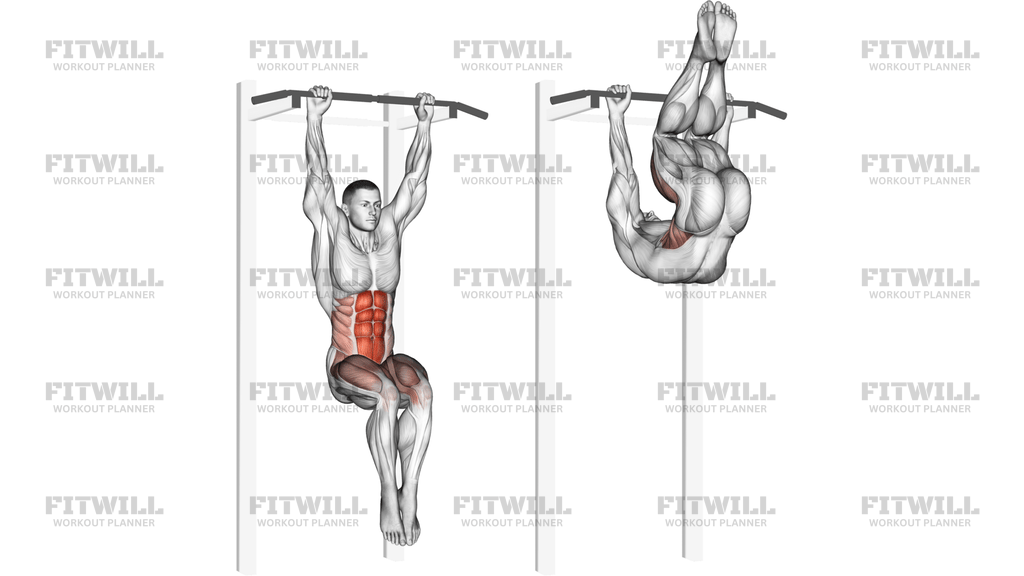
Instructions
- Grip a secure pull-up bar slightly wider than shoulder width and hang with your arms straight.
- Set your shoulders in an active hang so they stay down away from your ears.
- Bring your legs together and start from a still dead hang before each rep.
- Brace your abs, pull your ribs down, and keep your pelvis from tipping forward.
- Begin the rep by curling the pelvis and lifting the knees toward your chest.
- Keep folding at the hips until you reach a tight pike with the feet traveling upward.
- Pause briefly at the top without swinging or kicking the legs.
- Lower under control until the body is still and the arms are fully extended again.
Tips & Tricks
- Think about curling the tailbone upward, not just lifting the knees.
- Keep the legs squeezed together so the rep does not turn into a twisting swing.
- Press the bar down with the hands to help keep the shoulders packed during the hang.
- If straight legs make your lower back arch, bend the knees slightly and keep the pike strict.
- Exhale as the hips fold upward so the ribs stay down instead of flaring.
- Pause for a beat at the top to remove momentum and make the abs do the work.
- Lower slowly enough that the body does not rebound off the bottom position.
- Use smaller sets if your grip gives out before your core does.
Frequently Asked Questions
What muscles does Hanging Pike work?
It mainly trains the abs, hip flexors, and obliques. The lats, grip, and shoulder stabilizers also work hard because you are controlling the body from a hanging position.
Is Hanging Pike good for beginners?
Only if you can hang comfortably and keep the rep strict. Many beginners should start with hanging knee raises or bent-knee pikes before trying a tighter version.
How is Hanging Pike different from a hanging knee raise?
A hanging knee raise mainly bends the knees upward. Hanging Pike asks for more hip flexion and pelvic curl, so the torso folds tighter and the abs have to control a bigger range.
What is the biggest mistake in Hanging Pike?
Swinging the legs and arching the lower back are the most common problems. If the rep starts with a kick, the abs lose tension and the movement stops being a clean pike.
Should my feet go all the way to the bar?
Only if you can reach that top position without losing the brace or turning it into a kip. A smaller, strict pike is better than forcing range with momentum.
What should I do if my shoulders tire before my abs?
Shorten the set, reduce swing, and keep the shoulder blades active before each rep. If grip or shoulder endurance is the limiter, use fewer reps or a simpler hanging variation.
What breathing pattern works best?
Exhale as the knees and pelvis fold upward, then inhale as you lower under control. That helps keep the ribs down and prevents the lower back from overextending.
What is a good regression for this exercise?
Use hanging knee raises, captain's chair knee tucks, or a bent-knee pike with a smaller range before progressing to a tighter hanging pike.