Hanging Straight Leg Hip Raise
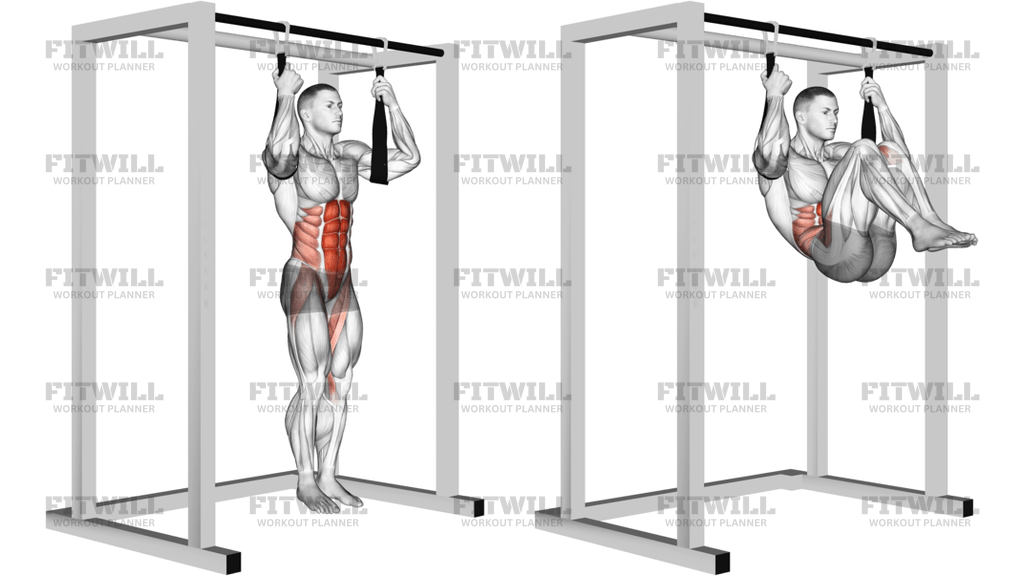
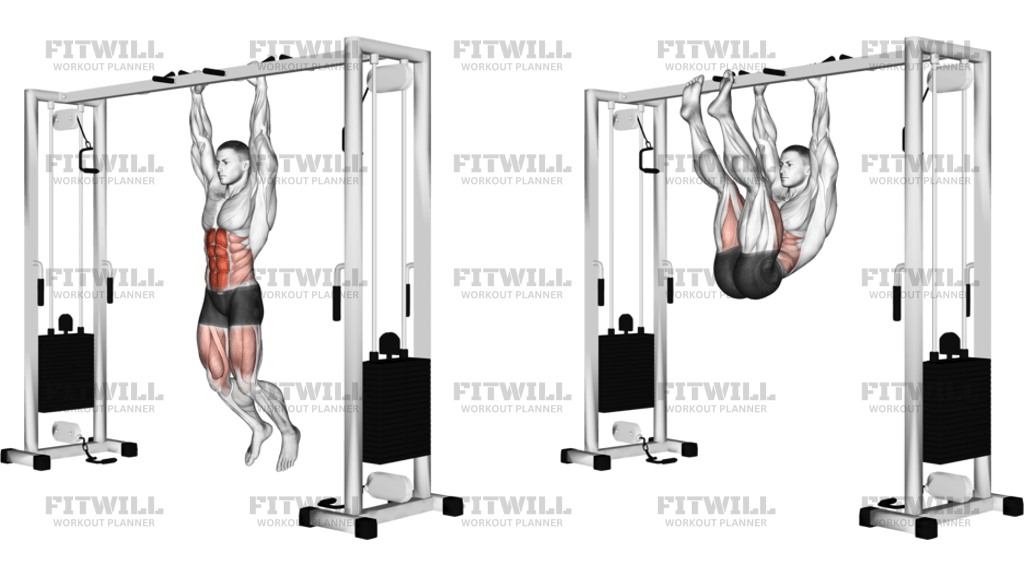
Hanging Straight Leg Hip Raise is a bodyweight hanging core exercise that trains the abs, hip flexors, and deep trunk control while your grip and shoulders stabilize overhead. The image shows a two-point setup: you hang from a fixed bar, keep the torso quiet, then raise the legs forward under control instead of swinging through the rep.
The setup matters because this movement can turn into a kip very quickly. A secure overhand hang, active shoulders, and a stable ribcage keep the load on the abdominal wall and hip flexors rather than on momentum or the lower back. If the pelvis tips forward or the body starts to swing, the exercise stops being the same drill.
Use a long, controlled range only if you can keep the legs together and the trunk from opening up. In the top position, the legs travel forward and upward as the pelvis curls slightly under the torso. That small posterior tilt is what makes the abdominal work obvious. Lower with the same control, keeping tension through the descent instead of dropping back to a dead hang.
This movement is useful in bodyweight strength work, athletic core training, and hang-time progressions because it combines abdominal compression with overhead stability. It also exposes common weaknesses fast: limited grip endurance, poor shoulder support, weak hip flexion, or an over-arched low back. That feedback is valuable, but only if the rep stays strict.
Treat the exercise as a controlled core raise, not a swing. Keep the neck relaxed, avoid whipping the feet, and reduce the range if the hips or hamstrings pull you out of position. A clean rep should look quiet from the bar down, with the legs moving as one unit and the torso staying organized from start to finish.
[ Workout Log & Planner ]
Put your next workout in Fitwill
Keep your plan and training log ready when you are.


Instructions
- Grab a fixed overhead bar with an overhand grip and hang with your arms fully extended.
- Set the shoulders down and slightly back so the hang stays active instead of collapsing into the joints.
- Bring the legs together, point the toes or keep them long, and let the body settle before the first rep.
- Brace the abs and start the raise by folding at the hips, not by kicking the feet or swinging the torso.
- Lift the straight legs forward until the hips curl and the pelvis tucks slightly under the ribs.
- Pause briefly at the top without losing the hang or letting the lower back arch.
- Lower the legs slowly to the start position, keeping the movement smooth and the swing under control.
- Reset the hang before the next rep and stop the set if you can no longer keep the body quiet.
Tips & Tricks
- A dead hang is not the goal; keep the shoulders active so the torso has a stable base for the raise.
- Think about pulling the front of the pelvis upward rather than just lifting the feet.
- If your hamstrings limit the range, keep a tiny bend in the knees instead of forcing a sloppy straight-leg swing.
- Do not let the ribs flare open at the top, or the lower back will take over the rep.
- The descent should be slower than the lift so the abs stay loaded instead of dropping out between reps.
- Keep the legs together to reduce twisting and make the hip flexion work more obvious.
- If your grip fails before your abs do, shorten the set rather than turning it into a hanging sway.
- Choose a bar height and clearance that let your feet travel without touching the floor or the uprights.
Frequently Asked Questions
What muscles does Hanging Straight Leg Hip Raise target most?
It mainly targets the rectus abdominis and hip flexors, with the obliques, transverse abdominis, lats, and grip muscles helping stabilize the hang.
What makes this different from a hanging knee raise?
In this version the legs stay much longer, so the lever is harder and the abs have to control a bigger forward swing of the hips.
Should I keep my legs perfectly straight the whole time?
Aim for straight legs, but a very small knee bend is fine if it helps you keep the pelvis tucked and the rep strict.
Why do my shoulders get tired before my abs?
The hang asks your shoulder stabilizers and grip to support your body weight the entire set, so fatigue there is normal if the set runs long.
How high should I raise my legs?
Raise them as high as you can while keeping the torso quiet and the lower back from arching; control matters more than matching a specific height.
What is the most common mistake in this exercise?
Swinging the legs or using a kip is the biggest mistake because it shifts the work away from the abs and into momentum.
Is this a good beginner core exercise?
It is better as an intermediate progression. Beginners usually do better starting with hanging knee raises, captain's chair raises, or reverse crunches.
When should I stop a set?
Stop when the body starts to sway, the shoulders shrug up, or you can no longer control the lowering phase.