Hip Raise Bridge
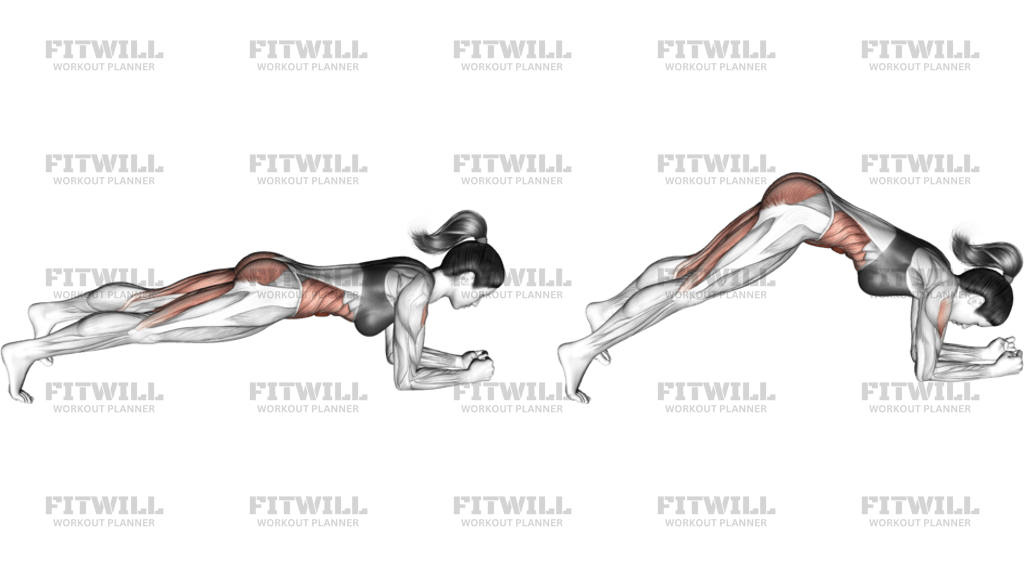
Hip Raise Bridge in this exercise is a forearm-supported hip raise from a plank position, where the body folds into a pike and then returns to a long, straight line. The movement is built around abdominal control, shoulder stability, and the ability to shift load between the forearms and toes without losing trunk position. The image shows a bodyweight floor drill, so the setup should stay simple and precise: forearms on the ground, elbows under the shoulders, feet planted behind you, and the hips doing the work.
The main training effect is core bracing under motion. As the hips lift, the abs shorten to bring the pelvis toward the rib cage, the shoulders keep the upper body from collapsing, and the hip flexors and hamstrings help control the fold. On the way down, the body has to re-lengthen without letting the low back sag. That combination makes the exercise useful for trunk strength, shoulder endurance, and bodyline control.
Start by building a stable forearm plank. Set the elbows under the shoulders, spread the forearms or clasp the hands depending on the version you use, and press the floor away so the upper back stays active. Keep the ribs tucked, glutes engaged, and neck neutral. If the starting plank is loose, the hip raise will become a lumbar hinge instead of a true core-driven lift.
From that plank, drive the hips upward by tightening the abs and pushing through the forearms and toes. The feet stay rooted while the pelvis travels up and back, creating a clean pike shape rather than a rounded collapse. Lower with control until the body returns to a straight plank line. The rep should feel like deliberate folding and unfolding, not a quick bounce between two positions.
This exercise fits well in warm-ups, core circuits, athletic prep, and conditioning sessions where bodyweight work needs to challenge the trunk without equipment. It can be scaled by bending the knees slightly, shortening the range, or holding the top position for a few seconds. Keep the motion pain-free and controlled; if the shoulders pinch or the low back takes over, reduce the range and slow the tempo before adding volume.
Fitwill
Log Workouts, Track Progress & Build Strength.
Achieve more with Fitwill: explore over 9600 exercises with images and videos, access built-in and custom workouts, perfect for both gym and home sessions, and see real results.
Start your journey. Download today!




Instructions
- Place your forearms on the floor with your elbows under your shoulders and your feet extended behind you on the toes.
- Set your forearms parallel or clasp your hands, then press down through the elbows so the shoulders stay active.
- Lift into a straight forearm plank with your body in one line from head to heels.
- Brace your abs, tuck your ribs, and squeeze your glutes before the first rep.
- Drive your hips up and back until you form a controlled pike shape.
- Keep your head between your upper arms and your neck long as the hips rise.
- Lower the hips slowly until you return to a long, straight plank.
- Reset the brace at the bottom before starting the next rep.
Tips & Tricks
- Keep the elbows planted directly under the shoulders; drifting forward turns the rep into a shoulder slide instead of a hip raise.
- Exhale as the hips lift so the ribs stay tucked and the lower back does not arch.
- Press the forearms into the floor hard enough to keep the shoulders from collapsing toward the ears.
- Think about moving the pelvis toward the ceiling, not just piking the chest up.
- If your hamstrings limit the top position, bend the knees slightly and keep the spine controlled.
- Use a shorter range if the shoulders or wrists feel crowded at the top.
- Do not let the heels pop wildly off the floor on the way up; keep the feet grounded and deliberate.
- Lower slowly enough that the body passes through a real plank instead of dropping straight down.
- Stop the set when the low back starts to take over or the plank line breaks.
Frequently Asked Questions
What muscles does Hip Raise Bridge work?
It mainly works the abs and deep core, with strong support from the shoulders, hip flexors, hamstrings, and glutes. The forearm plank position also challenges upper-back and shoulder stability.
Is Hip Raise Bridge good for beginners?
Yes, if you can hold a steady forearm plank first. Beginners can shorten the range, bend the knees slightly, or perform fewer reps while learning the timing.
Where should I feel the movement?
You should feel the abs working to fold and control the torso, plus the shoulders and upper core keeping the plank steady. A stretch in the hamstrings at the top is normal.
What is the biggest mistake in the forearm hip raise?
The biggest mistake is losing the plank and turning the rep into a low-back bend. If the ribs flare or the hips drop too fast, the core is no longer doing the work.
Can I bend my knees during Hip Raise Bridge?
Yes. A slight knee bend is a useful regression when tight hamstrings or limited mobility keep you from reaching the top without rounding hard through the back.
How do I make this exercise harder?
Slow the lowering phase, pause in the top pike, or add reps while keeping the forearms and toes fixed in place. You can also hold the straight plank longer between raises.
Should my feet stay flat on the floor?
No. This is a forearm plank variation on the toes, so the feet stay planted on the balls of the feet while the hips move.
Should Hip Raise Bridge hurt my lower back?
No. If the low back feels pinched or overloaded, reduce the range and re-check the plank position so the abs can control the lift.