Inverse Leg Curl Bench Support
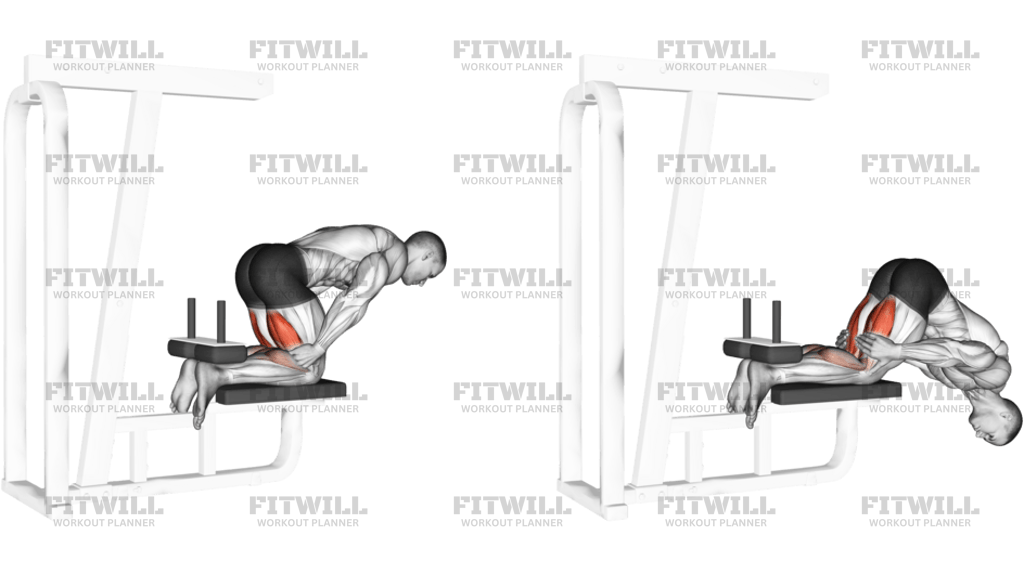
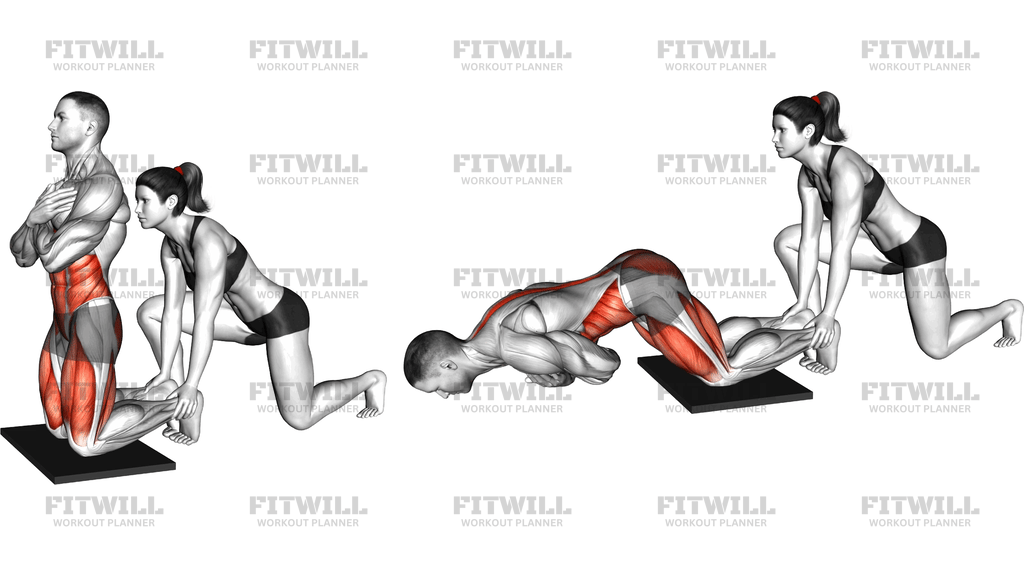
Inverse Leg Curl Bench Support is a bench-supported bodyweight hamstring exercise that trains knee flexion under control while asking the hips, trunk, and upper body to stay organized. It is useful for building stronger hamstrings without relying on a loaded barbell or machine stack, and it works well as accessory work after squats, deadlifts, running, or jump training. The big value of the movement is that it teaches the hamstrings to produce force while your body position is fixed and your torso has to stay quiet.
The setup matters more here than in many curl variations. Position your knees securely on the bench, anchor your lower legs or ankles under the support pads, and line your body up so your hips can stay near the pad without slipping forward. If the bench or rollers are too far away, you will lose tension and start yanking with momentum. A stable setup lets the hamstrings do the work instead of your lower back or hip flexors taking over.
During each repetition, keep the torso long, brace lightly through the trunk, and curl under control from the anchored position. Lower your body slowly if the exercise is performed as a kneeling hinge, or draw the heels toward the seat if the setup is a fixed bench curl, depending on the station you are using. The key is to keep the movement smooth and deliberate, with no collapse through the waist and no sudden snap at the bottom or top.
This exercise is usually best used for moderate to higher repetitions, where you can feel the hamstrings working through a long, controlled range. It can be a strong choice for athletes who need posterior-chain strength, runners who want more hamstring resilience, and lifters who want a bodyweight hamstring option that is hard without needing a lot of load. If you lose the line from knees through hips to shoulders, shorten the range and clean up the rep before adding more volume.
Safety comes from keeping the anchors secure and the tempo honest. If your knees drift on the bench, your ankles slip, or your lower back starts to take over, the set is too aggressive. Use the support handles if they help you stay centered, and finish each rep by regaining a stable position before starting the next one.
[ Workout Log & Planner ]
Put your next workout in Fitwill
Keep your plan and training log ready when you are.


Instructions
- Set the bench or support pad so your knees are anchored securely and your lower legs or ankles rest under the rollers.
- Kneel on the pad with your hips close to the edge, torso tall, and your hands on the front support or bench for balance.
- Lock your feet or ankles in place before you start so your legs do not slide when you begin the rep.
- Brace your trunk and keep your ribs stacked over your pelvis before you move.
- Lower your torso or let your body extend under control, keeping the hips from folding or drifting off the pad.
- If the station uses a curl path, draw your heels back with a smooth squeeze from the hamstrings instead of jerking the weight.
- Pause briefly in the hardest part of the curl while keeping tension through the back of the thighs.
- Return to the start slowly, re-centering your knees and ankles on the support before the next rep.
- Breathe out through the working phase and reset your body position before beginning another repetition.
Tips & Tricks
- Keep the knees planted on the pad; if they slide, shorten the range and reset the bench position.
- Use the hand support to stay centered, not to yank yourself through the rep.
- Think about pulling from the back of the thighs, not arching the lower back to finish the rep.
- A small pause at the hardest point makes the hamstrings work harder than bouncing through the bottom.
- If your hips keep breaking at the top, reduce the range until the torso and pelvis stay in line.
- Do not let the ankles roll outward on the rollers; keep pressure even through both legs.
- Use slower lowering on the way back to the start, because the eccentric phase is where this variation gets demanding.
- Stop the set when you start losing the anchored position, not after the rep turns into a back extension.
Frequently Asked Questions
What muscles does Inverse Leg Curl Bench Support work?
It mainly targets the hamstrings, with the glutes, calves, and trunk working to keep the body anchored and controlled.
Is Inverse Leg Curl Bench Support good for beginners?
Yes, if you start with a short range and use the support handles to stay stable. The main goal at first is learning how to keep the knees, ankles, and hips lined up.
How do I set up the bench and pads for Inverse Leg Curl Bench Support?
Place your knees securely on the bench and make sure your lower legs or ankles are locked under the rollers before you move. If the support is too far away, the rep turns into a swing instead of a hamstring curl.
Should I feel Inverse Leg Curl Bench Support in my lower back?
No, the lower back should only help stabilize. If it is doing most of the work, shorten the range and keep your ribs and pelvis stacked instead of arching to finish the rep.
What is the main mistake in Inverse Leg Curl Bench Support?
Letting the knees slide or the hips break position is the biggest one. That usually means the setup is off or the set is too hard for the current range.
Can I use support handles during this exercise?
Yes. The handles are there to help you stay centered and prevent wobble, but they should not be used to pull you through the rep.
What is a good substitute for Inverse Leg Curl Bench Support?
A stability-ball hamstring curl or an assisted Nordic curl can work well if you need a similar hamstring-focused pattern with a different setup.
How low or how far should I go on Inverse Leg Curl Bench Support?
Go only as far as you can keep tension on the hamstrings and maintain a steady line from knees through hips and torso. Once that line breaks, the range is too deep for that set.