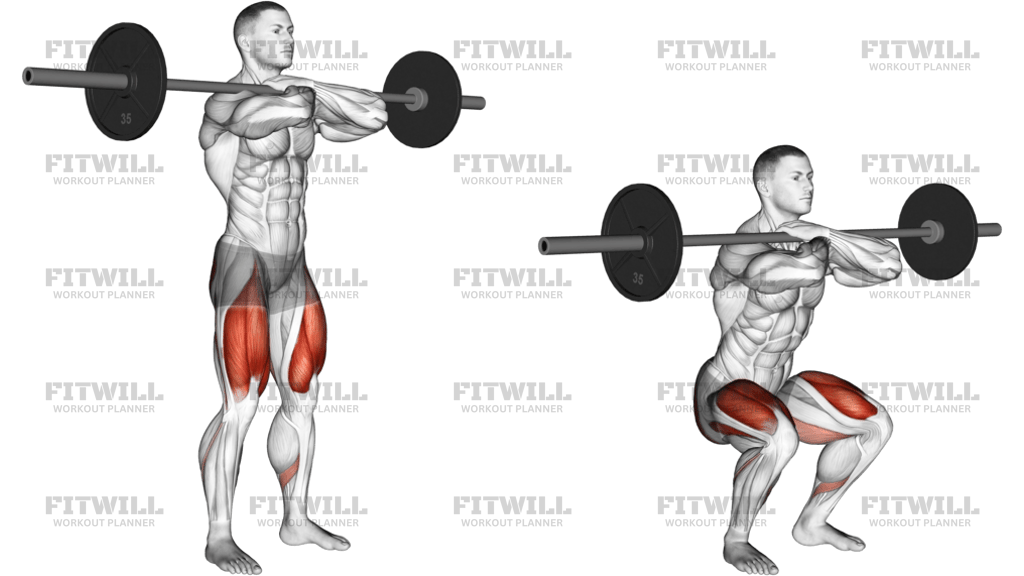
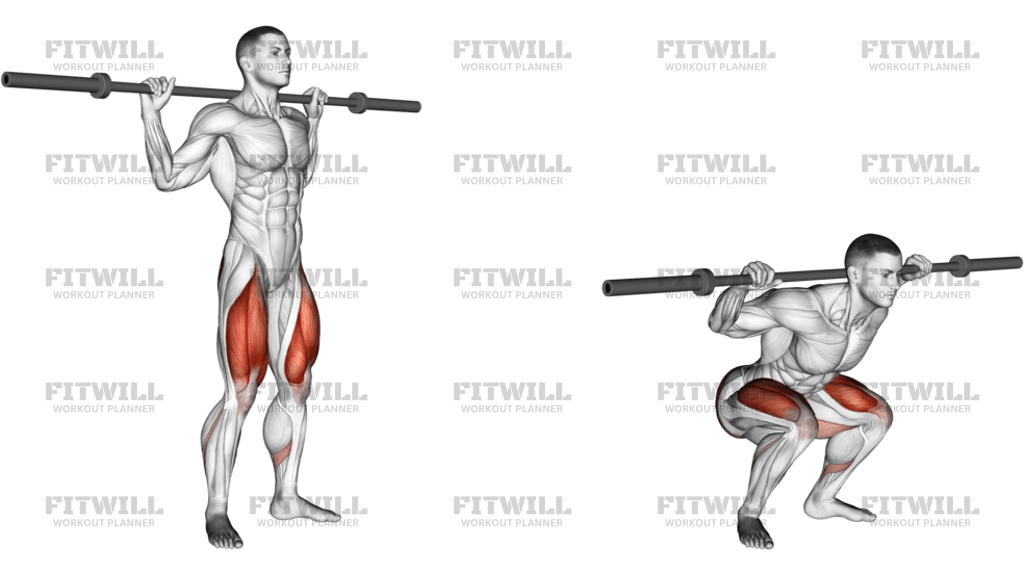
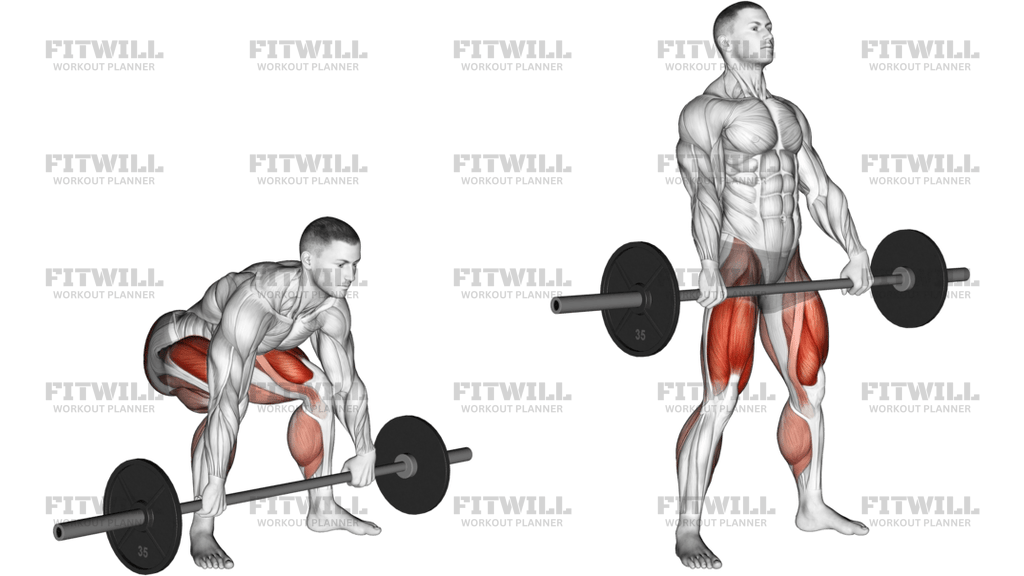
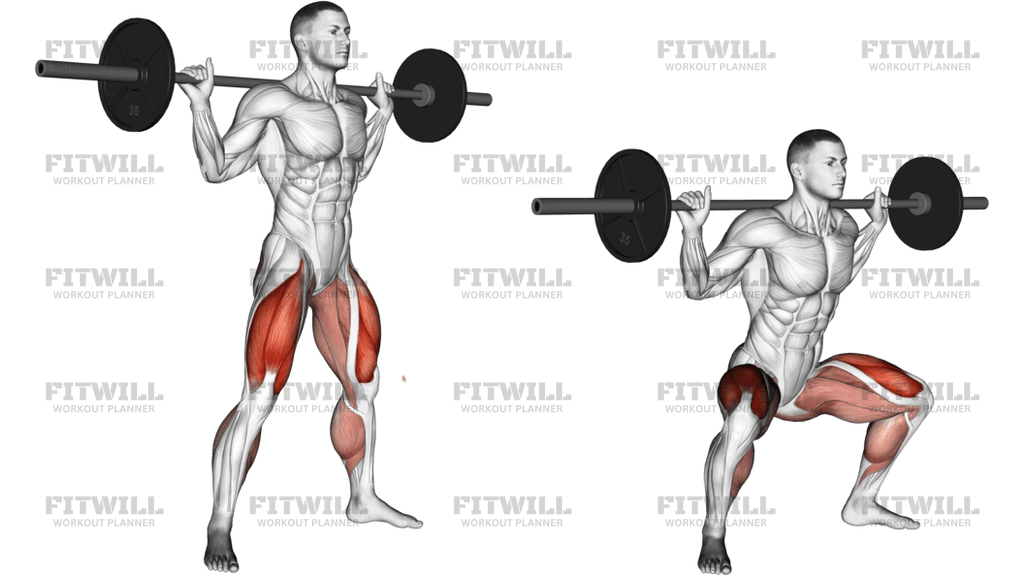
Barbell Full Squat With Rack
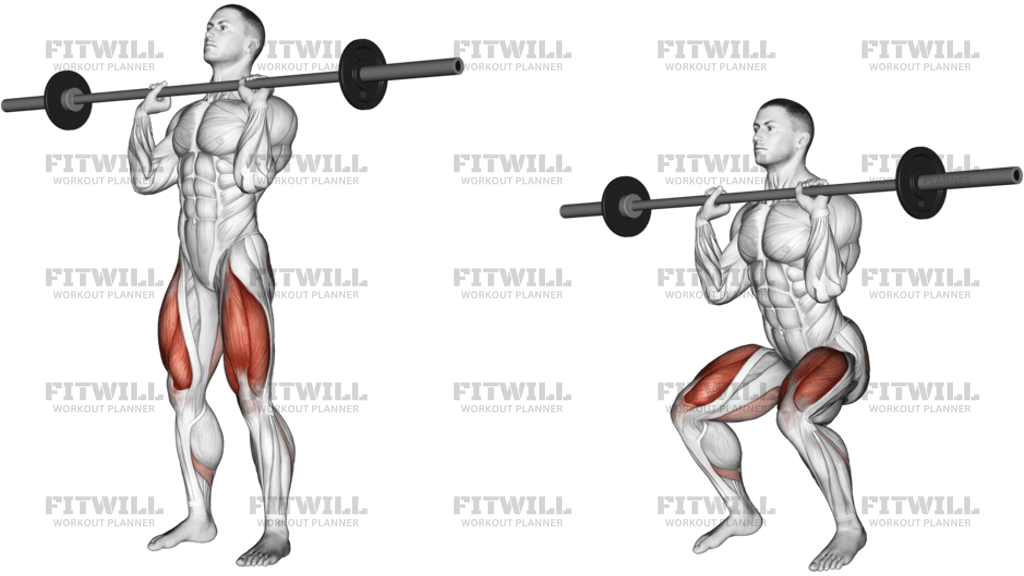
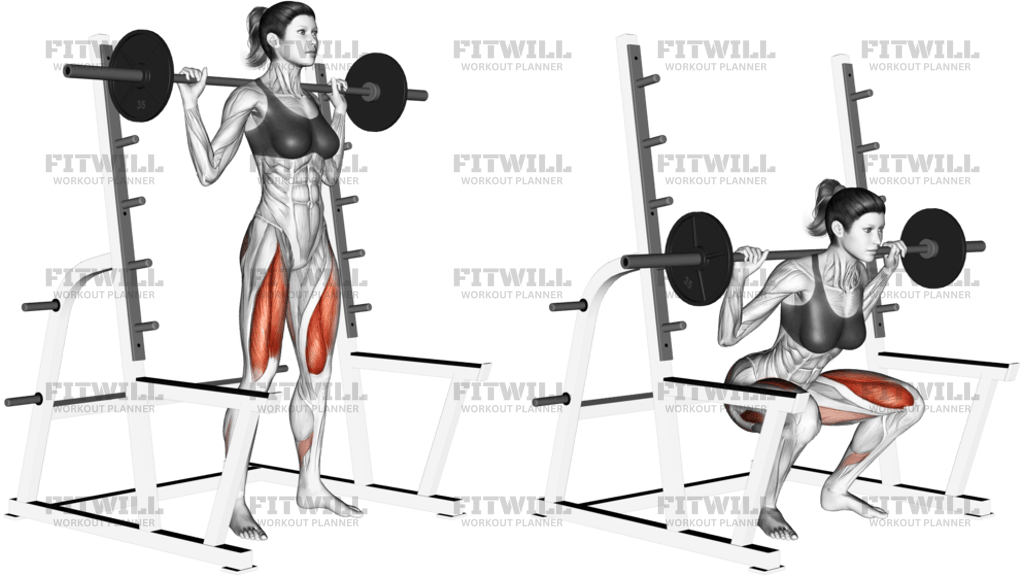
Barbell Full Squat With Rack is a classic barbell squat performed from a rack with the bar resting across the upper back. It is a foundational lower-body strength exercise that asks the thighs, glutes, hamstrings, core, and lower back to work together through a deep, controlled range of motion. The rack matters because it lets you set the bar at the right height, unrack it cleanly, and finish the set without awkwardly balancing the weight.
The full squat pattern builds strength where it is most useful: out of the bottom, through the sticking point, and into a stable standing position. Because the hips and knees both move through a large range, Barbell Full Squat With Rack is useful for athletes, lifters chasing leg size and strength, and anyone who wants a more complete squat pattern than a partial rep. The deepest part of the squat usually creates the greatest demand on the thighs and glutes, while the trunk keeps the torso from folding forward.
A good rep starts before the first descent. Set the bar in the rack just below shoulder height, place it across the rear delts and upper back, grip the bar firmly, and step back to a stance that lets the feet stay flat while the knees track naturally over the toes. The feet should feel planted from heel to forefoot, and the torso should stay braced so the bar does not drift forward as you lower.
On each repetition, inhale before you descend, sit between the hips, and lower under control until you reach a full squat depth that your mobility and control can support. Keep the chest proud without overextending the lower back, and drive up by pushing the floor away through the whole foot. The ascent should look smooth and deliberate, not jerky, with the bar rising over the midfoot as the hips and shoulders come up together.
Barbell Full Squat With Rack is best used when you want a heavy compound lift that teaches body tension, leg drive, and clean bracing. It can be trained for strength, hypertrophy, or general athletic prep, but it only pays off when the setup is repeatable and the descent stays controlled. If depth, ankle mobility, or upper-back position starts breaking down, reduce the load, narrow or widen the stance slightly, or shorten the set before form degrades.
[ Workout Log & Planner ]
Put your next workout in Fitwill
Keep your plan and training log ready when you are.


Instructions
- Set the bar in the rack just below shoulder height, place it across your upper back and rear delts, and grip it slightly wider than shoulder width.
- Step under the bar, stand tall to lift it out of the hooks, and take one or two controlled steps back to clear the rack.
- Plant your feet about shoulder width apart with toes turned out slightly, and balance your weight through the whole foot.
- Take a breath into your belly and brace your trunk before you start each rep.
- Sit down and back by bending the hips and knees together, keeping the chest up and the bar over midfoot.
- Lower until your thighs pass parallel or reach the deepest depth you can control without losing heel contact or lumbar position.
- Drive up by pushing the floor away, letting the hips and shoulders rise together until you are standing tall again.
- Exhale near the top, reset your brace, and walk the bar back into the rack under control after the final rep.
Tips & Tricks
- Set the hooks so you only need a small knee bend to unrack the bar; reaching up and tiptoeing into place makes the setup unstable.
- Keep the bar pinned to your upper back, not your neck. If it feels like it is sitting on the spine, lower it slightly onto the rear delts.
- Think about spreading the floor with your feet on the way down and up. That cue helps keep the knees tracking in line with the toes.
- If your heels lift, shorten the stance a little or use a slightly narrower depth until your ankles can stay planted.
- A brief pause at the bottom can clean up bounce and show whether you are actually controlling the hole, but it should not turn into a collapse.
- Do not let the chest shoot up while the hips stay behind on the ascent. The bar should travel in a mostly vertical line over the midfoot.
- Use a load that lets you keep your torso angle and bar path consistent for every rep, not just the first rep.
- Stop the set if the knees cave hard, the lower back rounds, or the bar starts drifting forward on the way out of the bottom.
Frequently Asked Questions
What does Barbell Full Squat With Rack train the most?
It trains the thighs and glutes most, with the hamstrings, core, and lower back working to keep the bar and torso stable.
Where should the bar sit in Barbell Full Squat With Rack?
The bar should rest across the upper back and rear delts, not on the neck. That position helps you stay balanced as you descend.
How deep should I go in Barbell Full Squat With Rack?
Go as deep as you can while keeping your heels down, chest controlled, and spine neutral. Full depth is ideal if mobility and control allow it.
Is Barbell Full Squat With Rack good for beginners?
Yes, if they start with light load and learn the rack setup, brace, and descent before adding weight.
Why do my knees cave in on Barbell Full Squat With Rack?
That usually means the stance is too narrow, the load is too heavy, or the feet are not actively pressing into the floor. Slightly widen the stance and think about driving the knees in line with the toes.
Should I use a spotter for Barbell Full Squat With Rack?
Use a spotter or safety pins if you are working near failure or still learning the movement. The rack should be set so you can re-rack safely even if a rep stalls.
What is the biggest mistake in Barbell Full Squat With Rack?
Letting the bar drift forward while the chest collapses is one of the most common mistakes. Keep the torso braced and the bar over the midfoot throughout the rep.
Can I do Barbell Full Squat With Rack if my heels come up?
Yes, but reduce the load, adjust your stance, and work only to the depth you can control. Persistent heel lift usually means mobility or balance needs attention before heavier squats.