Inverted Row Version 2
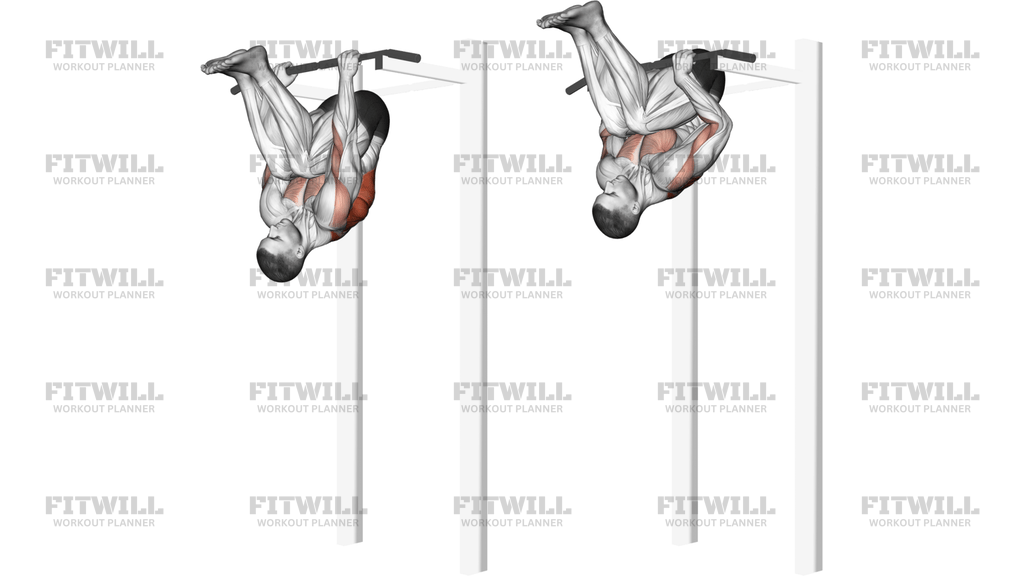
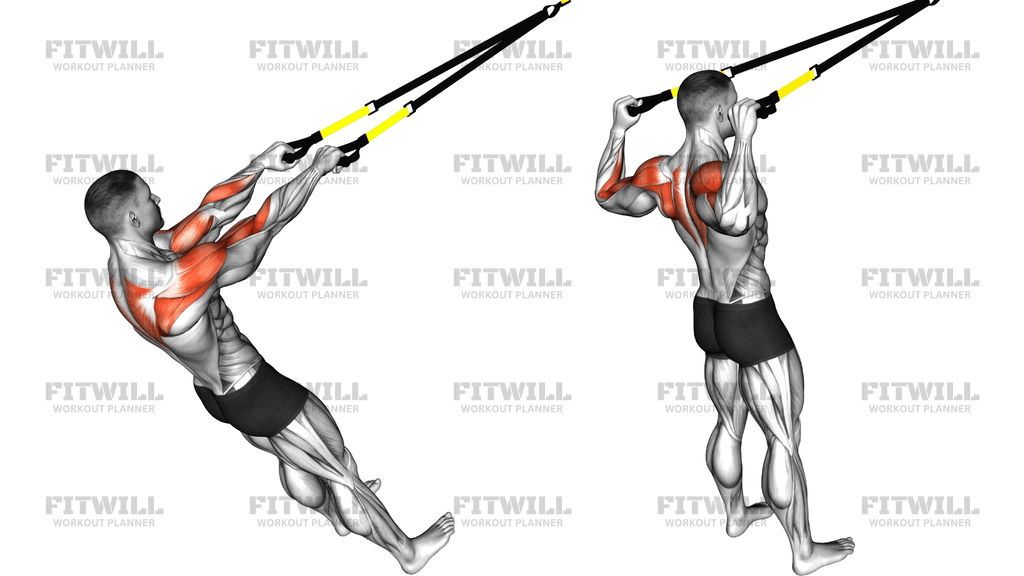
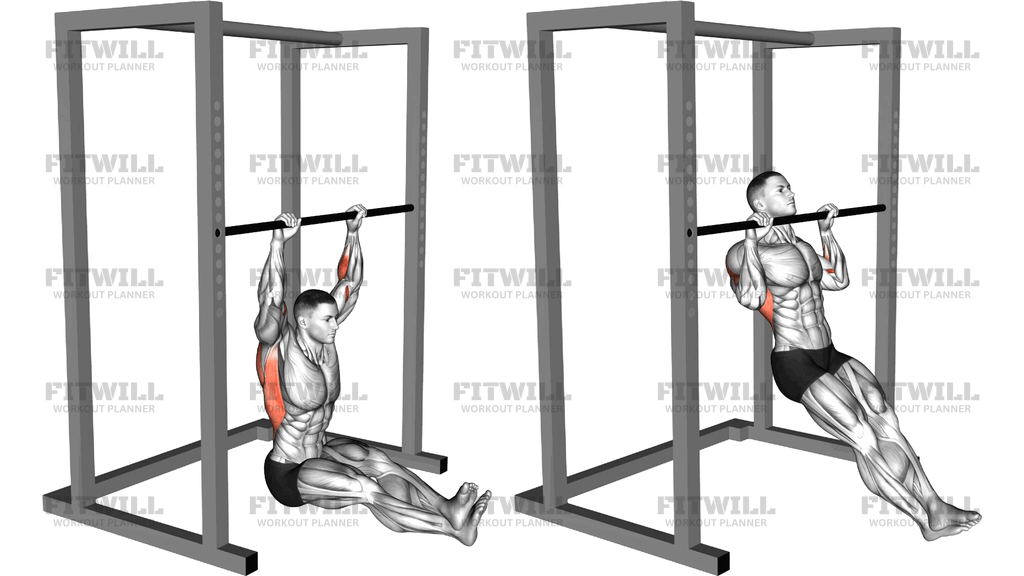
Inverted Row Version 2 is a bodyweight pulling exercise that builds upper-back strength while teaching you how to keep your torso rigid under load. It is especially useful when you want a row pattern that is easier to scale than a barbell row but still demands clean shoulder position, scapular control, and a tight line from shoulders to heels.
The main emphasis falls on the traps, with the upper back, lats, and biceps helping to finish each pull. In practical terms, that means you should feel your shoulder blades drawing back and down as your chest travels toward the bar, not your lower back doing the work. Because the movement is fixed by your body angle, the setup matters as much as the pull itself, and small changes in bar height or knee bend can change the difficulty a lot.
Start by placing a bar in a rack at a height that lets you lie underneath it with straight arms and a secure grip. Your body should be set like a plank before the first rep, with your heels anchored, glutes squeezed, and ribs controlled so you do not sag through the middle as you pull. A solid starting position makes the row feel smooth instead of wobbly, and it also keeps the shoulders in a safer line as you begin to work.
Each rep should begin by initiating the pull from the shoulder blades, then continuing with the elbows until the chest comes close to the bar. Keep the neck long, the wrists stacked, and the movement deliberate so the body rises as one piece. Lower yourself under control until the arms are fully extended again, then reset without letting the shoulders collapse or the hips drop. If the rep turns into a shrug, a hip twist, or a kick from the legs, the setup is too hard for the load you chose.
Inverted Row Version 2 works well in strength blocks, back-focused sessions, and accessory work when you want more pulling volume without heavy spinal loading. It is also a good option for beginners who need to learn rowing mechanics before moving to more advanced horizontal pulls. Keep the reps clean, choose a body angle you can control, and stop the set when you start shrugging, swinging, or cutting the lowering phase short. With consistent practice, it becomes a reliable way to build upper-back endurance, better shoulder mechanics, and stronger pulling control for other row and pull-up variations.
[ Workout Log & Planner ]
Put your next workout in Fitwill
Keep your plan and training log ready when you are.


Instructions
- Set a bar in a rack at about waist height and lie underneath it with an overhand grip slightly wider than shoulder width.
- Plant your heels on the floor, bend your knees as needed, and line your chest up under the bar with your body angled like a straight plank.
- Squeeze your glutes, brace your midsection, and keep your ribs from flaring before you start the first pull.
- Let your shoulder blades move slightly forward at the bottom while your arms stay straight and your body remains rigid.
- Pull your chest toward the bar by driving the elbows back and bringing the shoulder blades together.
- Stop when your chest reaches the bar or comes as close as your setup allows without shrugging your shoulders.
- Pause briefly at the top, then lower yourself slowly until your arms are straight again and the shoulders are fully controlled.
- Keep breathing steady through each rep, then step out from under the bar safely when the set is finished.
Tips & Tricks
- Keep the bar just high enough that your body can stay long; if your hips bend to reach it, lower the bar or raise your feet setup.
- Think about pulling the chest to the bar, not the chin, so the upper back does the work instead of the neck.
- If your shoulders shrug toward your ears, shorten the rep and finish with the shoulder blades down and back.
- A slightly bent knee position can help you keep the torso rigid if straight legs make your lower back sag.
- Drive the elbows toward your back pockets to keep the lats involved instead of yanking only with the hands.
- Lower under control for a full count so the bottom position does not turn into a drop-and-bounce.
- Use an overhand grip wide enough to keep the wrists comfortable, but not so wide that your shoulders flare and pinch.
- Stop the set when your hips start to twist or your heels lose pressure, because that usually means the row has turned into a swing.
Frequently Asked Questions
What muscles work most in Inverted Row Version 2?
The main work goes to the traps and upper back, with the lats and biceps helping to finish the pull.
How should my body be positioned under the bar?
Lie under a fixed bar with your body braced in a straight line, heels anchored, and chest lined up under the bar before each rep.
Should I keep my knees straight or bent?
Bend your knees enough to keep your torso rigid and your heels planted. Straight legs are fine if you can hold a solid plank from shoulders to heels.
How high should the bar be for Inverted Row Version 2?
Set the bar low enough that you can reach the top with a controlled row, but not so low that you have to twist or curl your body to get there.
Where should I touch at the top of the rep?
Aim to bring your chest to the bar, or as close as you can without shrugging or losing your plank position.
Why do I feel this mostly in my arms?
That usually means the elbows are doing all the work and the shoulder blades are not moving first. Start each rep by pulling the shoulders back and down, then finish with the elbows.
Can beginners use Inverted Row Version 2?
Yes. It is a good beginner row because you can adjust difficulty by changing the bar height and how much of your body weight you support.
How can I make the exercise harder?
Lower the bar, straighten the legs, or pause longer at the top. You can also slow the lowering phase to make each rep more demanding.