Inverted Row With Straps
Inverted Row With Straps is a bodyweight horizontal pulling exercise performed with suspension straps hanging from a stable frame. It trains the upper back, traps, lats, rear shoulders, and elbow flexors while asking the torso to stay rigid from the ankles to the head. Because your body angle changes the challenge, the movement can be scaled easily without changing equipment, which makes it useful for beginners, warmups, accessory work, and higher-tension rowing sessions.
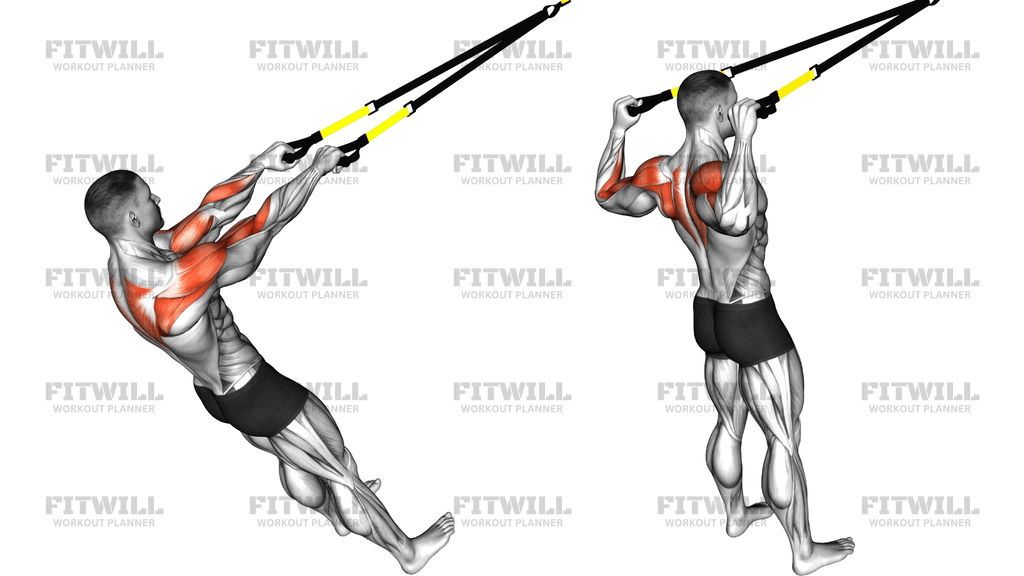
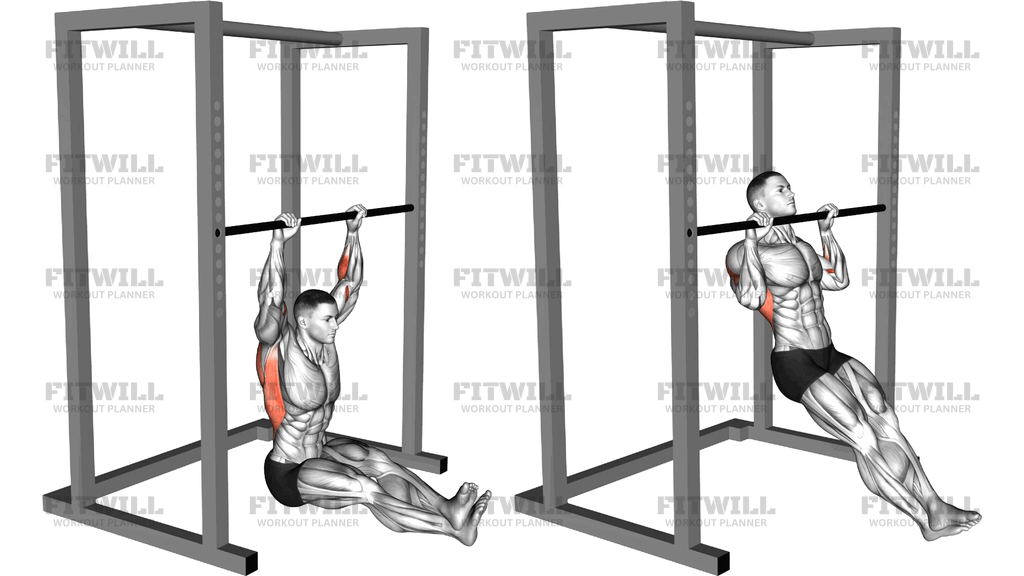
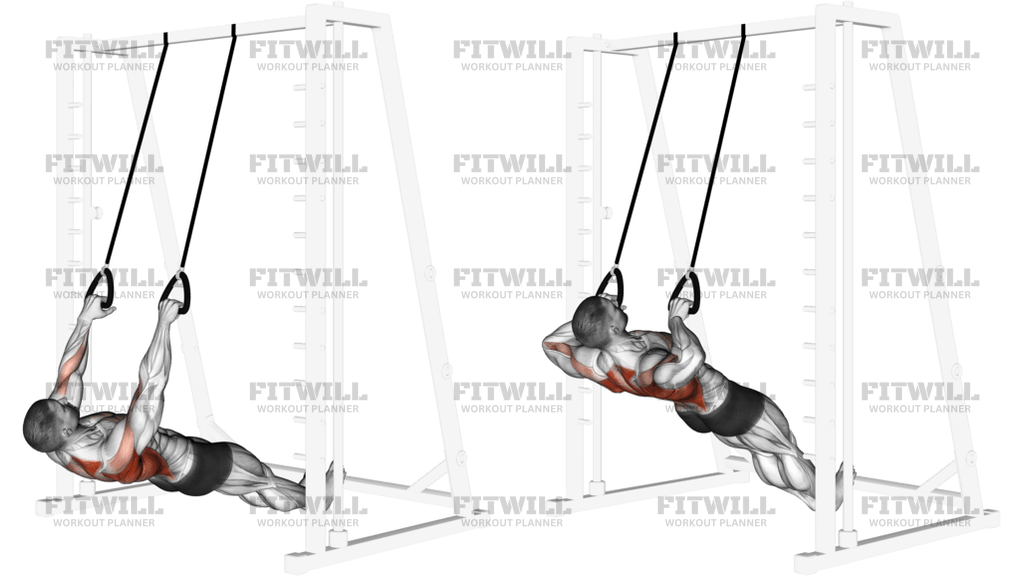
The straps matter because they let your hands move naturally while you row, which can make it easier to keep the shoulders organized and the wrists neutral. Set the straps so you can start with straight arms and enough space to lean back into a long line without the handles pulling you out of position. If the body sags at the hips or the shoulders creep toward the ears, the row usually becomes a tug-of-war instead of a controlled pull. The image shows a straight-body setup with the feet on the floor and the handles drawn toward the chest.
Each repetition should begin from a braced start: ribs down, glutes tight, legs long, and shoulder blades set without pinching hard. From there, pull the handles toward the lower chest or upper ribs by driving the elbows back, not by shrugging or kicking the hips. The upper body should rise as one unit while the torso stays aligned, and the finish should feel like a strong squeeze between the shoulder blades with the chest lifted. Lower under control until the arms are straight again and the shoulders can reach forward slightly without losing the body line.
This exercise is especially useful when you want a rowing pattern that is joint-friendly but still demanding enough to build real pulling strength. It can support posture work, upper-back development, and balanced shoulder training when paired with pushing exercises. It also helps teach scapular control because the same setup can be made easier or harder by changing foot position and body angle instead of changing the movement pattern itself.
For safest execution, choose an angle that lets you keep the hips level and the neck relaxed for every rep. If you cannot keep the body straight, make the row more upright before you try to add volume. Strong reps come from steady tension, a clean path to the chest, and a controlled return to the hang, not from jerking the straps or shortening the range whenever the set gets hard.
[ Workout Log & Planner ]
Put your next workout in Fitwill
Keep your plan and training log ready when you are.


Instructions
- Adjust the straps on a stable frame and hold one handle in each hand with a neutral grip.
- Walk your feet forward until your body forms a straight line from ankles to head and the straps are taut.
- Set your feet on the floor, tighten your glutes, and keep your ribs stacked over your pelvis.
- Start with straight arms and let the shoulders stay down away from your ears.
- Pull the handles toward your lower chest or upper ribs by driving the elbows back.
- Keep the torso rigid so your body rises as one piece instead of the hips sagging.
- Squeeze your shoulder blades together at the top without craning your neck forward.
- Lower yourself slowly until the arms are fully extended again and the shoulders can reach forward under control.
- Exhale as you pull and inhale as you return before starting the next repetition.
Tips & Tricks
- Set the strap height so the handles let you row to the chest without the anchor pulling you too high.
- A more upright body angle makes the row easier; a more horizontal angle makes the straps much harder to move.
- Keep the wrists in line with the forearms so the straps do not fold your hands backward at the top.
- Think about bringing the chest to the handles instead of yanking the handles into the chest.
- If your hips drop, shorten the range or step your feet closer so you can keep one straight line.
- Let the shoulder blades move naturally on the way down instead of locking them hard the whole time.
- Stop the set if you have to kick, twist, or shrug to finish the pull.
- Use a controlled lowering phase to build more upper-back work without changing the setup.
Frequently Asked Questions
What muscle does Inverted Row With Straps target most?
The traps are the primary target, with the upper back, lats, and biceps also doing important work.
Can beginners perform this exercise?
Yes. Beginners usually do best with a more upright body angle and a shorter range until they can keep the torso rigid.
Where should the handles go during the row?
Pull them toward the lower chest or upper ribs, not up toward the neck or out toward the shoulders.
What is the biggest form mistake on the straps?
Letting the hips sag or shrugging the shoulders usually turns the row into a sloppy pull instead of a clean upper-back rep.
Why use straps instead of a fixed bar?
Straps let your hands rotate naturally, which can make it easier to keep the wrists neutral and the shoulder path smooth.
How can I make the exercise harder?
Walk your feet farther forward and make your body more horizontal so more of your body weight has to be pulled.
How can I make it easier?
Stand a little more upright, bend the knees slightly, or shorten the range until each rep stays controlled.
Should my body move as one piece?
Yes. The torso should stay in a straight line so the row trains your upper back instead of becoming a hip hinge.
Is a pause at the top useful?
A brief pause helps you feel the shoulder blades finish the pull and keeps the repetition from turning into a bounce.