Inverted Row
The Inverted Row is a bodyweight horizontal pulling exercise performed under a fixed bar, such as a Smith machine bar or a sturdy rack bar. You start with your heels on the floor, your body in a straight line, and your chest hanging below the bar, then pull your torso up until the chest or upper ribs reach the bar. It trains the upper back and arms while also demanding trunk stiffness and shoulder control, which makes it a useful bridge between basic bodyweight work and heavier rowing patterns.
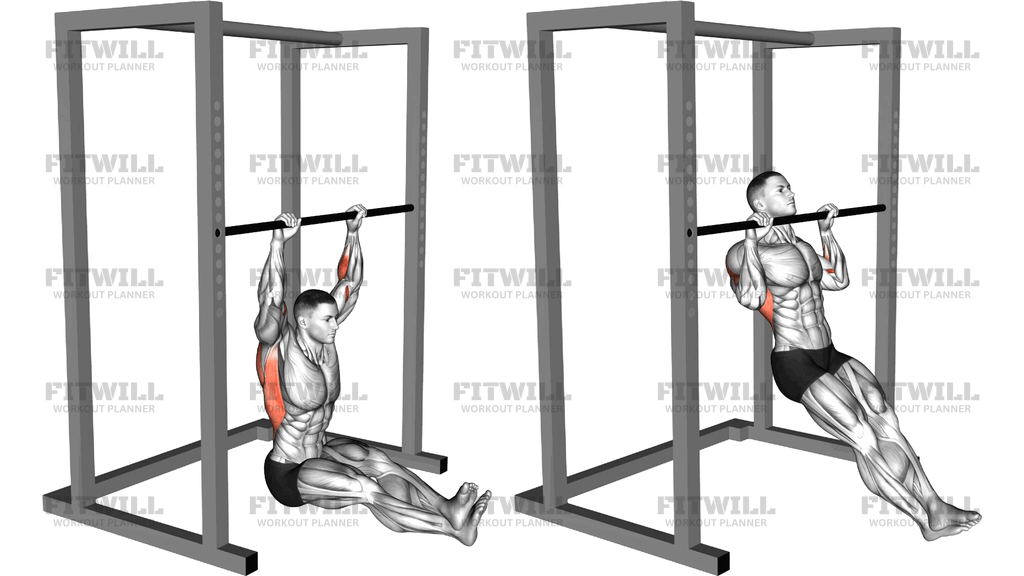
The setup matters because the bar height and body angle determine how hard the rep feels and how clean the line of pull stays. A lower bar and a more horizontal body position make the row harder, while a higher bar or more bent knees make it easier. In the image shown here, the athlete is gripping the bar with both hands and keeping the body long from shoulders to heels, which is the key position to preserve through every repetition.
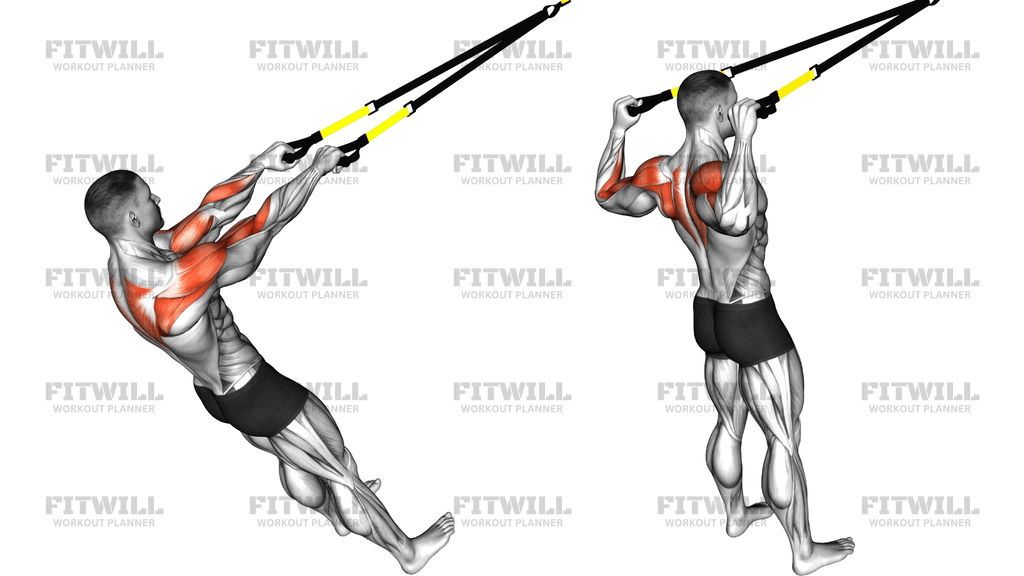
This movement is usually felt most in the upper back, lats, rear shoulder area, and elbow flexors, with the scapular muscles helping to control the pull. As you row, the shoulder blades should move back and slightly down before the elbows finish driving the body upward. That sequence keeps the repetition focused on back tension instead of turning it into a sloppy curl or a hip-driven swing.
To perform it well, keep the ribs from flaring, avoid sagging through the low back, and use a smooth pull-and-lower rhythm. The top position should be strong and deliberate, not a shrug toward the bar. On the way down, lower yourself under control until the arms are straight again and the shoulders stay organized. If you cannot maintain the straight-body position, bend the knees or raise the bar rather than forcing a rep with momentum.
Inverted rows are a practical accessory for building pulling strength, improving scapular control, and preparing for harder rowing or pull-up variations. They fit well in strength work, upper-body accessories, or programs that need a scalable back exercise with a clear technique standard. Clean reps matter more than chasing body angle or speed; the best version of the exercise is the one you can repeat with the same body line, grip, and pull path on every rep.
[ Workout Log & Planner ]
Put your next workout in Fitwill
Keep your plan and training log ready when you are.


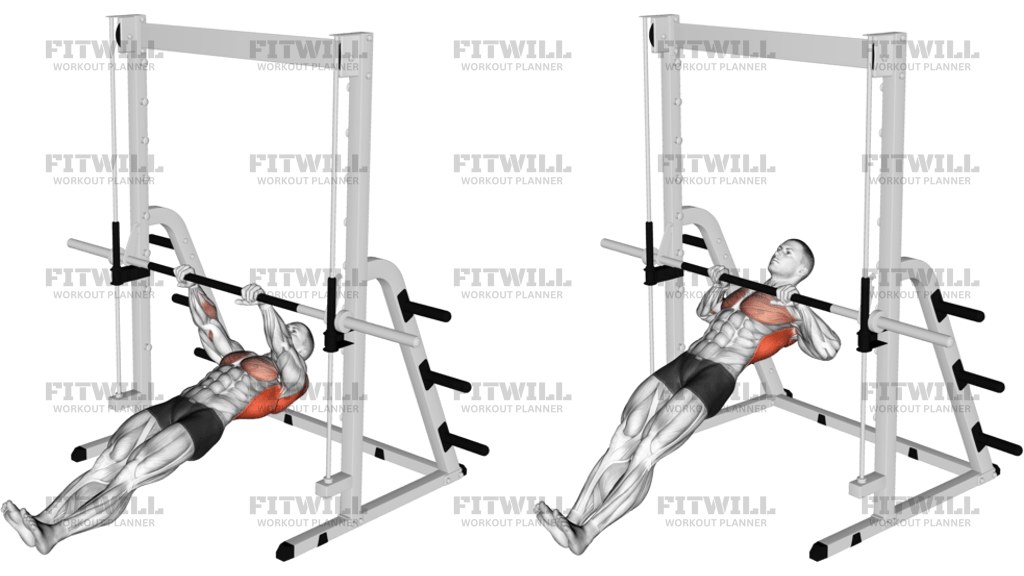
Instructions
- Set a Smith machine bar or rack bar at about waist to chest height and lie underneath it with your heels on the floor and your body straight.
- Grip the bar slightly wider than shoulder width with both palms facing away from you, then line your chest up directly under the bar.
- Squeeze your glutes, brace your midsection, and keep a straight line from your head through your heels before you start pulling.
- Pull your chest toward the bar by driving your elbows back and slightly down, keeping your torso rigid as one piece.
- Bring the chest or upper ribs close to the bar without losing the body line or letting the hips sag.
- Pause briefly at the top while keeping the shoulders packed and the neck long.
- Lower yourself under control until the arms are straight again and the shoulder blades stay organized.
- Reset your breath, keep tension through the torso, and repeat for the planned number of reps.
Tips & Tricks
- A lower bar makes the row harder because your body is more horizontal; raise the bar if you need a cleaner first version.
- If your heels slip or your body shakes, shorten the lever by bending the knees slightly or moving the feet closer to the bar.
- Start each rep by pulling the shoulder blades back first, then finish the pull with the elbows.
- Keep the chest rising toward the bar instead of craning the chin forward to reach it.
- Do not let the hips drop; a soft plank from shoulders to heels is part of the exercise.
- Use a grip width that lets your forearms stay roughly vertical at the top instead of flaring the elbows excessively wide.
- Lower under control for full tension, especially if your goal is back strength rather than just repeated reps.
- Stop the set when you cannot keep the same body angle and bar contact point from rep to rep.
Frequently Asked Questions
What does the Inverted Row work most?
It mainly works the upper back and lats, with the biceps and rear shoulders helping during the pull.
Is the Smith machine bar a good setup for this row?
Yes. A fixed bar is ideal as long as it is set securely and high enough for you to get under it with a full body line.
How do I make the rep easier?
Raise the bar, bend the knees a little, or walk the feet closer to the bar so your torso is less horizontal.
Where should the bar touch at the top?
Aim for the chest or upper ribs. If you only reach your neck or chin, the pull usually turns into a forward head movement.
Should my elbows flare out?
A small flare is normal, but the elbows should generally travel back and slightly down rather than shooting straight out to the sides.
Can I bend my knees during the set?
Yes, bending the knees shortens the lever and makes it easier to keep the torso rigid and the heels stable.
What is the biggest form mistake on this exercise?
The most common mistake is letting the hips sag or swinging the body to finish the pull.
How should I breathe during the row?
Brace before the pull, exhale as you row up, and reset your breath on the controlled way down.