Janda Sit-Up
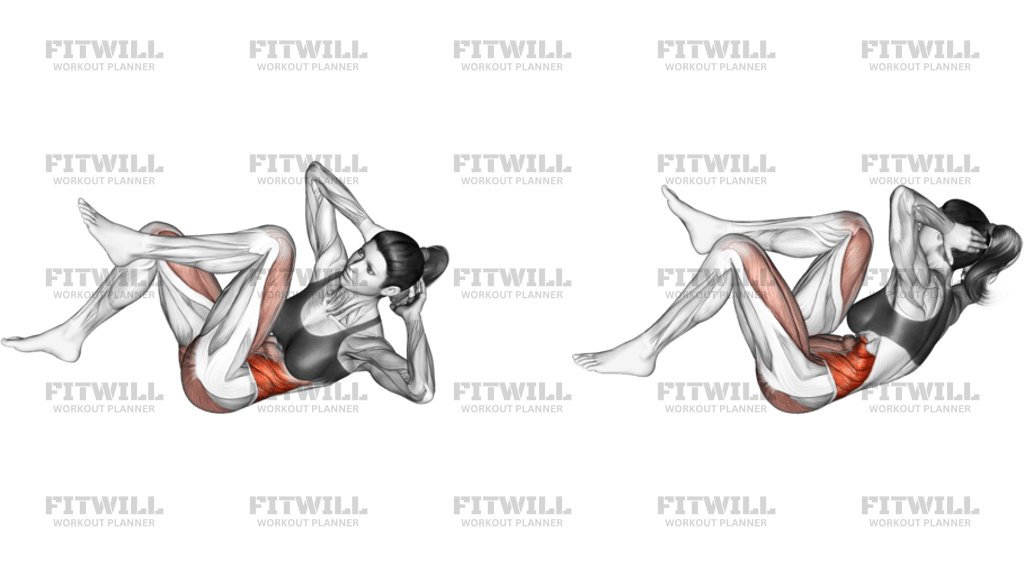
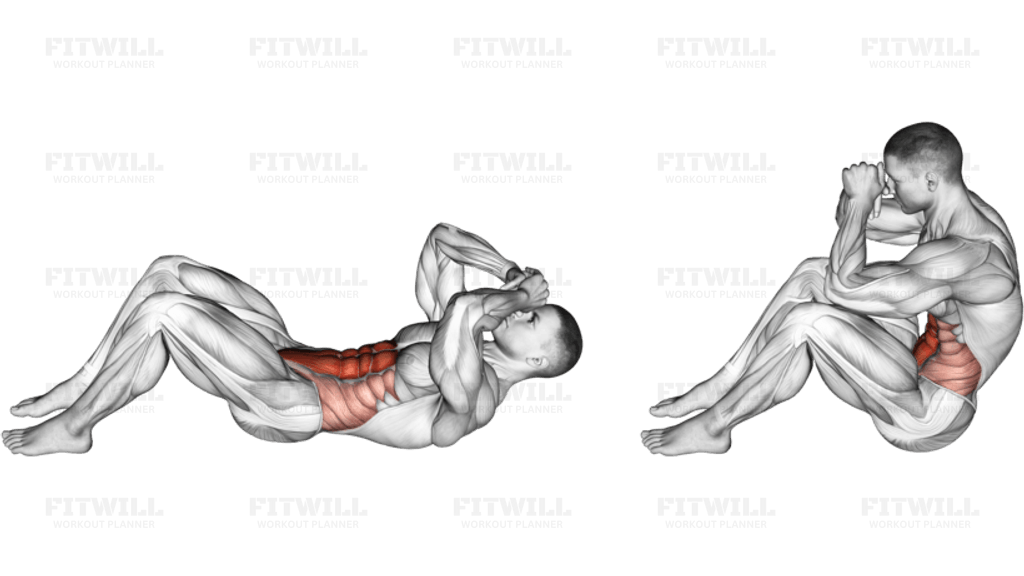
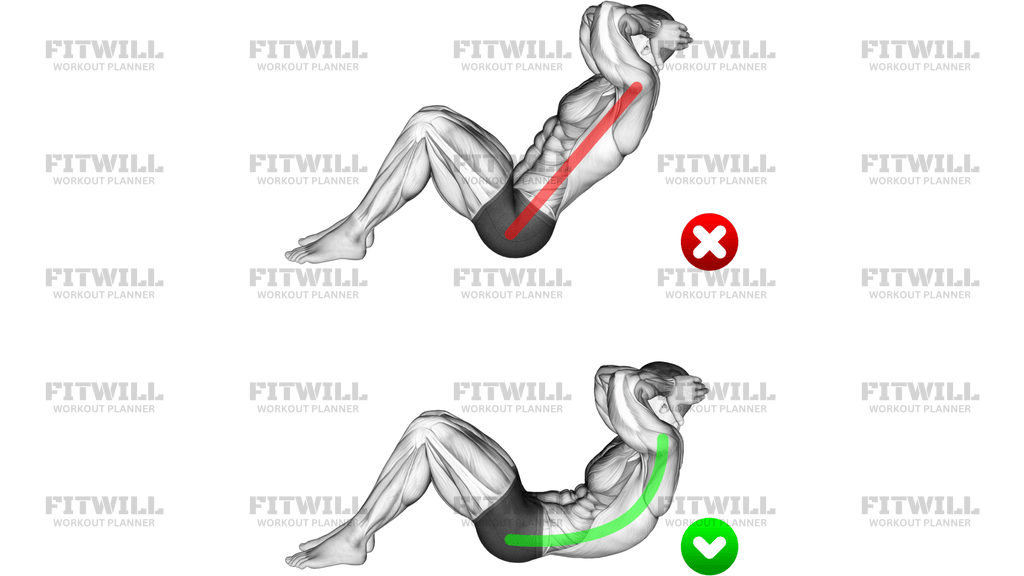
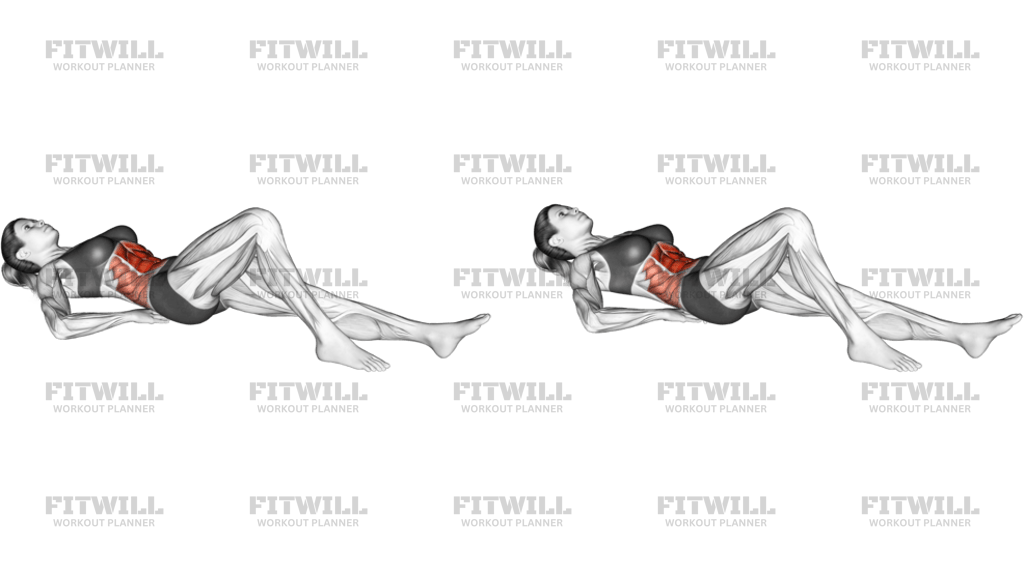
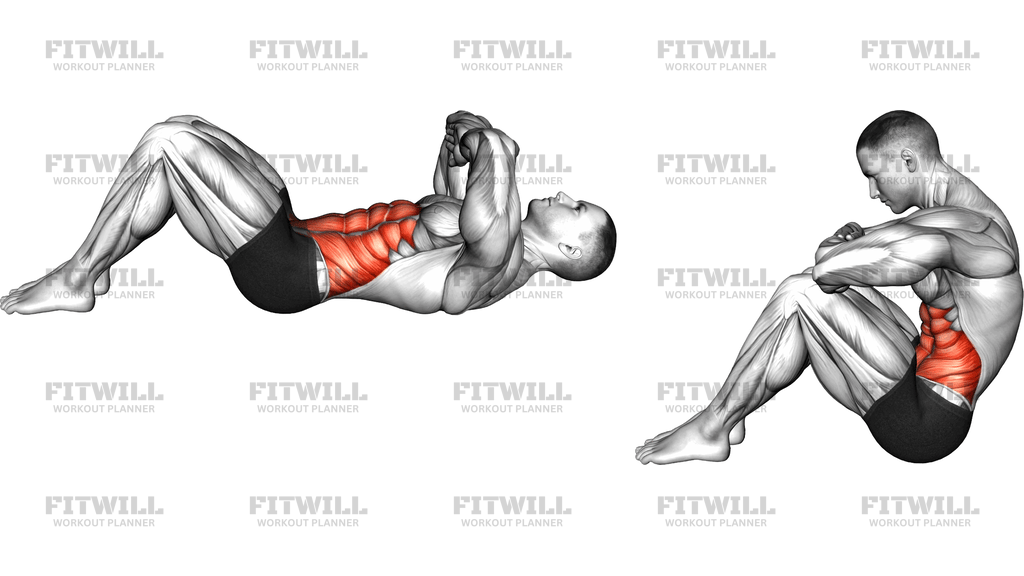
The Janda Sit-Up is a floor core exercise that uses a bent-knee setup and heel drive to shift work away from the hip flexors and toward the abdominal wall. In the image, the lifter is on the floor with the knees bent, feet planted, and the arms crossed over the chest. From that position, the torso curls up under control instead of being yanked by momentum.
This variation is usually used to build stronger trunk flexion, better brace awareness, and cleaner abdominal recruitment. The heel press is the key difference from a normal sit-up: when you actively dig the heels into the floor and avoid pulling with the legs, the hamstrings help stabilize the pelvis and make the abs do more of the lifting. That is why this exercise is popular in core training and as a teaching drill for people who tend to dominate sit-ups with the hip flexors.
Setup matters more here than in a basic crunch. Lie back with the lower back on the floor, knees bent, and feet planted about hip-width apart. Cross the arms over the chest or keep the hands light at the temples if that is how your program teaches it. Before every rep, press the heels down and gently think about pulling the heels toward you without actually moving them. That tension helps lock in the pelvis and keeps the torso from being launched by the legs.
On the way up, curl the ribs toward the pelvis and lift the shoulder blades in a smooth arc. Keep the neck long, the chin lightly tucked, and the ribs from flaring. At the top, finish with the abs, not a hip snap. Lower yourself slowly until the shoulder blades touch down again and reset the heel drive before the next rep. If the lower back, neck, or hip flexors take over, shorten the range and clean up the setup rather than forcing more reps.
Use the Janda Sit-Up when you want strict abdominal work, not when you want speed or a high-rep burn at any cost. It is useful for beginners who need a clearer sit-up pattern and for experienced lifters who want better trunk control. Keep the repetition crisp, the pelvis steady, and the return controlled so the abs stay under tension from start to finish.
Fitwill
Log Workouts, Track Progress & Build Strength.
Achieve more with Fitwill: explore over 9600 exercises with images and videos, access built-in and custom workouts, perfect for both gym and home sessions, and see real results.
Start your journey. Download today!




Instructions
- Lie on your back with your knees bent, feet planted about hip-width apart, and your lower back settled on the floor.
- Cross your arms over your chest, or place your fingertips lightly at your temples if that is how your coach teaches the movement.
- Press both heels into the floor before you start the rep and keep that heel drive active the whole time.
- Pull your ribs down, brace your abs, and keep your neck long instead of craning your chin forward.
- Curl your shoulder blades off the floor in a smooth arc without jerking your torso or kicking through the legs.
- Keep the movement driven by the abs while the heels stay rooted and the knees keep the same bend.
- At the top, finish the sit-up with control rather than snapping upright or letting the hips take over.
- Lower yourself slowly until your shoulder blades return to the floor and re-establish the heel press before the next repetition.
- Breathe out as you curl up and inhale as you lower back down.
- Reset completely between reps if you lose the heel drive or feel the hip flexors taking over.
Tips & Tricks
- The heel press is the point of the Janda variation; if the feet slide or the heels go light, the exercise turns into a regular sit-up.
- Keep the knees bent at roughly the same angle throughout the rep so the legs do not help you swing upward.
- Think about pulling your heels toward your butt without actually moving them to create tension in the hamstrings.
- Crossing the arms over the chest makes it harder to cheat with the shoulders and neck, which keeps the abs honest.
- Do not yank your head forward at the top; the upper abs should lift the torso, not the neck.
- A slower lowering phase usually improves the abdominal challenge more than adding speed or extra reps.
- If your hip flexors cramp, shorten the range and increase the heel drive before trying to go higher.
- Keep your lower ribs from flaring as you come up so the pelvis does not dump into an arched position.
- Use small, strict sets and stop when the heel pressure fades, because once that tension is gone the movement quality drops fast.
Frequently Asked Questions
What makes a Janda Sit-Up different from a regular sit-up?
The bent-knee setup and active heel drive reduce help from the hip flexors so the abs have to do more of the work.
What muscles does this exercise train?
It primarily trains the rectus abdominis, with the obliques and deeper core muscles helping stabilize the torso and pelvis.
Where should I feel the exercise most?
You should feel it mostly in the front of the abdomen, not in the neck or front of the hips.
How do I set up my feet for the Janda Sit-Up?
Plant the feet about hip-width apart, keep the knees bent, and actively press the heels into the floor before every rep.
Why do my hip flexors take over on this movement?
That usually means the heels are not driving into the floor hard enough or the knees are changing angle as you sit up.
Can beginners do this exercise safely?
Yes, as long as they keep the range small, move slowly, and use the heel press to avoid yanking through the hips.
Should I keep my arms crossed or behind my head?
Crossing the arms over the chest is usually the cleanest option because it reduces neck strain and makes cheating harder.
How many reps should I use?
Use a controlled rep range that lets you keep the heel drive and torso curl clean; quality matters more than chasing high numbers.
What is the most common mistake?
The most common mistake is turning the rep into a fast sit-up with momentum instead of a strict abdominal curl with active heel pressure.