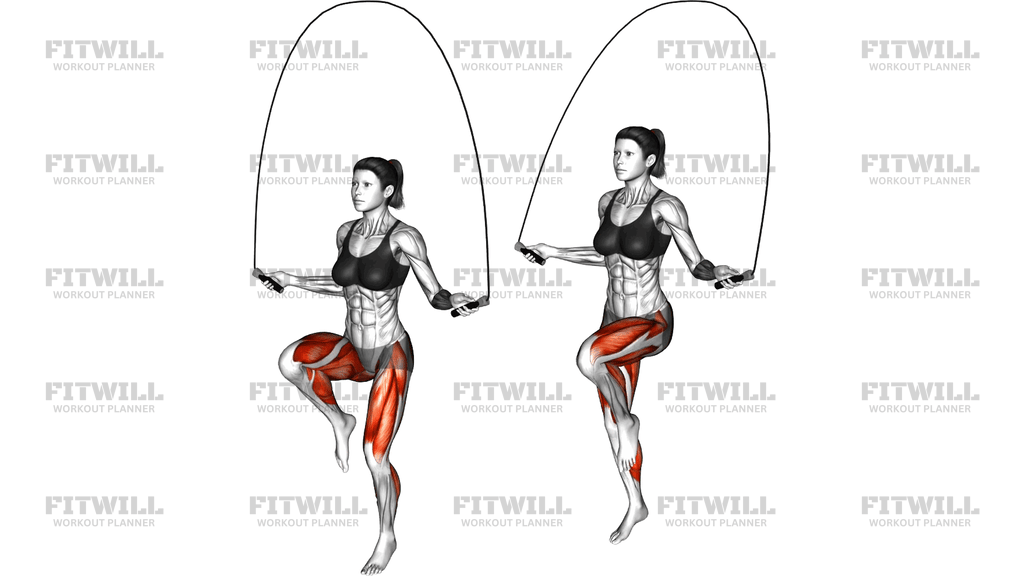
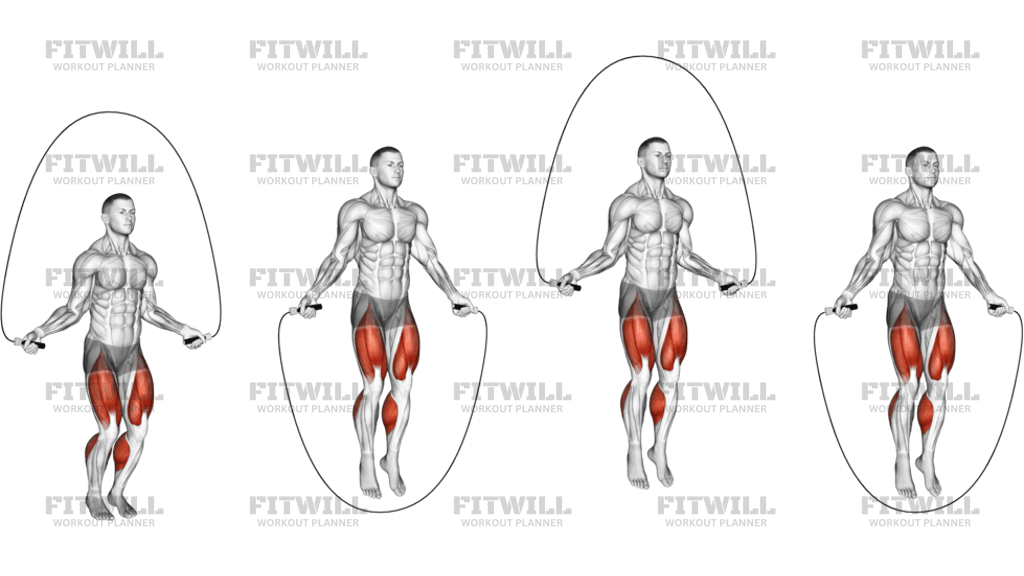
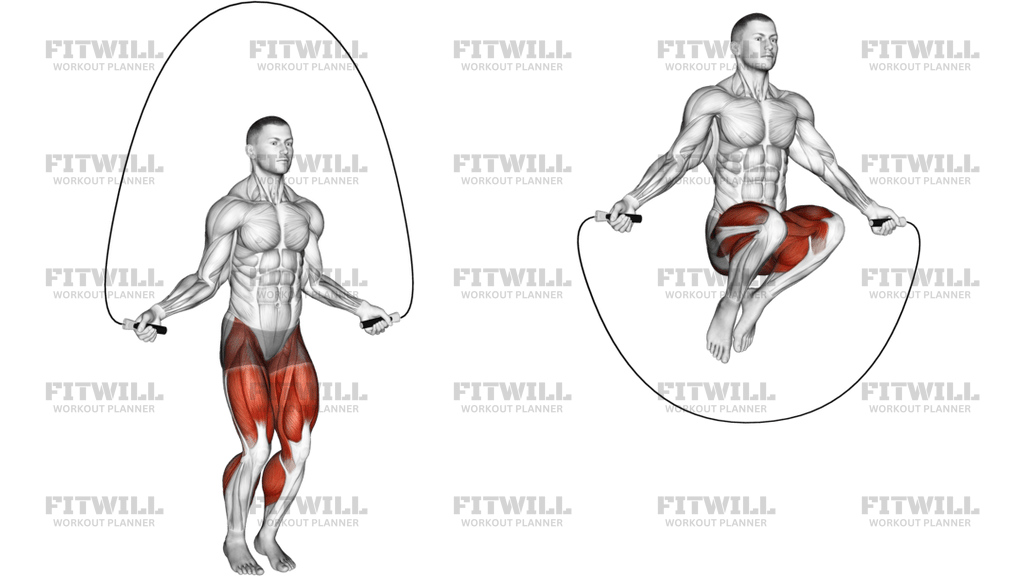
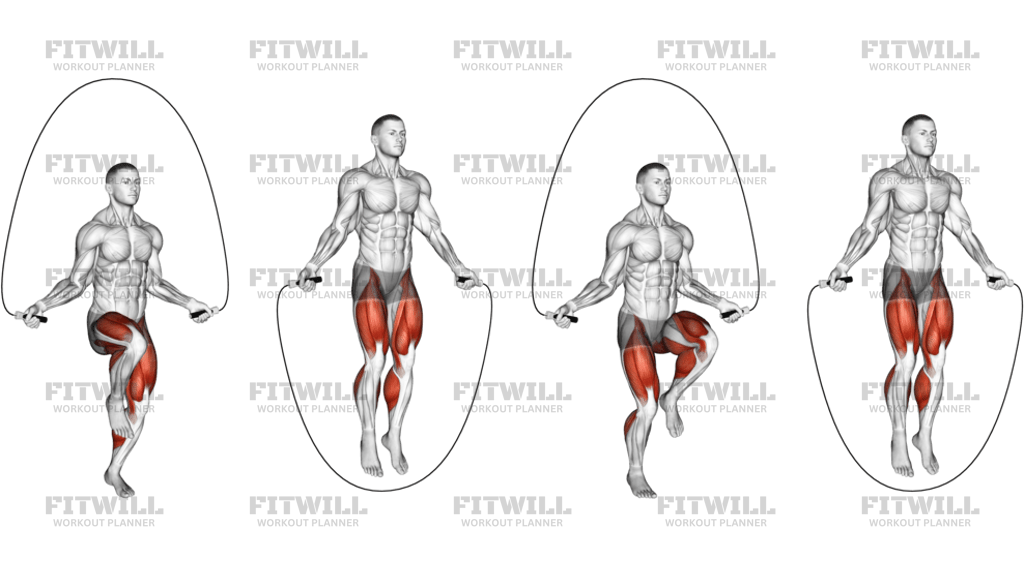
Jump Rope
Jump Rope is a compact conditioning drill that trains rhythm, foot speed, coordination, and repeatable ankle spring without needing much space or setup. The point is not to jump high. The point is to keep the rope moving smoothly while your body stays tall, relaxed, and quiet through each contact.
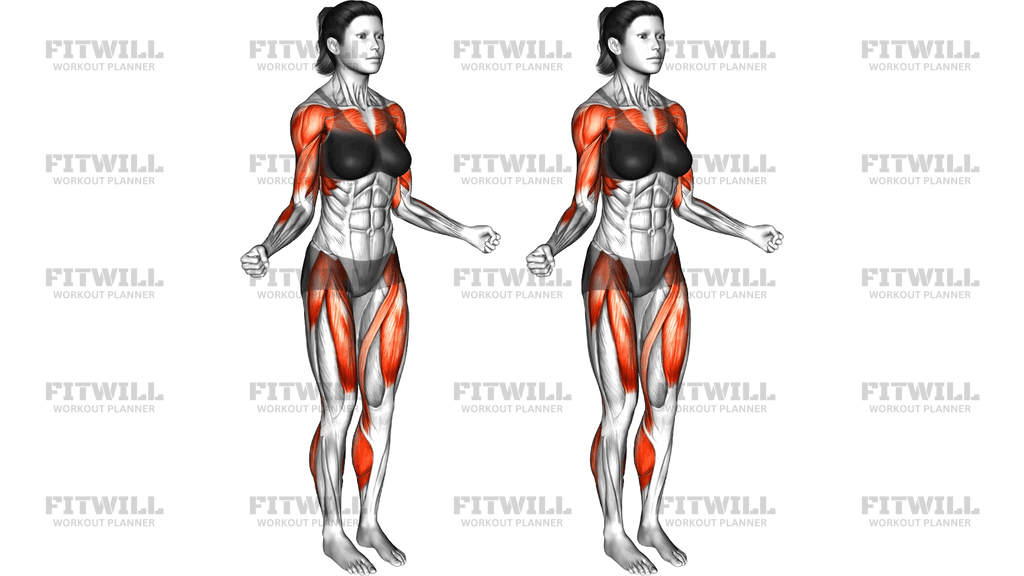
It is a useful tool for warm-ups, sports conditioning, and short interval work because it raises heart rate quickly while teaching timing and control. The repeated hops ask the calves, quads, glutes, shoulders, forearms, and core to coordinate every rep, so the exercise works best when the rope path and landing pattern stay efficient instead of exaggerated.
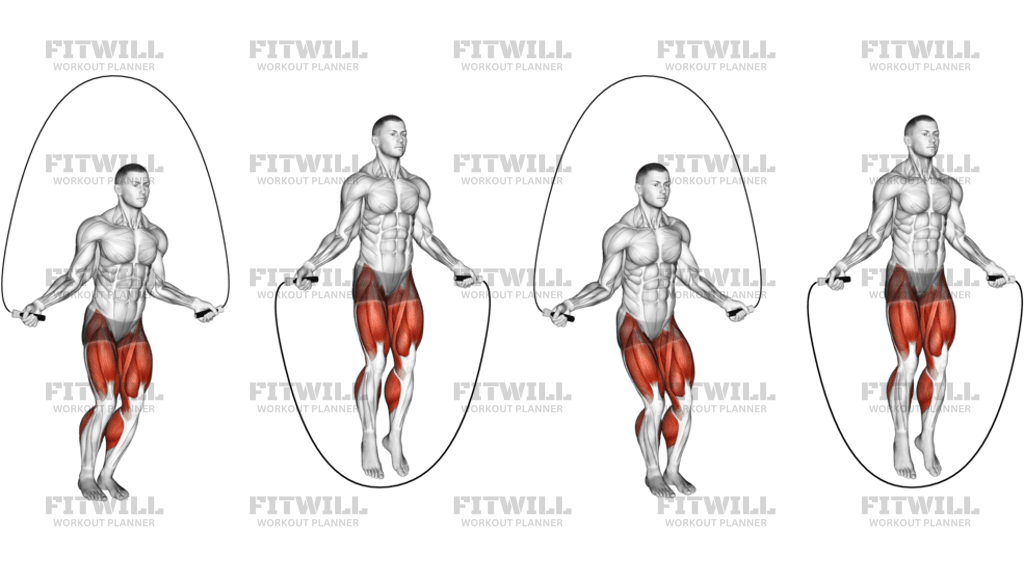
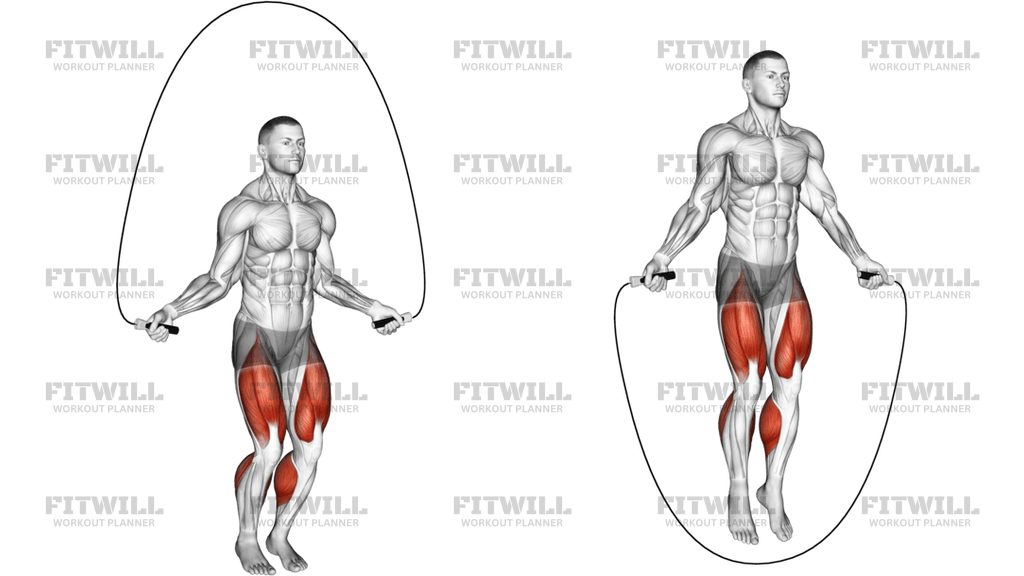
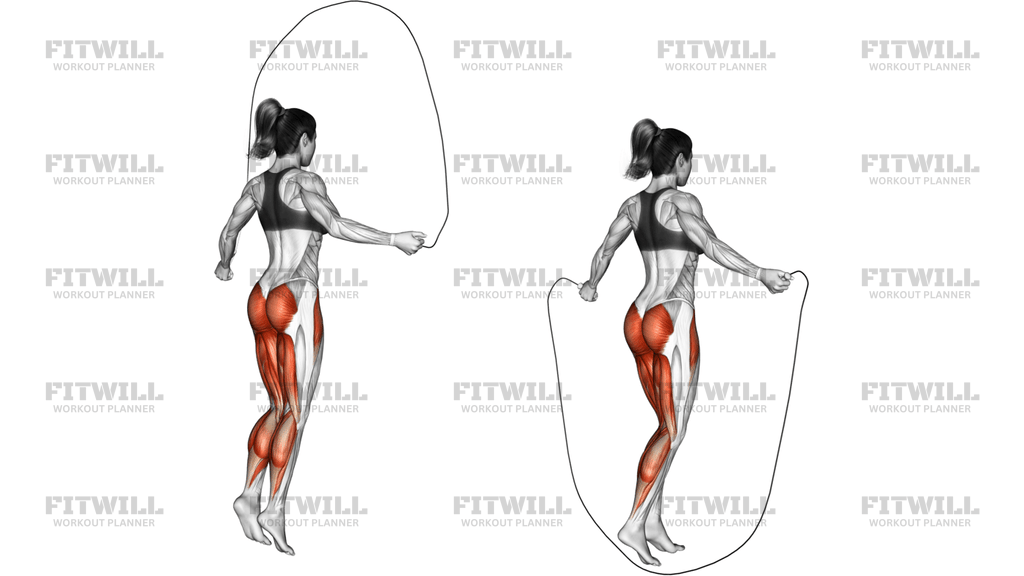
Start with the rope behind your heels, handles in each hand, and your feet close together under your hips or slightly narrower. Keep your elbows near your ribs, your hands a little in front of your hips, and your shoulders down so the rope turns from the wrists instead of the arms. From there, make a small forward swing and hop just high enough for the rope to pass under your feet.
Each landing should be soft and quick, with your weight centered over the balls of the feet and your knees only slightly bent. Keep your torso stacked, your eyes forward, and your breathing steady so the pace does not turn into a tense, breathless bounce. If the rope clips your toes or your heels are slapping the floor, the jump is usually too high or the hands are drifting too far forward.
Jump Rope is especially useful when you want a simple, low-space conditioning option that still asks for coordination and rhythm. It also carries over well to field sports, boxing-style intervals, and general fitness circuits because it rewards clean repeatable footwork. If your calves, shins, or Achilles area are not used to impact, build volume gradually and keep the hops small so the session stays crisp instead of punishing. As your timing improves, you can extend the working intervals or raise the rope speed, but the jump should stay compact and controlled rather than turning into a higher bounce.
[ Workout Log & Planner ]
Put your next workout in Fitwill
Keep your plan and training log ready when you are.


Instructions
- Stand with the rope behind your heels, a handle in each hand, and your feet close together under your hips.
- Hold your hands slightly in front of your hips with your elbows tucked near your ribs and your shoulders relaxed.
- Look straight ahead, brace lightly through your midsection, and keep most of your weight over the balls of your feet.
- Turn the rope mainly with your wrists and start a small forward swing rather than windmilling your arms.
- Hop just high enough for the rope to clear your toes, keeping the jump compact and vertical.
- Land softly on the balls of both feet with your knees soft and your torso stacked over your hips.
- Keep the rope path smooth and repeat the same short hop and wrist turn for each rep.
- Breathe in a steady rhythm as you skip instead of holding your breath as the pace increases.
- If you miss a pass, stop, reset the rope behind your heels, and restart with a smaller jump.
Tips & Tricks
- If the rope keeps catching, shorten your jump before you speed up the turn.
- Keep your elbows close to your sides; flared elbows usually make the rope arc too wide.
- Let the wrists do the work. Big shoulder circles waste energy and throw off the rope path.
- Quiet landings are a good sign that the jump is low enough and your ankles are springy, not stomping.
- If your shins feel beat up, cut the set into shorter intervals and keep the hops small.
- Hands should stay slightly in front of the hips; if they drift behind you, the rope tends to drag.
- Use a steady rope speed that matches your breathing instead of sprinting the first few seconds.
- A soft surface such as a mat or wood floor is easier on the lower legs than concrete.
Frequently Asked Questions
What muscles does Jump Rope work?
Jump Rope mainly trains the calves and lower legs, but the quads, glutes, shoulders, forearms, and core all help keep the rope moving and the body stable.
Is Jump Rope good for beginners?
Yes, as long as you start with short sets and keep the jump small. Beginners usually benefit from practicing the rope timing before trying to go fast.
How high should I jump during Jump Rope?
Only high enough for the rope to pass under your feet. If the jump gets much bigger than an inch or two, the set becomes less efficient and more jarring.
Why does the rope keep hitting my toes?
Usually the hands are drifting forward, the rope is too fast for your timing, or the jump is late. Keep the elbows near your ribs and think about jumping just before the rope reaches your toes.
Should I jump on both feet or alternate feet?
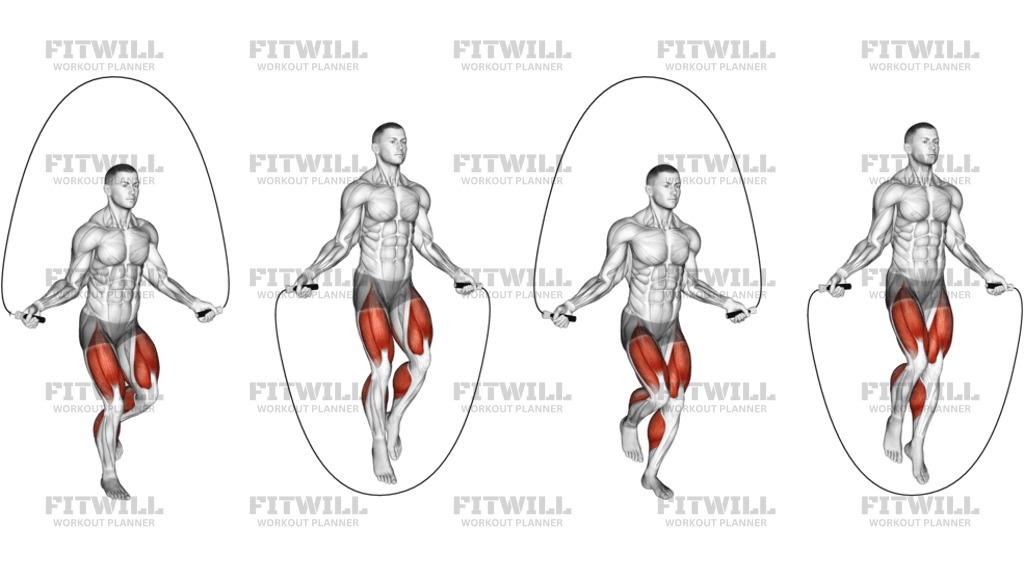
The two-foot hop shown in Jump Rope is the simplest version and the best place to start. Alternate-foot patterns are useful later if you want more speed or a sports-style rhythm.
Can I use Jump Rope instead of running?
Yes, it can be an efficient conditioning substitute, especially in intervals. It is usually more calf- and coordination-focused than running, so start with shorter rounds if you are not adapted to bouncing.
What should my hands and elbows do in Jump Rope?
Keep the elbows tucked close to your sides and let the wrists turn the rope. Wide elbows and big arm swings make the movement sloppy and use more energy than necessary.
What if my calves fatigue before my lungs do?
That is common, especially early on. Reduce the set length, keep the hops lower, and build volume gradually so the lower legs adapt without losing clean timing.