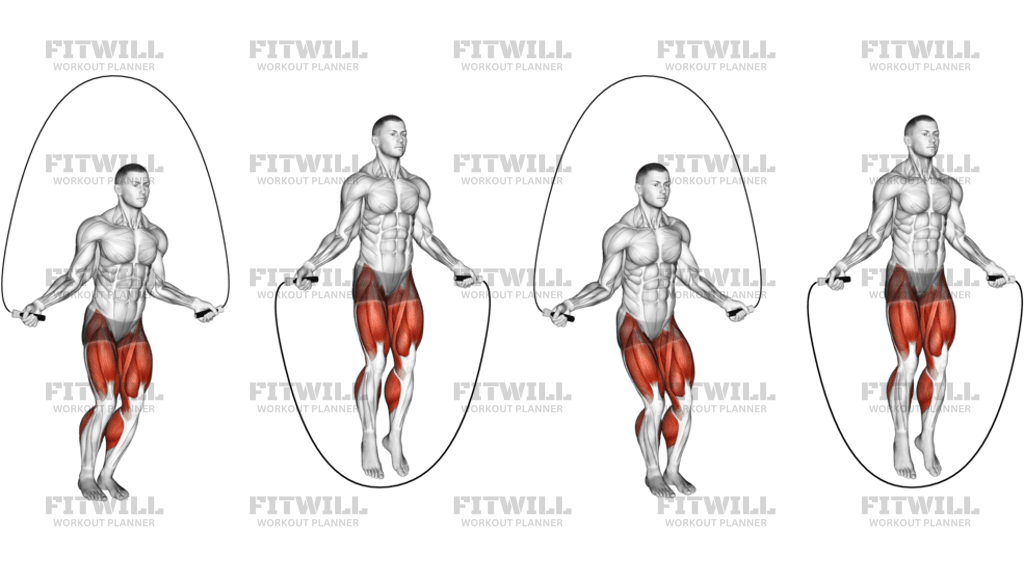
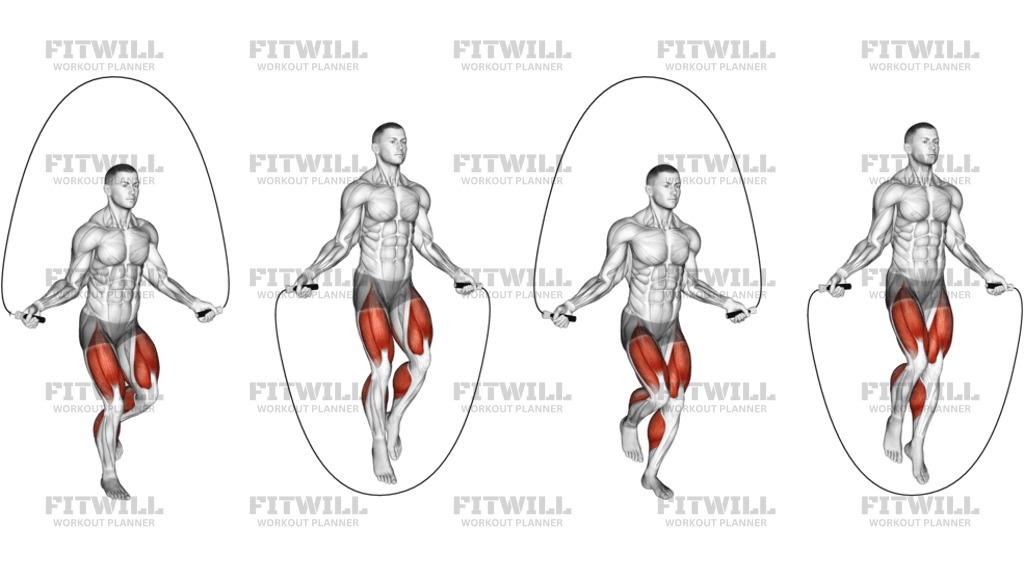
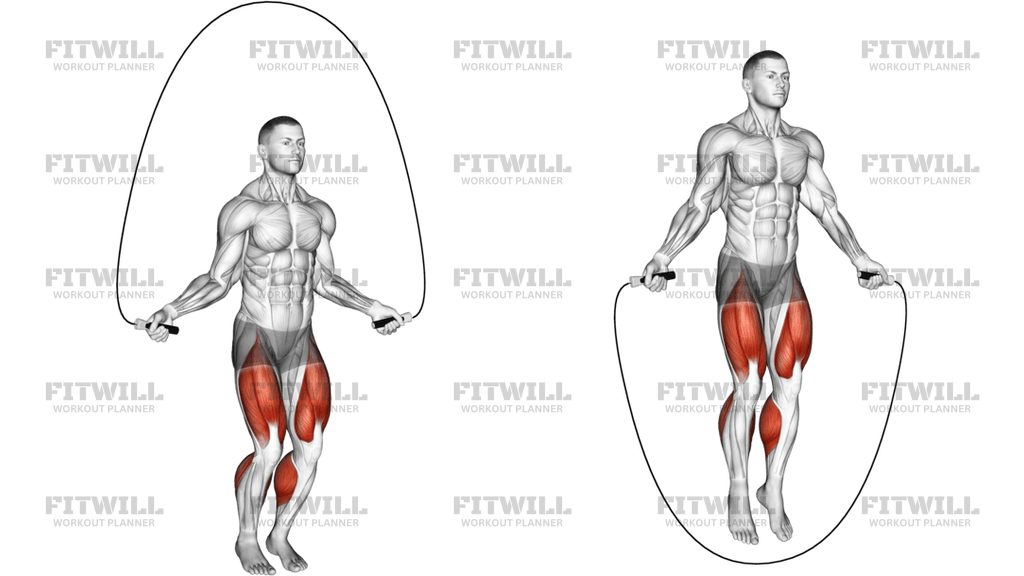
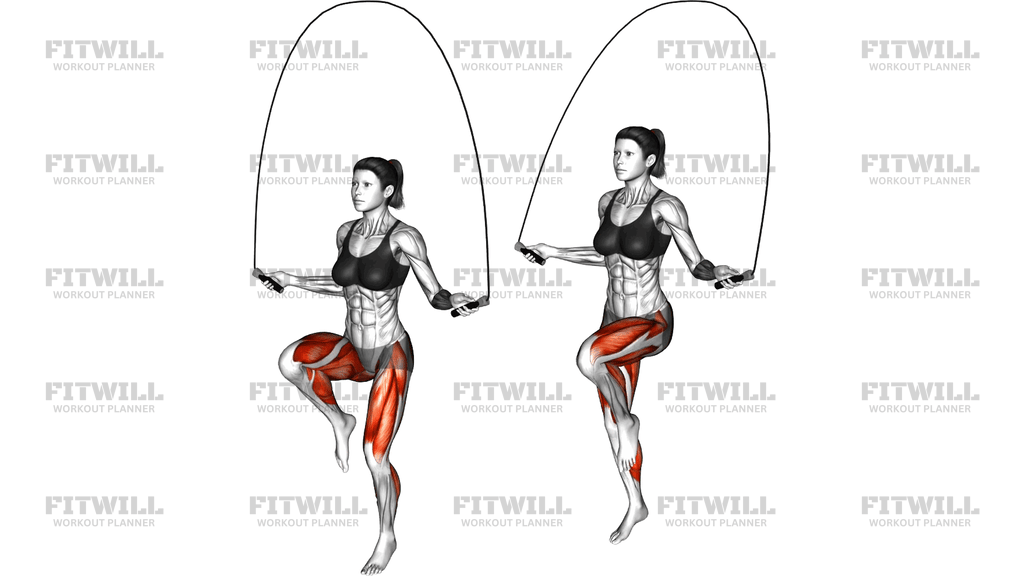
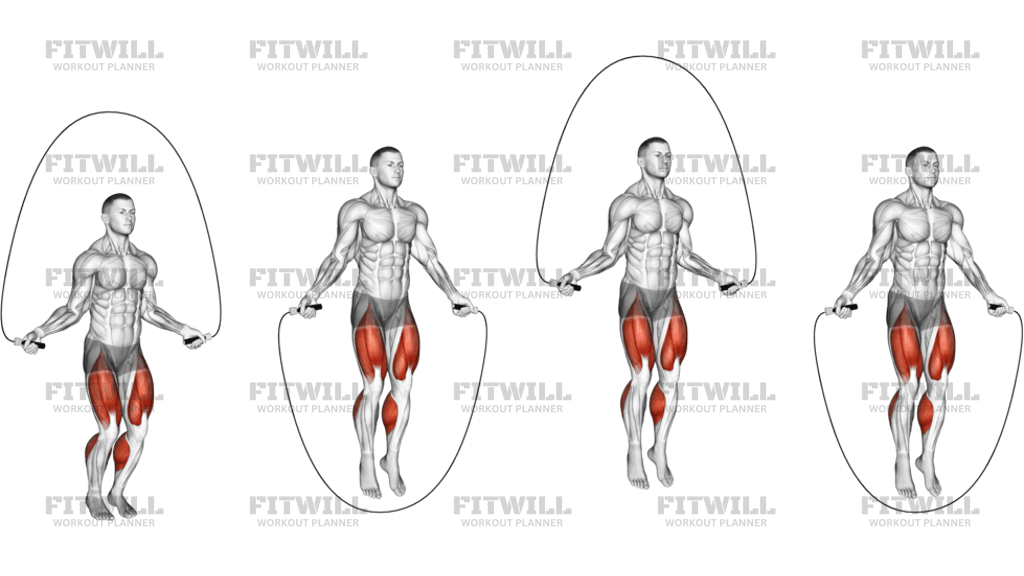
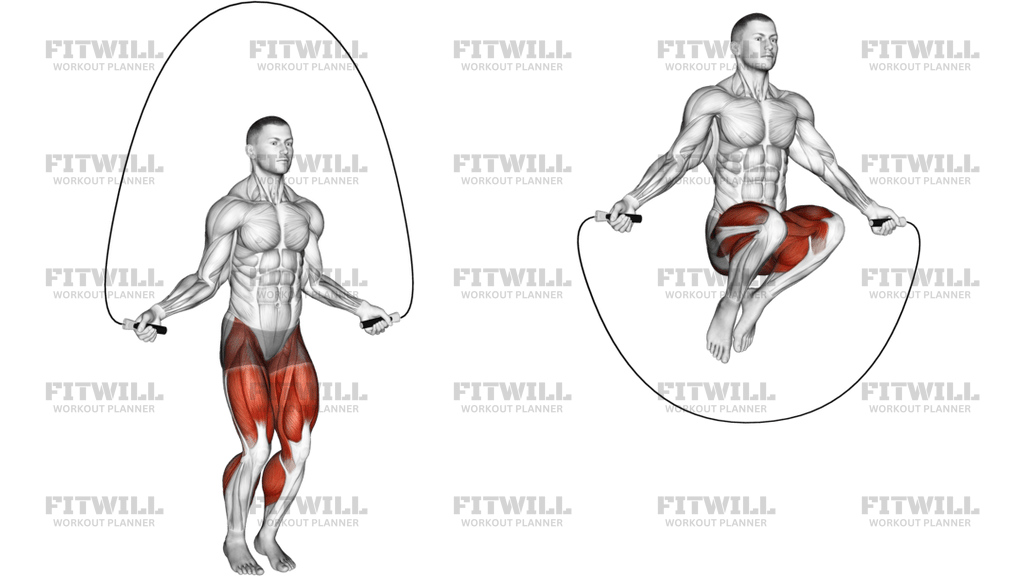
High Knee Jump Rope
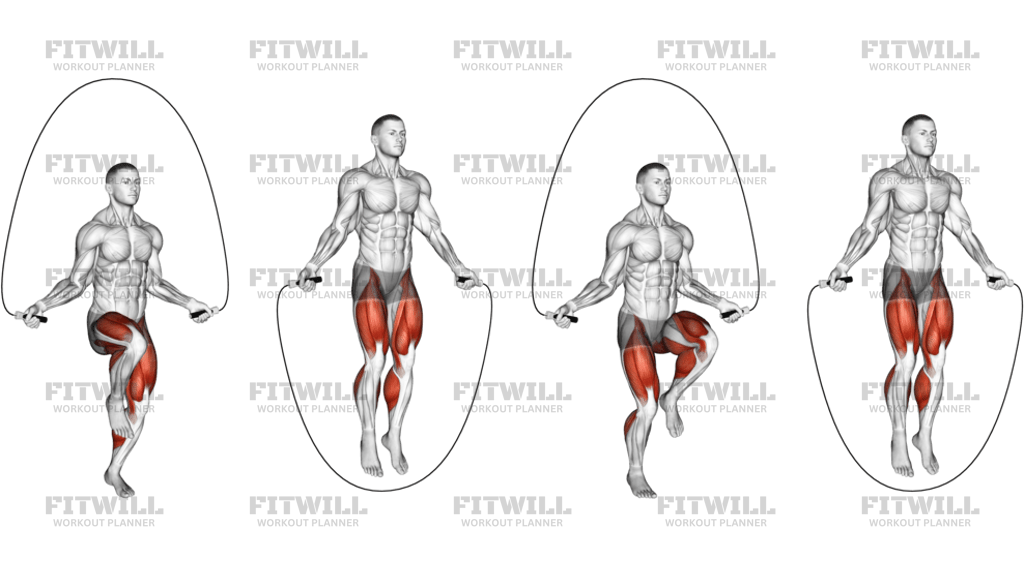
High Knee Jump Rope is a fast-paced conditioning drill that combines rope skipping with alternating knee drive. It is not just about turning the rope and staying light on your feet; each jump asks one knee to rise while the other leg supports the body and keeps the rhythm clean. That makes it useful for building coordination, foot speed, lower-body endurance, and work capacity in a short amount of time.
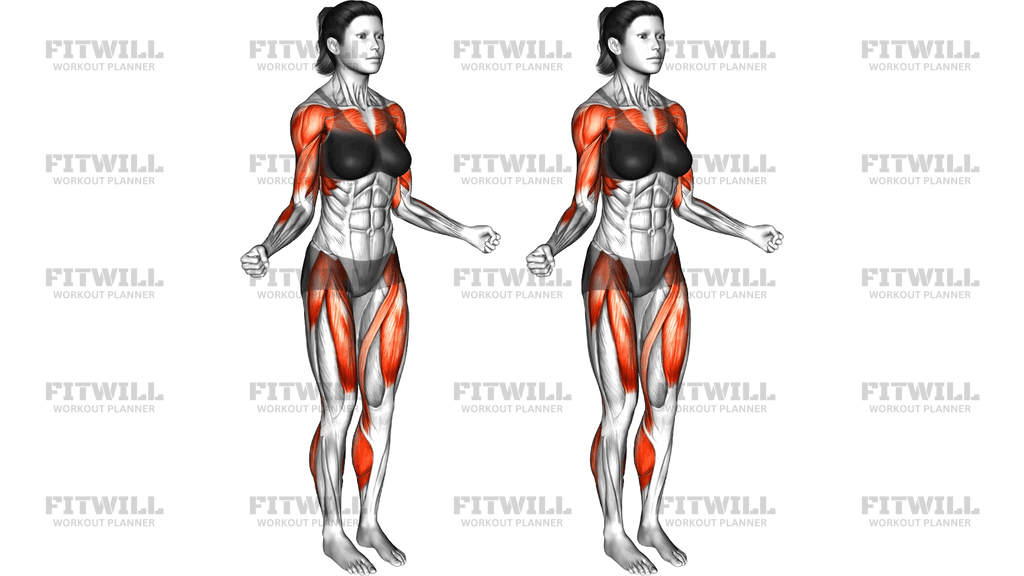
The movement asks a lot from the calves, quads, hip flexors, glutes, and core, while the shoulders, forearms, and upper back keep the rope moving smoothly. Because the rope has to clear the body on every rep, timing matters as much as leg power. If the swing gets sloppy or the torso leans too far forward, the drill turns into a noisy shuffle instead of a crisp high-knee skip.
Set the rope to a length that lets the handles sit comfortably near your ribs or lower chest when you stand on the middle of it. Start tall with your feet under your hips, elbows tucked near your sides, and wrists doing most of the turning. From there, jump just high enough to clear the rope and drive one knee up toward hip height, then switch legs on the next turn or after a short burst depending on the rhythm you are training.
The best reps stay compact. Land on the balls of your feet, keep the contact time short, and let the rope skim close to the floor instead of swinging in big circles. Your torso should stay stacked over your pelvis, with the chest open and the gaze forward, so the knee drive comes from the hips rather than from throwing the whole body backward or side to side.
High Knee Jump Rope works well as a warm-up, a conditioning finisher, or a short interval drill between strength sets when you want intensity without heavy loading. It is also a useful coordination test for athletes who need quick foot contacts and rhythm under fatigue. Keep the pace controlled enough that every pass of the rope stays clean; if the rope starts clipping your shins or your knees stop rising, reset the rhythm before continuing.
[ Workout Log & Planner ]
Put your next workout in Fitwill
Keep your plan and training log ready when you are.


Instructions
- Hold the jump rope handles with your elbows close to your ribs and stand on the middle of the rope to check that the length reaches around your lower chest.
- Stand tall with your feet under your hips, shoulders relaxed, and the rope resting behind your heels before the first turn.
- Turn the rope from your wrists, not your shoulders, and make small circles that stay close to your sides.
- Hop just high enough for the rope to pass under your feet, then drive one knee up toward hip height on the next beat.
- Land softly on the ball of the support foot and switch legs in a quick, rhythmic pattern.
- Keep your chest up and your eyes forward so your torso stays stacked instead of folding over the knee lift.
- Breathe in through a few skips to find rhythm, then exhale steadily as the pace builds.
- If the rope clips your toes or shins, pause, reset the handles, and start the next burst with a smaller jump.
Tips & Tricks
- Shorter, quicker wrist turns usually clean up the timing better than large arm circles.
- If the rope keeps catching, shorten the jump before you try to jump higher.
- Think of pulling one thigh up while the opposite foot stays springy on the floor instead of doing a full sprint hop.
- A slightly softer rope and smooth handles make the rhythm easier to keep than a stiff, heavy rope.
- Keep the elbows near your waist; flared elbows usually make the rope drift outward and slow down.
- Land under your center of mass instead of reaching forward, or the high-knee pattern will turn into a forward bounce.
- Use short intervals if your calves fatigue quickly, since the drill becomes sloppy once the ankle spring disappears.
- Stop the set when the knee drive drops below hip level or the rope starts hitting the front of the shins.
Frequently Asked Questions
What muscles does High Knee Jump Rope work?
It mainly trains the calves, quads, hip flexors, glutes, and core while the shoulders and forearms keep the rope moving.
How is High Knee Jump Rope different from regular jump rope?
Regular skipping usually stays low and even, while High Knee Jump Rope adds an active knee drive on each beat to make the drill more demanding and athletic.
How high should my knees come up during High Knee Jump Rope?
Aim for about hip height when your rhythm allows it, but keep the jump small enough that the rope still clears cleanly.
What is the most common mistake with High Knee Jump Rope?
Most people swing the rope with their arms instead of their wrists, which makes the rope drift wide and ruins the cadence.
Can beginners do High Knee Jump Rope?
Yes, but it helps to master basic jump rope timing first and then add the knee drive at a slower pace.
Why does the rope keep hitting my toes or shins?
The jump is usually too low, the rope is too long, or the wrist circles are too wide. Tighten the turn and make only the smallest hop needed to clear the rope.
How should I breathe during High Knee Jump Rope?
Use short, steady exhales while skipping and avoid holding your breath, especially once the pace increases.
What kind of rope works best for this drill?
A standard speed rope or lightweight beaded rope is usually easiest to control because the turn stays quick and predictable.