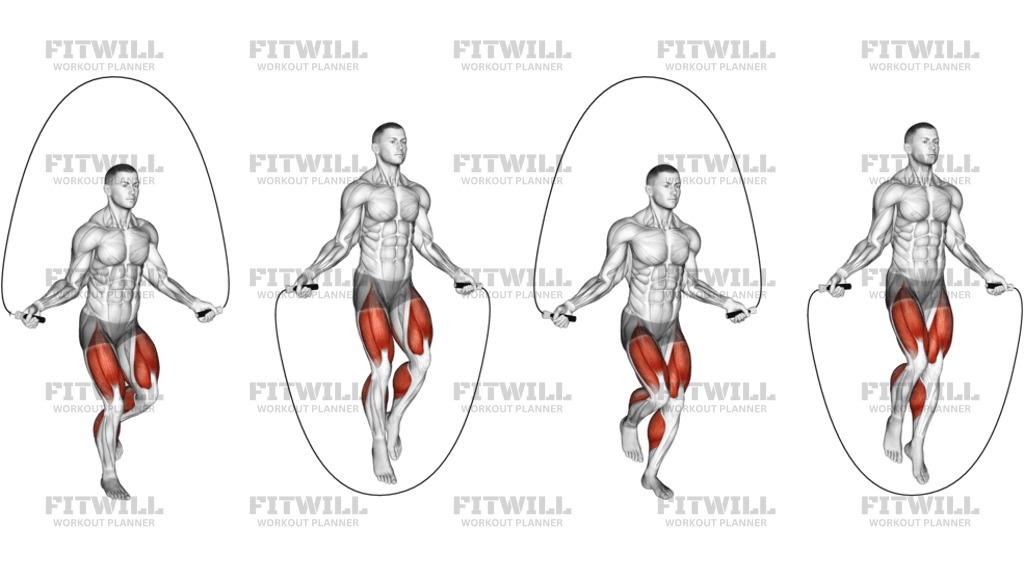
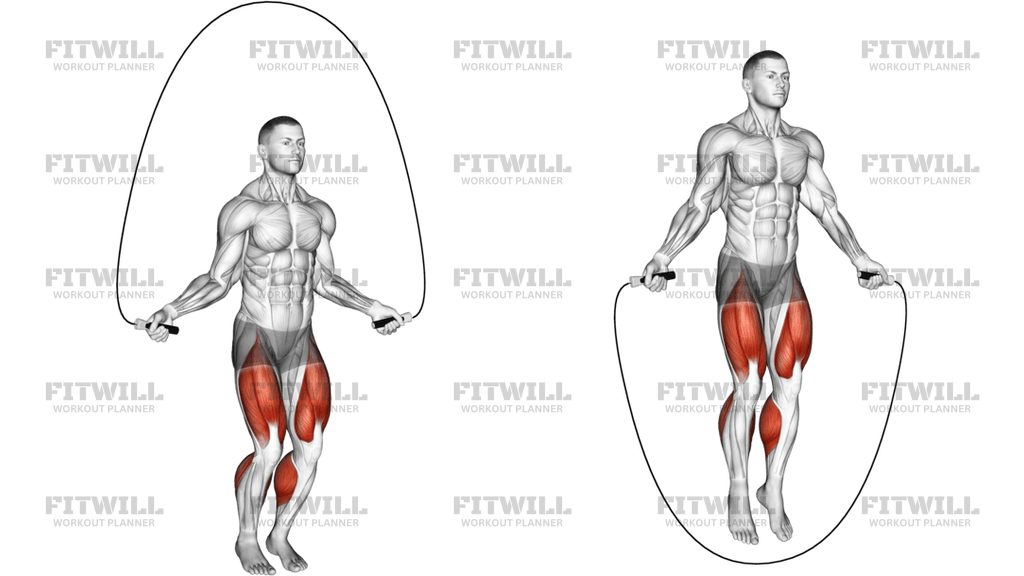
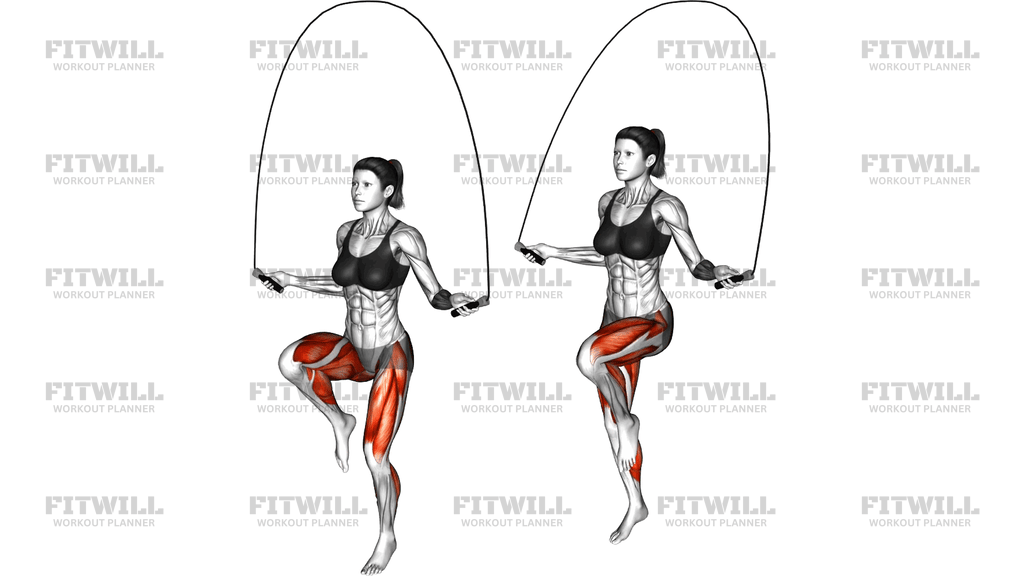
Side-to-Side Jump Rope
Side-to-Side Jump Rope is a rhythmic cardio drill that combines repeated rope turns with small lateral hops. Instead of staying planted in one spot, you shift a few inches from one side to the other on each repetition, which asks your feet, ankles, calves, and core to stay organized while the rope keeps moving. It is a conditioning exercise first, but it also builds coordination, timing, and lower-leg stiffness that carry over to athletic footwork.
The setup matters because rope length, handle position, and hop width decide whether the drill feels smooth or chaotic. Stand tall with the handles slightly in front of your hips, elbows close to your sides, and the rope resting behind your heels before you start. Keep the shoulders relaxed and the chest open while the wrists do most of the turning. If the rope is too long, the hops get sloppy; if the hands drift wide, the swing turns into a shoulder exercise instead of a clean rope pattern.
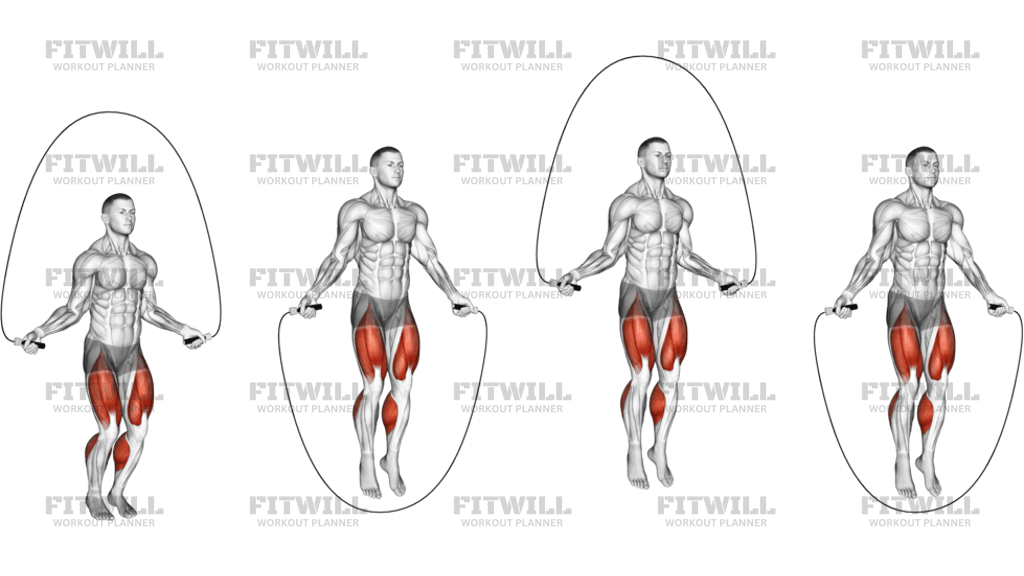
Each rep should be a small, springy exchange with the floor. Turn the rope from the wrists, leave the ground only enough to clear the cable, and land softly on the balls of the feet. Shift a short distance left and right while keeping the torso mostly quiet and the knees tracking over the toes. The goal is not a big leap or a dramatic side shuffle. The goal is a repeatable rhythm that stays crisp when you fatigue.
Use Side-to-Side Jump Rope for warm-ups, conditioning intervals, footwork prep, or low-equipment cardio blocks. It works well when you want a drill that raises the heart rate without heavy impact or complicated setup. Keep the jumps low, breathe in short controlled bursts, and stop the set when the rope starts catching because the hop got too large or the timing drifted. Clean reps matter more than speed here, and the best sets feel quick, quiet, and controlled from start to finish.
[ Workout Log & Planner ]
Put your next workout in Fitwill
Keep your plan and training log ready when you are.


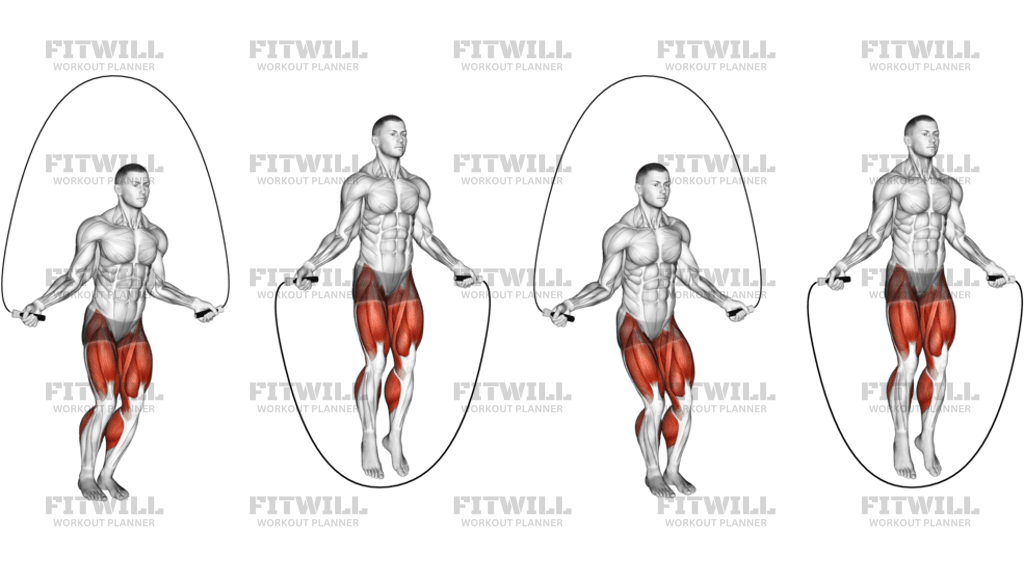
Instructions
- Stand upright with your feet close together, the rope behind your heels, and the handles held at about hip height with your elbows tucked near your ribs.
- Grip the handles lightly and relax your shoulders so the rope can turn from the wrists instead of from big arm circles.
- Brace lightly through your trunk, then start the rope with a smooth wrist turn as you prepare to hop.
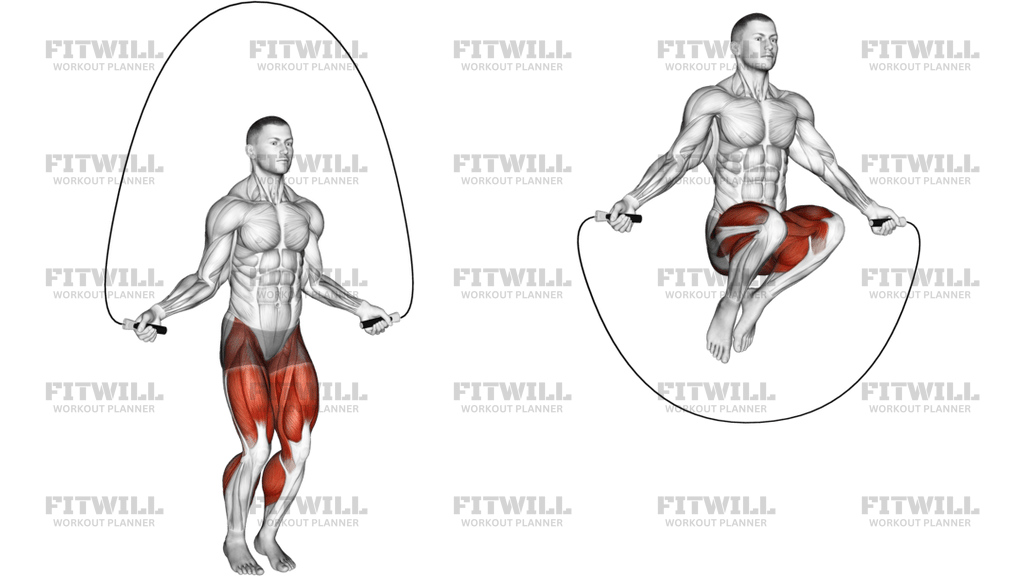
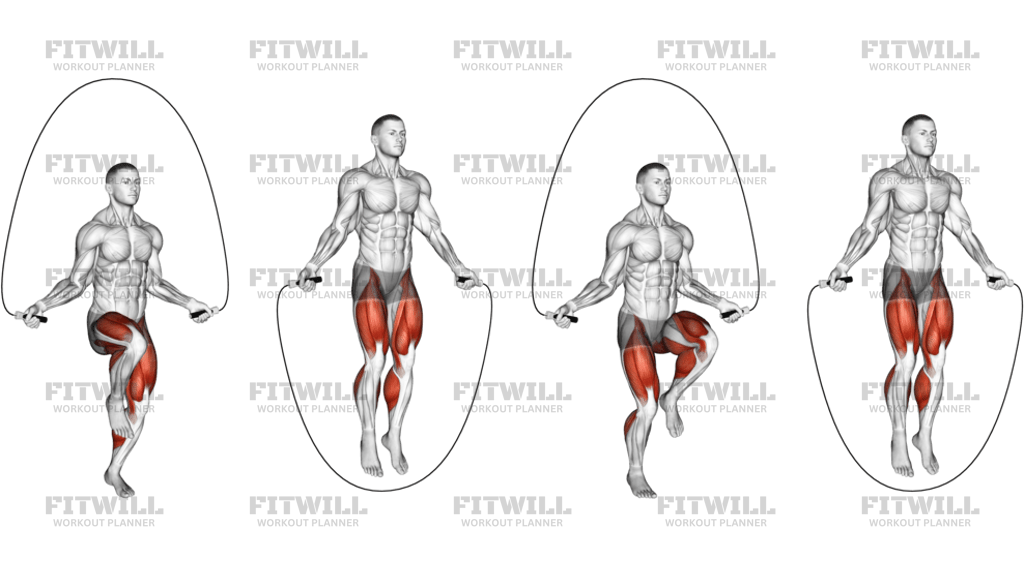
- Hop just high enough for the rope to clear the floor, keeping the jump compact and springy.
- Shift a few inches to the left on one rep, then a few inches to the right on the next, while keeping your torso facing forward.
- Land softly on the balls of your feet with your knees slightly bent and your chest stacked over your hips.
- Keep the rope speed even and let the wrists do most of the work while the elbows stay near your sides.
- Breathe in short, steady breaths and finish the set before the rope starts catching or your hops become noisy.
Tips & Tricks
- Keep the side-to-side travel small; a few inches is enough to challenge coordination without turning the drill into a shuffle.
- If the rope clips your toes, shorten the hop before you speed up the swing.
- Think wrists turn, elbows stay quiet, and avoid making big shoulder circles.
- Land quietly; loud slaps usually mean the jump is too high or the ankles are too stiff.
- Keep the knees tracking over the toes as you shift left and right so the landing stays stable.
- Use a rope length that clears the floor with only a small margin at the bottom of the swing.
- When the calves start burning, shorten the set instead of letting the hops get heavier and slower.
- Stay tall through the trunk so the rope rhythm does not pull your ribcage forward.
Frequently Asked Questions
What does Side-to-Side Jump Rope work?
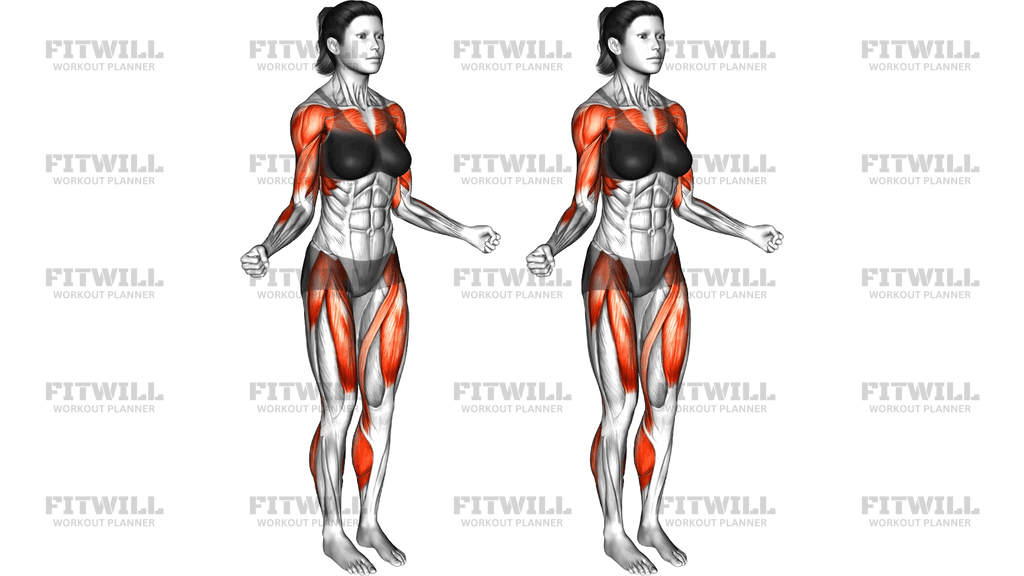
It is mainly a cardio and coordination drill for the calves, quads, glutes, and trunk, with a strong demand on foot and ankle control.
Is this different from regular jump rope?
Yes. The rope turn is the same, but the lateral hop pattern adds side-to-side footwork and balance control.
How high should I jump?
Only high enough for the rope to clear the floor, usually just a very small hop.
Should my arms be moving a lot?
No. The handles should stay near your hips and the rotation should come mostly from the wrists.
Can beginners do this exercise?
Yes, but start with slow turns and tiny hops until the timing feels automatic.
Why do I keep catching the rope?
The most common causes are jumping too high, letting the hands drift away from the body, or shifting too far side to side.
Where should I feel it most?
You should feel a lot of work in the calves and feet, with the trunk helping you stay upright and balanced.
Can I use it for conditioning intervals?
Yes. It works well in short work bouts because the rhythm can be scaled up or down quickly.