High Jump Rope
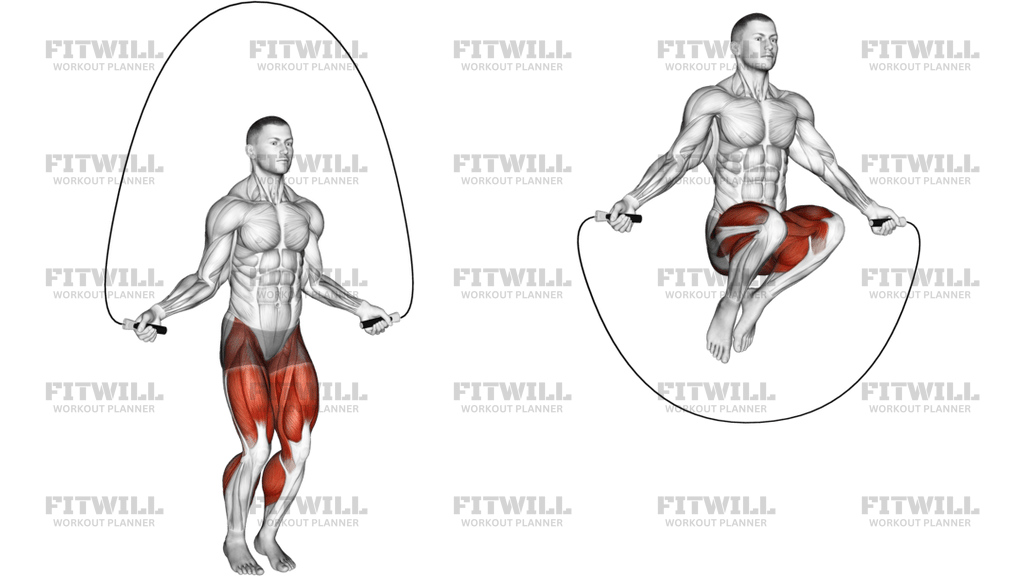
High Jump Rope is a fast, rhythmic jump-rope variation that emphasizes a taller knee drive than a basic bounce skip. It is still a cardio exercise first, but the higher leg action asks more from your hips, quads, calves, and trunk while the shoulders and forearms keep the rope turning smoothly. The goal is not to jump as high as possible; it is to stay light, coordinated, and repeatable while the rope clears cleanly on every turn.
This variation works well when you want conditioning with a little more athletic footwork than standard jump rope. The high-knee action challenges balance, timing, and midline control, which is why the torso position matters as much as the leg action. If you lean back, fling the rope with the arms, or overjump the floor, the rhythm falls apart quickly and the set turns into a fatigue contest instead of clean work.
A good setup starts with a rope that fits your height and a surface that lets you land quietly. Stand tall with the rope behind your heels, hands just outside your hips, and elbows close enough that the turns come mainly from the wrists. Before the first rep, find a narrow, upright posture so the rope travels in a tight arc and your knees can rise without your chest collapsing or your lower back arching.
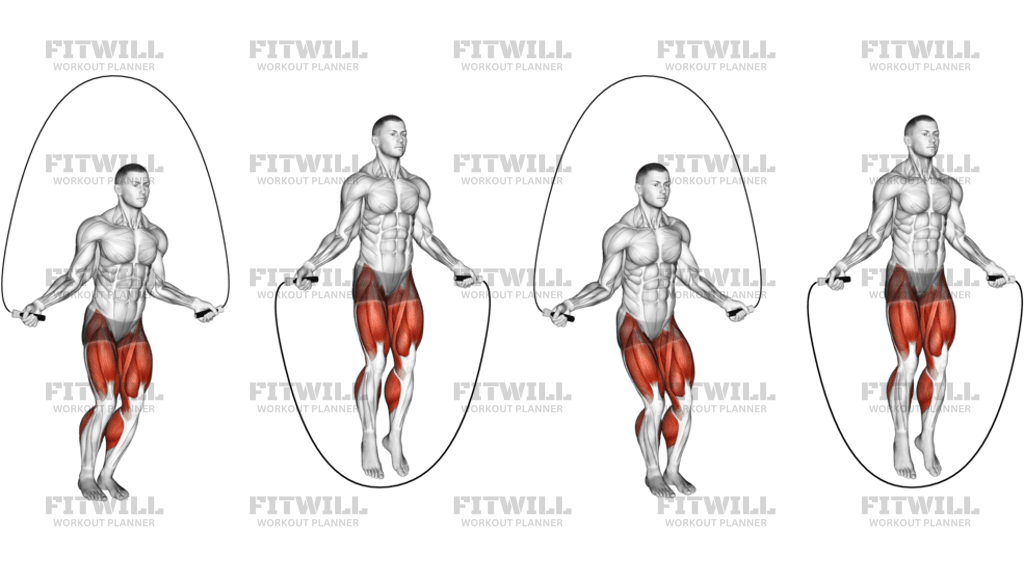
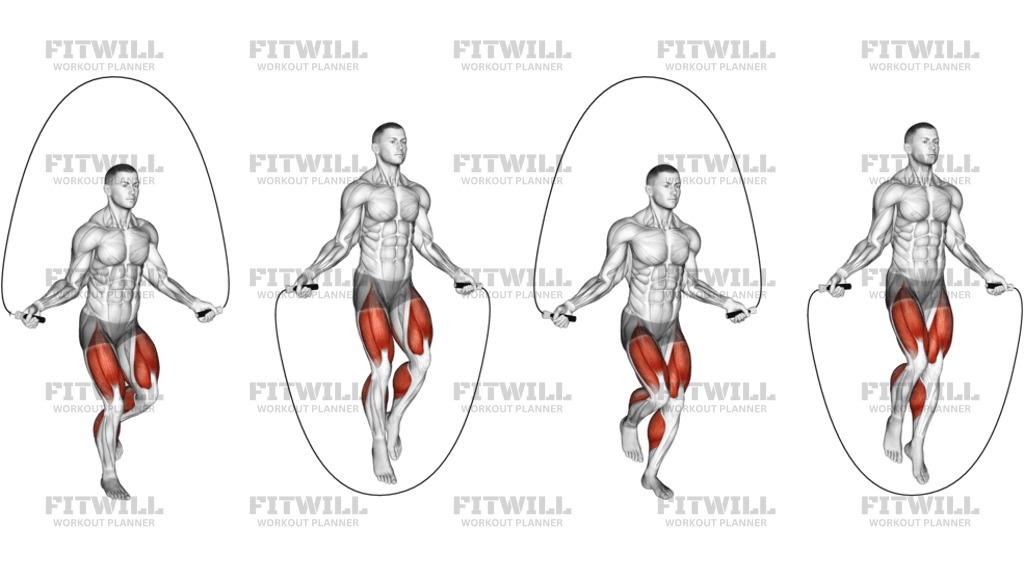
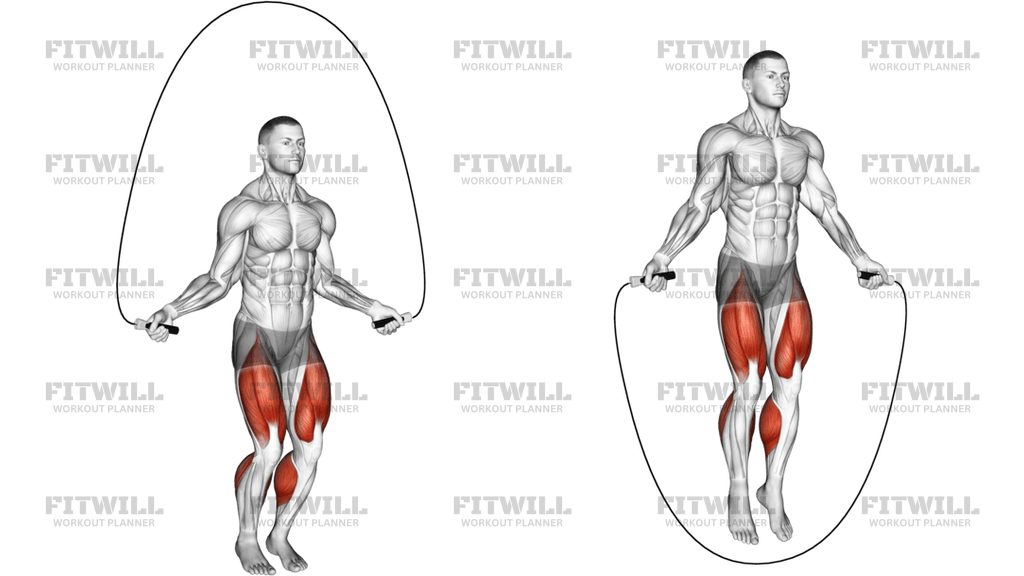
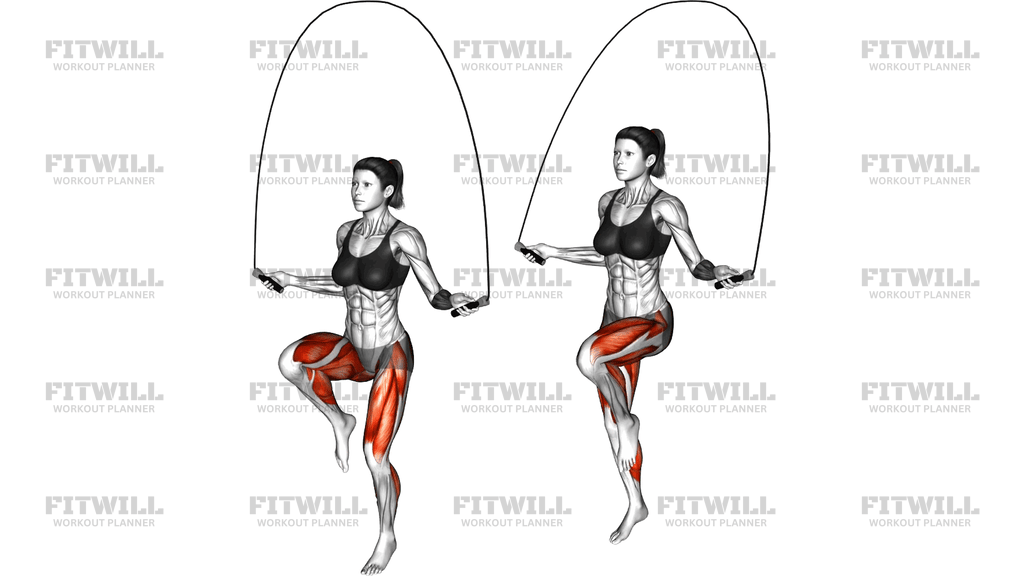
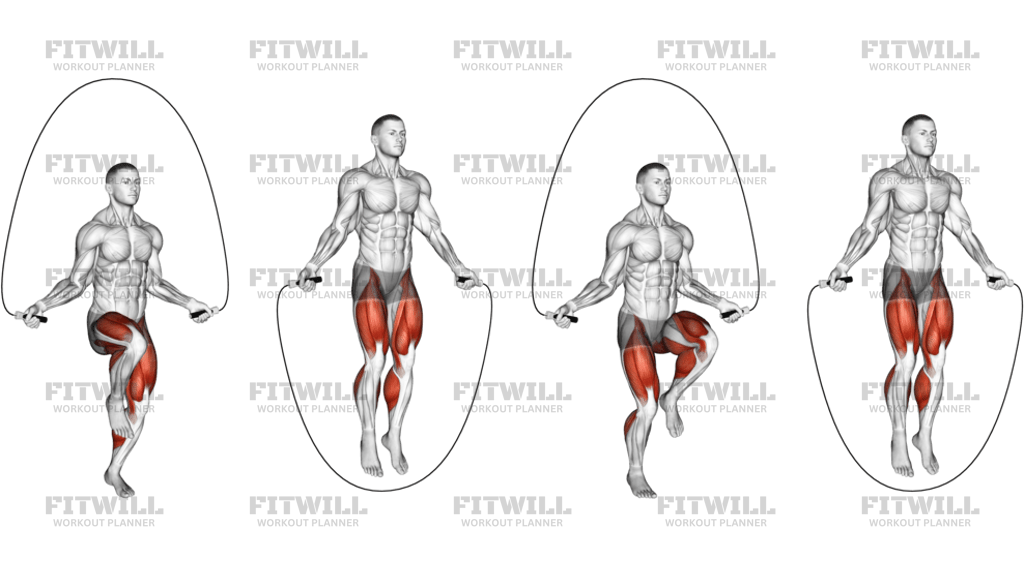
Each rep should feel like a quick, springy skip with one knee driving up as the opposite foot makes a light landing. Keep the jumps low, let the lifted knee come up toward hip height as the rope passes under you, and switch sides in a steady rhythm. The rope should skim close to the floor, your feet should land under your center of mass, and your breathing should stay controlled enough that the pace does not force sloppy arm circles.
High Jump Rope is useful in warm-ups, conditioning intervals, athletic circuits, or as an efficient way to raise heart rate without heavy equipment. Because the movement is repeated quickly, small setup errors show up fast, so clean mechanics matter more than speed. When the rhythm stays smooth, the exercise builds better foot timing, trunk stiffness, and calf endurance while keeping the workout simple and portable.
Fitwill
Log Workouts, Track Progress & Build Strength.
Achieve more with Fitwill: explore over 9600 exercises with images and videos, access built-in and custom workouts, perfect for both gym and home sessions, and see real results.
Start your journey. Download today!




Instructions
- Stand on the middle of the jump rope and hold the handles so the ends reach about your armpits or lower chest when pulled up.
- Hold the handles just outside your hips with your elbows close to your sides and the rope resting behind your heels.
- Stand tall with your chest stacked over your pelvis, ribs down, and eyes forward before you start the first turn.
- Turn the rope mostly with your wrists instead of making big arm circles.
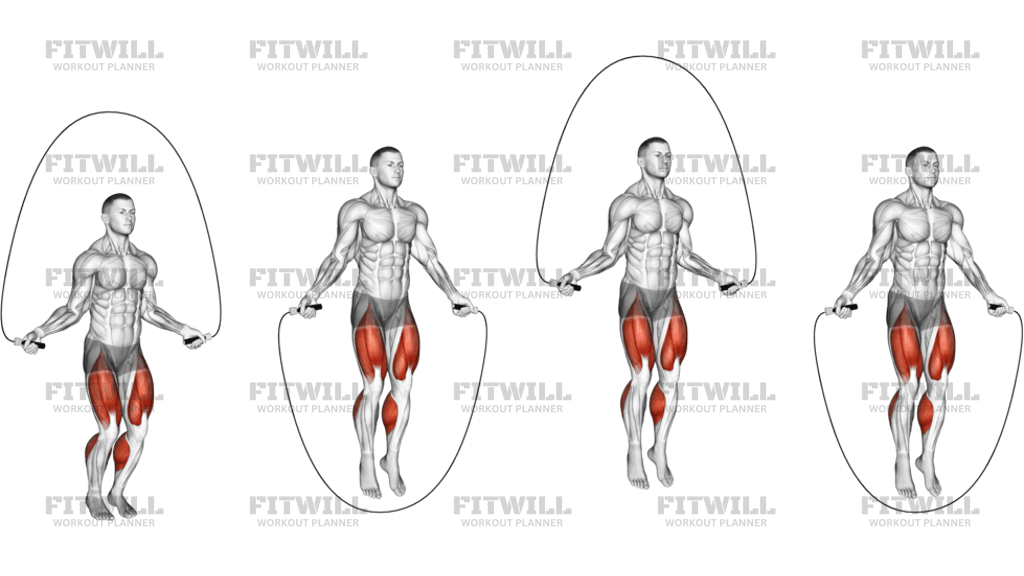
- Make a small hop as the rope comes under your feet and keep the jump low to the floor.
- Drive one knee upward toward hip height as the opposite foot leaves the ground and the rope passes under you.
- Land softly on the ball of the foot beneath you, then switch knees on the next turn to keep the rhythm smooth.
- Keep your torso upright and your shoulders relaxed so the rope path stays tight and controlled.
- Breathe in for a few turns and exhale in short bursts if the pace rises, then reset if the rope starts catching.
Tips & Tricks
- A slightly shorter rope makes the turns tighter and reduces the chance of clipping the floor during the high-knee switch.
- Keep your elbows pinned near your ribs; wide elbows usually mean the rope path is too big and the rhythm gets noisy.
- Lift the knee from the hip instead of leaning your torso backward to fake more height.
- If you are jumping too high, you will lose speed and timing before the legs get any real benefit.
- Stay on the balls of your feet and let the heels kiss down only if needed between turns.
- Use the wrists to turn the rope; gripping harder usually makes the forearms fatigue before the legs do.
- On longer sets, alternate the knee drive smoothly rather than trying to hold one leg high for multiple rope turns.
- If the rope catches often, slow the cadence and keep the landing directly under your hips.
Frequently Asked Questions
What muscles does High Jump Rope work most?
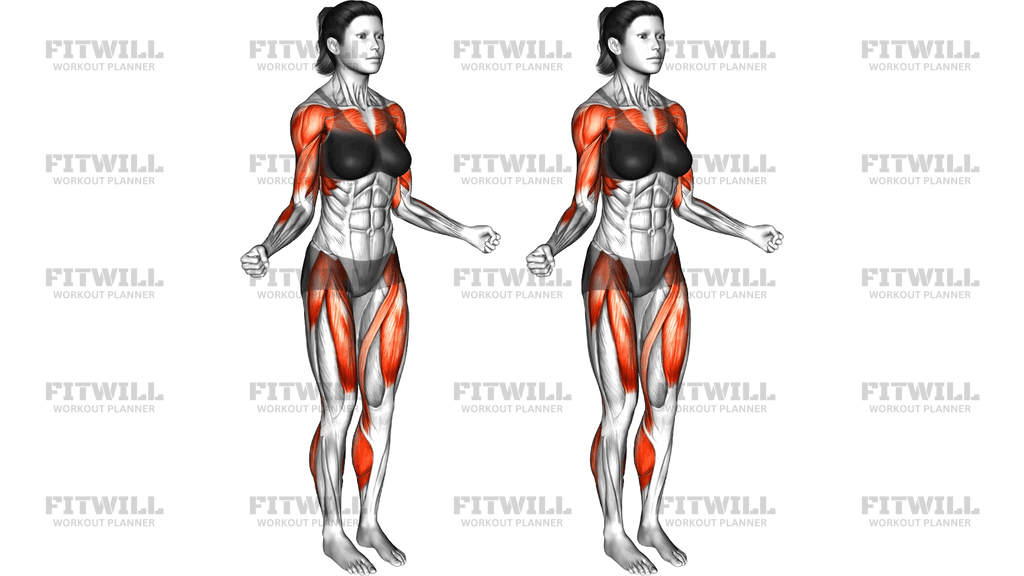
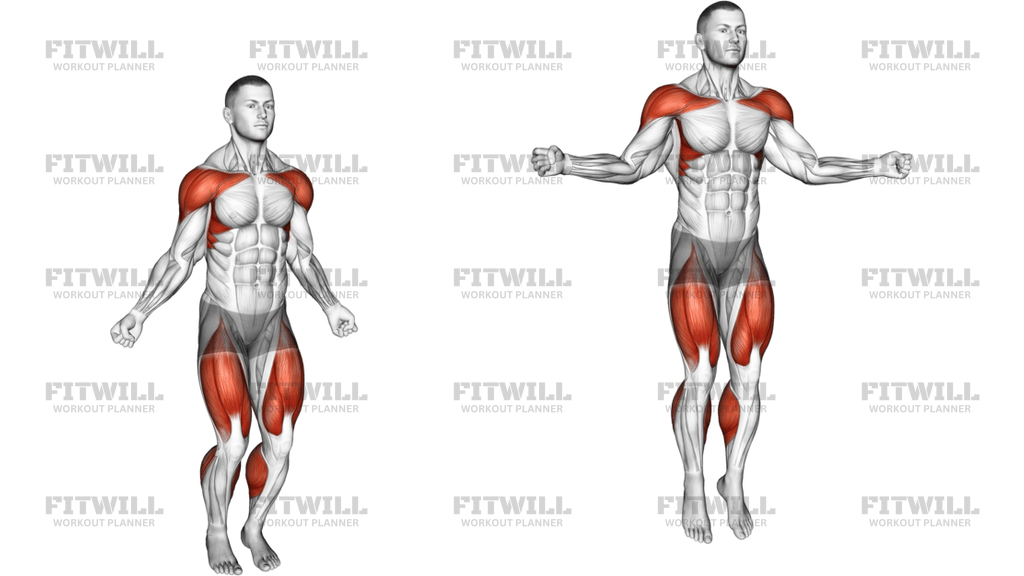
It mainly challenges the calves, quads, hip flexors, glutes, and core while the shoulders and forearms keep the rope turning.
Is High Jump Rope just regular jump rope with higher knees?
Yes, it is a more athletic version of jump rope where the knee drive is higher and the rhythm is more demanding than a basic bounce.
How high should my knees come during High Jump Rope?
Aim for a noticeable drive toward hip height without leaning back or losing the rope rhythm.
Why do I keep hitting the rope on High Jump Rope?
The rope is usually too long, the arms are circling too wide, or the jump is too big and slow. Tighten the rope path and keep the hop small.
Can beginners do High Jump Rope?
Yes, but it helps to master a basic skip first and then add the higher knee drive in short intervals.
What kind of rope works best for High Jump Rope?
A standard speed rope or the rope attachment shown here works well as long as it is sized so the handles reach about armpit level when you stand on the middle.
Should my heels touch the floor during High Jump Rope?
Try to stay light on the balls of your feet. Any heel contact should be brief and quiet, not a heavy landing.
When is High Jump Rope useful in a workout?
It works well as a warm-up, conditioning interval, or athletic finisher when you want quick footwork and a higher heart rate.