Skip Jump Rope
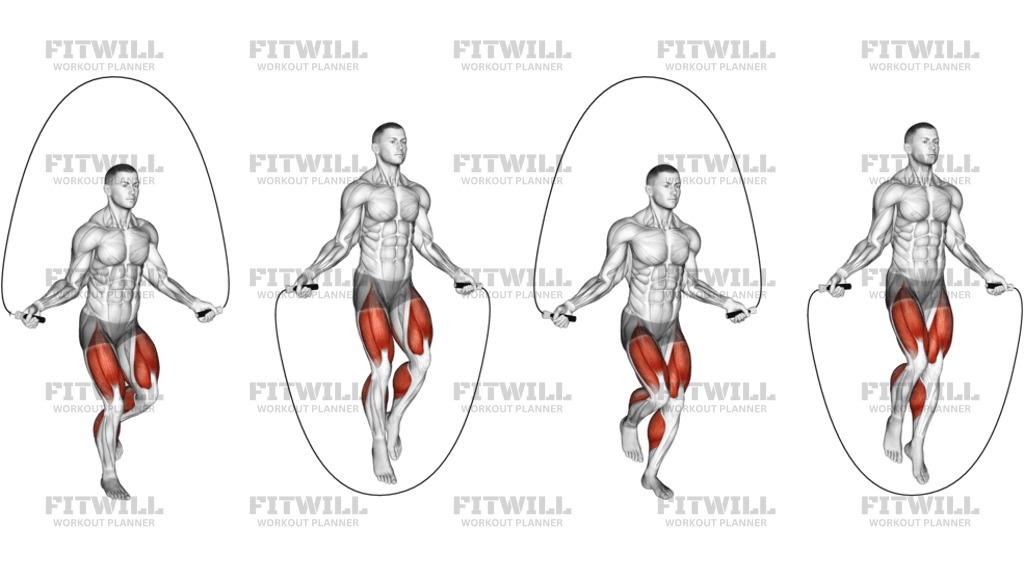
Skip Jump Rope is a fast rhythmic cardio drill built around small alternating hops and a rope that clears the floor with each turn. It trains foot speed, ankle stiffness, coordination, and aerobic capacity more than raw strength, so the quality of the bounce and the timing of the rope matter more than how high you jump or how fast you rush.
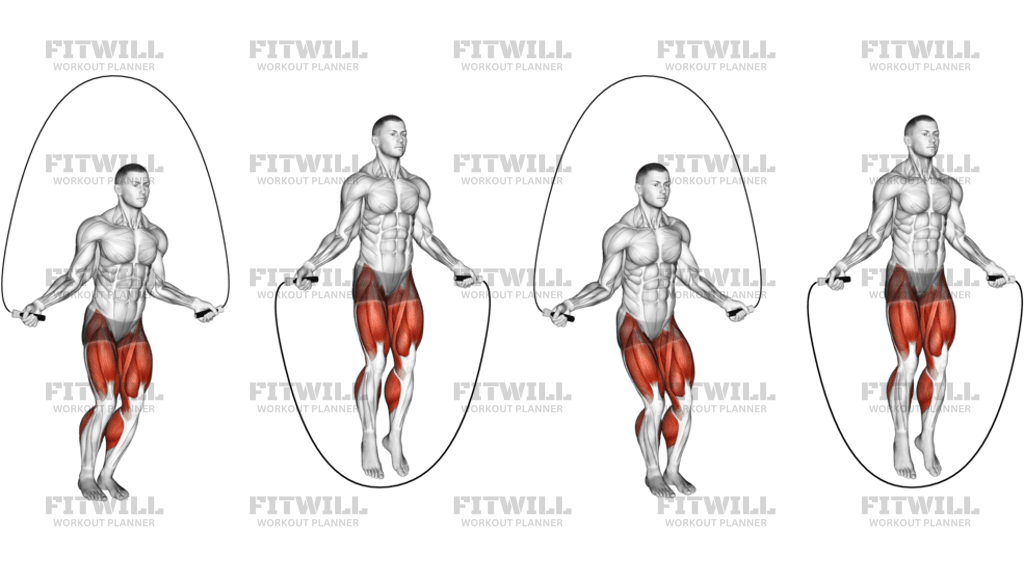
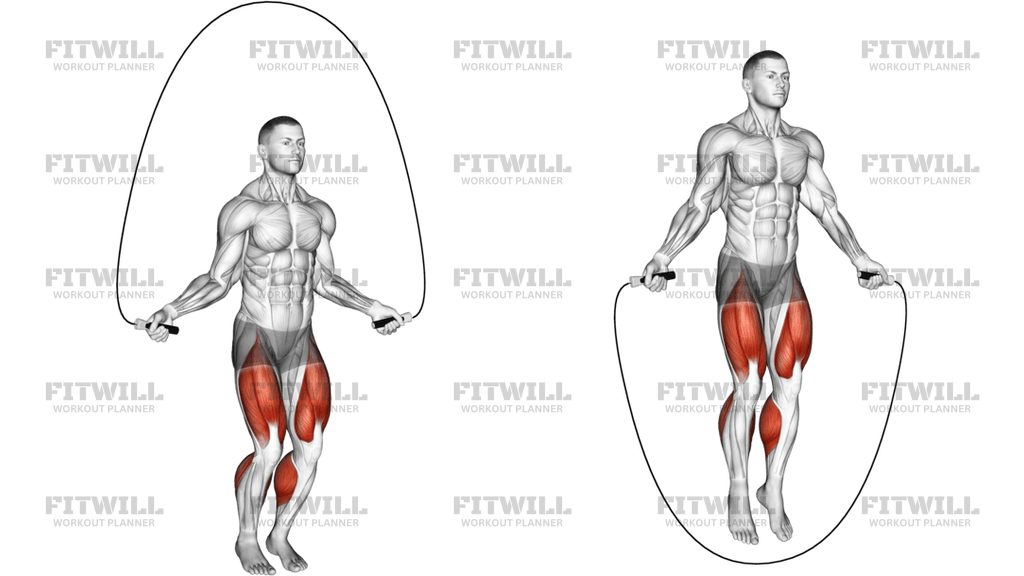
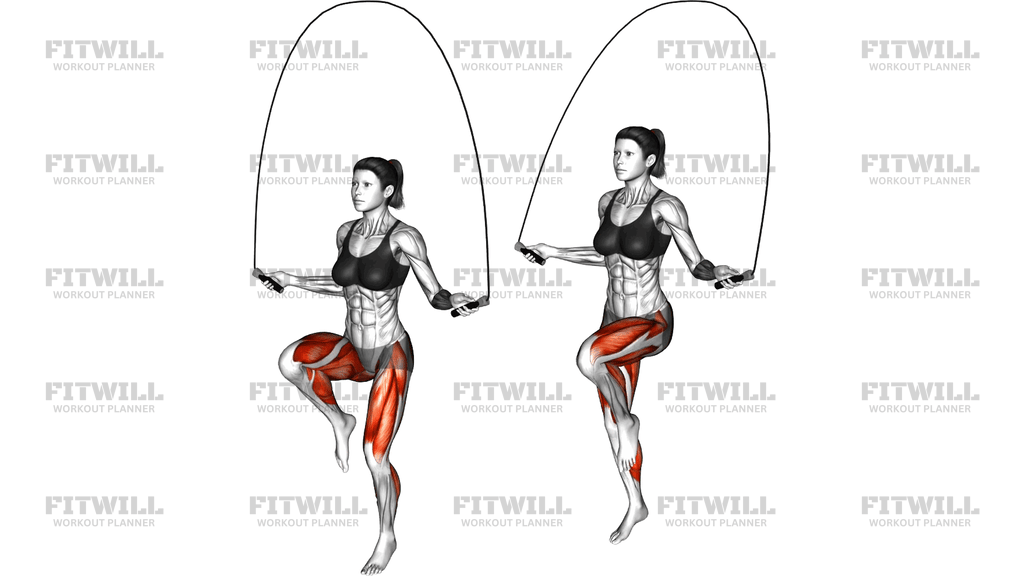
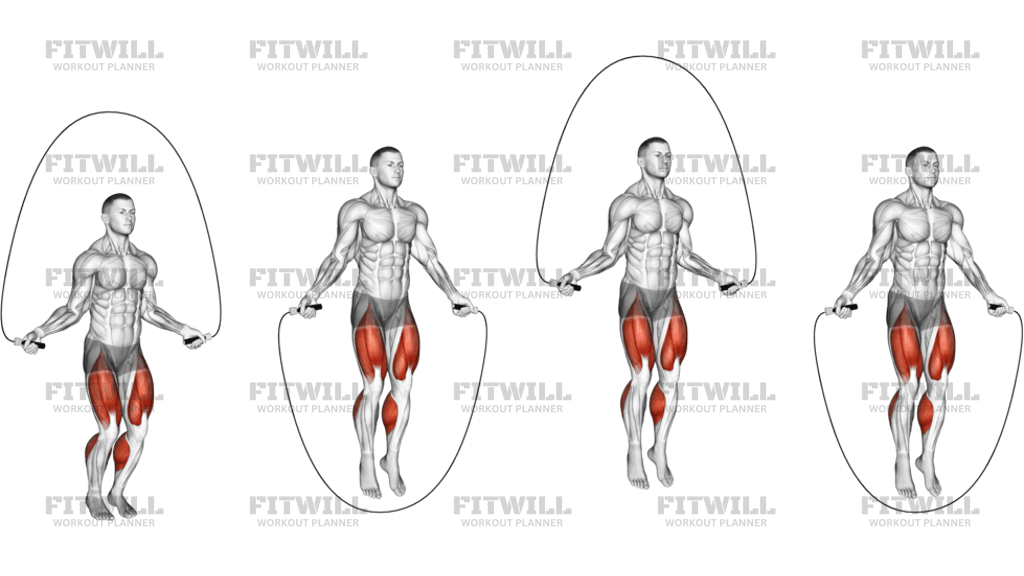
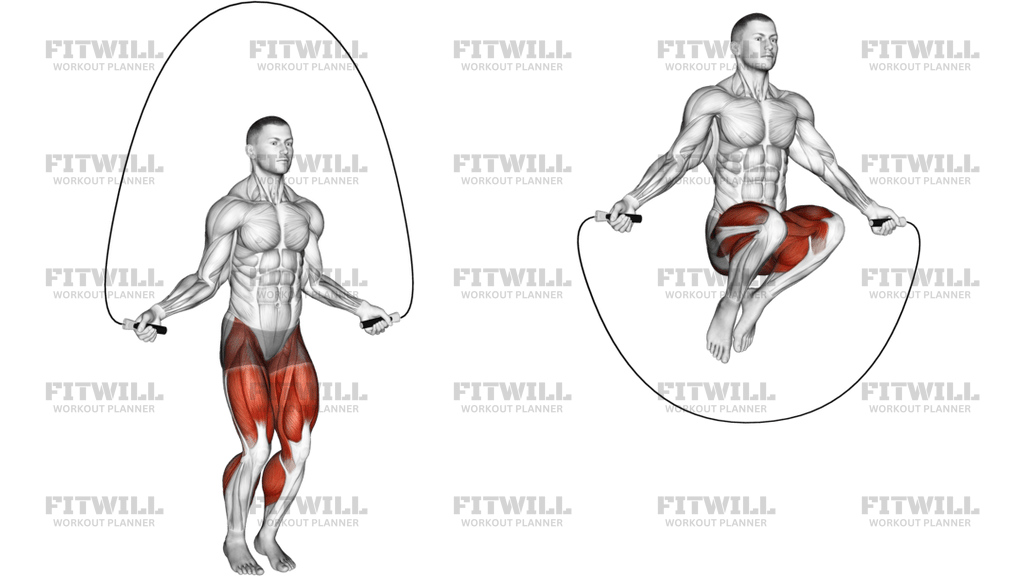
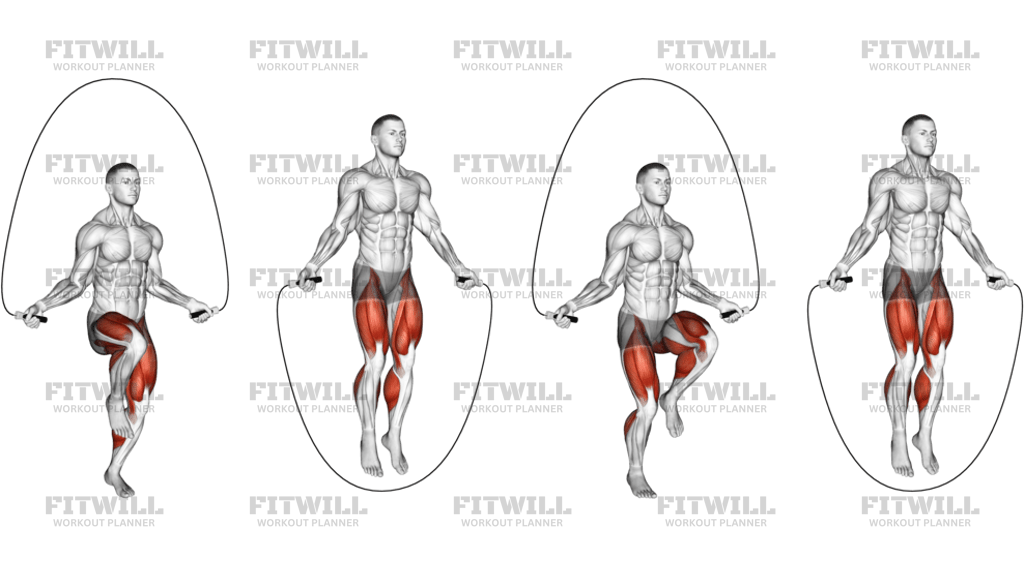
The image shows a skip pattern rather than a two-foot pogo: one foot lands while the other lightly lifts, then you switch sides in a steady running rhythm. That alternating pattern keeps the movement springy and lowers impact compared with hard, exaggerated jumps. The rope should skim close to the body, the elbows should stay near the ribs, and the wrists should do most of the turning so the shoulders do not take over.
Setup matters because a short, efficient rope path makes the exercise feel smooth instead of choppy. Stand tall with the rope behind your heels, hands slightly in front of your hips, and a relaxed grip on the handles. Keep the chest open, the ribcage stacked over the pelvis, and the knees softly bent. The first turn should come from the wrists as you begin a light hop, not from a big arm windmill.
Each rep is a repeatable cycle: turn the rope, leave the floor just enough for clearance, land softly on the ball of the foot, and switch feet with a quick springy rhythm. The goal is a quiet landing and a rope arc that stays consistent rep to rep. If the rope brushes your toes, the fix is usually a smaller jump, a steadier wrist turn, or a slightly slower cadence rather than trying to leap higher.
This movement is useful as a warm-up, conditioning block, or sport-prep drill when you want to raise heart rate without heavy loading. It also works well for coordination and lower-leg resilience because the calves, Achilles tendon, and foot intrinsics have to keep returning you to the floor with control. Keep the effort smooth, stay light on the ground, and stop the set before the rope timing turns sloppy.
[ Workout Log & Planner ]
Put your next workout in Fitwill
Keep your plan and training log ready when you are.


Instructions
- Stand upright with the jump rope behind your heels and the handles held loosely at about hip height.
- Keep your elbows close to your sides, chest tall, and knees softly bent before you start the first turn.
- Turn the rope mostly with your wrists instead of making big circles with your arms.
- Hop just high enough for the rope to clear the floor, using a light alternating-foot skip pattern.
- Land softly on the balls of your feet and switch legs with a quick, springy rhythm.
- Keep your torso stacked and your gaze forward so the rope path stays smooth and repeatable.
- Breathe in a steady rhythm while you maintain the same cadence for each skip.
- Step out of the rope and stop if your timing falls apart or your landings get heavy.
Tips & Tricks
- Let the wrists spin the rope; if the shoulders start burning, the arm arc is too large.
- Keep the jumps low enough that your feet barely leave the floor.
- Aim for quiet landings on the forefoot so each contact feels springy instead of stompy.
- If you are using the alternating skip pattern, switch feet every rope turn rather than hopping high between turns.
- Keep the rope path close to your body; wide loops usually lead to toe catches.
- Hold the handles lightly so your forearms can stay relaxed during longer sets.
- If the rope clips your toes, slow the cadence before you try to jump higher.
- Use a steady breathing rhythm and stop the set when the rope timing starts to drift.
Frequently Asked Questions
What does Skip Jump Rope train most?
It mainly trains cardiovascular fitness, foot speed, coordination, and lower-leg endurance.
Should I jump with both feet or alternate feet?
The image shows an alternating skip, so one foot lands while the other lifts. You can use two-foot hops as a simpler regression.
How should the rope be turned?
Turn it mostly with your wrists and keep your elbows near your ribs. Big arm circles usually make the rope path sloppy.
How high should I jump over the rope?
Just high enough for the rope to clear the floor. Small, quick hops are easier to repeat and much easier on your joints.
Is this exercise suitable for beginners?
Yes, if you start with short sets, a slower cadence, and a simple two-foot hop before moving to the alternating skip.
Where should I feel the work most?
You should feel it in your calves, feet, and conditioning system, with the shoulders staying relatively quiet.
What are the most common mistakes with the handles and rope?
Gripping too hard, widening the elbows, and letting the rope arc drift too far from the body are the usual problems.
How can I progress Skip Jump Rope?
Build up time under tension, then increase speed, then add more complex foot patterns once the basic rhythm stays clean.