Lateral Step-Up
Lateral Step-Up is a body-weight lower-body exercise performed beside a stable bench or box. It trains the glutes, quads, hamstrings, and hip stabilizers by asking one leg to lift the body sideways while the other leg stays organized. Because the movement is single-leg and side-on, it also exposes side-to-side differences in balance and control.
Set the bench next to your working side and place the full foot of the stepping leg on top, with the heel and forefoot both planted. Keep the other foot on the floor, hips facing forward, and ribs stacked over your pelvis. The setup matters because if the step is too high or the foot is too far toward the edge, the knee and hip will compensate before the glute can do its job.
To perform Lateral Step-Up well, press through the foot on the bench and stand up without bouncing off the floor leg. Keep your knee tracking over the toes of the leg on the bench, bring the trailing leg up with control, and finish tall with both hips level. Lower yourself the same way: place the floor foot down softly, then let the working leg bend under control rather than dropping.
This exercise fits well as accessory work before heavier lower-body training or as a standalone unilateral strength drill. It is useful for lifters, runners, and anyone who wants more stable hips during squats, lunges, cutting, or stair climbing. A lower step with clean control usually gives better glute work than a high bench with momentum.
Keep the repetition honest. If you have to twist your torso, push hard off the floor foot, or collapse the knee inward to reach the top, reduce the bench height and slow the tempo. Lateral Step-Up should feel like a controlled sideways drive from the working hip, not a hop onto the bench.
[ Workout Log & Planner ]
Put your next workout in Fitwill
Keep your plan and training log ready when you are.


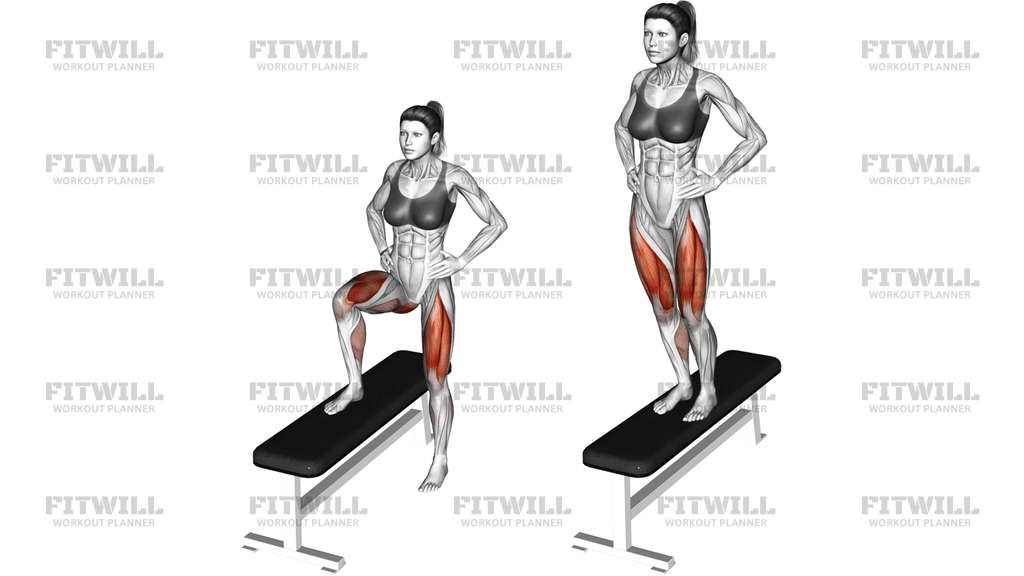
Instructions
- Stand sideways beside a stable bench with your working side closest to it.
- Place the full foot of your working leg on the bench so the heel and forefoot are both planted.
- Keep your other foot flat on the floor, with your hips and shoulders square to the front.
- Brace lightly through your trunk and shift most of your weight into the foot on the bench.
- Press through that bench foot to drive your body upward without jumping off the floor leg.
- Bring the trailing leg up and finish tall with both hips level at the top.
- Lower yourself under control, placing the floor foot down softly before the working leg bends.
- Reset your stance and repeat for the planned reps, then switch sides if needed.
Tips & Tricks
- Choose a bench height that lets you stand up without hiking the hip of the working leg.
- Keep the whole foot on the bench; hanging the heel off the edge makes the ankle wobble and cuts glute drive.
- Use the floor leg for balance only, not for a push-off that turns the rep into a hop.
- If the torso twists toward the bench, slow the lowering phase and square your ribs before the next rep.
- Let the knee on the bench-side track over the middle toes instead of collapsing inward.
- A brief pause at the top removes bounce and makes each rep start from a dead stop.
- A slightly forward torso lean can shift more work into the glute of the stepping leg, but keep the spine long.
- Stop the set when the trailing foot starts slamming to the floor or the working knee loses alignment.
Frequently Asked Questions
What muscles does Lateral Step-Up work most?
It emphasizes the glutes and quads, with the hamstrings and hip stabilizers helping you control the side-to-side drive and the lowering phase.
Is Lateral Step-Up good for beginners?
Yes. Start with a low bench and body weight only so you can learn the sideways step without hopping or twisting.
How high should the bench be for Lateral Step-Up?
Use a height that lets you stand up with control and keep your pelvis level. If you have to lean hard or push off the floor leg, the bench is too high.
Should my whole foot stay on the bench?
Yes. Plant the heel and forefoot on the bench so the working leg can drive cleanly and the ankle does not roll inward.
Why do I feel Lateral Step-Up in my lower back?
That usually means you are twisting your torso or overreaching with the step. Keep your ribs stacked over your pelvis and lower the bench height if needed.
Can I hold dumbbells during Lateral Step-Up?
You can once the body-weight version is smooth. Keep the load light enough that you still control the sideways drive and the descent.
What should my knee do on the bench side?
It should track over the middle toes, not cave inward. If it drifts in, slow down and use a lower step.
Is Lateral Step-Up more of a glute or quad exercise?
It trains both. A slightly forward torso and deeper hip bend usually bring more glute work, while a more upright torso shifts more emphasis to the quads.