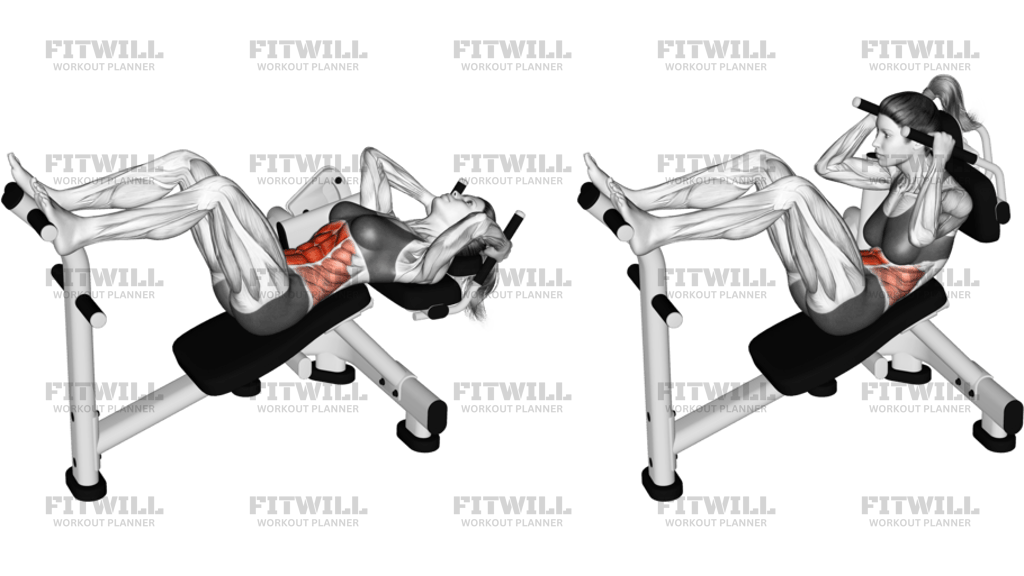
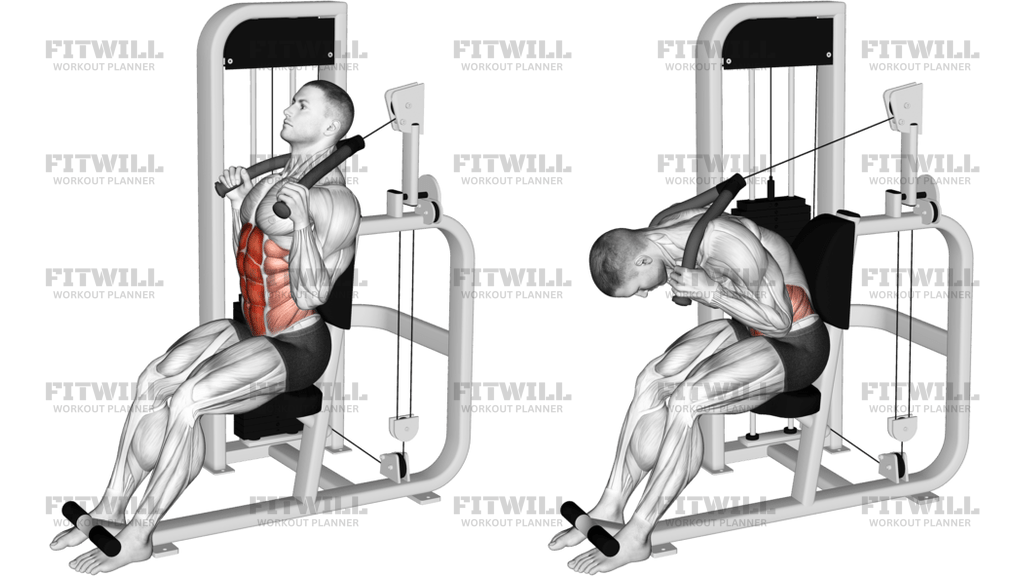
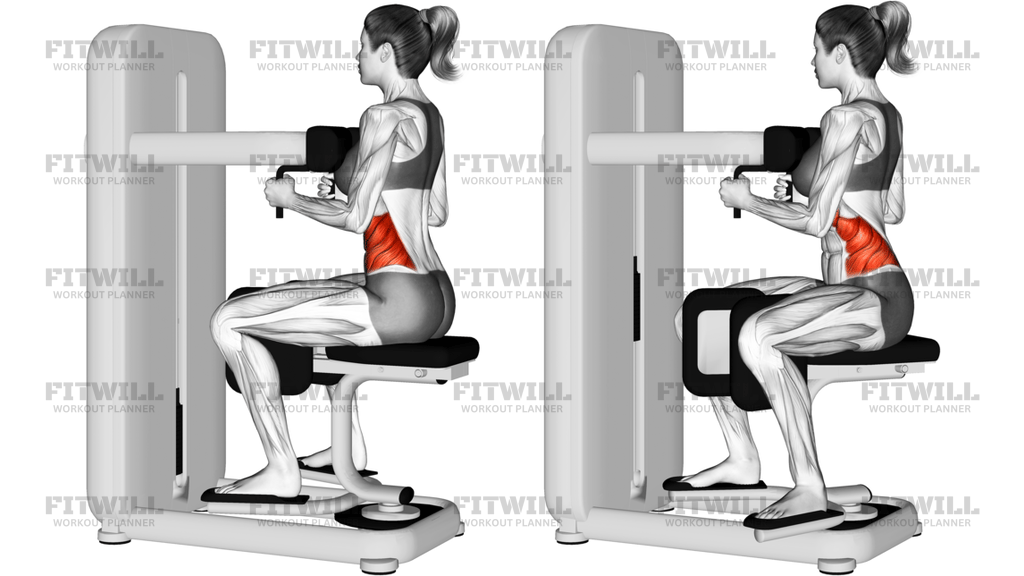
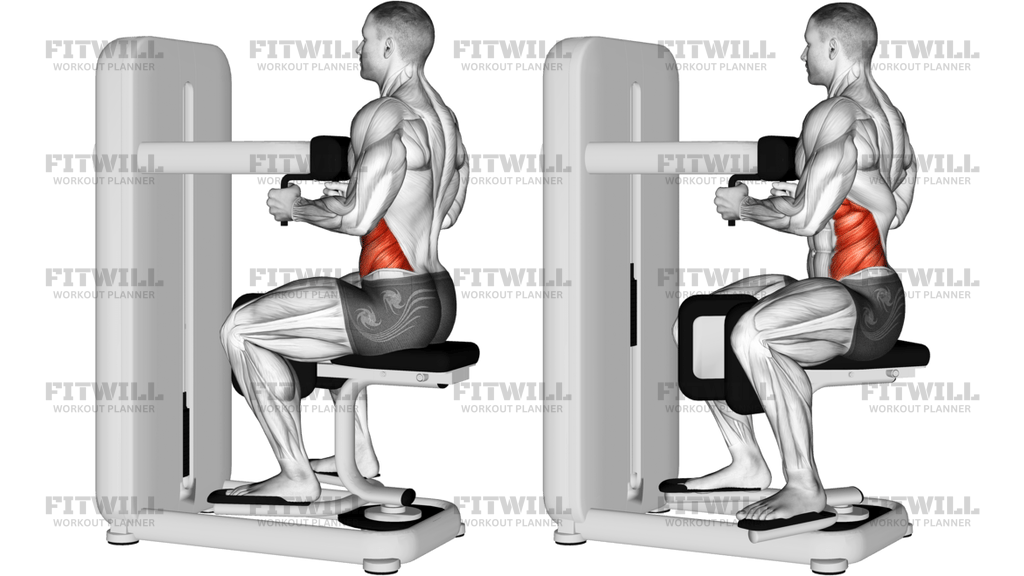
Lever Kneeling Twist
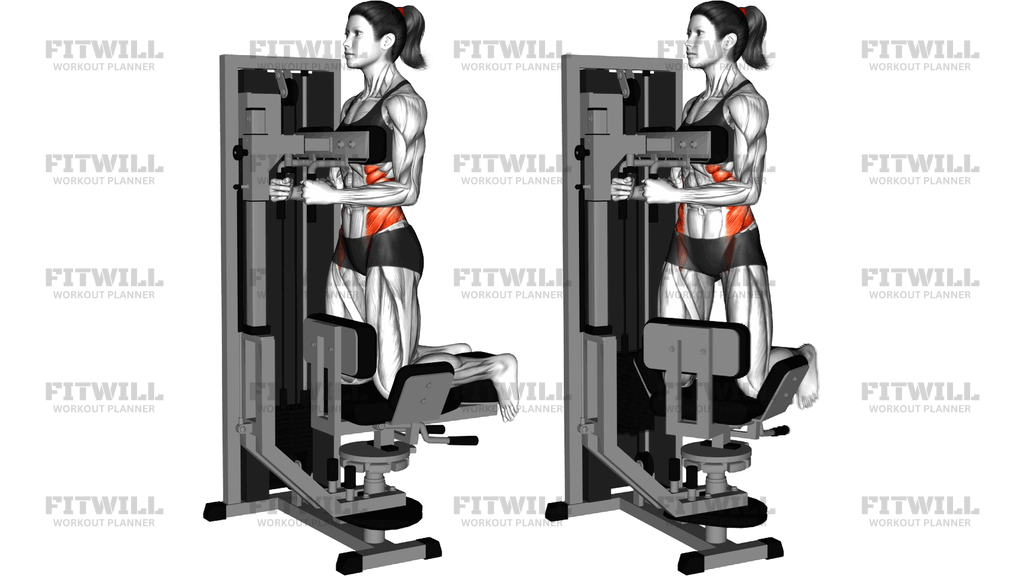
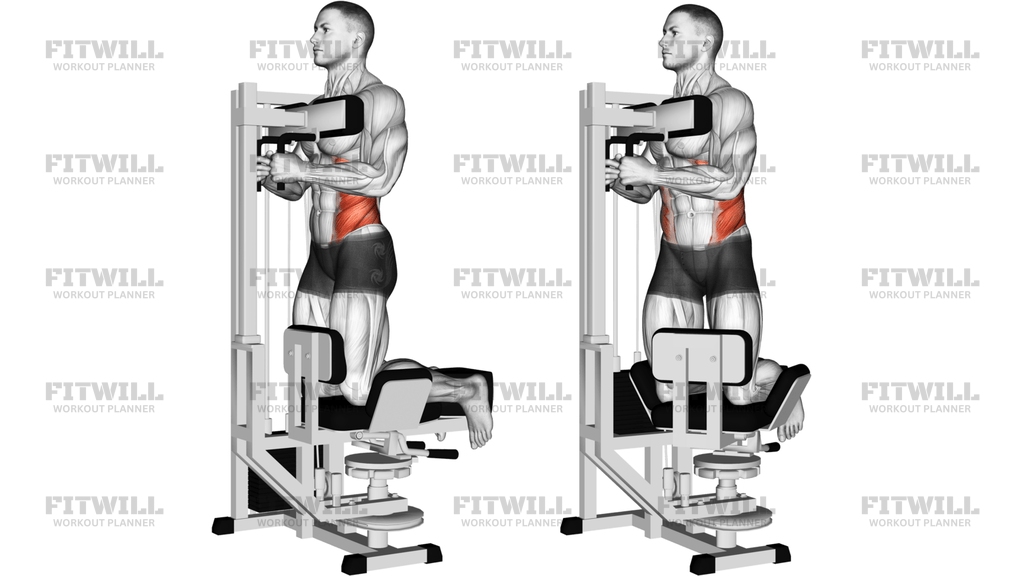
Lever Kneeling Twist is a guided rotational core exercise on a leverage machine that keeps your upper body braced while your trunk and pelvis work through a controlled twist. It is built to train the obliques with support from the abs and lower back, so the set feels more like organized rotation than a free-swinging crunch. Because the machine fixes part of your body, the quality of the setup matters as much as the range you use.
The movement is especially useful when you want direct oblique work without having to balance a cable stack or move a dumbbell through space. The chest pad, handles, and kneeling platform should all help you stay tall and stable, not force you into a shrugged or collapsed position. When the setup is correct, the torso can rotate smoothly while the shoulders stay quiet and the hips move under control.
For each rep, think about rotating from the midsection while keeping pressure through the chest pad and tension in the handles. The twist should be deliberate and even, with no jerking at the start and no bouncing out of the bottom. A shorter, cleaner range is usually better than chasing an aggressive turn that pulls the knees, ribs, or lower back out of line.
This exercise works well in core-focused sessions, accessory blocks, or as a controlled trunk rotation drill before heavier lifting or sport work. It can suit beginners if the load is light and the range is conservative, because the machine gives clear feedback when the torso starts to drift or the hips start to cheat. Used well, Lever Kneeling Twist builds rotational strength, control, and awareness through the waist without turning the set into a momentum exercise.
Safety comes from staying organized on the pad and controlling the return through center. If the chest pad is too low, the knees are not centered, or the grip is too loose, the twist will usually show up as neck strain, hip shifting, or a pull in the low back instead of a clean oblique contraction. Keep the motion smooth, match the sides evenly, and let the machine guide the path instead of trying to force extra range.
[ Workout Log & Planner ]
Put your next workout in Fitwill
Keep your plan and training log ready when you are.


Instructions
- Set the chest pad so it sits firmly across your upper chest and shoulders, then kneel on the lower pad with your knees centered and your shins resting behind you.
- Grip the front handles lightly but firmly, keep your elbows close to your sides, and press your sternum into the pad without shrugging.
- Stack your ribs over your pelvis, keep your neck long, and let your hips start from a square, neutral position.
- Brace your trunk, exhale, and twist the pad or lower body toward one side in a smooth, controlled arc.
- Keep the shoulders anchored to the chest pad while the rotation comes from the waist and hips instead of from yanking with the arms.
- Pause briefly at the end of the twist, then feel the obliques finish the turn without bouncing off the stop.
- Inhale as you return through center under control, keeping tension on the machine instead of letting the stack slam.
- Repeat to the other side if the program calls for alternating reps, or finish the set on one side before switching.
- When the set ends, guide the machine back to neutral, release the handles, and step off the kneeling platform carefully.
Tips & Tricks
- If the chest pad feels low on the sternum, readjust it higher so your shoulders can stay relaxed and supported.
- Keep the kneeling position tall; if your hips sit back on your heels, the twist usually turns into a hip hinge instead of a trunk rotation.
- Use a load that lets you stop the twist cleanly at the same end range on both sides.
- A small pause at the end of each turn makes the obliques do the work instead of the machine's momentum.
- Do not pull hard through the handles; they are there to stabilize the torso, not to start the rep.
- If your knees lift or slide on the platform, shorten the range and reduce the weight before the set gets sloppy.
- Keep the chin neutral and look straight ahead so the neck does not start leading the rotation.
- Exhale as you twist and inhale as you come back through center to keep the trunk braced without holding your breath the entire set.
- Match the speed of both sides; the slower side should dictate the pace, not the stronger side.
- Stop the set if you feel the movement shifting into the low back instead of the side waist.
Frequently Asked Questions
What does Lever Kneeling Twist train most?
It primarily trains the obliques, with the abs and deeper core muscles helping to control the rotation and the return to center.
How should I position my chest on Lever Kneeling Twist?
Set the chest pad high enough that your shoulders can stay relaxed while your sternum stays supported. If the pad sits too low, the movement usually gets sloppy and the neck starts working too hard.
Should my knees or hips move during the twist?
Both should stay anchored to the machine while the torso rotates as one controlled unit. The goal is a smooth side-to-side turn, not a bouncing knee drive.
Is Lever Kneeling Twist good for beginners?
Yes, as long as the load is light and the range stays short and controlled. Beginners usually do best when they learn the setup first and only then add more resistance.
How far should I rotate on this machine?
Rotate only as far as you can keep the chest supported and the pelvis centered. If the range pulls your shoulders forward or your hips start sliding, it is too far.
Why do I feel Lever Kneeling Twist in my lower back?
A little support from the low back is normal, but sharp or dominant lower-back work usually means the torso is arching instead of rotating. Reduce the load, shorten the range, and keep the ribs down.
Can I alternate sides rep by rep on Lever Kneeling Twist?
Yes, if the machine and program are set up for alternating reps. Keep both sides even and avoid rushing the second side just because the first side felt easier.
What is the biggest mistake on Lever Kneeling Twist?
The most common mistake is using the handles and momentum to whip the body through the rep. The handles should stabilize you while the waist and trunk produce the twist.