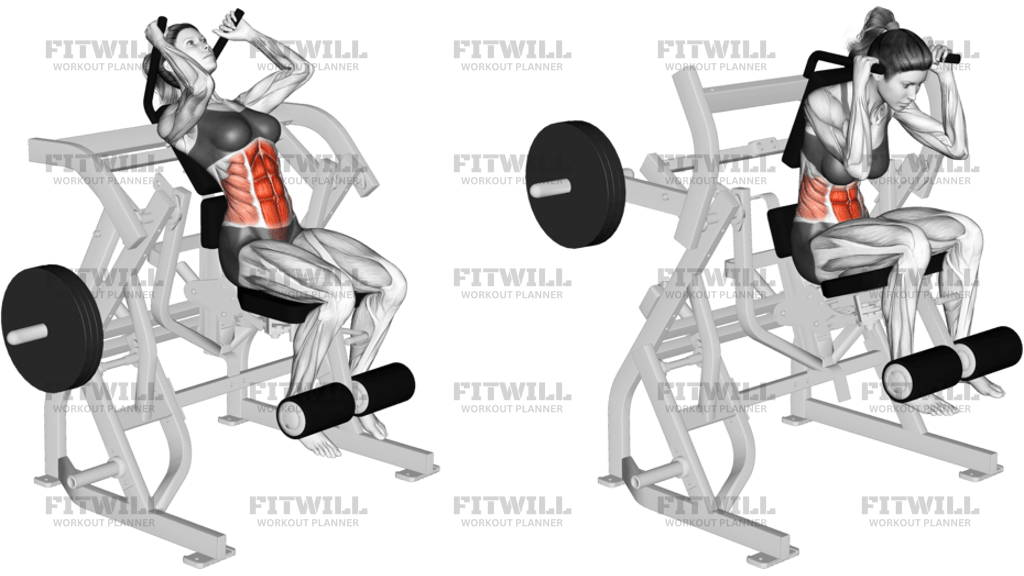
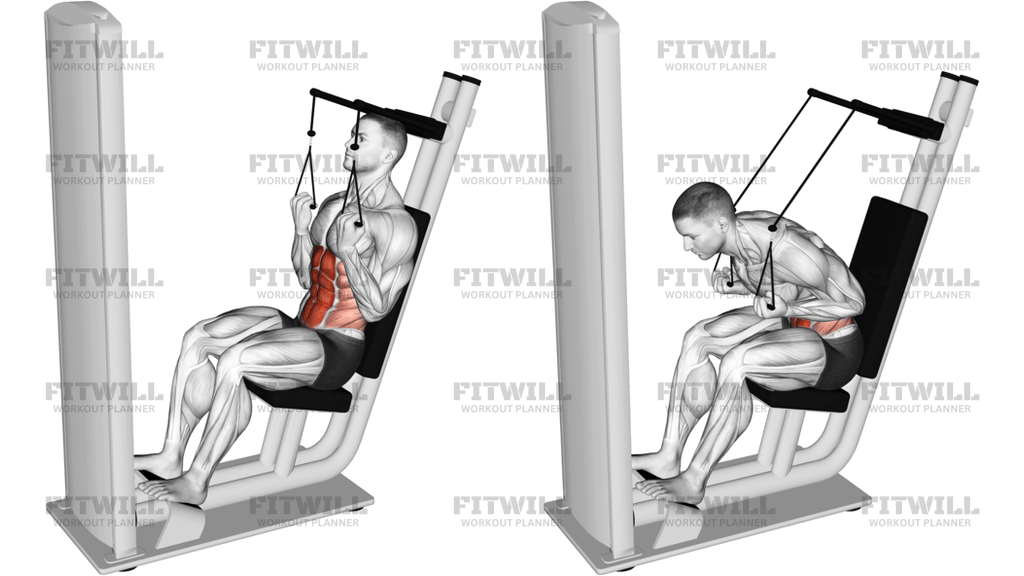
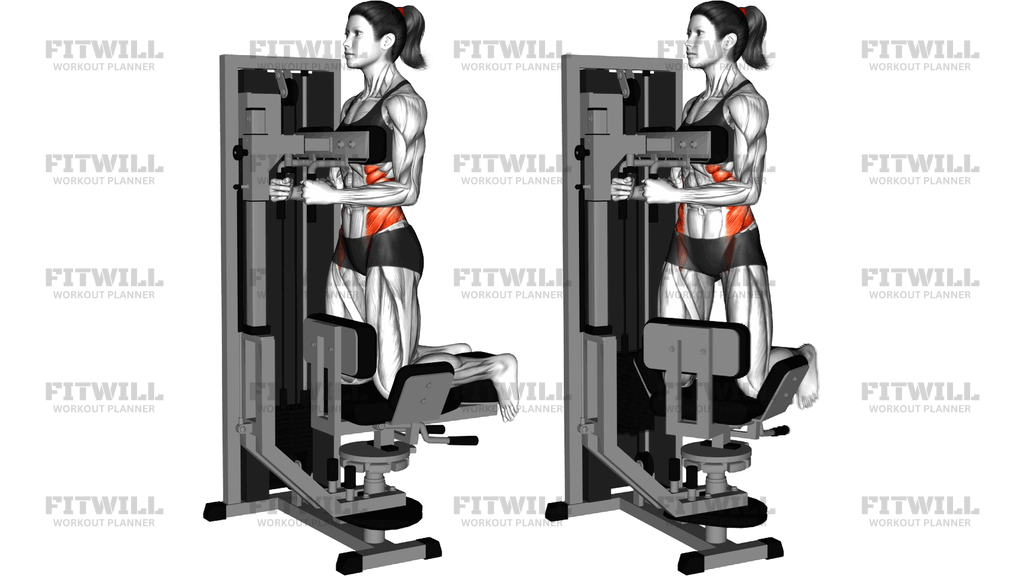
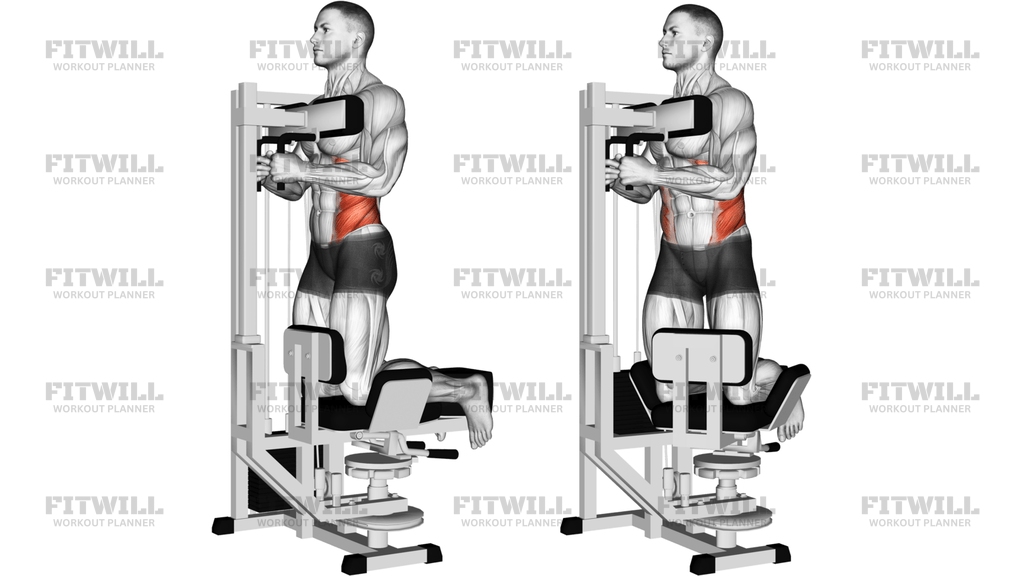
Lever Seated Twist
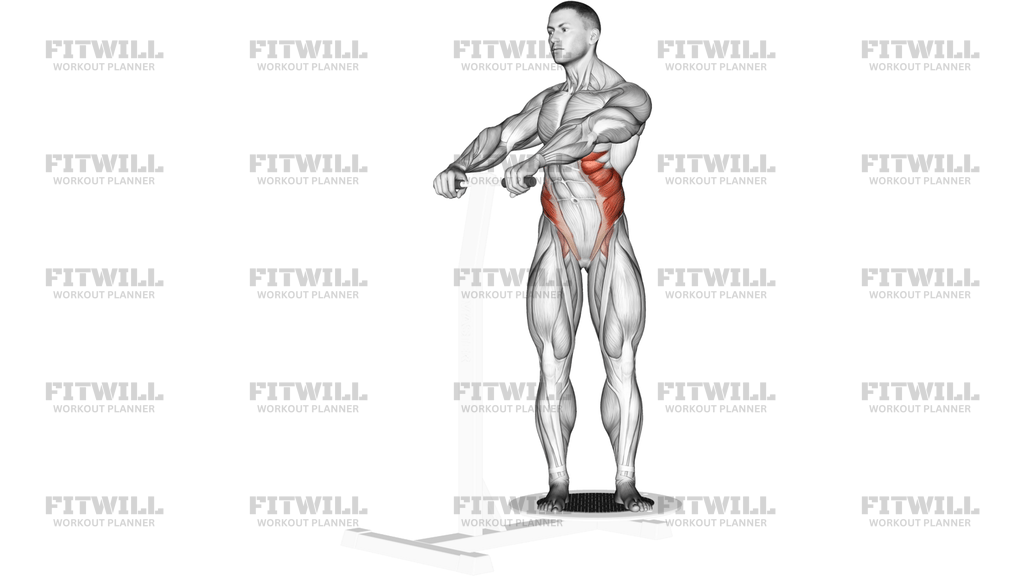
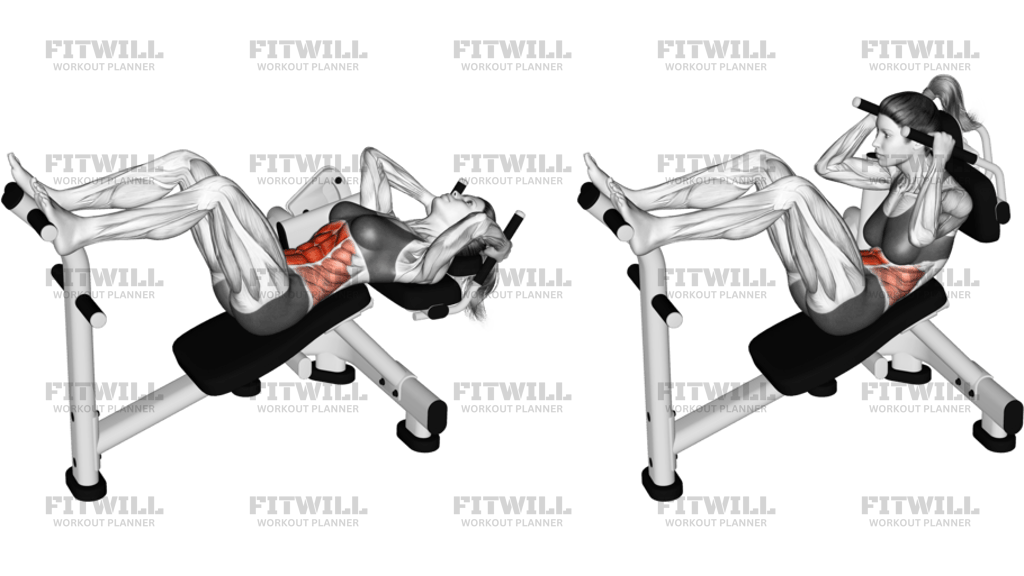
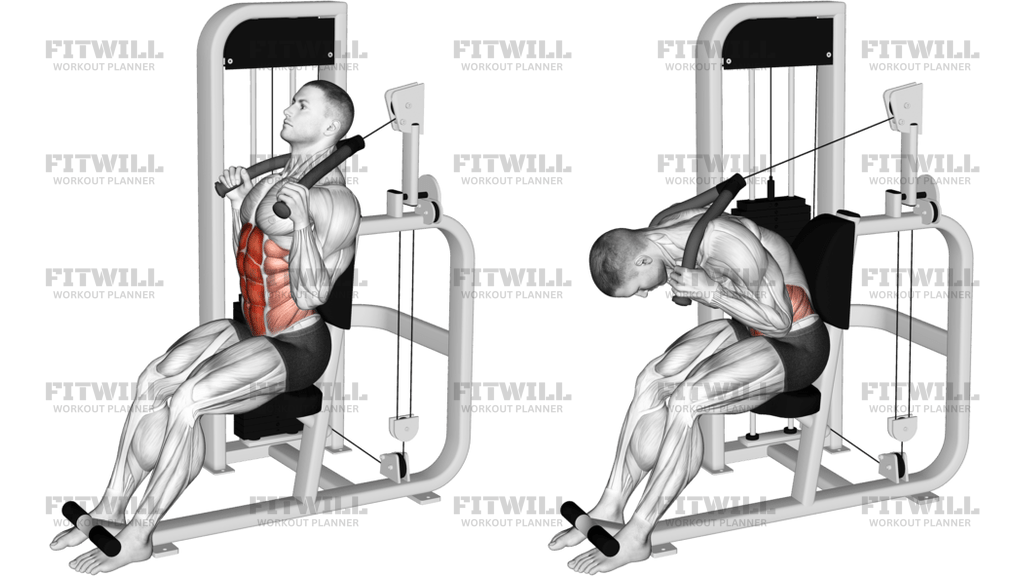
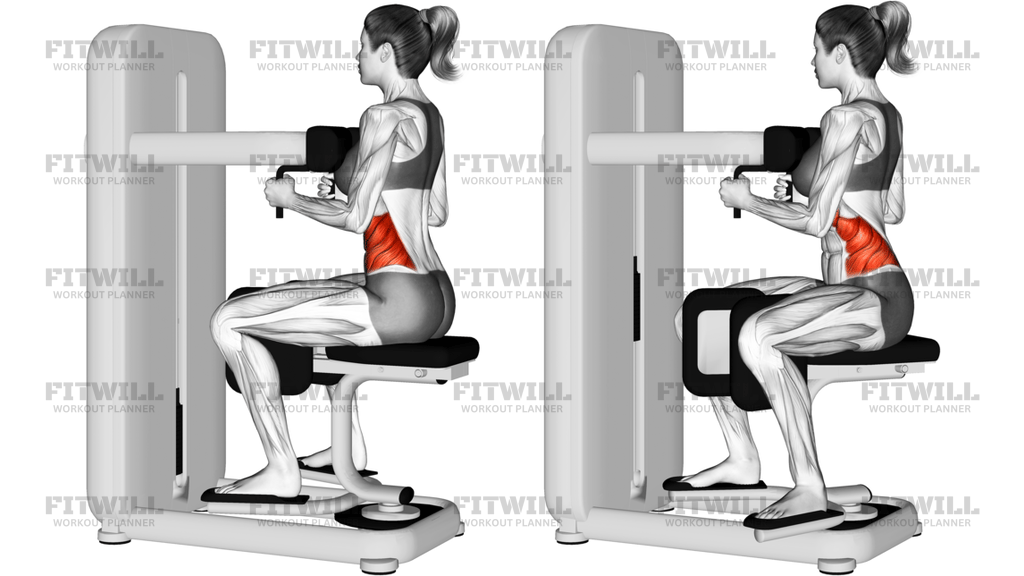
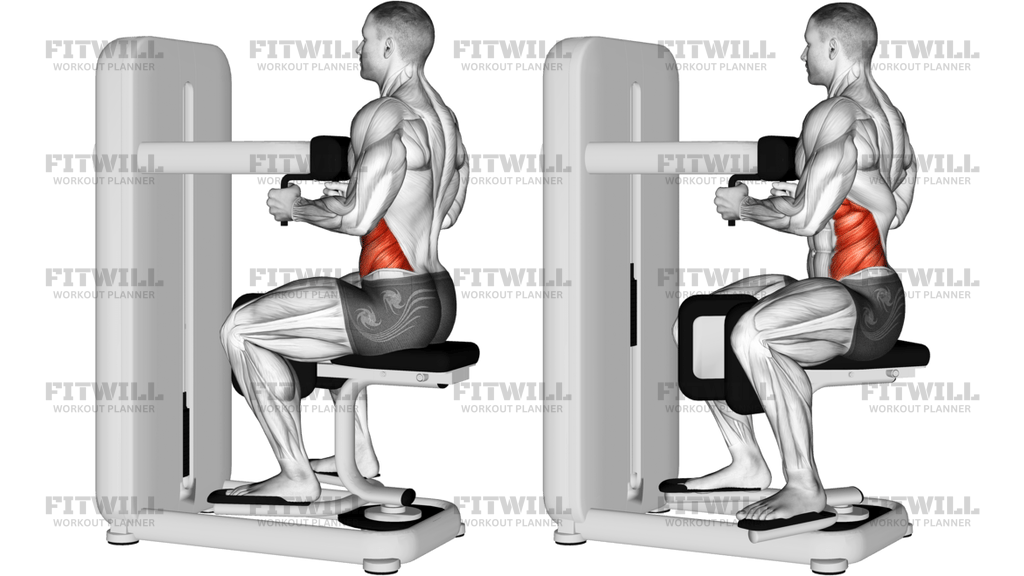
Lever Seated Twist is a machine-based rotational core exercise that trains the obliques to produce and control trunk rotation while the hips and lower body stay anchored. The leverage machine gives you a fixed pad and handle path, so the value of the movement comes from how cleanly you set your pelvis, brace your torso, and rotate through the ribs instead of yanking the weight with your arms.
Because the machine guides the resistance, setup matters more here than on a free-body twist. Sit tall with your thighs secured, feet planted on the platforms, and your chest and forearms pressed into the pad or handles so the torso starts centered. When the seat height and starting angle are correct, the spine can rotate smoothly without the shoulders drifting, the hips sliding, or the lower back taking over the rep.
The exercise is usually used as an accessory core movement, a warm-up for rotational sports, or a lighter strength block when you want direct oblique work without needing to balance a medicine ball or cable. It is not a speed exercise. Good reps feel controlled from the first inch of the turn to the return, with the abdomen tightening to resist unwanted motion and the neck staying long and relaxed.
Use a range of motion you can own. Rotate through the torso until the machine, not momentum, decides the limit, then come back to the start under control and keep the ribs stacked over the pelvis. Exhale as you twist, inhale as you return, and stop the set if the hips start sliding, the shoulders shrug, or the movement turns into a push from the arms. When loaded correctly, Lever Seated Twist should feel like a crisp oblique drill with stable lower-body support, not a loose swing from side to side.
[ Workout Log & Planner ]
Put your next workout in Fitwill
Keep your plan and training log ready when you are.


Instructions
- Set the seat height so the machine pads line up with your torso and sit with your back tall, thighs secured, and feet flat on the platforms.
- Grip the handles or hold the chest pad so your upper body stays centered and your shoulders stay down away from your ears.
- Brace your abs and set your ribs over your pelvis before the first rep so the lower body stays quiet.
- Rotate your torso toward one side in a smooth arc, letting the machine move while your hips stay planted.
- Keep the movement coming from the waist and ribcage, not from jerking the arms or sliding the seat.
- Pause briefly at the turned position and feel the obliques shorten without collapsing your posture.
- Return to the starting position under control, resisting the pull of the weight stack or lever.
- Breathe out as you twist, then inhale as you come back to center.
- Repeat for the planned reps, then reset the stack before getting up.
Tips & Tricks
- If the seat is too far forward or back, the pad will hit your ribs or arms awkwardly and you will lose a smooth twist path.
- Keep both sit bones heavy on the seat so the pelvis does not follow the rotation.
- Let the shoulders stay stacked over the hips; do not let one shoulder dive forward while the other pulls back.
- Choose a load that lets you pause at the end of the twist without bouncing off the stack.
- Think about turning the sternum and ribcage, not pulling with the hands.
- A slightly slower return usually keeps the obliques working better than snapping back to center.
- If your lower back feels pinched, shorten the range and reduce the load before continuing.
- Keep your chin neutral so you are not craning your neck toward the turning side.
- Stop each rep before the seat starts to shift or your feet lift off the platforms.
Frequently Asked Questions
What muscle does Lever Seated Twist target most?
The obliques are the main target, especially the external obliques that help rotate and control the torso.
Do my hips move during the seated twist?
They should stay mostly fixed. The movement should come from the torso while the seat and lower body stay anchored.
How should I set up on the machine?
Sit tall, secure your thighs under the pad, place your feet on the platforms, and line your torso up with the handles or chest pad before you start twisting.
Should I pull with my arms or hands?
No. Your arms should only help keep contact with the machine; the rotation should come from your midsection.
Is this a good exercise for beginners?
Yes, if the load is light and the range is controlled. It is easier to learn than many free-rotation core drills because the machine guides the path.
How far should I twist each rep?
Twist only as far as you can keep your pelvis still and your spine comfortable. The end position should feel controlled, not forced.
What is the most common mistake on this machine?
Using momentum from the shoulders or hips instead of controlled trunk rotation is the biggest issue.
When should I use Lever Seated Twist in a workout?
It fits well after your main lifts as accessory core work, or earlier in a session when you want a light rotational warm-up.