Lever Seated Twist
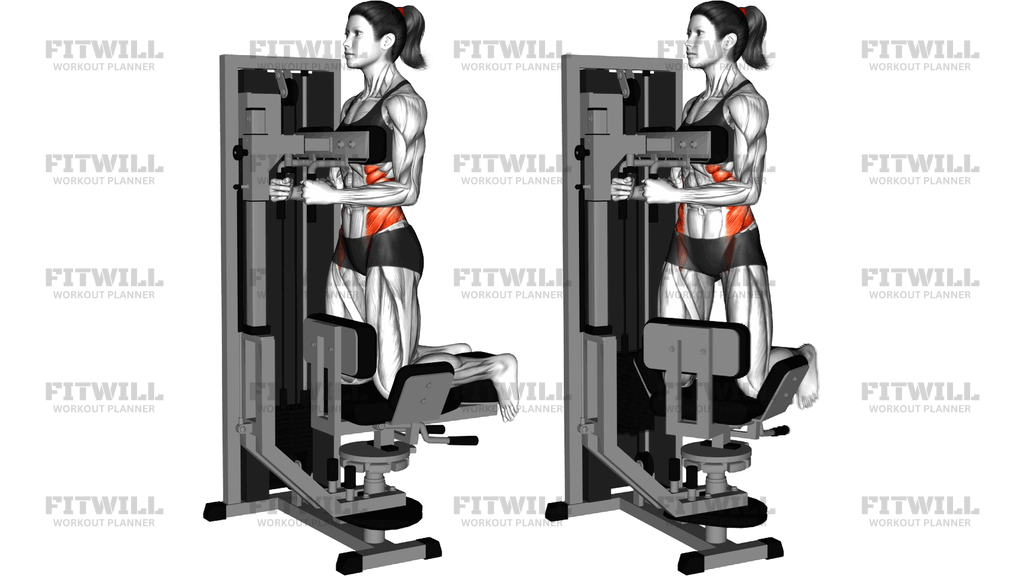
Lever Seated Twist is a machine-based rotational core exercise that trains the obliques to turn and resist rotation while the pelvis stays anchored. The leverage machine gives you a fixed pad and a guided arc, so the quality of the rep depends less on balancing and more on how well you set your seat height, brace your trunk, and rotate from the ribs instead of swinging the arms.
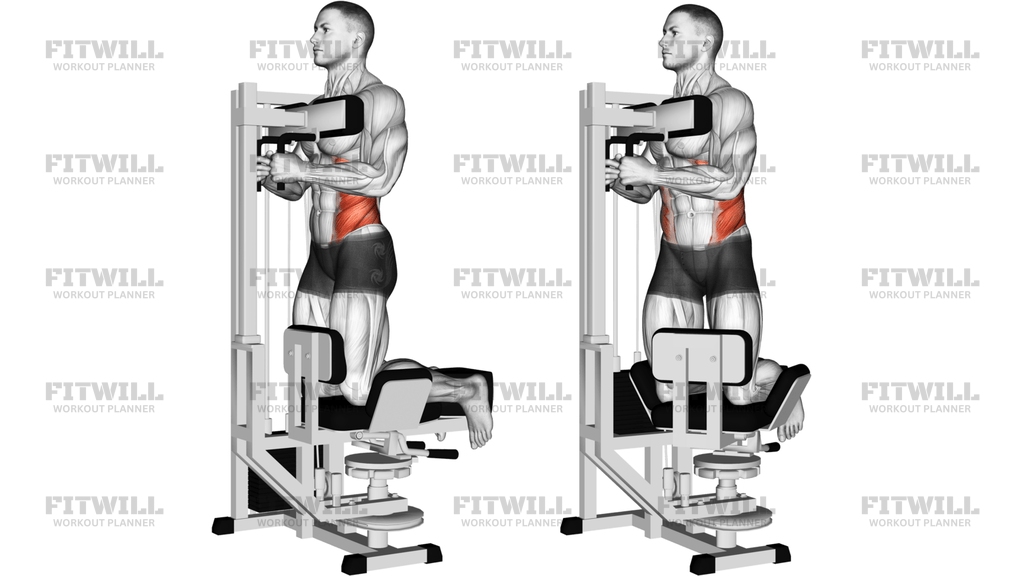
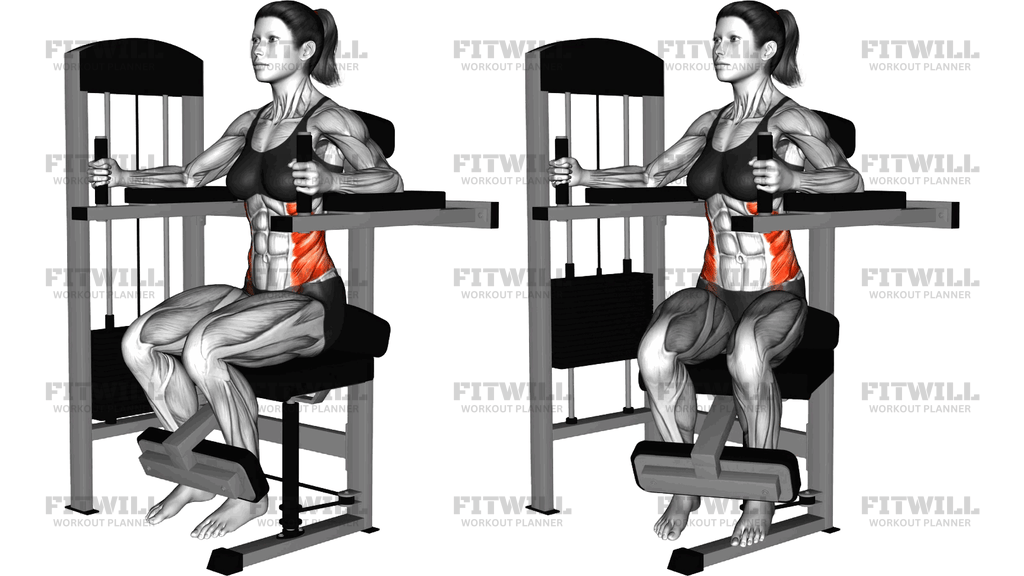
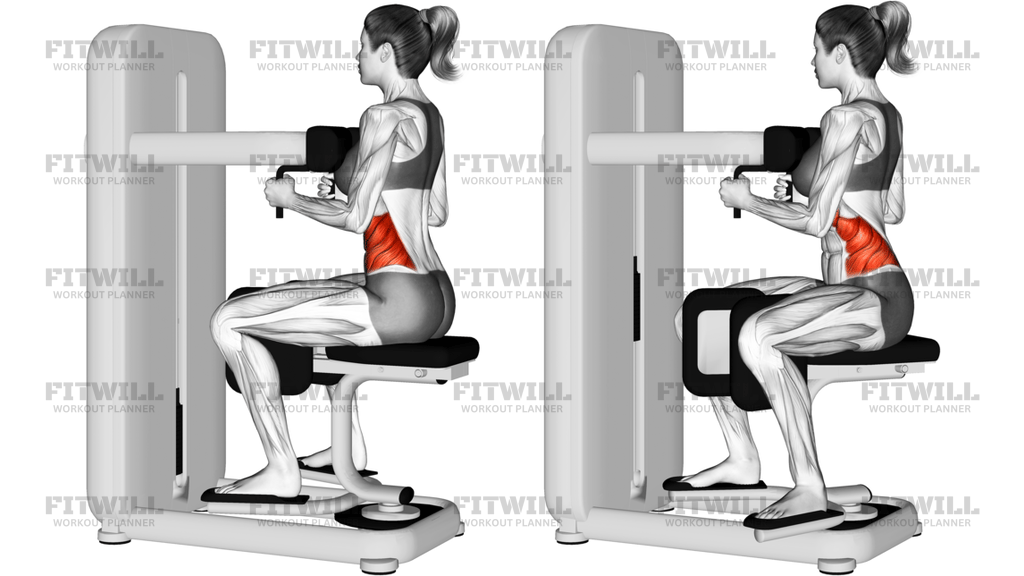
In the image, the athlete sits tall with the thighs supported, the feet braced on the foot platforms, and the forearms pressing into the handles or pads. That setup matters because it locks the lower body into position and lets the torso do the work. If the seat is too high or too low, the shoulders will shrug, the hips will slide, or the spine will twist awkwardly before the obliques can take over.
The goal of each repetition is a clean turn, not a big lunge or a fast shove. Start from a tall neutral torso, rotate smoothly to one side until the machine or your own control limit stops you, then return slowly under tension. Keep the chest open, the neck long, and the ribs stacked over the pelvis so the movement stays in the trunk. The arms should only transfer force into the machine; they should not be the source of the twist.
This exercise is useful as accessory core work, rotational strength training for sports, or a lower-load finisher when you want direct oblique work without free balancing demands. It also works well as a controlled warm-up before heavier lifts or field work that needs trunk stiffness and rotary control. Because the machine removes some of the instability, it is a good option for beginners as long as the resistance stays light enough to keep the motion smooth.
Use pain-free range and controlled breathing. Exhale as you twist, inhale as you come back, and stop the set if the hips drift, the shoulders jerk, or the movement turns into a bounce. When it is performed well, Lever Seated Twist should feel like a crisp, repeatable oblique drill with the lower body quiet and the torso doing the turning.
[ Workout Log & Planner ]
Put your next workout in Fitwill
Keep your plan and training log ready when you are.


Instructions
- Set the seat so the handles or forearm pads line up with your mid-torso, then sit tall with your hips back on the pad.
- Place both feet flat on the foot platforms and let the thighs rest against the support so the lower body stays anchored.
- Grip or press the handles lightly enough to transmit force without shrugging the shoulders.
- Brace your abs and keep your ribcage stacked over your pelvis before the first turn.
- Rotate the torso to one side in a smooth arc, letting the machine guide the path.
- Pause briefly at the end of the twist without bouncing or forcing extra range.
- Return to center under control, keeping the hips and feet quiet the whole way back.
- Repeat for the planned reps, then reset with the torso tall and the shoulders relaxed.
Tips & Tricks
- If your shoulders rise toward your ears, lower the load and keep the forearms pressed into the pads instead of pulling with the arms.
- Move from the ribs and waist, not from the knees or hips; the lower body should feel locked in, not active.
- A shorter, cleaner rotation is better than chasing a bigger finish that makes the spine or pelvis shift.
- Keep the chest open as you turn so the twist comes from the trunk instead of collapsing forward.
- Exhale through the working side of the twist to help the obliques tighten without bracing so hard that you lose motion.
- Do not let the seat edge or foot platforms become a push point that throws the weight; the rep should feel controlled on both directions.
- Use a tempo that is smooth out and slower back so the return phase still challenges the obliques.
- Stop the set when the machine starts moving faster than your torso can control.
Frequently Asked Questions
What muscles does Lever Seated Twist train most?
It mainly trains the obliques and other trunk muscles that rotate and stabilize the waist.
Why do the feet stay planted on the platforms?
The planted feet help lock the pelvis in place so the torso does the twisting instead of the hips sliding around.
Should I be pulling the handles with my arms?
No. The arms only connect you to the machine; the rotation should come from the waist and ribcage.
How much should my torso rotate on each rep?
Turn as far as you can while keeping the hips still, the chest tall, and the motion smooth.
Can beginners use this machine safely?
Yes. Start with a light stack and a short, controlled range so you can learn the seat and handle position first.
What is the most common mistake on the lever seated twist?
People usually yank with the arms or let the hips drift, which turns the exercise into a swing instead of a torso twist.
When should I breathe during the rep?
Exhale as you twist into the working side and inhale as you return to center.
What if my lower back feels uncomfortable?
Shorten the range, reduce the load, and keep your ribs stacked over your pelvis; if it still feels off, stop the set.