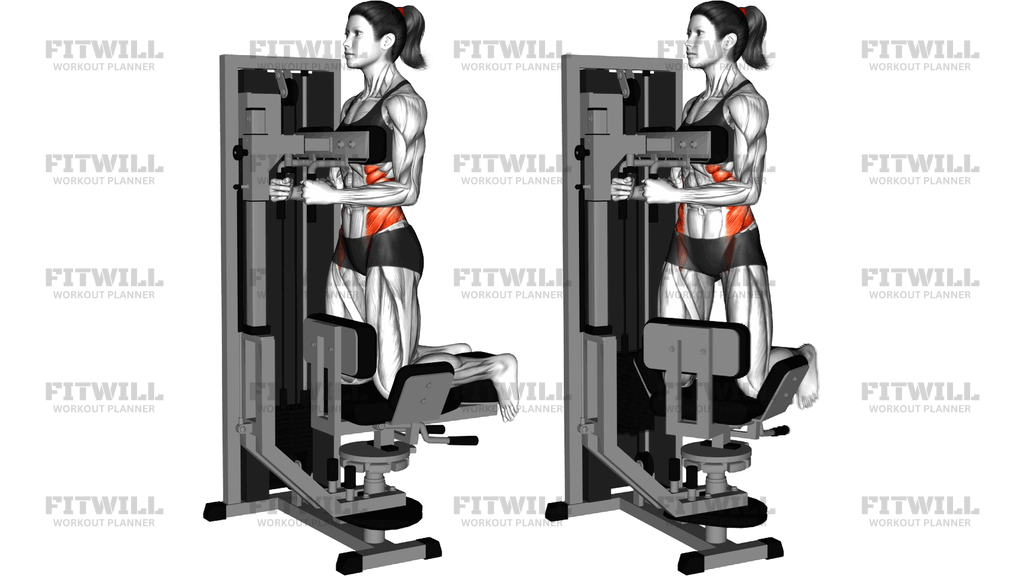
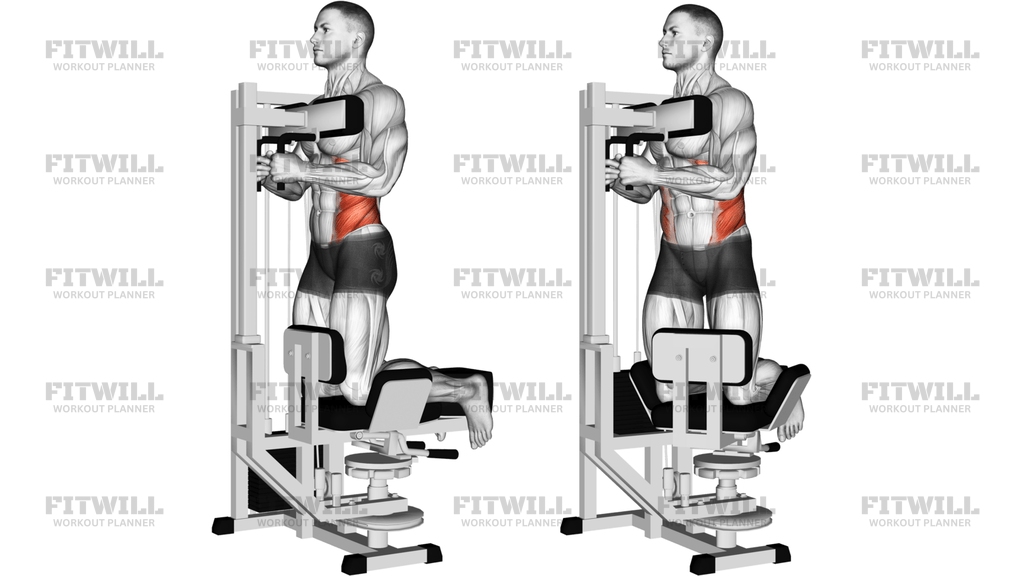
Lever Seated Left Side Crunch
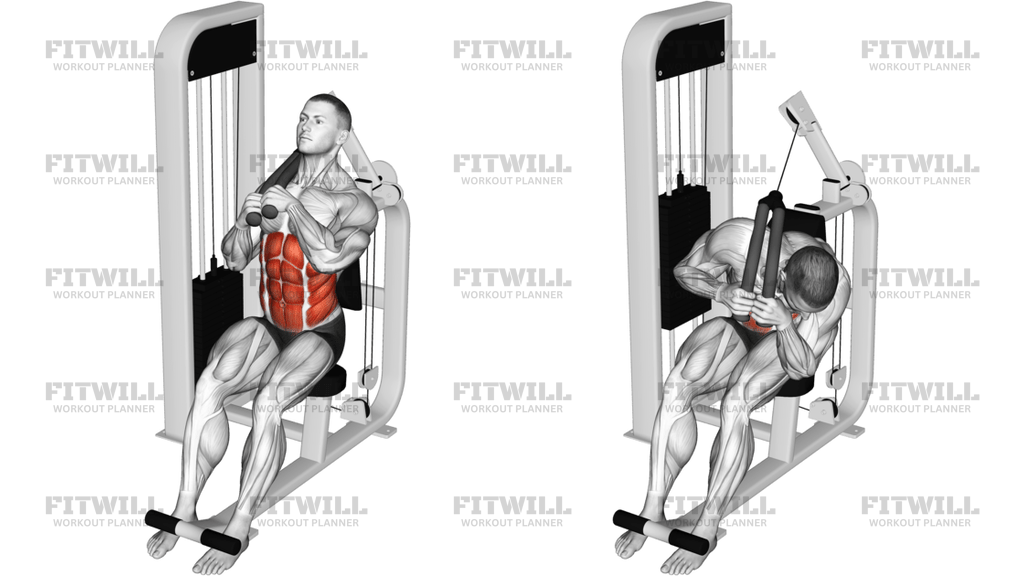
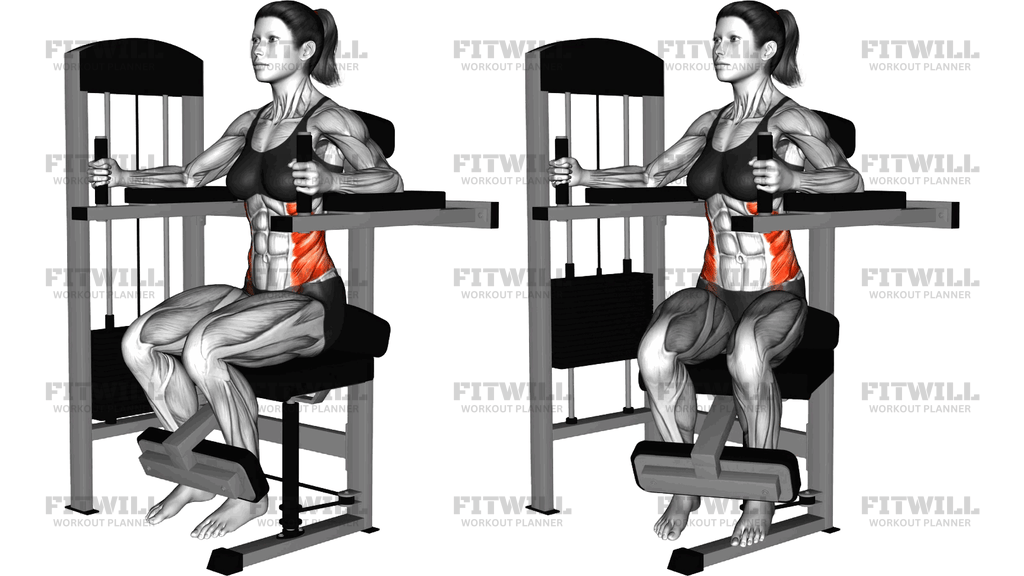
Lever Seated Left Side Crunch is a guided machine crunch that trains the left side of the waist through controlled spinal flexion and side-bending. It is useful when you want a stricter abdominal movement than floor crunches or cable work, because the lever machine keeps the path consistent and makes it easier to focus on the trunk instead of the legs or arms. The movement should feel like the left ribs are shortening toward the left hip while the upper body stays organized against the pad.
This exercise mainly challenges the obliques and deep core while the hips, lower back, and grip help stabilize the body. The setup matters because the machine only works well when your seat position, thigh support, and handle position let you crunch without sliding, shrugging, or pulling with the arms. If the machine is set too far away or too close, the rep turns into a shoulder-driven tug instead of a clean side crunch.
A good repetition starts tall and controlled. Sit fully into the seat, secure your legs under the lower roller or foot bar, and hold the handles close to your upper chest or shoulders. From there, keep your chest lifted just long enough to brace, then bend the torso toward the left side by closing the space between your left rib cage and left hip. The motion should be smooth and deliberate, with the machine carrying the load through the arc rather than your body whipping into it.
At the bottom, pause briefly only if you can keep tension on the waist without collapsing forward. On the way back up, let the trunk rise under control and stop before you lose the stacked position of ribs over pelvis. Breathing should stay rhythmic: brace before the crunch, exhale as you fold to the left, and inhale as you return. Clean reps matter more than big range here, especially if the torso starts twisting or the shoulders start doing the work.
Lever Seated Left Side Crunch fits well in an abdominal or accessory block, especially for athletes or lifters who want more direct oblique work without a lot of momentum. It can also be a practical option for beginners because the lever path helps guide the motion, provided the resistance is light and the range stays pain-free. Keep the focus on a smooth left-side contraction, a quiet upper body, and a controlled return to the start position.
[ Workout Log & Planner ]
Put your next workout in Fitwill
Keep your plan and training log ready when you are.


Instructions
- Sit on the lever machine with your hips back on the seat, your legs secured under the lower roller or foot bar, and your torso upright against the pad.
- Grip the handles near your upper chest or shoulders so your elbows stay bent and your arms can stay quiet during the rep.
- Set your rib cage over your pelvis, then take a breath and tighten your midsection before you start the crunch.
- Bend your torso toward the left by bringing your left ribs down and in toward your left hip.
- Keep the motion smooth and let the machine guide the arc instead of yanking with your shoulders or arms.
- Pause briefly in the shortened position if you can still feel tension through the left side of your waist.
- Reverse the movement slowly and return to the tall start position without letting the stack slam down.
- Reset your posture, re-brace, and repeat for the planned number of reps before carefully exiting the machine.
Tips & Tricks
- Set the seat so the handles line up close to your upper chest; if you have to reach, the rep usually turns into a shoulder pull.
- Keep your elbows bent and your hands steady so the lever machine moves because your torso bends, not because your arms press.
- Think about closing the left side of your waist rather than crunching straight forward.
- Do not let your right shoulder drive the movement; the upper body should stay compact and controlled throughout the arc.
- Use a smaller range if your hips lift off the seat or your lower back starts arching on the return.
- Exhale as you fold to the left, then inhale as you come back up to the tall start position.
- A light pause in the squeezed position works better than bouncing at the bottom.
- Choose a load that lets you slow the lowering phase; if the stack drops quickly, the resistance is too heavy.
- Keep your neck long and your chin relaxed so the crunch stays in the waist instead of the throat.
- Stop the set when the torso starts twisting hard instead of bending cleanly to the left.
Frequently Asked Questions
What does Lever Seated Left Side Crunch work?
It mainly targets the left side of the waist, especially the obliques, with the deep core helping to control the machine path.
How is Lever Seated Left Side Crunch different from a regular crunch machine?
This version is biased toward one side, so the torso bends toward the left instead of moving straight forward through both sides evenly.
Should my arms be doing anything in Lever Seated Left Side Crunch?
No. Hold the handles only to stay connected to the machine; the movement should come from the waist, not from pulling with the arms.
How do I know the seat is set correctly?
You should be able to sit tall, keep your legs secured, and grab the handles without reaching or shrugging your shoulders.
Can beginners use Lever Seated Left Side Crunch?
Yes. Start light and keep the range short enough that you can fold to the left without twisting or losing contact with the seat.
What is the most common mistake on this machine?
People usually pull with the arms, lean back too far, or let the stack drop too fast on the way up.
Should I feel this in my hips too?
Some hip support is normal because your legs are anchored, but the working sensation should stay mostly in the left side of the waist.
How heavy should Lever Seated Left Side Crunch be?
Use a load that lets you control both directions of the rep and keep the torso bending smoothly instead of jerking the stack.
Can I train both sides with this exercise?
Yes. Perform the left-side version and the matching right-side version if your program calls for balanced oblique work.