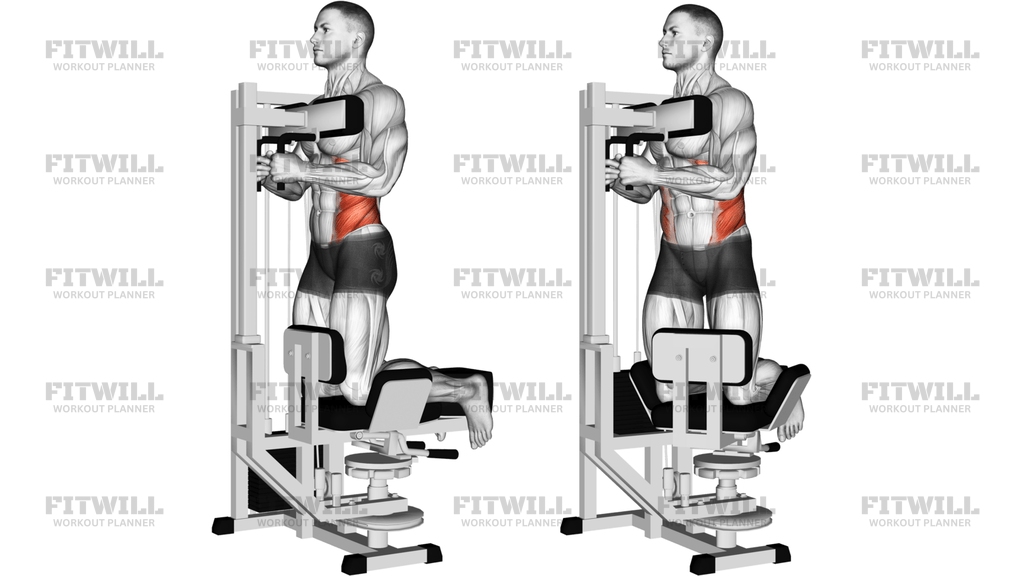
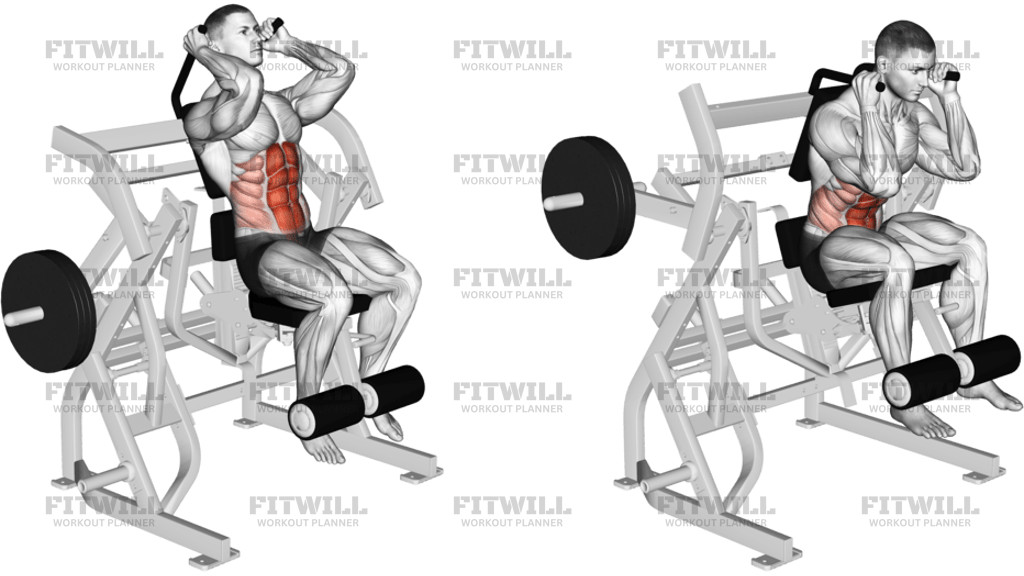
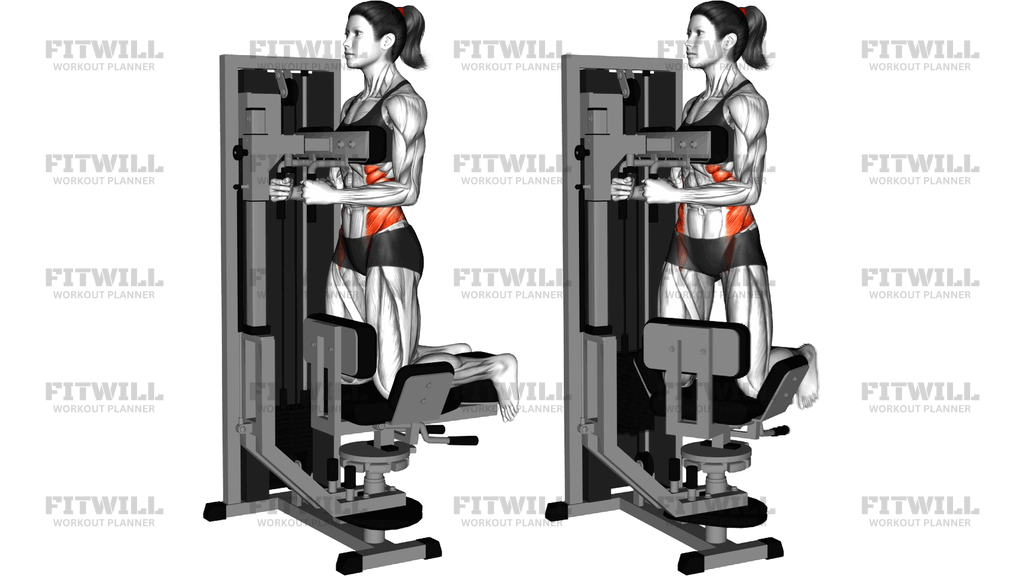
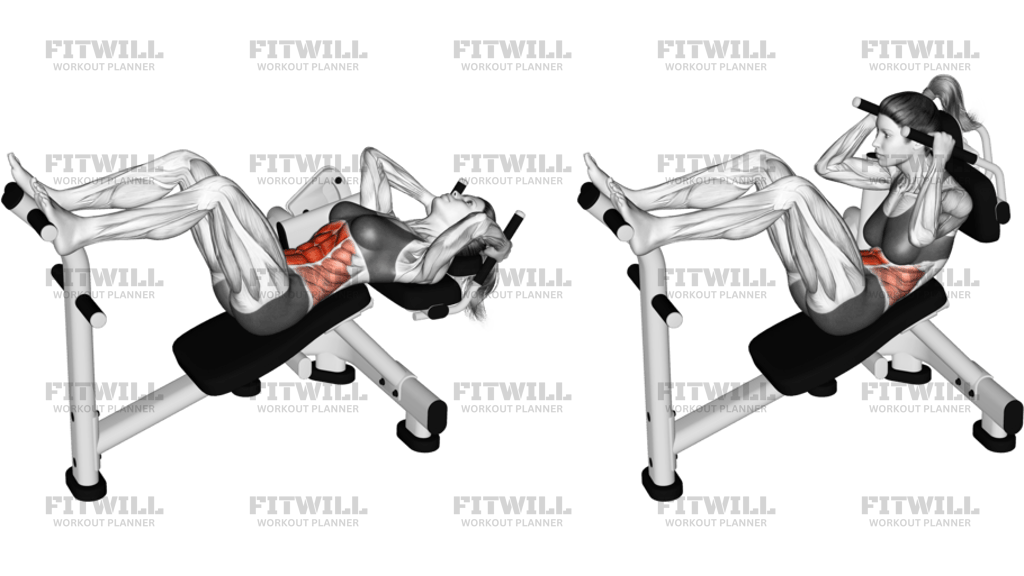
Lever Seated Crunch Chest Pad
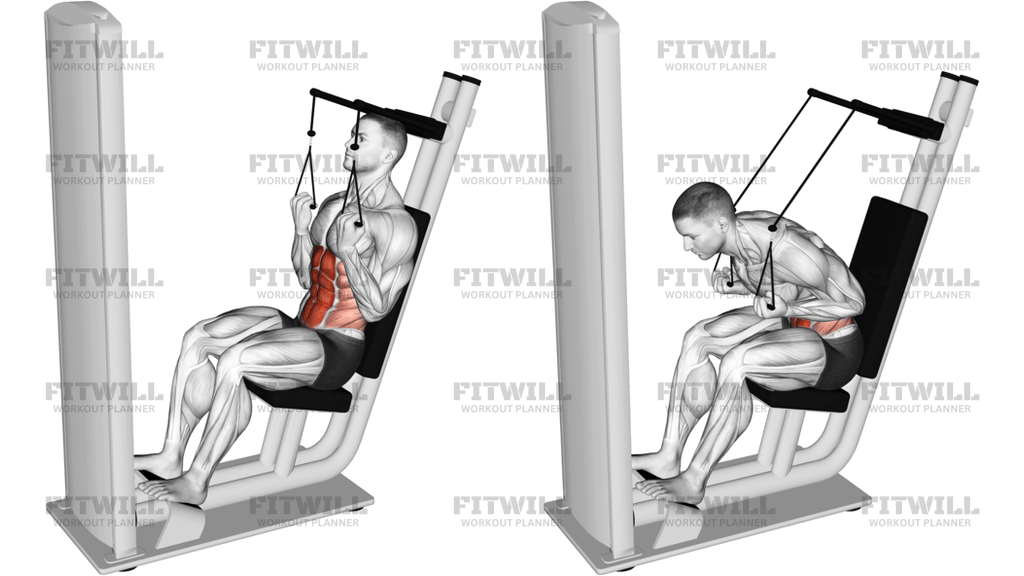
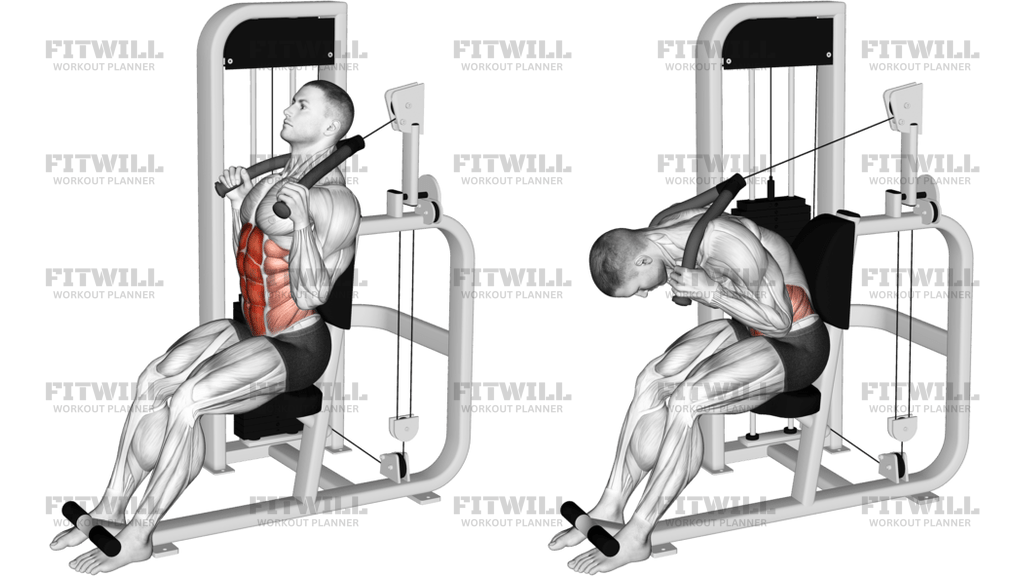
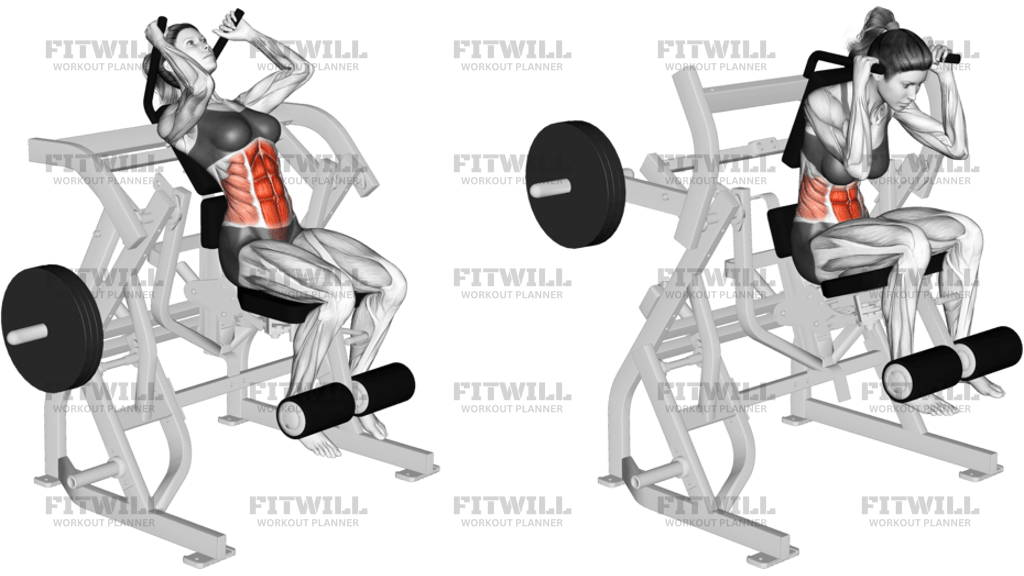
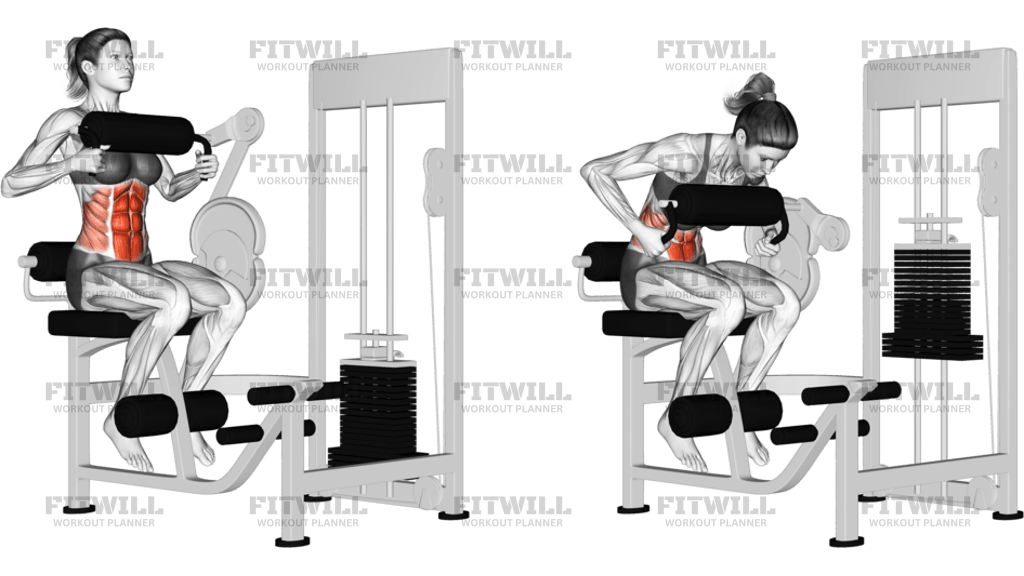
Lever Seated Crunch Chest Pad is a machine-based abdominal crunch that keeps the body in a fixed seated position while you flex the trunk against a chest pad. The guided path makes it easier to load the abs directly than a floor crunch, because the machine removes most of the balance demand and lets you focus on controlled spinal flexion. That makes it useful for targeted core work, higher-rep accessory sets, and beginners who need a clearer movement pattern than a free-bodyweight crunch.
The main target is the rectus abdominis, with the obliques and deeper core muscles helping steady the torso. Depending on how hard you load it, the hip flexors will assist too, but the best reps keep the pelvis quiet and the trunk doing the visible work. If the machine is set up well, the pad should rest high on the chest or sternum so the line of force stays centered through the torso instead of riding up into the neck.
Setup matters a lot on this machine. Sit all the way back, anchor the lower body against the leg pads or foot support, and keep the chest pad snug before you start the first rep. If the seat is too high or too low, you will end up shrugging, sliding, or turning the movement into a hip fold. A good setup lets you start tall, ribs stacked over the pelvis, with your hands only guiding the handles rather than pulling the machine with your arms.
On each rep, think about curling the ribcage toward the pelvis instead of driving the shoulders downward. Exhale as the torso closes, pause briefly when the abs are fully shortened, and then return under control until you are upright again. The return should feel deliberate, not springy, because bouncing out of the bottom shifts tension away from the abs and into the machine's momentum.
Lever Seated Crunch Chest Pad works well in core-focused sessions, after main lifts, or as accessory work when you want a simple machine exercise that is easy to repeat with clean form. It is especially helpful if floor crunches bother the neck or if you want a more stable way to train trunk flexion. Keep the range strict, load it only as hard as you can control, and stop a set when the chest pad starts moving faster than your abs can control it.
Fitwill
Log Workouts, Track Progress & Build Strength.
Achieve more with Fitwill: explore over 9600 exercises with images and videos, access built-in and custom workouts, perfect for both gym and home sessions, and see real results.
Start your journey. Download today!




Instructions
- Sit on the machine with your hips all the way back on the seat and your lower body anchored under the pads or foot support.
- Place the chest pad high across your sternum and upper chest, then hold the handles beside your shoulders without shrugging.
- Set your feet firmly and keep your pelvis still so the machine cannot rock you backward.
- Start tall with your ribs stacked over your pelvis and your neck long, not craned forward.
- Inhale to brace your trunk before each rep.
- Exhale and curl your ribcage toward your pelvis, driving the chest pad downward with your abs instead of pulling with your arms.
- Continue the crunch until your torso is fully shortened, but stop before your hips slide or your shoulders roll up.
- Pause briefly at the bottom and feel the abs squeeze hard against the fixed pad.
- Inhale and return slowly until you are upright again, then reset your posture before the next rep.
Tips & Tricks
- Set the chest pad on the upper chest, not the throat, or you will end up shrugging through the rep.
- Think about bringing the lower ribs toward the hips; that cue keeps the motion in the abs instead of turning it into a hip fold.
- Keep your elbows quiet and your hands light on the handles so the arms do not take over the movement.
- If your hips slide or your low back comes off the seat, shorten the range before you add load.
- Use a slower return than the crunch itself; the lowering phase is where the abs keep tension most cleanly.
- A small pause at the bottom helps prevent bouncing against the machine stack.
- If your neck feels tense, keep your chin slightly tucked and look straight ahead rather than down.
- Choose a load that lets you finish the set without jerking the chest pad or rocking the seat.
Frequently Asked Questions
What muscles does Lever Seated Crunch Chest Pad work most?
It mainly targets the rectus abdominis, with the obliques and deeper core muscles helping stabilize the torso. The hip flexors can assist, especially if the load is too heavy.
Where should the chest pad sit on Lever Seated Crunch Chest Pad?
The pad should sit high across the sternum or upper chest, not up on the neck. If it sits too low, you will usually shrug and lose the clean crunch pattern.
Do my feet need to stay locked down on the machine?
Yes. Keep your lower body anchored against the pads or foot support so your pelvis stays planted and the machine does not pull you backward.
Is Lever Seated Crunch Chest Pad good for beginners?
Yes, because the machine guides the path and reduces balance demands. Start light and learn to curl the ribs toward the pelvis before you increase the stack.
Why do I feel this mostly in my hip flexors?
That usually means you are folding at the hips or loading the machine too heavily. Reduce the weight and think about shortening the ribcage instead of driving the knees or thighs.
Can I use this instead of cable crunches?
Yes. Both train spinal flexion for the abs, but the chest-pad machine gives you a more fixed path and usually feels more stable through the torso.
Should my lower back round during the crunch?
A small amount of spinal flexion is normal and expected, but do not collapse or jerk out of the bottom. The motion should stay smooth and controlled.
How heavy should I load Lever Seated Crunch Chest Pad?
Use a load that lets you control the bottom position and return without rocking the seat. If the stack moves faster than your abs can control it, the weight is too heavy.