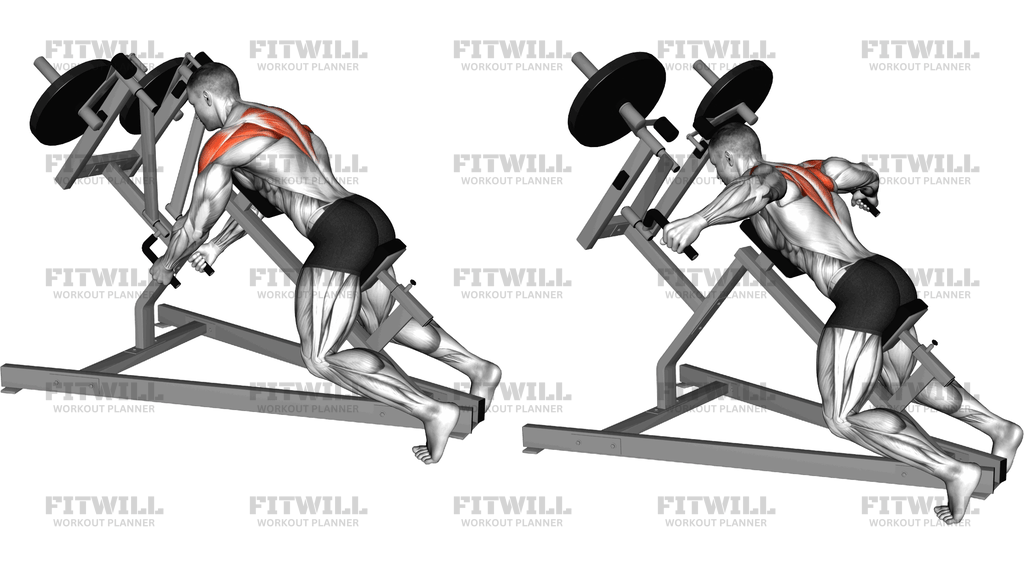
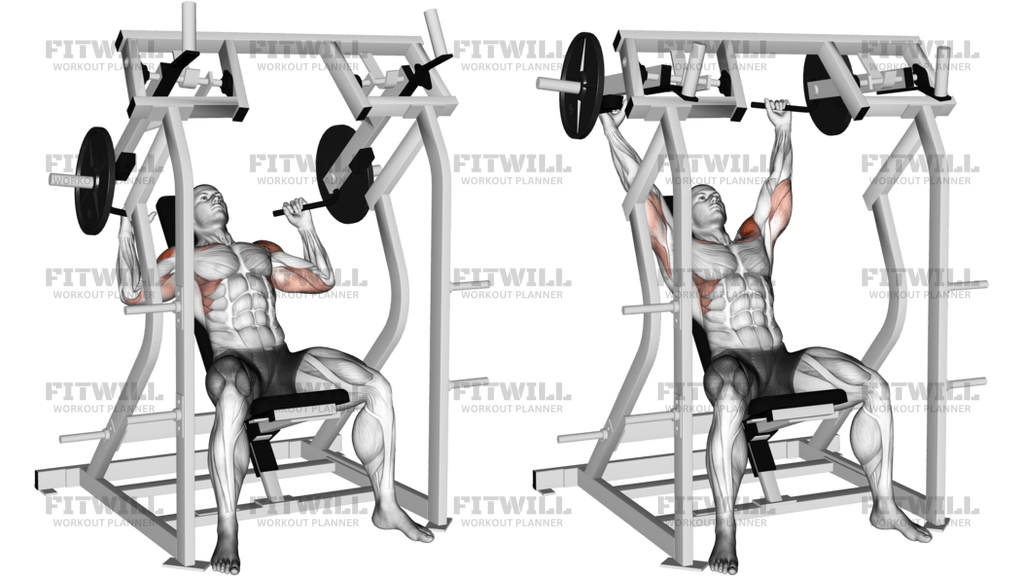
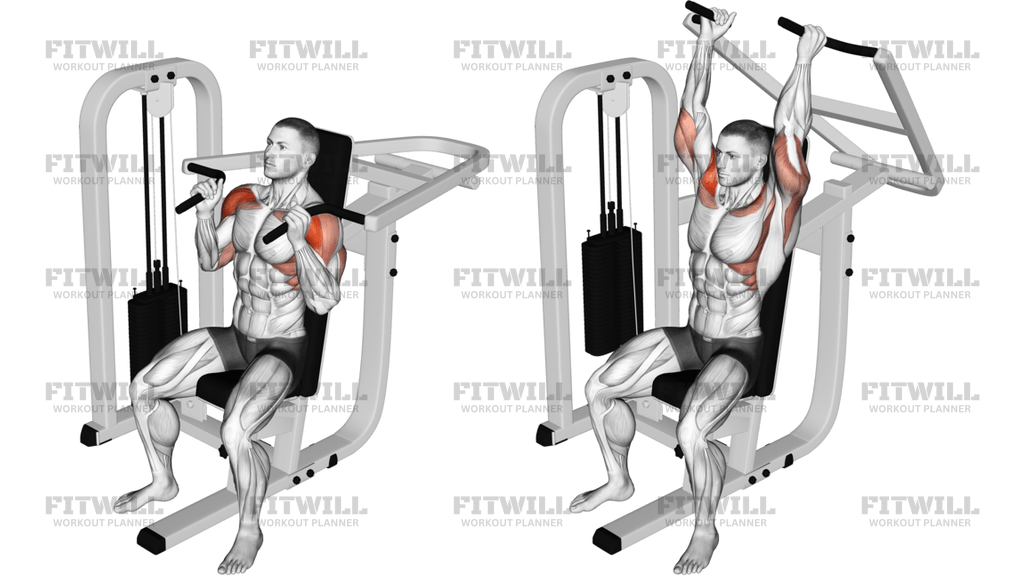
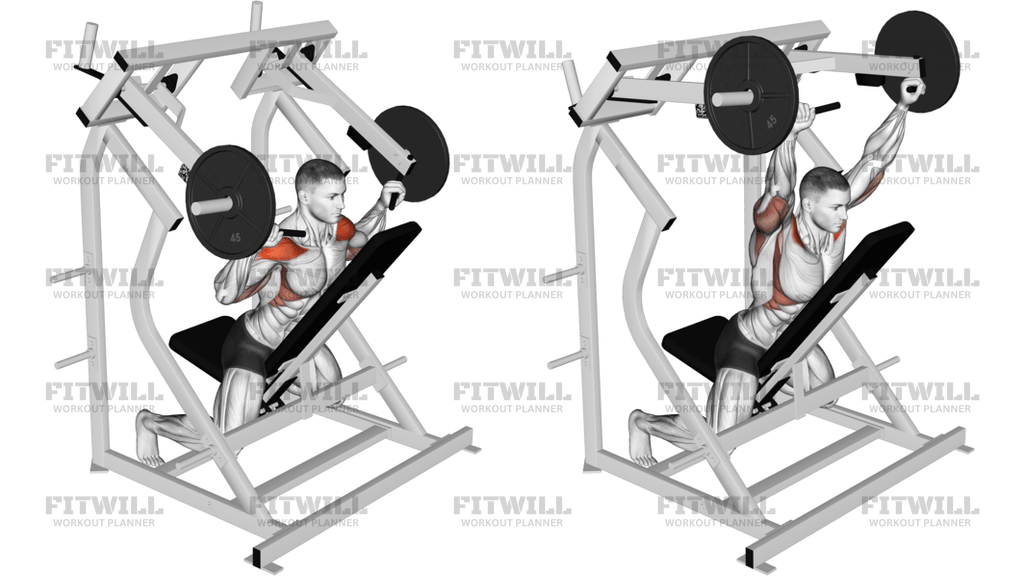
Lever Lateral Raise Deltoid Raise
Lever Lateral Raise, also called a deltoid raise, is a machine-based shoulder isolation exercise that keeps the rep path fixed while the side delts do the main work. The lever arms and forearm pads make it easier to keep tension on the deltoids without turning the movement into a body swing, which is why this variation is common in hypertrophy work and controlled shoulder accessories.
The setup matters because the machine should line up with your shoulder joint before the first rep starts. Sit tall with your feet planted, chest lifted, and your upper arms or forearms resting firmly on the pads. Keep your wrists neutral and your elbows slightly bent so the load sits on the shoulder rather than being forced through the hands. If the seat is too high or too low, the raise will feel cramped at the bottom or overly trap-heavy at the top.
Each repetition should travel in a smooth arc out to the sides, not straight up with a shrug. Lead the motion with the elbows and keep the shoulders down as the arms rise toward shoulder height. A brief pause at the top makes the side delts work harder, but the lowering phase is just as important: return slowly until you are back to the starting stretch without letting the weight stack crash.
This exercise is useful as a shoulder builder, a warm-up for pressing days, or a strict accessory movement when you want direct delt tension with less lower-back involvement than free-weight lateral raises. Beginners can learn it quickly because the machine guides the path, but the same machine can be cheated with too much load, so keep the resistance moderate and the range pain-free. If the top position pinches the shoulder or forces the neck to tense up, shorten the range and reset the seat before continuing.
[ Workout Log & Planner ]
Put your next workout in Fitwill
Keep your plan and training log ready when you are.


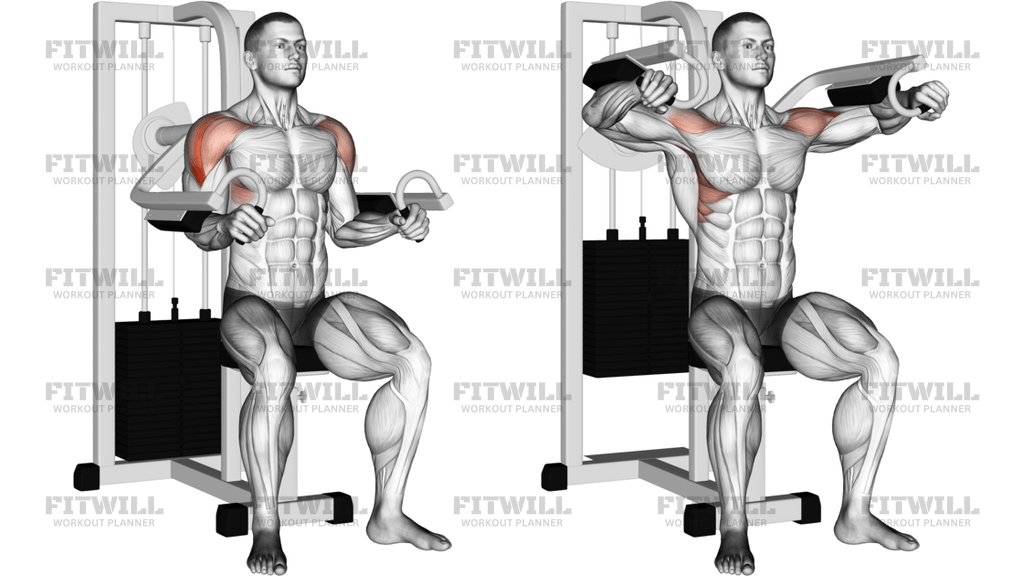
Instructions
- Sit on the machine with your feet flat, chest tall, and your shoulder joints lined up with the lever arms.
- Place your forearms or elbows firmly on the pads and hold the handles lightly with neutral wrists.
- Set your shoulders down away from your ears and brace your torso before the first rep.
- Start from the lowered position without letting the weight stack slam or your torso rock backward.
- Lift the lever arms out to the sides in a smooth arc, leading with the elbows.
- Raise until your upper arms are about level with your shoulders, or just below it if the machine feels better there.
- Pause briefly at the top, keeping the neck relaxed and the traps quiet.
- Lower the pads under control to the start position and keep the same tempo on every rep.
- Breathe out as you raise and breathe in as you lower, then reset if your body starts to shift.
Tips & Tricks
- Adjust the seat first so the machine pivot feels lined up with your shoulder, not your neck or upper arm.
- Keep a slight elbow bend fixed through the whole set; do not turn the raise into a press.
- Think about moving the elbows out and up rather than lifting the hands higher than the pads.
- Stop before your shoulders creep toward your ears, because that usually means the traps are taking over.
- Use a controlled lowering phase so the side delts stay loaded instead of bouncing between reps.
- If the grip feels busy, soften your hands and let the forearms drive the lever instead of squeezing hard.
- Keep your ribs stacked over your pelvis; leaning back to finish the rep turns it into a cheat.
- Choose a load that lets you pause at the top without shortening the range or twisting the torso.
Frequently Asked Questions
What muscles does Lever Lateral Raise train most?
The side delts do most of the work, with the upper traps and upper back helping stabilize the machine path.
Why use the machine instead of dumbbells?
The lever arms keep the path fixed, which makes it easier to keep constant tension on the shoulders and avoid body swing.
Where should my forearms or elbows sit on the pads?
They should sit securely on the pads with a slight bend in the elbow and the shoulder joint aligned to the machine's pivot.
How high should I raise the lever arms?
Raise until your upper arms are about level with your shoulders, then stop if going higher makes you shrug or pinch.
What is the most common mistake on this exercise?
The biggest error is using too much weight and letting the torso lean, shrug, or twist to fake the last few inches.
Is Lever Lateral Raise good for beginners?
Yes. The guided path makes it easier to learn shoulder isolation, as long as the load stays light and the seat is adjusted correctly.
Should I feel this in my neck or upper traps?
You may feel some trap support, but the neck should stay relaxed. If the neck is working hard, the load is likely too heavy or the shoulders are shrugging.
Can I use this as a finisher after pressing?
Yes. It fits well after overhead or incline pressing when you want direct side-delt work without needing more heavy compound reps.