Lever Reverse T-Bar Row
Lever Reverse T-Bar Row is a chest-supported rowing exercise performed on a leverage machine with an underhand or reverse grip. It trains the lats, mid-back, rear delts, and elbow flexors while keeping your torso fixed against the pad, which makes it easier to load the pull without turning the set into a lower-back exercise.
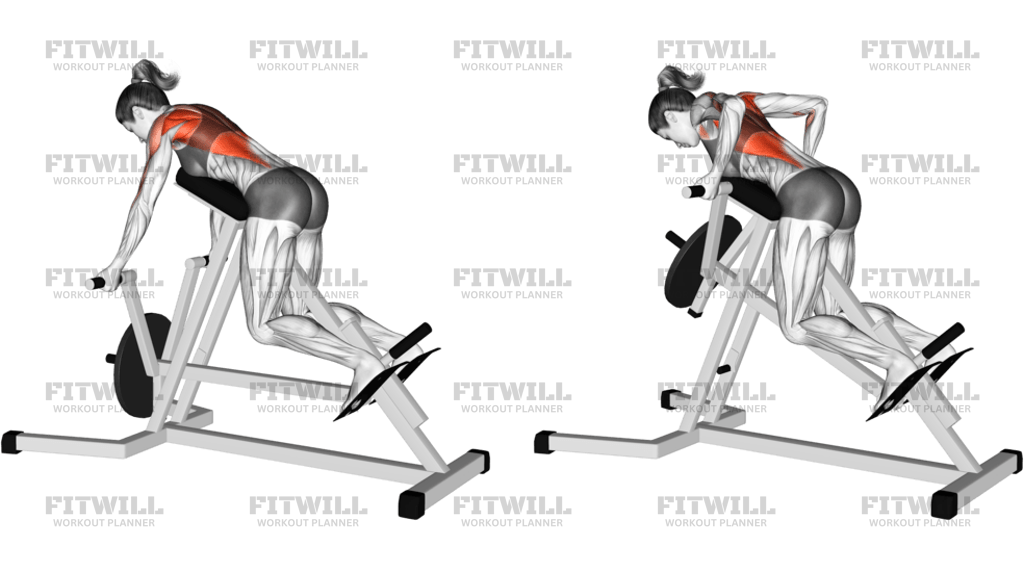
The machine shown in the image places you face-down on an angled support with your chest on the pad, hips resting into the bench, and feet braced behind you. That setup matters because the pad removes most body sway and lets you focus on the actual rowing path. If your feet are loose, your chest slips off the pad, or your shoulders drift forward at the top, the exercise stops being a clean reverse-grip row.
Each repetition should begin with the arms reaching forward and the shoulder blades slightly protracted, then the elbows drive back and down toward the lower ribs or upper waist. The reverse grip usually encourages a tucked elbow path and a strong finish near the torso. At the top, squeeze the back without shrugging, then lower the handles slowly until the lats and upper back are fully stretched.
This variation is useful for building pulling strength and back size, especially when you want heavy rowing work with more stability than a bent-over row. It also works well as accessory work after deadlifts, pull-ups, or pulldowns because the chest support reduces fatigue from bracing. The movement should feel like a controlled pull through the elbows, not a yank with the shoulders or a hip drive.
Keep the load honest and the rep quality strict. A good set keeps the chest planted, the wrists straight, the neck long, and the lowering phase under control. If you need to shorten the range, bounce the handles, or arch your torso off the pad to finish the pull, the weight is too heavy for the purpose of this exercise.
[ Workout Log & Planner ]
Put your next workout in Fitwill
Keep your plan and training log ready when you are.


Instructions
- Adjust the chest pad so your sternum and upper chest stay supported and your feet can brace firmly on the rear platform.
- Grip the handles with an underhand reverse grip and keep your wrists straight before you start the first pull.
- Set your chest against the pad, lengthen your neck, and let your arms reach forward until the shoulders are slightly stretched.
- Brace your midsection without lifting off the pad, then begin the pull by driving your elbows back and down.
- Pull the handles toward your lower ribs or upper waist until the shoulder blades squeeze together without shrugging.
- Pause briefly at the top and keep the chest planted instead of rocking into the finish.
- Lower the handles slowly until the arms are extended and the back feels long again.
- Exhale as you pull, inhale as you return, and repeat for the planned number of reps.
Tips & Tricks
- Keep your chest glued to the pad so the row stays strict and does not turn into a torso swing.
- Think about driving the elbows back, not curling the handles with your hands.
- Use a grip width that lets the wrists stay straight and the elbows track close to the body.
- Stop the pull when the handles reach your torso; forcing extra range usually just lifts the shoulders.
- Lower the weight under control for a full stretch through the lats and mid-back.
- Keep your shoulders down at the top instead of shrugging into the neck.
- Use a load that lets you pause cleanly against the pad without bouncing.
- If your feet start sliding or you lose contact with the chest pad, reduce the resistance.
Frequently Asked Questions
What muscles do Lever Reverse T-Bar Row work?
It mainly works the lats and mid-back, with the rear delts, rhomboids, lower traps, and biceps helping in the pull.
Why is the chest pad important on this machine?
The pad keeps your torso fixed so you can row with cleaner elbow drive and less lower-back cheating.
Should I use a wide grip or a narrow reverse grip?
A narrower underhand grip usually fits this variation best because it helps keep the elbows tucked and the pull path close to the body.
How high should I pull the handles?
Pull toward the lower ribs or upper waist, not up into the chest, so the back does the work instead of the shoulders.
Can beginners use the Lever Reverse T-Bar Row?
Yes. The chest support makes it beginner-friendly as long as the load stays light enough to keep the chest planted and the lowering phase controlled.
What is the most common form mistake?
Most people shrug, bounce, or lift the chest off the pad to finish the rep, which reduces back tension and changes the exercise.
Where does this fit in a workout?
It works well as a back accessory after heavier compounds, or on a rowing-focused day when you want stable horizontal pulling.
How do I progress this movement safely?
Add weight only when you can keep the chest on the pad, the wrists straight, and the return phase slow and controlled.