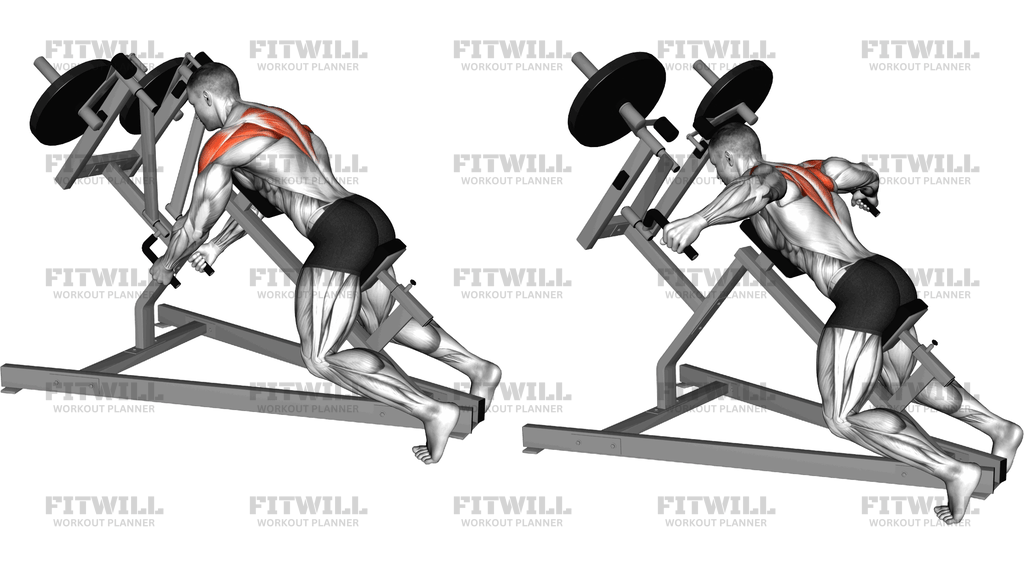
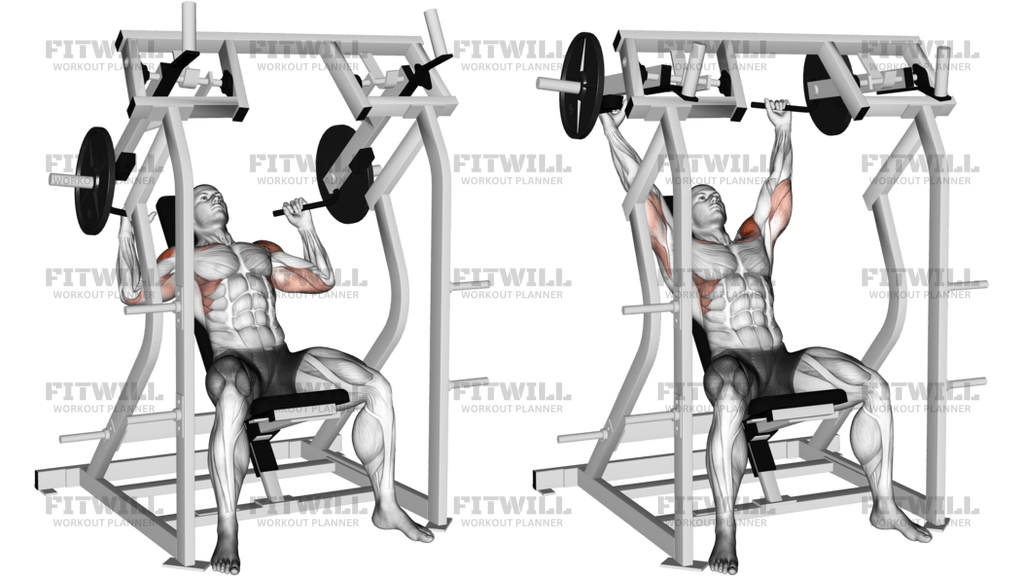
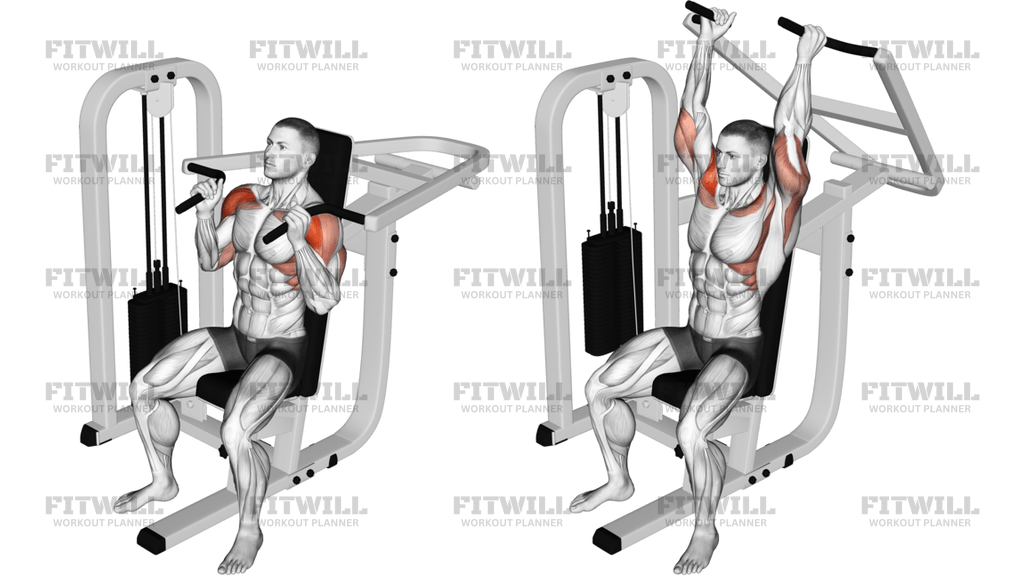
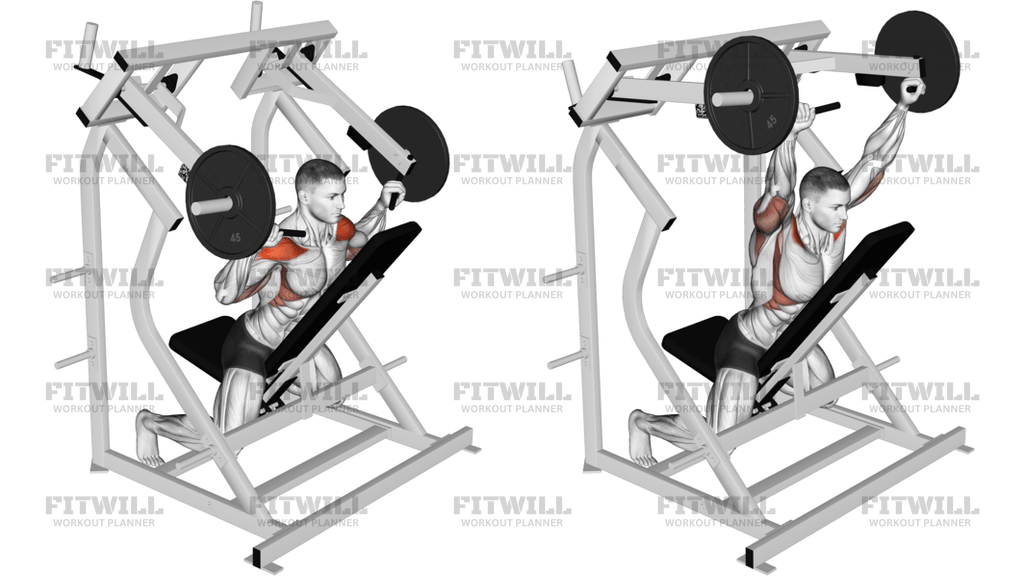
Lever Military Press Plate Loaded
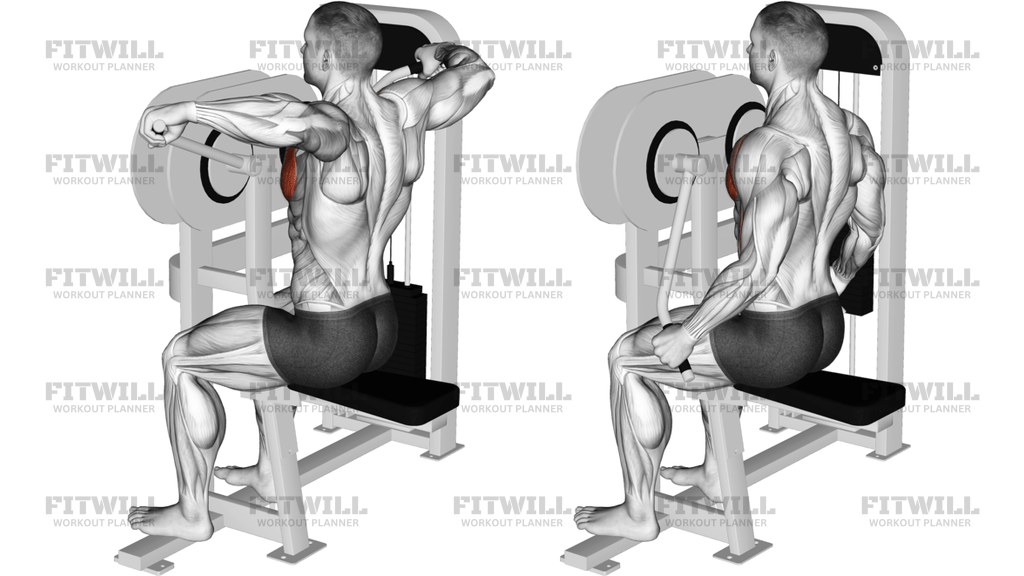
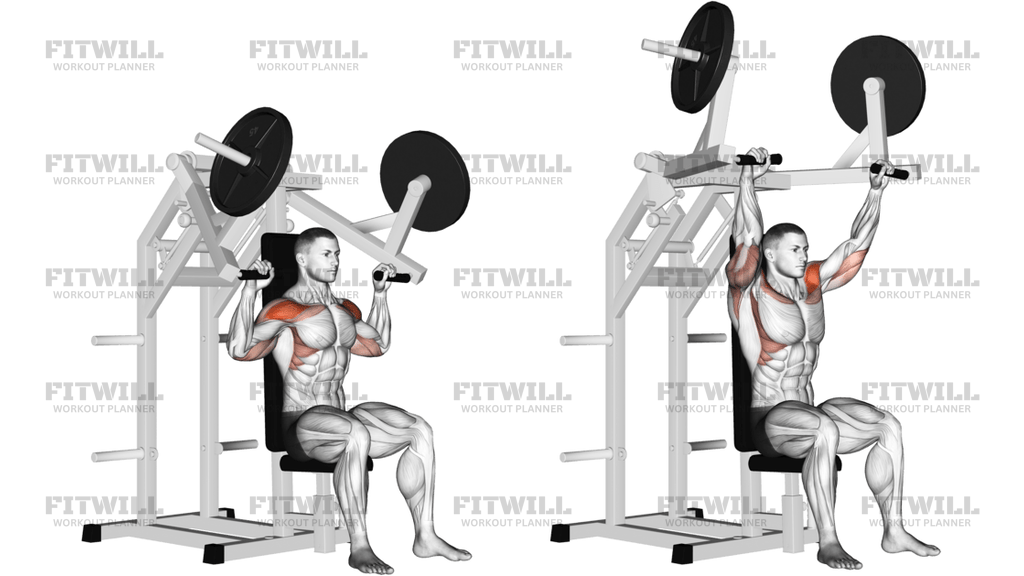
Lever Military Press Plate Loaded is a seated machine shoulder press that uses a fixed lever path and plate resistance to train the delts under steady tension. The back pad removes most of the balance demand, so the exercise is easier to load consistently than a free-weight press while still asking the shoulders and triceps to do the work.
The main emphasis is on the deltoids, especially the front and side portions, with the triceps helping to finish the press and the upper traps and upper back assisting with shoulder positioning. In anatomy terms, the primary work centers on the Deltoids, with support from Trapezius, Rhomboids, and Triceps brachii. Because the machine follows one path, seat height matters: if the handles start too low, the press becomes cramped; if they start too high, the shoulders shrug and the range gets awkward.
A good setup begins with your back, head, and hips firmly against the pad, feet flat, and the handles aligned so your forearms can stay roughly vertical at the bottom. From there, brace your torso, keep your ribs from flaring, and press the handles up and slightly forward along the machine arc. The movement should feel smooth and controlled, not forced into a straight line that fights the machine's path.
At the top, finish with the elbows nearly straight without jamming the joints or letting the shoulders ride up toward the ears. On the way down, lower under control until the handles return to shoulder level or just below, depending on shoulder comfort and machine design. The goal is repeatable shoulder-driven reps with even tempo, not bouncing the weight stack or leaning into the back pad for extra drive.
This exercise is a strong choice for hypertrophy work, shoulder-focused strength blocks, or as a safer pressing option when you want less stabilization than a barbell overhead press. It can also be useful for lifters who need a machine pattern that keeps the torso stable and the range of motion predictable. Keep the load honest, respect any shoulder pinching at the bottom, and stop the set when the press turns into a shrug or a back arch.
[ Workout Log & Planner ]
Put your next workout in Fitwill
Keep your plan and training log ready when you are.


Instructions
- Adjust the seat so the handles start at about upper-chest or chin height, then plant your feet flat and keep your back, head, and hips against the pad.
- Grip the handles evenly with straight wrists and align your forearms so they point toward the machine's press path at the bottom.
- Set your shoulder blades and brace your torso so your ribs stay down before the first rep.
- Press the handles upward and slightly forward along the lever arc as you exhale.
- Keep your elbows under control and let them travel smoothly without flaring hard out to the sides.
- Finish the press with your arms nearly straight while keeping your shoulders away from your ears.
- Lower the handles slowly until they return to shoulder level or a comfortable depth that does not pinch the front of the shoulder.
- Reset your breath at the bottom and repeat for the planned number of controlled repetitions.
Tips & Tricks
- Set the seat height first; if the handles start too low, the first part of the press will feel jammed and your shoulders may roll forward.
- Keep your wrists stacked over the handles instead of bending them back, especially when the set gets heavy.
- Think about pressing up and slightly forward on the machine arc, not straight up like a barbell strict press.
- Do not let your rib cage flare to fake extra range; keep the back pad contact and let the shoulders do the work.
- Stop the lowering phase just before the front of the shoulder loses comfort; a shorter range is better than a painful bottom.
- Use a controlled lowering phase of about two to three seconds to keep tension on the delts and avoid bouncing the machine.
- Keep your neck long and relaxed so the upper traps do not take over the rep.
- Choose a load that lets every rep look identical; once the seat contact, wrist position, or elbow path changes, the set is too heavy.
Frequently Asked Questions
What muscle does Lever Military Press (plate loaded) target most?
The deltoids are the main target, with the triceps helping finish the press and the upper traps assisting.
Can beginners perform this exercise?
Yes. The back support and fixed path make it beginner-friendly as long as the seat height and range of motion are set correctly.
Where should the handles be at the start of each rep?
They should start around upper-chest or chin height so your forearms can stay close to vertical and your shoulders do not feel jammed.
What is the most common mistake on this machine press?
Setting the seat too low and turning the rep into a shrug, which usually makes the shoulders and neck do more work than the delts.
Should I lock out my elbows at the top?
Finish the press with near-full elbow extension, but do not slam into a hard lockout or let your shoulders rise toward your ears.
Why does the machine not move in a perfectly straight line?
The lever arm follows a guided arc, so the best rep follows that arc instead of forcing a vertical path that fights the machine.
What if the bottom position pinches my shoulders?
Shorten the range slightly, raise the seat if needed, and stop just before the front of the shoulder loses comfort.
How should I breathe during the press?
Exhale as you press the handles up and slightly forward, then inhale as you lower them back to the start.